Alarm and CCTV Installers Insurance for security and fire installers
Insurance for companies that design, install and maintain intruder alarms, fire detection, CCTV and access control. Compare cover built around your engineers, maintenance contracts and the responsibility that comes with protecting customers' premises.
- Cover when a system fails to detect a break-in or fire
- Liability for codes, keys and system data your firm holds
- Engineers, stock and vans across installation and maintenance
Reviewed October 2026 by the MyBusinessComparison.com editorial team
What is alarm and CCTV installers insurance?
Alarm and CCTV installers insurance is cover designed for firms that fit and maintain intruder alarms, fire detection, CCTV cameras and access control. A specialist policy joins liability for injury and damage, employers' liability and professional indemnity with protection for the moment a system you installed fails to work during a burglary or fire.
That failure to perform risk is what separates this trade from most others. If a fire alarm does not sound or an intruder alarm does not signal, the customer's insurer may pay the loss and then try to recover it from the installer. Many general liability policies exclude claims where a product simply did not do its job, so security installers need a policy written for them.
Insurers look at the systems you fit, your certification, how engineers are vetted and whether you hold customers' codes, keys or remote access to their systems.
Alarm and CCTV installers cover at a glance
- Suits
- Security and fire systems firms with engineers, vans and maintenance contracts
- Main sections
- Liability, employers' liability, failure to perform and professional indemnity
- Must have
- Employers' liability for engineers and office staff
- Trade specific
- Failure of a system to perform, codes and keys held, remote system access
- Insurers look for
- Recognised certification and screened engineers
- Separate cover
- Guarding, keyholding and monitoring, under security firm insurance
What does alarm and CCTV installers insurance cover?
Specialist policies for security and fire installers usually include the sections below. Limits for failure to perform and professional indemnity are worth checking closely.
Public liability
Injury and property damage during installation and servicing, such as drilling through a hidden water pipe, damaging decor while running cable or a ladder falling against a shopfront.
Read more about public liability insurance
Products and completed installations
Claims arising from equipment you supply and install after handover, such as a power supply that overheats or a faulty detector that causes damage.
Read more about products liability insurance
Failure to perform
Losses that follow when a system you installed or maintained fails to detect or signal a break-in or fire. Policies written for security installers usually include it, often with its own annual limit, while general trade policies generally do not.
Professional indemnity
Allegations that a system was poorly designed or specified, such as too few detectors for the risk, a fire alarm category unsuitable for the building or cameras that cannot identify intruders.
Read more about professional indemnity insurance
Employers' liability
Injury to your engineers, including falls from ladders and towers when fitting external sounders and cameras, and electrical injuries.
Read more about employers' liability insurance
Codes, keys and access
Lock replacement costs and liability when customers' keys, alarm codes or access credentials in your keeping go missing or are stolen.
Cyber and data
Remote access to customers' alarm panels and camera systems, and the personal data held about them, create cyber risks that liability policies do not cover.
Read more about cyber insurance
Tools, test kit and stock
Detectors, panels, cameras and test equipment in stores and vans, which are valuable and easy to resell.
Read more about business equipment insurance
Other cover alarm and CCTV installers often add
- Crime and fidelity insurance: theft by an engineer who has access to customers' premises, codes or keys
- Fleet insurance: one policy for your engineers' vans as the business grows
- Commercial legal expenses: contract disputes, debt recovery and employment claims
- Contractors' all risks: systems being installed on new build and refurbishment projects until handover
Which alarm, CCTV and security installers is this cover for?
Security installation covers several specialisms, and many firms offer more than one. Below are the installers we place cover for.
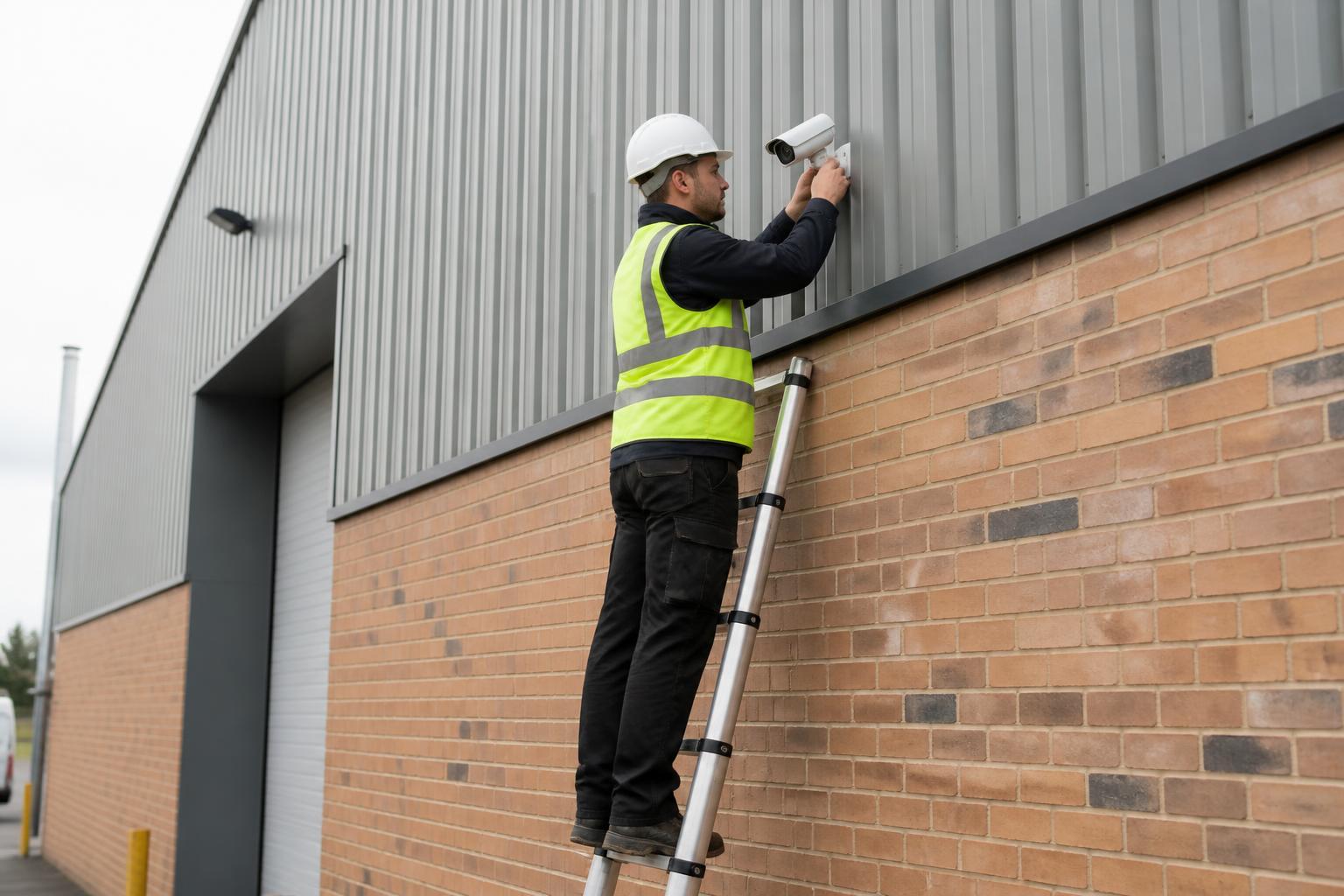
Also run guarding or keyholding? Those services need different cover. See insurance for security firms or look through other trade insurance.
- Intruder alarm installers: certificated firms fitting and maintaining alarms for homes and businesses, including systems with police response
- Fire detection and alarm contractors: design, installation and servicing of fire alarm systems for offices, care homes, schools and industrial sites
- CCTV and video surveillance installers: cameras, recorders and remote viewing for warehouses, yards, retail parks and construction sites
- Access control and door entry firms: fob, card and biometric access for offices, apartment blocks and multi-tenant buildings
- Nurse call and warden call installers: call systems in care homes, hospitals and other healthcare settings, where a failure can lead to injury claims
- Electrical contractors with a security division: firms that install alarms and CCTV alongside general electrical work
- Integrated security systems firms: large projects combining intruder, fire, CCTV and access control, often under a main contractor
- Smart home and domestic security installers: connected alarms, cameras and video doorbells, where customer data and remote access add cyber exposure
How much does alarm and CCTV installers insurance cost?
Premiums start from your turnover and wage roll, then reflect what you install and who for. These factors move the price most.
Systems you install
Fire detection and nurse call systems carry heavier failure to perform exposure than CCTV or door entry, and insurers rate them accordingly.
Customer profile
Jewellers, cash handling businesses, high value warehouses and care homes carry more weight than ordinary offices and homes.
Certification and standards
Recognised certification, documented design procedures and commissioning records reduce the uncertainty insurers price in.
Design responsibility
Firms that design systems, rather than installing to a consultant's specification, need more professional indemnity cover.
Codes, keys and remote access
Holding customers' keys and codes, or connecting to their systems remotely, adds dishonesty and cyber exposure.
Limits and claims
The liability and indemnity limits your contracts demand, and any past claims, finish off the price.
What alarm and CCTV installers insurance usually excludes
These are the exclusions most likely to matter to a security or fire installer.
- Failure of a system to perform, under general trade policies that are not written for security installers
- Systems you did not install or maintain, or work outside the activities you declared
- Losses where the customer did not set the alarm or the system was switched off
- Theft by your own staff, unless crime and fidelity cover has been added
- Guarding, keyholding and alarm response, which need security firm insurance
- Cyber attacks on systems you connect to remotely, unless a cyber policy is in place
- Fines or contract penalties for missed maintenance visits
Installing systems or providing guarding: how the cover differs
Installation and guarding are both security work, but they are insured in very different ways.
| Feature | Alarm and CCTV installers | Guarding and keyholding firms |
|---|---|---|
| Main activity | Designing, fitting and maintaining systems | Guarding, patrols, keyholding and response |
| Key liability | A system that fails to detect or signal | Officers who fail to prevent a loss or make an error on patrol |
| Professional cover | Design and specification of systems | Advice, risk assessments and contract performance |
| Employee exposure | Engineers working at height and with electrics | Officers facing confrontation and lone working |
| Keys and access | Codes and keys held to service systems | Keys held to attend alarms and lock up sites |
How to get alarm and CCTV installers insurance quotes
Insurers rely on detail about your systems and controls, so it pays to prepare before you ask.
Split turnover by system type
Show your turnover from intruder, fire, CCTV, access control and call systems, and between installation and maintenance.
Set out your certification
Note your certification body, the standards you install to and how design and commissioning are recorded.
List customers and sectors
Highlight high value, high risk or vulnerable customers, such as jewellers, cash centres and care homes.
Explain codes, keys and access
Describe what you hold for customers, how it is stored, and any remote access to panels or cameras.
Compare the detail
Check failure to perform cover, professional indemnity limits, height conditions, cyber and dishonesty cover.
Speak to a security trade specialist
Describe your systems, engineers and contracts, and a broker who handles security installers will compare terms.
Compare quotesAlarm and CCTV installers insurance FAQs
How much does alarm and CCTV installers insurance cost?
It depends on the systems you install, your turnover and wage roll, the customers you serve, your certification, whether you design systems, the codes and keys you hold and your claims history. Fire and nurse call work usually costs more to insure than CCTV or door entry.
Am I covered if an alarm I installed fails during a burglary?
Usually only if your policy includes failure to perform cover, sometimes called efficacy cover, and your negligence contributed to the loss. Many general liability policies exclude losses caused by a product not doing its job, so this is the first thing to check on any quote for a security installer.
Do fire alarm installers need different cover from intruder alarm installers?
The same type of policy can cover both, but insurers treat fire detection as a heavier risk because a failure can lead to injury and major property loss. Fire alarm design work also calls for professional indemnity with a limit that suits the buildings you protect.
Does certification affect my insurance?
Yes. Insurers favour firms with recognised certification, such as NSI or SSAIB, documented design and commissioning procedures and screened engineers. Some customers' insurers and police response arrangements also expect a certificated installer.
Is professional indemnity insurance needed by alarm installers?
If you design or specify systems, it usually is. Public liability covers physical damage and injury, while professional indemnity covers financial loss from poor design, such as a CCTV system that cannot identify intruders or a fire alarm category unsuited to the building.
Are customers' keys and alarm codes covered if they are lost or stolen?
A security installer's policy can pay for new locks and system resets, and liability arising from codes or keys you hold. Cover for theft by your own engineers needs a separate crime and fidelity policy.
Does the policy cover cyber risks from remote access to customers' systems?
Usually not. If your engineers or monitoring platform connect to customers' panels or cameras remotely, a cyber policy is worth considering for data breaches, system compromise and the costs of responding to an incident.
Does this policy cover CCTV installers who do not fit alarms?
Yes. CCTV installers buy the same liability, professional indemnity and equipment cover. Insurers focus on work at height on poles and walls, cable routes through customers' buildings, recorded footage and remote viewing access, and any claim that a camera system failed to capture an incident.
Can I add keyholding or alarm response to an alarm installers policy?
Some schemes allow limited keyholding, but most treat response and guarding as security firm activities with their own cover. Tell the broker about any response work so it is placed on the right policy.
How do I get an alarm and CCTV installers insurance quote?
Choose the compare button on this page and you will be passed to our partner, whose broker will call to discuss your firm. Prepare your turnover by system type, wage roll, certification, customer sectors, how codes and keys are held, and any past claims.
Compare cover for your alarm and CCTV installation business
Liability, failure to perform and design cover arranged for firms whose systems protect other people's premises.