Environmental Liability Insurance for sites and contractors
Cover for pollution clean-up and the claims that follow, including the gradual leaks and contamination that a public liability policy leaves out. Compare environmental cover through specialist brokers who understand sites, processes and contracting work.
- Gradual and sudden pollution covered
- Clean-up of your own site and neighbouring land
- Restoration of damaged rivers, habitats and wildlife
Reviewed October 2026 by the MyBusinessComparison.com editorial team
What is environmental liability insurance?
Environmental liability insurance pays to clean up pollution caused by your business and to meet the claims that follow. It covers contamination of land, water and air, whether sudden or gradual, including clean-up of your own site, restoration of damaged habitats and claims from neighbours and environmental regulators.
It exists because most public liability policies only cover pollution caused by a sudden, identifiable, unintended and unexpected incident, and only for injury or damage to others. A diesel tank that seeps for months, or contaminated run-off that slowly reaches a stream, can fall outside that cover entirely.
Regulators such as the Environment Agency, Natural Resources Wales, the Scottish Environment Protection Agency and the Northern Ireland Environment Agency can require a business to investigate, clean up and restore damage at its own expense. Those costs can arise even where nobody has made a claim against you.
Environmental liability at a glance
- Covers
- Sudden and gradual pollution of land, water and air
- Clean-up
- On your own site, on neighbouring land and in watercourses
- Restoration
- Repairing damage to protected species, habitats, water and land
- Main forms
- Site-based cover, contractors' pollution cover, or both
- Insurers check
- Substances stored, site history, drainage and containment
- Not usually covered
- Contamination known before the policy started
What does environmental liability insurance cover?
Policies are written around a site, an activity or both. These are the sections most UK environmental policies offer.
Gradual pollution
Contamination that builds up over time, such as a slow leak from a tank, pipe or drain, which most liability policies exclude.
Own site clean-up
Investigating and removing contamination on land you own or occupy, when the pollution came from your activities or is found during the policy.
Read more about commercial property insurance
Third party claims
Injury, property damage and loss of use claims from neighbours and others affected by pollution from your site or work.
Read more about public liability insurance
Biodiversity and water damage
Restoring rivers, groundwater, protected habitats and species when a regulator requires the damage to be repaired.
Contractors' pollution
Pollution caused by your work on a client's site, such as a burst fuel line on a groundworks job or contaminated spoil disturbed during excavation.
Read more about contractors' all risks cover
Pollution in transit
Spills of fuel, chemicals or waste while carried in your vehicles or by hauliers on your behalf, beyond what the motor policy covers.
Read more about HGV and haulage insurance
Legal and defence costs
Representing the business in investigations, enforcement action and prosecutions linked to a covered pollution event.
Read more about commercial legal expenses cover
Business interruption
On some policies, lost income when a pollution event or clean-up stops you trading from the site.
Read more about business interruption insurance
Optional additions
- Emergency response costs: immediate action to contain a spill and stop it spreading, before the full claim is agreed
- Mould and legionella: claims from contaminated water systems or mould, which some policies include and others exclude
- Historic contamination: pollution from before your ownership, sometimes insurable where a site investigation has been done
- Property transaction cover: protection for buyers, sellers and lenders on land with a known history
Who needs environmental liability insurance?
Any business that stores fuel or chemicals, handles waste or works on land and near water. These are the firms that buy it most often.
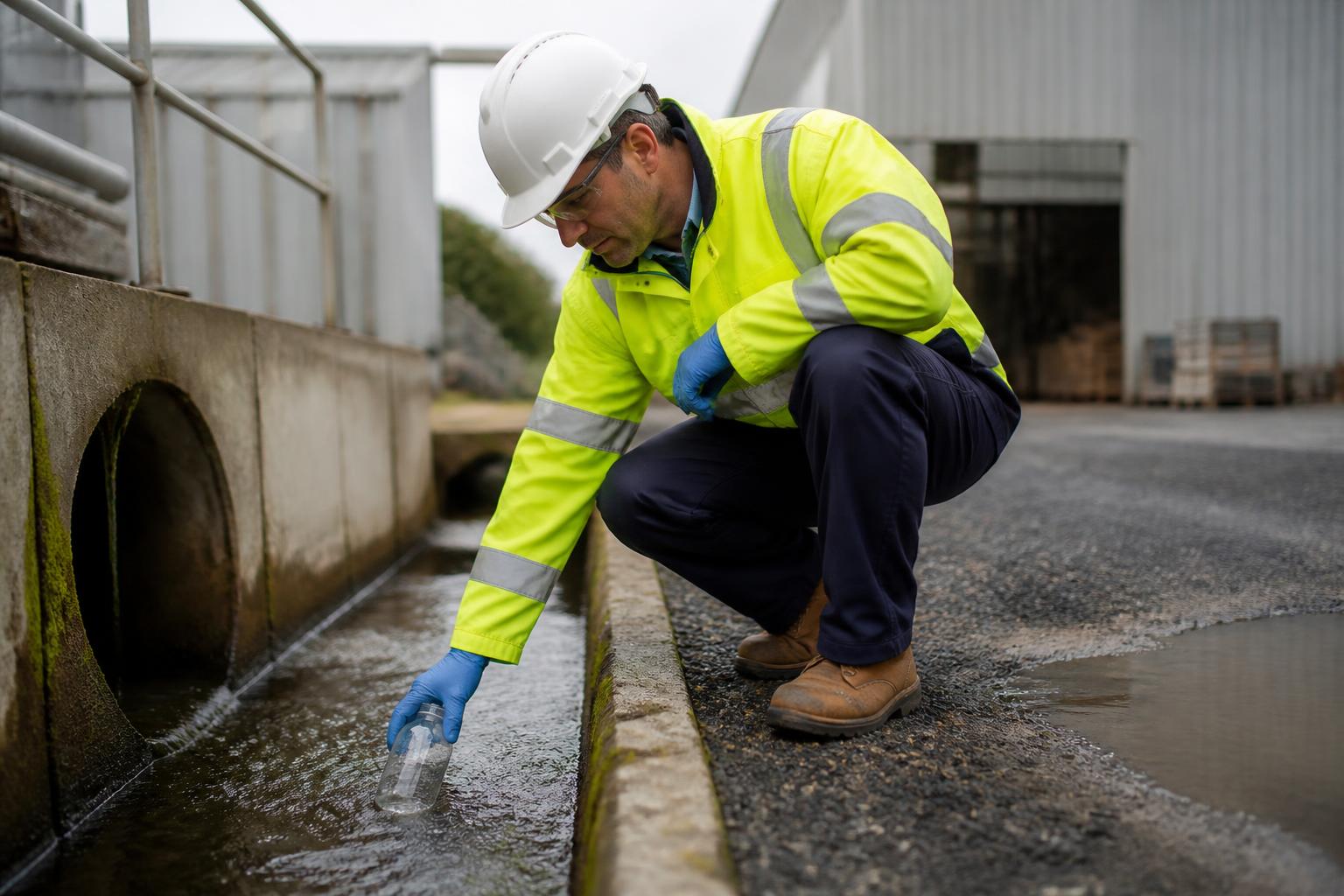
Work on other people's sites? Contractors need pollution cover that follows them to each job. See cover for construction companies or civil engineering insurance.
- Manufacturers: chemicals, solvents and process water stored and used on site
- Skip hire and waste firms: mixed waste, run-off from yards and materials moving off site
- Farms and agricultural businesses: slurry, fuel, fertilisers and pesticides close to watercourses
- Groundwork contractors: excavation, dewatering and disturbing contaminated ground
- Civil engineering firms: major works near rivers, sewers and protected sites
- Hauliers and fuel distributors: fuel and chemical loads where a spill can reach drains and land
- Warehouse and storage operators: stored chemicals, fire water run-off and leaking stock
- Motor traders and garages: oil, fuel, coolant and interceptor drains
- Dry cleaners: cleaning solvents that can contaminate ground and groundwater over time
- Commercial landlords: tenants' activities and contamination left behind at let industrial units
- Property developers: brownfield sites with historic contamination and remediation work
- Engineering firms: workshops using oils, coolants and metal treatments
How much does environmental liability insurance cost?
Insurers look at what could escape, where it would go and how well it is contained. These are the factors that matter most.
Activities and substances
The type and quantity of fuel, chemicals or waste you store or handle is the starting point for any quote.
Site history
Previous uses of the land, past spills and any environmental reports on the site affect both the price and what can be covered.
Location
Nearness to rivers, groundwater, homes and protected habitats increases the potential cost of clean-up.
Containment and drainage
Bunded tanks, interceptors, spill kits and drainage plans reduce the chance of pollution spreading.
Permits and inspections
Environmental permits, inspection findings and any enforcement history are reviewed closely.
Limit and policy form
The limit you need, whether cover is site-based or for contracting work, and the excess all change the premium.
What environmental liability insurance does not cover
Exclusions differ more than on most liability covers. These are the ones to check.
- Contamination known to you, or recorded in a site report, before the policy started
- Deliberate breaches of permits or deliberate discharges
- Fines and penalties imposed by regulators or courts
- Gradual deterioration of your own tanks, pipes and plant, as opposed to the pollution it causes
- Pollution from vehicles on the road, which usually falls under the fleet policy
- Asbestos removal and asbestos-related injury, unless specifically agreed
- Sites that are not listed on the schedule, for site-based policies
Environmental liability or public liability pollution cover?
Many firms assume their public liability policy deals with pollution. It usually does only in part, as this comparison shows.
| Feature | Environmental liability | Public liability |
|---|---|---|
| Gradual pollution | Covered | Usually excluded |
| Sudden pollution | Covered | Usually covered if sudden, identifiable, unintended and unexpected |
| Clean-up of your own site | Covered on most site policies | Not covered |
| Damage to habitats and water | Restoration required by regulators is covered | Usually not covered |
| Injury and property claims | Covered when caused by pollution | Covered for most incidents |
| Usually suits | Sites storing fuel, chemicals or waste, and contractors working on land | Every business dealing with the public |
How to compare environmental liability insurance
Environmental insurers need a clear picture of your sites and work. This is what to gather first.
List your sites
Each site's use, size, previous uses and distance from watercourses, homes and protected areas.
Record substances
Fuel, chemicals, waste and other hazardous materials, with storage methods and typical quantities.
Show your controls
Bunding, interceptors, spill procedures, permits and recent environmental inspections or audits.
Describe contract work
For contractors, the type of work, typical sites and any contract requirements for pollution cover.
Compare the trigger
Check whether cover is claims made or occurrence based, any retroactive date and how known contamination is treated.
Get pollution cover arranged
Tell us about your sites, the substances you use and the work you do, and a broker will compare pollution cover.
Compare quotesEnvironmental liability insurance FAQs
How much does environmental liability insurance cost?
It depends on your activities, the substances you store, your site history, nearness to water and homes, your containment and the limit you choose. A small engineering workshop and a waste transfer site will be priced very differently. A broker can explain what drives your quote.
Does public liability insurance cover pollution?
Usually only in part. Most public liability policies cover pollution only where it results from a sudden, identifiable, unintended and unexpected incident, and only for injury or damage to others. Gradual pollution, clean-up of your own land and damage to habitats are normally excluded.
What is gradual pollution?
It is contamination that builds up slowly, such as a leaking underground tank, a cracked drain or repeated small spills soaking into the ground. Because nobody can point to a single incident, standard liability policies tend to exclude it.
Do contractors need environmental liability insurance?
Many do, particularly groundworks, demolition, civil engineering and drainage firms. Contractors' pollution cover follows you to each site and responds when your work causes or worsens contamination. Main contractors and public bodies increasingly ask for it in contracts.
Can we insure a site that is already contaminated?
Sometimes. Known contamination is normally excluded, but insurers may cover unknown pollution on the same site, or historic contamination where a recent site investigation sets out the condition of the land. It is a question for a specialist broker.
Does it pay regulators' fines?
No. Fines and penalties are generally not insurable. The policy can pay for defence costs and for investigation, clean-up and restoration work required by a regulator after a covered pollution event.
Is it the same as environmental impairment liability?
Yes, broadly. Environmental impairment liability is an older name for site-based pollution cover. Today most insurers use environmental liability or pollution liability, and offer site cover, contractors' cover or a combination of both.
Do landlords need environmental liability cover?
Landlords of industrial units, yards and petrol sites can be pursued for contamination caused by tenants, especially when a tenant has gone. Site-based cover can protect the owner, and lenders and buyers often ask about it.
How do I get an environmental liability quote?
Pass your details to us through this page and a broker who handles pollution risks will take it from there. Have your site details, substances stored, containment measures, permits and any site reports ready so insurers can assess the risk quickly.
Ready to compare environmental liability insurance?
Pollution cover for your sites and your work, arranged by a broker who knows what environmental insurers need to see.