Drilling Contractors Insurance for drilling and boring firms
Drilling contractors insurance for firms running rigs, drill crews and support vehicles on borehole, coring and ground investigation contracts. Compare cover that deals with buried services, aquifers, rigs and tooling that does not always come back up.
- Liability for service strikes, fluid breakouts and ground damage
- Rigs and tooling, with options for equipment lost downhole
- Professional indemnity for logs, reports and borehole design
Reviewed October 2026 by the MyBusinessComparison.com editorial team
What is drilling contractors insurance?
Drilling contractors insurance is a policy for firms that drill boreholes, take cores or bore through ground and structures for clients. Most policies pair public and employers' liability with cover for rigs and tooling, contract works and pollution, and are shaped around drilling risks: struck services, contaminated groundwater, damaged slabs and tools lost below ground.
Insurers want to know what you drill, where and how deep. Water and ground source heat pump boreholes, site investigation, concrete coring inside occupied buildings and directional drilling under roads each produce different claims, so the activity split drives both the terms and the price. Bulk excavation and foundations belong on groundwork contractors insurance instead.
Drilling contractors insurance at a glance
- Suits
- Borehole, coring, site investigation and directional drilling firms
- Core sections
- Public and employers' liability, rigs and tooling, contract works, pollution
- Compulsory part
- Employers' liability for drillers, assistants and support crews
- Key questions
- Depths, drilling methods, services checks, aquifer protection and fluids
- Priced on
- Activities, turnover, wage roll, rig values and claims history
- Often added
- Professional indemnity for logs and interpretation
What does drilling contractors insurance cover?
Drilling firms usually put these sections together. Insurers attach conditions to service tracing, fluid control and tooling below ground, so each one is worth reading with care.
Public liability
Claims from people hurt or property damaged by your work, such as a rig sinking into a client's lawn and cracking a drive, drilling fluid surfacing in a road, or a core cut through a neighbour's pipework.
Read more about public liability insurance
Underground and embedded services
Strikes on buried cables, gas mains and water pipes, and on services hidden in floors and walls during coring. Insurers usually set conditions on scanning and service plans before drilling starts.
Employers' liability
Injury to drillers and crews from rotating rods, rig movement and manual handling, plus noise, vibration and silica dust from coring concrete and rock.
Read more about employers' liability insurance
Rigs and support plant
Drilling rigs, compressors, mud pumps, generators and site vehicles, owned or hired in, against theft, fire, overturning and accidental damage.
Read more about plant and machinery insurance
Rods, casing and tooling
Drill rods, bits, core barrels, casing and samplers at the yard and on site. Many plant policies exclude equipment lost or stuck below ground, so downhole cover is a specific extension to ask about.
Pollution and groundwater
Sudden contamination from drilling fluids, fuel or cuttings, including opening a path between separate bodies of groundwater by mistake. Clean-up of an aquifer can be costly and some insurers cap it.
Read more about environmental liability cover
Contract works
Boreholes, wells, headworks and ground loops under construction. Some insurers will pay to redrill after sudden collapse or damage, while others exclude it, so this section is worth comparing.
Read more about contract works insurance
Logs, reports and design
Errors in borehole logs, ground investigation reports, yield estimates and borehole designs that cause a client financial loss. This is professional indemnity cover, not liability.
Read more about professional indemnity insurance
Other cover drilling firms often add
- HGV insurance: for lorry-mounted rigs, rig transporters and support lorries on the road
- Engineering inspection: thorough examination of rig masts, winches and lifting gear
- Commercial legal expenses: contract disputes over delays, dry holes and unpaid retentions
- Group personal accident: fixed benefits for crews hurt while working away on remote sites
Which drilling firms is this cover for?
Drilling ranges from coring crews inside buildings to rig fleets on infrastructure sites. The usual buyers are listed below.
Hiring rigs out? Rigs supplied to other contractors are covered on our plant hire insurance page. For other trades, see insurance for trade firms.
- Borehole drilling contractors: water supply boreholes for farms, estates, food producers and industrial users, from drilling through to pump installation
- Ground source heat pump drillers: closed loop boreholes for heating engineers and renewable installers, often on tight sites
- Ground drilling and site investigation firms: window sampling, cable percussion and rotary coring for engineers, developers and civil engineering contractors
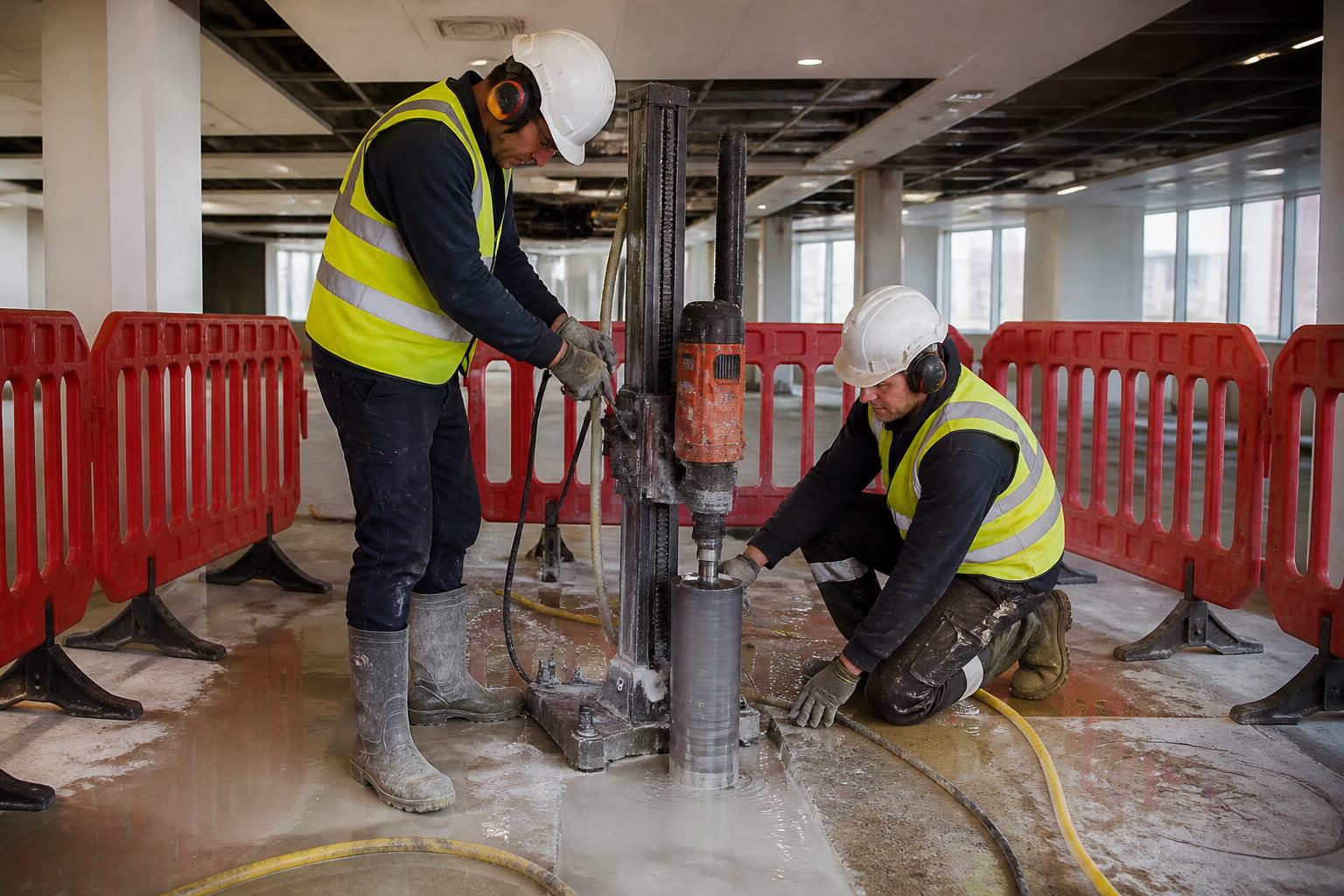
- Core drilling contractors: diamond coring and sawing through slabs and walls in occupied offices, hospitals and factories for main contractors and services trades
- Directional drilling contractors: trenchless ducting under roads, railways and rivers for utilities and networks built by telecoms engineers
- Environmental and monitoring well drillers: gas and groundwater monitoring wells and remediation boreholes on contaminated land
- Rock drilling and anchoring firms: rock anchors, soil nails and slope stabilisation for highways and rail
- Mineral exploration drillers: exploratory coring for quarries and mineral surveys, often on remote sites
How much does drilling contractors insurance cost?
Drilling is underwritten activity by activity. These are the points that move a drilling firm's premium most.
Drilling methods
Rotary, percussion, sonic, directional and diamond coring carry different hazards, and insurers rate each one separately.
Depth and ground conditions
Deep boreholes, artesian water, contaminated land and unstable ground raise both liability and contract works exposure.
Where you drill
Rigs in open fields are rated differently from coring in occupied buildings, under live roads or beside railway lines.
Services and aquifer controls
Insurers look at how you trace services, scan slabs, manage drilling fluids and seal boreholes to protect groundwater.
Rig and tooling values
Owned rigs, rods and casing, annual hire spend and whether you want downhole cover all feed into the plant premium.
Interpretation work
Firms that log, test and report on ground conditions need professional indemnity, priced on fees and the type of advice given.
What drilling contractors insurance does not usually cover
These are the gaps drilling firms most often find when a job goes wrong.
- Tools, rods and casing lost or stuck below ground, unless downhole cover has been agreed
- Redrilling a hole that failed because of your own faulty technique or materials
- Dry holes and low yields, where the borehole was drilled properly but the water was not there
- Gradual contamination of groundwater, which sits under environmental liability insurance
- Damage to services where the policy's scanning or tracing conditions were not met
- Advice, logs and reports, unless professional indemnity is in place
- Road journeys by lorry-mounted rigs and support lorries, which belong on a fleet or HGV policy
Drilling to a specification or advising on the ground?
Many drilling firms do both: they drill where they are told, and they log, test and report on what they find. The two sides of the work fall under different policies.
| Feature | Drilling to the client's specification | Logging, testing and reporting |
|---|---|---|
| What you deliver | A hole, core or bore to the agreed depth and position | Logs, test results, interpretation and recommendations |
| Typical claim | A rig strikes a gas main or drilling fluid floods a basement | A missed soft layer leads to redesigned foundations and delay |
| Policy that responds | Public liability and contract works | Professional indemnity |
| Type of loss | Injury and physical damage | Financial loss to the client |
| What insurers ask | Methods, depths, service checks and fluid control | Qualifications, report checking and fee income |
How to compare drilling contractors insurance
Drilling proposals ask for more detail than most trades. Preparing these points shortens the process.
Describe each drilling activity
Split turnover across water boreholes, ground source, site investigation, coring, directional drilling and anything else you do.
State depths and locations
Give typical and maximum depths, and how much work is inside buildings, in the highway or near railways and rivers.
Explain your controls
Cover service tracing, slab scanning, fluid management, borehole sealing and supervision of each rig.
Schedule rigs and tooling
List rigs, compressors and support plant with values, rods and casing stock, and road vehicles for motor cover.
Say what advice you give
Explain whether you log, test, interpret or design, and how reports are checked before issue.
Quotes for drilling firms
Describe your rigs, methods and contracts, and a broker who places drilling risks will gather terms.
Compare coverDrilling contractors insurance FAQs
How much does drilling contractors insurance cost?
Drilling methods, depths, where the work happens, how you protect services and groundwater, the value of your rigs and tooling and your claims record all count. Coring inside a busy hospital and drilling water boreholes on a farm are rated in quite different ways, and a broker can explain which factors weigh most for your firm.
Does drilling contractors insurance cover borehole drilling for water supply?
Yes, where it is declared. Insurers will ask about depths, how boreholes are lined and sealed, and whether you also install pumps and headworks. A dry hole or poor yield is not an insured loss, so client contracts need to deal with that risk separately.
Is core drilling inside occupied buildings covered?
It can be, under public liability. Insurers focus on how you scan slabs and walls for cables, pipes and post-tensioned tendons before cutting, and how you control slurry and water. Cutting a tendon or flooding the floor below are the claims they worry about.
Are tools lost down a borehole covered?
Not under most standard plant policies, which exclude equipment lost or stuck below ground. Some specialist insurers offer downhole cover for rods, bits and casing, usually with its own excess and conditions. If you drill deep or in difficult ground, ask the broker to include it.
Do ground drilling contractors need professional indemnity?
If you only drill to someone else's specification, often not. Once you log cores, run tests, interpret results or recommend designs, a client can claim for financial loss if you get it wrong, and that needs professional indemnity alongside your liability cover.
Is pollution from drilling fluids covered?
Sudden and accidental pollution, such as bentonite breaking out into a stream during directional drilling, is often covered under public liability, sometimes with a lower limit. Gradual contamination and slow mixing of separate groundwater layers usually need an environmental liability policy.
Are our rigs covered while being moved between sites?
Carried as a load, usually yes, if your plant cover includes transit. Lorry-mounted rigs and rigs driven on the public road under their own power need motor insurance, so they normally sit on a commercial vehicle or fleet policy.
What if a borehole collapses before it is finished?
Contract works cover may pay to redrill after sudden collapse or damage from an insured cause. It will not usually pay where the cause was poor technique or unsuitable casing. Insurers differ on this, so compare the contract works section closely.
How do I get a drilling contractors insurance quote?
Fill in the short enquiry form here and a broker experienced in placing drilling risks will be in touch. Have your activity split, typical and maximum depths, rig and tooling schedule, service checking procedures and any past strikes or pollution incidents ready, so insurers can be approached straight away.
Ready to compare drilling contractors insurance?
Cover for your rigs, your crews and the ground and groundwater you drill into, placed with insurers that understand drilling.