Construction Company and Contractors Insurance for main contractors
An insurance programme for construction companies that win contracts, manage subcontractors and hand over finished buildings. Compare contractors' combined policies and the covers your clients will write into the contract.
- Works, public and employers' liability under one contractors' combined policy
- Non-negligence and design cover for JCT and design and build contracts
- Limits set to the largest contract you plan to tender for
Reviewed October 2026 by the MyBusinessComparison.com editorial team
What is construction company insurance?
Construction company insurance is the set of policies a main contractor holds to win and deliver building contracts. At its centre is a contractors' combined policy covering the works, public liability and employers' liability, usually with non-negligence, professional indemnity and cover for plant, offices and vehicles arranged around it.
As main contractor you carry the risks of the whole site: your own staff, every subcontractor, the public, neighbouring buildings and the works until handover. Clients set many of the insurance terms through the contract, so the programme is built from your contracts outwards rather than from a standard package.
Firms that mainly subcontract or work as a specialist trade usually need a narrower package, set out on our construction and tradesman insurance page.
Construction company insurance at a glance
- Suits
- Main contractors, design and build contractors and housebuilders
- Core policy
- Contractors' combined: works, public and employers' liability
- Contract covers
- Non-negligence, joint names and indemnity to the client
- Built around
- Annual turnover, largest contract value and subcontract spend
- Compulsory part
- Employers' liability for your workforce
- Not included
- Design errors, unless professional indemnity is added
What does a construction company insurance programme cover?
Most contractors hold a combined policy at the core and add the covers their contracts and operations call for. A broker will usually review your standard contract terms first.
Contract works
Physical damage to the works and materials on every site until handover, usually in joint names with the client where the contract requires it.
Read more about contractors' all risks insurance
Public liability
Claims from passers by, neighbours and site visitors hurt or left with damaged property, including incidents caused by your subcontractors.
Read more about public liability insurance
Employers' liability
Injury and illness to your direct employees and labour-only subcontractors, often the largest claims a contractor faces.
Read more about employers' liability insurance
Non-negligence cover
Protects the client when your works damage a neighbouring property through collapse, subsidence or vibration without anyone being negligent. JCT contracts often ask for it.
Professional indemnity
Design errors and negligent advice on design and build contracts, including design work you pass to subcontractors or consultants.
Read more about professional indemnity insurance
Plant, owned and hired
Excavators, cranes, access equipment and site accommodation, with cover for hired-in plant and continuing hire charges.
Read more about plant and machinery insurance
Fleet
Vans, pickups and plant lorries on one fleet policy, separate from the construction policy.
Read more about fleet insurance
Directors and management
Defence costs when directors face a safety investigation, plus employment disputes and claims over decisions that affect investors or creditors.
Read more about management liability insurance
Covers clients and funders often ask about
- Environmental liability: pollution clean up on sites with contaminated ground or fuel storage
- Commercial combined cover: head office, depot, stores and workshop under one property policy
- Group personal accident: benefits for site staff and managers injured on or off the job
- Commercial legal expenses: legal costs in contract disputes, though many policies limit or exclude construction adjudication
Which construction companies need this cover?
If you sign the main contract and control the site, you carry the risk for everyone on it. These are the contractors who buy a full programme.
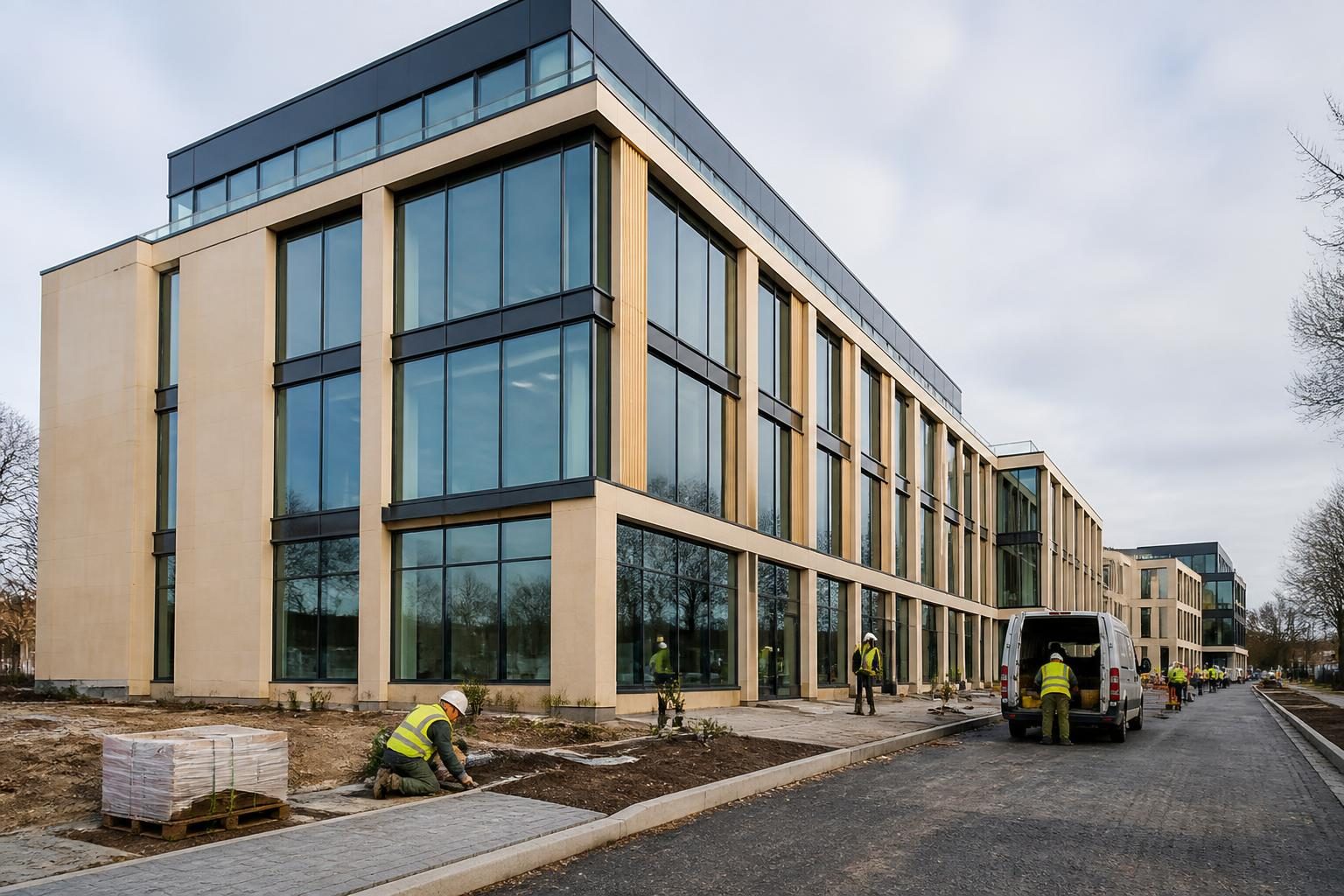
Mainly a subcontractor? Trade and specialist firms are covered on our construction and tradesman insurance page, and individual trades on the trades hub.
- Commercial main contractors: offices, schools, healthcare and retail buildings under JCT and NEC contracts
- Design and build contractors: who take on design responsibility under the contract, so need professional indemnity alongside the works and liability cover, and often design input from consultants they appoint
- Housebuilders: contractors building new homes on estates and infill plots, often with structural warranties for buyers
- Developers acting as contractor: building on their own land, where the development and the build risks sit together
- Refurbishment and fit out contractors: working in occupied or listed buildings, where the existing structure needs careful arrangement
- Infrastructure contractors: roads, utilities and drainage packages, with cover for underground services and vibration
- Modular and timber frame builders: who make components off site and erect them, combining factory and site risks
- Housing repair contractors: planned maintenance and void works for councils and housing associations
- Building services contractors: electrical and mechanical firms that take the lead role on services-heavy projects
- Framework contractors: public sector frameworks that set minimum liability limits for every contractor on the list
How much does construction company insurance cost?
Insurers look at the contractor behind the numbers as much as the numbers themselves. These factors carry the most weight.
Turnover and subcontract spend
Liability is rated on turnover and on how much work is passed to subcontractors, with checks on whether they carry their own insurance.
Largest contract and type of build
Maximum contract value, height, basement depth and construction type set the works rating and any project referrals.
Wage roll
Direct staff and labour-only subcontractors drive the employers' liability section, split between site and office roles.
Contract terms
Joint names, waivers of recovery, high liability limits and onerous indemnities all add to the exposure insurers price.
Health and safety management
Accreditations, site audits, near miss reporting and subcontractor vetting show insurers how risk is controlled.
Claims experience
Insurers look at frequency and size of claims across the programme over several years, and what changed afterwards.
What construction company insurance does not cover
The gaps that hurt main contractors usually come from contracts, not accidents. These are the ones to watch.
- Liquidated damages and penalties for late completion
- Liability you accept under a contract that goes beyond what you would otherwise owe, unless the insurer has agreed it
- Design and specification errors, unless professional indemnity is in place
- Contracts above the value, height or depth limits of your annual policy, unless declared and agreed
- The cost of putting right defective work
- Gradual pollution, which needs environmental liability cover
- Vehicles used on the road, which sit on a separate fleet policy
Annual contractors' policy or a project-specific policy?
Most contractors run an annual policy and buy project cover for the jobs that fall outside it. This is how the two differ.
| Feature | Annual contractors' policy | Project-specific policy |
|---|---|---|
| Scope | Every contract started in the year, up to set limits | One named project from start to handover |
| Who arranges it | The contractor | The contractor or, on larger schemes, the client |
| Parties insured | The contractor, with clients and subcontractors noted as contracts require | Often the client, contractor and subcontractors together |
| Period | Renews each year | The build period plus the defects period |
| Usually suits | A steady flow of similar contracts | Large, long or unusual projects |
How to compare construction company insurance
A broker can only match the programme to your contracts if they see them. Gather this before you ask for terms.
Collect your contract terms
Standard insurance clauses from recent contracts and frameworks, including limits, joint names, waivers and indemnities.
Set your contract limits
The largest contract value, height, depth and build period you plan to tender for over the next year.
Show your subcontract controls
How you vet subcontractors, check their insurance and manage them on site.
Pull together your figures
Turnover, subcontract spend, wage roll split, plant values and a claims history covering several years.
Compare the whole programme
Check how the works, liability and design covers fit together, and where each one stops, before comparing price.
Tendering for a bigger contract?
Share your turnover, contract sizes and the work you deliver, and a construction broker will compare programmes.
Compare quotesConstruction company insurance FAQs
How much does construction company insurance cost?
It depends on your turnover, subcontract spend, wage roll, the largest contract you take on, the type of build and your claims record. Contract terms such as high limits and broad indemnities also add cost. A broker can show which parts of the programme drive the premium.
What is a contractors' combined policy?
It is a single policy that brings together contract works, public liability and employers' liability for a construction company, often with plant and temporary buildings added. Having these with one insurer avoids arguments over which policy responds when one incident damages the works and injures someone.
What is non-negligence insurance and when is it needed?
It covers the client when your works damage a neighbouring property through collapse, subsidence, vibration or removal of support, and nobody was negligent. Ordinary public liability only responds where you are liable, which usually means at fault. JCT contracts often require it on sites near other buildings.
Do we need professional indemnity on design and build contracts?
Usually, yes. Once you take on design responsibility, neither the works nor the liability cover responds when a design mistake simply costs the client money. Professional indemnity covers that, including design passed to subcontractors and consultants, so check their cover as well.
How do insurers treat our subcontractors?
Labour-only subcontractors are normally covered as your employees. For bona fide subcontractors, most policies require you to check they hold their own liability cover at suitable limits. If you do not, your insurer may refuse to pay for claims they cause.
Can our policy name the client or give them an indemnity?
Most contractors' policies can note the client's interest and extend cover to them, often called indemnity to principals. Many contracts also ask for joint names on the works cover. A broker should check each contract's requirements against the policy before you sign.
What if a contract is bigger than our annual policy allows?
Declare it to your insurer before you sign. They may extend the annual policy for that contract, or you may need a project-specific policy. Starting work without agreeing it can leave the works and liability for that site uninsured.
Does the programme cover our offices, depot and vehicles?
Not as standard. Offices, depots and stores usually sit on a property or commercial combined policy, and vehicles on a fleet policy. A broker can line up renewal dates so the whole programme is reviewed together.
Do design and build contractors need extra cover?
Yes. Design and build contractors take responsibility for the design as well as the build, so a works and liability policy alone leaves a gap. Professional indemnity covers losses from design errors, including those of consultants you appoint, and clients usually set the limit in the contract.
How do I get a construction company insurance quote?
Request terms with the quote button and a broker experienced with main contractors will arrange a call. Their first questions will cover turnover, subcontract spend, wage roll, your largest contract, the insurance clauses you usually sign and several years of claims.
Ready to compare construction company insurance?
Works, liability, non-negligence and design cover arranged as one programme, by brokers who read your contracts before they quote.