Plasterers Insurance for plastering contractors
Plasterers insurance for plastering, drylining and rendering contractors with teams on several sites, spray machines, access equipment and materials on order. Compare cover that fits the subcontracts and fit-out work you take on.
- Liability for damage to finished work and occupied buildings
- Employers' liability for plasterers, dryliners and labourers
- Board, materials, spray machines and towers covered
Reviewed October 2026 by the MyBusinessComparison.com editorial team
What is plasterers insurance?
Plasterers insurance is cover for plastering, drylining and rendering contractors. It combines public liability for harm to people and property around your work, such as ceilings collapsing or finished floors and joinery being spoiled, with employers' liability for your teams and cover for materials, spray equipment and access kit.
Most established plastering firms work as subcontractors on new build, fit-out and refurbishment, so the main contractor's subcontract sets the liability limit and decides who insures materials and work in progress. External rendering, insulated render systems and fire-rated partitions change the risk, and insurers ask about each one separately. Pebble dashing and roughcast, the traditional thrown external finishes, are rated with rendering.
Plasterers insurance at a glance
- Suits
- Plastering, drylining, rendering and ceiling contractors with employed teams
- Foundation covers
- Public liability with employers' liability
- Often added
- Contract works, materials, spray machines, access equipment, tools
- Insurers ask about
- External render systems, fire-rated work, working height and asbestos
- Priced on
- Wage roll, turnover, work mix, height of work and claims
- Separate cover
- Vans on a vehicle or fleet policy
What does plasterers insurance cover?
A plastering contractor's policy is usually put together from these parts. Whether you need the works and materials sections turns on what the main contractor already insures.
Public liability
Claims from occupants, visitors and other trades, for example plaster splashed over new kitchens, flooring or stonework, or a ceiling falling in an occupied home.
Read more about public liability insurance
Employers' liability
Accidents and illness affecting your plasterers, dryliners and labourers: falls from podiums and towers, back injuries from lifting board, and conditions caused by sanding dust.
Read more about employers' liability insurance
Completed work
Problems that surface once the job is finished, such as a poorly fixed ceiling coming down later or render cracking and letting water into the building.
Read more about products and completed work cover
Contract works
Boarding, plaster and render in progress and materials delivered to site, if a fire, flood, break-in or vandal damages them before the client takes over.
Read more about contractors' all risks insurance
Spray machines and tools
Plaster spray machines, render pumps, mixers, sanders with extraction, stilts and hand tools, at work and in vans.
Read more about business equipment insurance
Access equipment
Owned and hired mobile towers, podiums and scissor lifts, with hire charges while a damaged or stolen item is replaced.
Read more about plant and machinery cover
Board and materials
Plasterboard, metal stud, beads and bagged plaster held in your store or on site, on supply-and-fix jobs where they remain yours until fixed.
Other covers plastering contractors add
- Professional indemnity: where you design partition layouts, specify fire-rated systems or advise on render choice
- Commercial legal expenses: disputed valuations, unpaid retentions and staff disputes
- Group personal accident: a weekly benefit or lump sum when an operative is laid up
- Fleet insurance: vans and a materials lorry on one policy
Which plastering firms is plasterers insurance for?
Any firm earning most of its turnover from plaster, board or render. The list below shows where the cover is most often used.
Other finishing trades? See tilers insurance, flooring contractors insurance or the trades hub.
- Housebuilder plastering subcontractors: boarding, taping and skimming plot by plot on new homes, under subcontracts that set the insurance terms
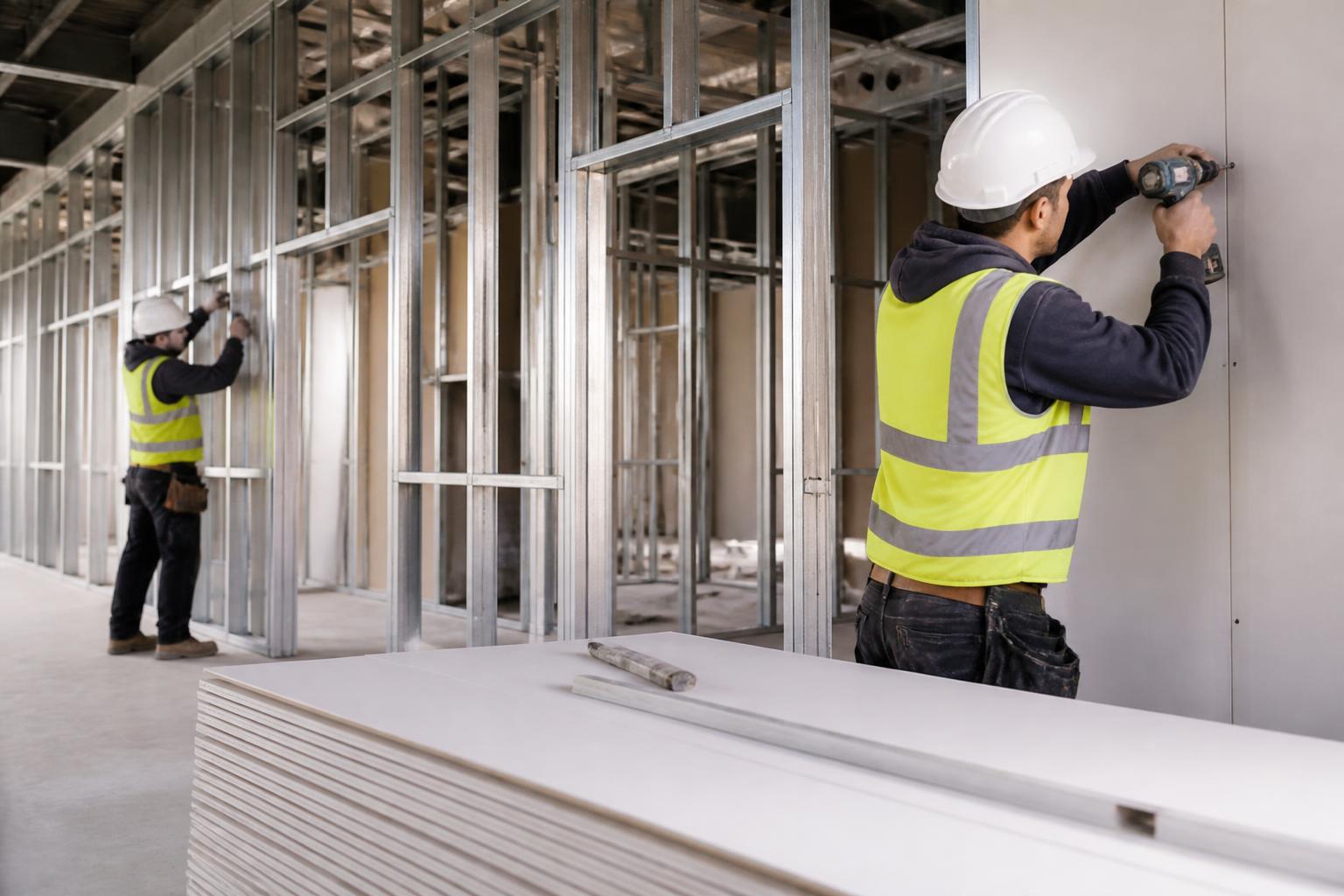
- Drylining and partition contractors: metal stud partitions, suspended ceilings and fire-rated walls for main contractors; firms that only board and partition can see dry lining insurance
- Commercial fit-out plasterers: fast-track work in shops, restaurants and offices, often alongside shop fitters
- External rendering contractors: sand and cement, silicone and insulated render systems on scaffold, where water ingress and cracking are the main claims
- Pebble dashers and roughcasters: dry dash, roughcast and wet dash external render finishes on houses and housing estates, working from scaffold with mixers and spray kit, where overspray onto windows, cars and neighbouring walls is a common claim
- Heritage and lime plasterers: lime plaster, lath and decorative mouldings in older and listed buildings, with high-value existing fabric
- Spray plastering firms: machine-applied plaster on larger projects, where overspray and masking failures drive damage claims
- Refurbishment and repair plasterers: work in occupied homes and premises for property maintenance firms and landlords, where old ceilings and textured coatings need care
How much does plasterers insurance cost?
For plastering contractors, payroll and the kind of finishes applied do most to set the price. Insurers weigh the following.
Wage roll and labour-only spend
Employers' liability is usually the largest part, rated on wages for direct staff and labour-only operatives.
Internal or external work
External render and insulated render systems are rated higher than internal plastering and drylining.
Fire-rated and specialist work
Fire-rated partitions, fire stopping and acoustic systems may need declaring and can change the terms.
Working height
Insurers ask about the maximum height you work at and whether you use towers, podiums, powered access or scaffold.
Turnover and contract types
Liability to the public follows turnover, and a supply-and-fix job is often rated differently from labour-only work.
Claims history
Damage to finished work, ceiling collapses and dust or back injury claims all count. Show what changed afterwards.
What plasterers insurance does not cover
Plastering claims tend to fall foul of the same handful of exclusions.
- Making good your own poor finish, cracking or blown plaster, although resulting damage to other property may be covered
- Disturbing asbestos in old textured coatings or boards, unless covered by a limited extension and handled correctly
- External render or insulated render systems that were not declared
- Fire-rated or fire stopping work outside what you told the insurer you do
- Design or specification of partitions and systems, which needs professional indemnity
- Work above the height limit on your schedule
- Theft of materials from an unsecured site where the policy requires secure storage
Internal plastering or external rendering: how the cover differs
Many plastering firms do both. Insurers see them as different risks, so the policy has to describe each one correctly.
| Feature | Internal plastering and drylining | External rendering |
|---|---|---|
| Typical claims | Damage to finished work, ceiling collapse, dust injuries | Cracking, water ingress and falls from scaffold |
| When problems appear | Usually during or soon after the job | Often a season or more after completion |
| Rating | Standard plastering rate | Higher rate, with insulated systems rated higher again |
| Insurer questions | Height, fire-rated work, asbestos controls | System type, manufacturer approval, scaffold |
| Extra cover worth having | Contract works for board and materials | Completed work cover and professional indemnity for system choice |
How to compare plasterers insurance
Brokers place plastering risks faster with these details ready.
Show where turnover comes from
Plastering, drylining, ceilings, fire-rated partitions and external render, as a share of the total.
Break down your workforce
Separate payroll for employed plasterers from the cost of labour-only operatives and of subcontractors who carry their own cover.
Read the main contracts
Pick out the indemnity limit required on each project and who carries the risk of materials and part-finished work.
List equipment
Spray machines, render pumps, towers and podiums you own, and what you hire in.
Note claims and controls
Past claims, plus how you control dust, protect finished work and check for asbestos in older buildings.
Quotes for plastering contractors
Outline your teams, work mix and main contractors, and a broker familiar with finishing trades will gather terms.
Compare coverPlasterers insurance FAQs
How much does plasterers insurance cost?
Payroll, turnover, the balance of internal and external work, any fire-rated systems, working height and past claims set the price. A drylining firm on commercial fit-out is rated differently from a firm rendering houses from scaffold, and a broker can break down where the cost sits.
Does plasterers insurance cover damage to a client's new kitchen or flooring?
Yes, accidental damage to a client's or other contractor's property, such as plaster spilled on new units or flooring, is normally covered under public liability, subject to the excess. Protecting finished work properly helps keep these claims down.
Is external rendering covered?
Only if you declare it. External render and insulated render systems are rated separately because water ingress and cracking can lead to large claims, sometimes long after completion. Tell the broker which systems you apply.
What if we disturb asbestos in an old ceiling?
Many liability policies exclude asbestos or give only limited cover for accidental disturbance. Textured coatings and boards in older buildings can contain it, so insurers expect a survey or check before work starts, and specialist removal when found.
Are labour-only plasterers covered by my employers' liability?
They can be, provided you declare them. For employers' liability purposes insurers generally count labour-only operatives the same as staff, and that cover is compulsory for firms with employees. Leaving their cost out of the payroll figure risks a dispute with the insurer and an extra premium when it comes to light.
Does plasterers insurance cover pebble dashing and roughcast?
Yes, if declared as external render work. Pebble dashers and roughcasters face claims for dash and render thrown onto windows, cars and neighbouring property, and for water getting in where a finish cracks or blows. Insurers ask about scaffold, masking and the area you cover.
Are spray plastering machines covered?
Spray machines and render pumps can be covered against theft and accidental damage on site, in the yard and in transit. Check the cover applies when equipment is left on site overnight and what security is required.
Is fire-rated drylining covered by a standard policy?
Not always. Fire-rated partitions and fire stopping carry a risk of serious claims if work is installed wrongly, so many insurers want it declared and may ask about training and system approval. Design or specification needs professional indemnity.
Who insures the materials on site?
The subcontract decides. Where the main contractor insures the whole project, delivered materials are often included, but supply-and-fix arrangements commonly leave board and plaster at your risk until fixed. Contract works cover fills that gap.
How do I get a plasterers insurance quote?
Make an enquiry here and a broker who covers plastering firms will be in contact. Before the call, pull together your split of internal and external work, payroll, labour-only costs, turnover, equipment list and any past claims.
Ready to compare plasterers insurance?
Cover for plastering, drylining and rendering firms that keeps pace with the main contractors you work for.