Sports Surfacing Insurance for sports and play contractors
Sports surfacing insurance for contractors building synthetic pitches, tennis courts, tracks and playgrounds for schools, councils and clubs. Compare cover that follows your work past handover, when players and children start using it.
- Products liability for surfaces and play equipment after handover
- Contract works for pitches, courts and play areas being built
- Professional indemnity for design and specification
Reviewed October 2026 by the MyBusinessComparison.com editorial team
What is sports surfacing insurance?
Sports surfacing insurance is cover for contractors that build and refurbish synthetic pitches, tennis courts, running tracks, multi-use games areas and playgrounds. Policies bring public and products liability together with employers' liability, contract works and plant, with particular attention to the injury claims that can follow once a surface or play area is in use.
Insurers look closely at what you build, who you build it for and whether you design it. A firm installing play equipment to a manufacturer's layout is rated differently from one designing the drainage and base for a floodlit pitch. Perimeter fencing as a main trade sits on our fencing contractors insurance page.
Sports surfacing insurance at a glance
- Suits
- Pitch, court, track and playground contractors with crews and plant
- Core sections
- Products and public liability, employers' liability, works and plant cover
- Compulsory part
- Employers' liability for installation crews and labour-only gangs
- Key questions
- Surfaces built, play equipment, design work and maintenance contracts
- Priced on
- Largest contract value, turnover, wage roll, design fees and claims record
- Common clients
- Schools, councils, clubs, leisure operators and housing developers
What does sports surfacing insurance cover?
Sports and play contractors normally combine these sections. The products liability limit and the contract works limit are the two figures clients look at first.
Public liability
Injury and damage during the works, such as a pupil hurt near a site compound, plant rutting a school field outside the agreed access route, or rubber crumb blown into neighbouring gardens.
Read more about public liability insurance
Products and completed works
Injuries after handover that are blamed on your work, such as a fall onto playground surfacing that did not cushion as it should, or a play unit that gave way.
Read more about products liability insurance
Employers' liability
Injury to installers from heavy turf rolls, hot bitumen, adhesives and solvents, as well as plant, kneeling work and repetitive lifting.
Read more about employers' liability cover
Contract works
The pitch, court or play area being built, including heavy rain washing out a base, vandalism, theft of turf rolls and fire in stored infill.
Read more about contract works cover
Plant
Laser graders, tracked dumpers, pavers, rollers and turf handling equipment, owned or hired in.
Read more about plant and machinery cover
Design and specification
Drainage layouts, base designs, play area layouts and surface specifications, where a design fault leaves the client with a surface that fails or must be rebuilt.
Read more about professional indemnity insurance
Maintenance and inspection work
Deep cleaning, decompaction, infill top-ups, line marking and repairs, plus any play area inspections you carry out. Inspection reports can bring professional indemnity into play.
Pollution and infill
Sudden escape of infill, fuel or chemicals onto neighbouring land or into drains. Some insurers ask how infill is kept on the pitch and out of surrounding ground.
Other cover sports and play contractors add
- Fencing contractors insurance: if ball stop fencing, court enclosures and gates are a main activity
- Electrical contractors insurance: for firms with an electrical team installing floodlights
- Goods in transit: turf rolls, surfacing materials and play equipment carried to site
- Commercial legal expenses: disputes over retentions, test results and final accounts
Which sports and play contractors is this cover for?
From specialist pitch builders to firms installing play equipment for developers, these are the businesses that typically buy it.
Maintaining grounds as well? Firms whose main work is mowing and upkeep can see grounds maintenance insurance, or browse cover for other trades.
- Sports surfacing contractors: synthetic turf pitches, multi-use games areas and athletics tracks for schools, clubs and councils
- Tennis court makers: porous macadam, acrylic, artificial grass and clay courts, with nets, fencing and resurfacing
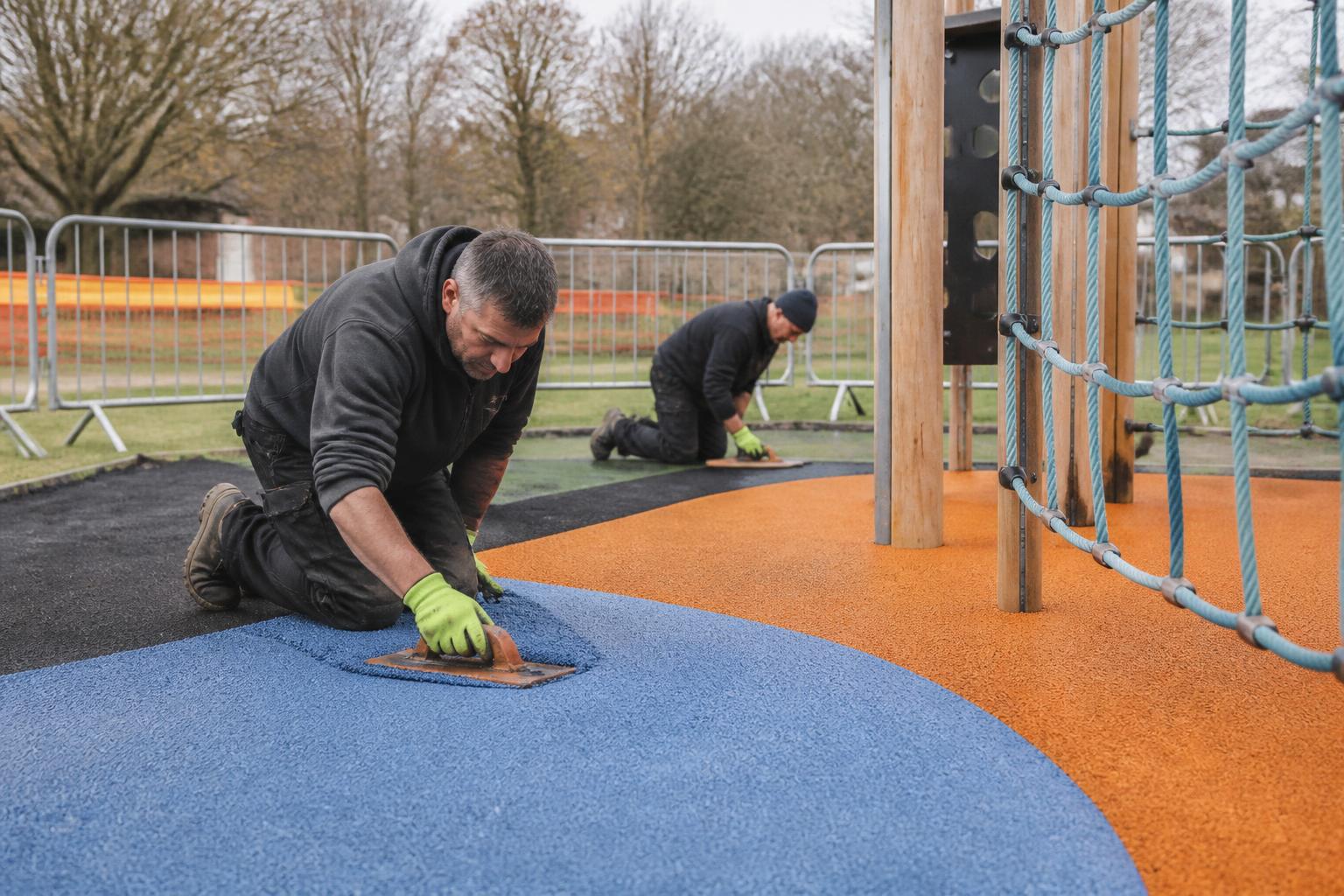
- Playground equipment installation firms: frames, swings, climbing units and safety surfacing for councils, schools and housebuilders on new estates
- Safety surfacing installers: wet pour rubber, bonded mulch and grass mats under play equipment
- Natural turf sports contractors: drainage, construction and renovation of grass pitches, golf features and cricket squares
- Sports maintenance contractors: cleaning, decompaction and repair contracts on existing pitches and courts, often alongside grounds maintenance firms
- Outdoor gym installers: outdoor exercise equipment in parks, on school sites and at leisure venues
How much does sports surfacing insurance cost?
Price follows what you build, who uses it afterwards and how much design you take on. These are the factors that weigh most.
Type of surface
Synthetic pitches, tracks, courts and play areas carry different contract values and different after-handover claim risks.
Play equipment
Installing play equipment and safety surfacing brings children into the risk, so insurers weigh it heavily and ask about checks before handover.
Design responsibility
Designing drainage, base builds or play layouts adds professional indemnity and raises questions about qualifications and checking.
Contract values
Your largest single contract sets the contract works limit, and long programmes on open sites raise theft and weather exposure.
Clients and limits
Councils, schools and sports bodies often set high liability limits and indemnity clauses in their contracts.
Claims history
After-handover injury claims and surface failures are looked at closely, including how testing and inspection were recorded.
What sports surfacing insurance does not usually cover
These are the limits sports and play contractors most need to understand.
- Rebuilding a surface that failed because of your own faulty workmanship or materials
- A pitch or court that falls short of performance testing, unless a design fault is covered by professional indemnity
- Wear and tear, gradual compaction and loss of infill over time
- Play equipment altered or poorly maintained by others after handover
- Surfaces laid in conditions the manufacturer advises against, which insurers may treat as faulty workmanship
- Floodlighting and electrical installation, unless declared as an activity
- Lorries and crew vans while being driven, which are insured under a fleet or vehicle policy
During the works or after handover: which liability applies?
Sports and play contractors face claims at two very different stages. A clear view of both helps when setting limits and reading quotes.
| Feature | Public liability during the works | Products liability after handover |
|---|---|---|
| When the incident happens | While your crew is on site | Once the surface or equipment is in use |
| Typical claim | A passer-by trips on materials or plant damages a school path | A child is hurt in a fall from play equipment onto the surfacing |
| Who claims | Neighbours, visitors, pupils and site users | Players, children, parents and the site owner |
| When claims arrive | Usually soon after the incident | Sometimes years after completion |
| What helps a defence | Site fencing, method statements and supervision | Installation records, test results and handover documents |
How to compare sports surfacing insurance
Insurers ask detailed questions about this trade. Have these answers ready before requesting quotes.
Split your work by surface
Give turnover for pitches, courts, tracks, play areas and maintenance, and whether work is new build or refurbishment.
Explain design responsibility
Say whether you design drainage, bases or play layouts, or build to someone else's drawings.
Describe handover checks
Explain the testing, inspection and records kept when a pitch or play area is handed over.
List contracts and values
Give your largest expected contract value and the limits your main clients ask for.
Schedule plant and vehicles
List the plant you own and its value, what you spend on hire each year and the vehicles needing motor cover.
Quotes for sports and play contractors
Tell us what you build and for whom, and a broker who handles sports and play contractors will compare cover.
Compare coverSports surfacing insurance FAQs
How much does sports surfacing insurance cost?
Price depends on the surfaces you build, whether you install play equipment, how much design you take on, your largest contract value and your claims record. A play area installer working for councils will be rated differently from a firm resurfacing tennis courts for private clubs.
Does sports surfacing insurance cover tennis court makers?
Yes. Building and resurfacing tennis courts in macadam, acrylic, artificial grass or clay is core sports surfacing work. Tell the broker if you also install court fencing, floodlights or nets, as those may need declaring as separate activities.
Does it cover playground equipment installation?
It can, if declared. Installing play equipment and safety surfacing brings children into the risk, so insurers ask about manufacturers' instructions, post-installation inspection and records. Products liability is the key section, as injury claims can arise long after you leave site.
How long after handover can a claim be made against us?
Injury claims can arrive years after completion, and claims for children can be brought later still. Products liability is usually arranged so the policy in force when the injury happened responds, so keep records of past insurers alongside test results and handover documents.
Is a pitch that fails performance testing covered?
Not usually under liability or contract works cover, as that is a quality issue rather than damage. If the failure came from a design fault and you carry professional indemnity, that policy may respond. Contracts need to be clear about who carries testing risk.
Do sports surfacing contractors need professional indemnity?
If you design drainage, base construction or play layouts, or advise on specifications, yes. A design error can leave the client paying to rebuild a surface, which is a financial loss that public and products liability do not cover.
Is maintenance of existing pitches covered?
Yes, if declared. Cleaning, decompaction, infill top-ups and line marking are usually rated as lower hazard than new construction. If you also inspect play areas and report on their condition, ask whether that advice is covered too.
Are turf rolls and materials on site covered against theft?
Usually, under contract works, while they are on site for the job and subject to any security conditions. Materials in your own vehicles need goods in transit cover, and stock held at your yard needs its own section.
How do I get a sports surfacing insurance quote?
Click through from this page to tell us about your firm, and a broker who handles sports and play contractors will follow up. A turnover split by surface, your largest contract value, any design work and your handover procedures are the details insurers ask for first.
Ready to compare sports surfacing insurance?
Cover for your crews and plant, and for the pitches, courts and play areas you leave behind, placed with insurers that understand sports and play contracts.