Insulation Installers Insurance for loft, thermal and industrial firms
Insulation installers insurance for firms fitting loft, roof and wall insulation in buildings, and insulation engineering contractors working on pipework and plant at industrial sites. Compare cover arranged around how and where your crews actually work.
- Liability for damage in homes, offices and industrial sites
- Employers' liability for crews and insulation engineers
- Contract terms for industrial and housing clients
Reviewed October 2026 by the MyBusinessComparison.com editorial team
What is insulation installers insurance?
Insulation installers insurance protects firms that fit insulation in lofts, roofs, walls and floors, or insulate pipework, tanks and plant at industrial sites. The policy usually joins liability for damage and injury caused by the work with employers' liability for installers and engineers, plus cover for tools, materials and contract works.
The trade divides into two markets. Domestic and building insulation brings claims about condensation, blocked ventilation and feet through ceilings. Industrial insulation engineering means work on hot or live plant, on scaffolds, under strict site rules, often in buildings where old lagging may contain asbestos.
Cavity wall work is a specialist class of its own and is covered on our cavity wall insulation insurance page. This page covers the rest of the insulation trade.
Insulation installers insurance at a glance
- Suits
- Loft, thermal and industrial insulation firms with crews and vans
- Core covers
- Third-party and completed work liability, crews, tools, materials
- Key concern
- Asbestos in existing lagging, ceilings and plant rooms
- Insurers ask about
- Materials, spray foam, working heights, industrial sites
- Priced on
- Domestic or industrial split, wage roll, turnover, contract terms, claims
- Cavity wall fill
- See cavity wall insulation insurance
What does insulation installers insurance cover?
Insulation firms usually combine the sections below. Industrial contractors weight the policy towards employers' liability and contract terms; domestic installers towards completed work.
Loft insulation
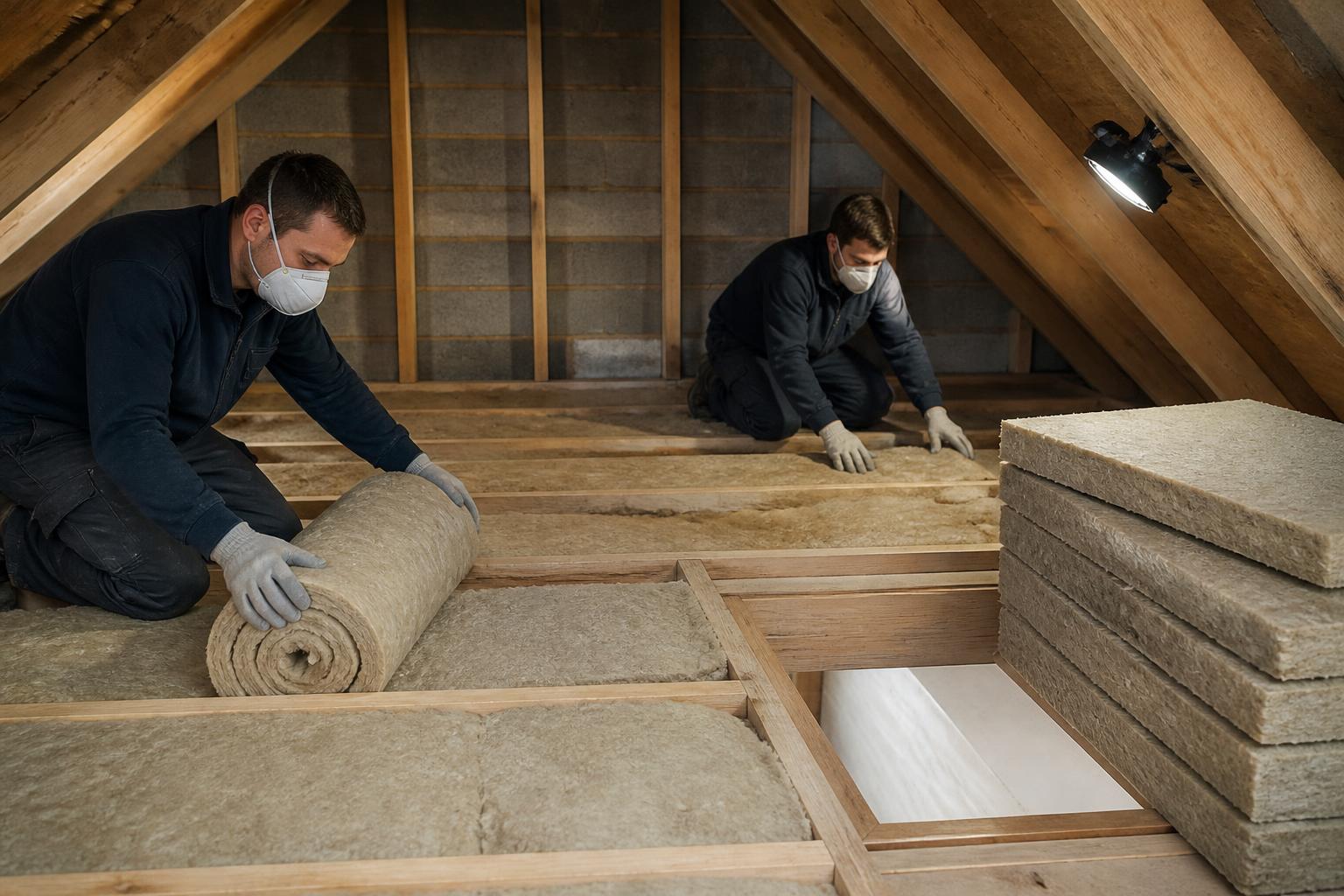
Damage in homes while insulating lofts, such as a foot through a ceiling, a disturbed water tank or a cable damaged while laying rolls.
Read more about public liability insurance
Completed work
Claims after the job, such as condensation and rot when insulation blocks eaves ventilation, or overheating where it buries downlights and cables.
Read more about products liability insurance
Thermal insulation in buildings
Roof, floor and wall insulation on new build and refurbishment, including internal and external wall systems, with questions on fire performance in external walls.
Industrial insulation
Insulating pipework, vessels, ducts and tanks in factories, power plants, hospitals and process sites, often on live plant under permit.
Insulation engineering
Design, fabrication and fitting of insulation and metal cladding systems for heat retention, cold service and personnel protection on plant.
Crews and engineers
Employers' liability for falls from scaffolds and loft hatches, burns from hot surfaces, fibre irritation, heat stress and manual handling.
Read more about employers' liability insurance
Tools, machines and materials
Blowing machines, cladding tools, cutting equipment and insulation stock in vans, stores and on site.
Read more about business equipment insurance
Spray foam
Spray foam insulation in roofs is restricted or excluded by some insurers because of disputes over ventilation and roof timbers. Spraying also exposes operatives to isocyanates, so insurers ask about breathing protection. It needs declaring and may be rated separately.
Insulation awaiting handover
Insulation and cladding installed on larger projects but not yet handed over, protected against damage and theft.
Read more about contractors' all risks insurance
Other covers insulation firms consider
- Professional indemnity: insulation engineering design, heat loss and condensation calculations
- Environmental liability: pollution and contamination on industrial sites
- Group personal accident: benefits for crews injured at height or on plant
- Commercial legal expenses: contract disputes with industrial clients and housing programmes
Which insulation firms is this for?
It suits established firms installing insulation as their main trade. These are the businesses that most often ask for cover.
Filling cavities or fitting solar? Cavity fill has its own page at cavity wall insulation insurance, and renewable installs at solar panel installation insurance.
- Loft insulation installers: loft top-ups, loft boarding and roof insulation for homeowners, landlords and funded schemes
- Thermal insulation contractors: roof, floor and wall insulation packages for main contractors on housing, commercial and public sector projects
- Industrial insulation contractors: pipework, vessel and tank insulation in manufacturing plants, refineries and power stations
- Insulation engineering firms: designing and installing insulation and cladding systems for process and energy clients
- Cold insulation specialists: insulating chilled water, refrigerant and cryogenic lines, often alongside refrigeration contractors
- Internal and external wall insulation installers: solid wall systems for housing programmes, with render work close to plastering
- Spray foam installers: open and closed cell foam in roofs and floors, a specialist activity insurers look at closely
- Retrofit and energy efficiency contractors: insulation alongside heating upgrades and other measures
How much does insulation installers insurance cost?
Insulation firms are priced very differently depending on whether they work in homes or on industrial plant. Insurers weigh these factors.
Domestic or industrial
Industrial insulation on live plant and at height is rated differently from loft and building insulation, and the split matters more than turnover.
Asbestos controls
How you identify, avoid and report suspected asbestos, and whether you ever remove it, is near the top of every underwriter's list.
Materials and methods
Mineral wool, rigid boards, blown fibre, spray foam and cladding each carry different risks, and spray foam can narrow the market.
Heights and sites
Scaffold work, roof work and access to tanks and vessels all count, as do client site rules and permits.
Wage roll and history
Employers' liability follows wages, and insurers ask how long the firm and its people have worked in the trade.
Contract terms
Industrial clients often ask for high limits and broad indemnities, which affect both price and the insurers willing to quote.
What insulation installers insurance usually excludes
These are the points where insulation claims are most often limited or declined.
- Asbestos removal, which is a separate specialist activity, and asbestos disturbed without proper checks
- Cavity wall fill and extraction, which belong on a cavity wall insulation policy
- Undeclared spray foam installs
- The cost of stripping out and refitting insulation you installed wrongly, as opposed to the damage caused
- Condensation or ventilation advice relied on by the client, unless professional indemnity is held
- Work offshore, or in undeclared high hazard sites such as nuclear or petrochemical plants
- Liability accepted under industrial contracts beyond what the insurer has agreed
- Crew vans on the road, which need fleet insurance
Insulating homes or insulating industrial plant: how the cover differs
Some insulation firms work in both markets. Insurers treat them almost as separate trades, and the policy has to reflect the split.
| Feature | Homes and buildings | Industrial plant |
|---|---|---|
| Typical work | Lofts, roofs, walls and floors | Pipework, vessels, tanks and ducts |
| Main liability claim | Condensation, rot, ceilings damaged in lofts | Damage to plant, fire on site, delays to shutdowns |
| Employee risks | Falls through ceilings, fibre irritation, confined lofts | Heights, hot surfaces, heat stress, legacy asbestos |
| Contract terms | Homeowner, landlord or scheme conditions | High limits and indemnities set by the site owner |
| Extra cover often needed | Products liability for completed work | Professional indemnity for design, environmental cover |
How to compare insulation installers insurance
Insulation firms get clearer terms when the broker can see the full mix of work.
Split your work
Give turnover for loft, building thermal, external wall, spray foam and industrial insulation.
Set out your asbestos procedure
Explain how surveys are checked, what happens when suspect material is found and that removal is left to specialists.
List materials and sites
Name the products you install, the types of industrial site you work on and the maximum working height.
Collect contract terms
Pull the insurance and indemnity clauses from industrial and housing contracts.
Detail staff and claims
Number of installers and engineers, wage roll, how long the firm has traded and any claims with what changed.
Quotes for insulation firms
Tell us what you insulate, where and with which materials, and a broker who handles insulation firms will compare cover.
Get a quoteInsulation installers insurance FAQs
How much does insulation installers insurance cost?
It depends on your domestic and industrial split, materials, asbestos controls, working heights, wage roll, contract terms and claims. A loft insulation firm and an industrial lagging contractor are rated very differently, even at the same size.
Does insulation installers insurance cover loft insulation?
Yes, loft insulation is a standard activity on most insulation policies. Insurers ask how crews keep eaves ventilation clear, treat downlights and cables, and move safely in lofts, because those are the source of most claims.
Is industrial insulation covered on the same policy?
It can be, if declared. Industrial insulation on pipework, vessels and plant brings heights, hot surfaces and site permits, so insurers rate it separately and ask which sites you work on. Some domestic-focused insurers will not write it.
What does insulation engineering cover include?
Insulation engineering firms usually need liability and employers' liability like any installer, plus professional indemnity where they design systems or calculate heat loss and condensation risk. Workshop fabrication of cladding can be added as a declared activity.
Why do insurers ask so much about asbestos?
Old pipe lagging and boards often contained asbestos, and disease claims from exposure can arise decades later. Insurers want to see that crews check asbestos surveys, stop work on suspect material and leave removal to specialist contractors.
Is spray foam insulation covered?
Some insurers cover it, others restrict or exclude it, because of disputes about trapped moisture in roof timbers and homeowners struggling to sell or remortgage. Declare it and explain the products and surveys you use.
Does a general insulation policy include cavity fill?
Not unless it is declared, and many insurers will not add it. Cavity fill brings long-tail damp claims and is treated as a specialist class, so firms doing it usually arrange separate terms. Our dedicated cavity page explains what insurers ask.
Do industrial clients ask for higher limits?
Often. Process, energy and manufacturing clients commonly set higher liability limits and ask to be named or indemnified. Check the contract before signing and ask the broker whether your policy can match it.
How do I get an insulation installers insurance quote?
Enquiries from this page reach a broker who handles insulation firms, who will call you back. Have your work split, materials, asbestos procedure, heights, contract clauses, staff and claims ready for that call.
Ready to compare insulation installers insurance?
Liability and employee cover for loft, thermal and industrial insulation firms, arranged around the work you actually do.