Dry Cleaner Insurance for dry cleaning businesses
Insurance for dry cleaning businesses with staff, receiving shops and processing plant, from a single high street site to a group of branches feeding a central works. Compare cover for customers' garments, solvents, boilers and the machinery your trade depends on.
- Customers' garments and household items covered in your care
- Machinery breakdown and boiler inspection for processing plant
- Pollution, fire and interruption risks from solvents and dryers
Reviewed October 2026 by the MyBusinessComparison.com editorial team
What is dry cleaner insurance?
Dry cleaner insurance is a business package for firms that clean, press and launder customers' garments and household textiles. It usually combines cover for premises, machinery and stock, customers' goods in your care, public and products liability, employers' liability, business interruption, machinery breakdown and boiler inspection.
The heart of the risk is other people's property. Every rail of tickets represents suits, wedding dresses, curtains and leather that you are responsible for, and a single fire can destroy every item waiting on the rails. Insurers also look hard at solvents, which can pollute the ground below a site, and at the steam boilers and pressure plant that keep the presses running.
Damage caused by the cleaning process itself, such as shrinkage or colour loss, is treated differently from fire or theft, and many policies limit or exclude it. That makes it one of the first details to compare.
Dry cleaner insurance at a glance
- Suits
- Dry cleaners and launderers with staff, shops and processing plant
- Policy sections
- Premises, machinery, customers' goods, liability and business interruption
- Must have
- Employers' liability for counter, pressing and plant staff
- Trade specific
- Process damage, solvent pollution, boiler and pressure plant, dryer fires
- Often needed
- Periodic inspection of boilers and pressure vessels by an engineer surveyor
- Arranged separately
- Collection and delivery vans
What does dry cleaner insurance cover?
Most dry cleaning businesses combine the sections below, with a sum insured or limit for each one, and any conditions on solvents, lint and fire safety.
Customers' goods in trust
Garments and household items in your care against fire, theft, flood and accidental damage, at your shops, at the works and in transit between them. Check whether the limit covers your busiest periods.
Process damage
Damage caused by cleaning or pressing, such as shrinkage, colour run or a melted trim. Many insurers limit this or apply a higher excess, and some exclude it, so read the detail.
Machinery breakdown
Repair or replacement when dry cleaning machines, washer extractors, tumble dryers or finishing equipment break down suddenly, with cover for the extra cost of sending work elsewhere.
Read more about engineering inspection and breakdown cover
Boiler and pressure plant inspection
Periodic examination of steam boilers, air receivers and pressure vessels, which many businesses with this plant must arrange, combined with cover for explosion and collapse.
Read more about engineering inspection insurance
Premises, contents and stock
Your buildings or tenant's interest, shop fittings, conveyors, presses and consumables, against fire, flood, storm and theft.
Read more about commercial property insurance
Pollution and solvents
Clean-up costs and claims if solvent escapes into soil, drains or groundwater. Public liability usually covers only sudden incidents, so slow leaks need separate environmental cover.
Read more about environmental liability insurance
Public and products liability
Claims from customers hurt in your shops, and from items you clean, such as a skin reaction blamed on solvent residue in a garment.
Read more about public liability insurance
Employers' liability
Staff injuries and illness, including burns from presses and steam, solvent exposure and manual handling of loaded bags and drums.
Read more about employers' liability insurance
Business interruption
Gross profit lost when a fire or breakdown at your works halts processing for every receiving shop it serves, with an indemnity period long enough to replace specialist machines.
Read more about business interruption insurance
Other cover dry cleaners often add
- Goods in transit: garments moving between shops, the works and customers' homes
- Commercial vehicle insurance: collection and delivery vans, or a fleet policy as numbers grow
- Money cover: takings held in tills and safes and carried to the bank
- Commercial legal expenses: customer disputes over damaged items, lease issues and employment claims
Which dry cleaning businesses is this cover for?
Dry cleaning businesses are set up in different ways, and the way work flows between sites matters to insurers. These are the businesses we arrange cover for.
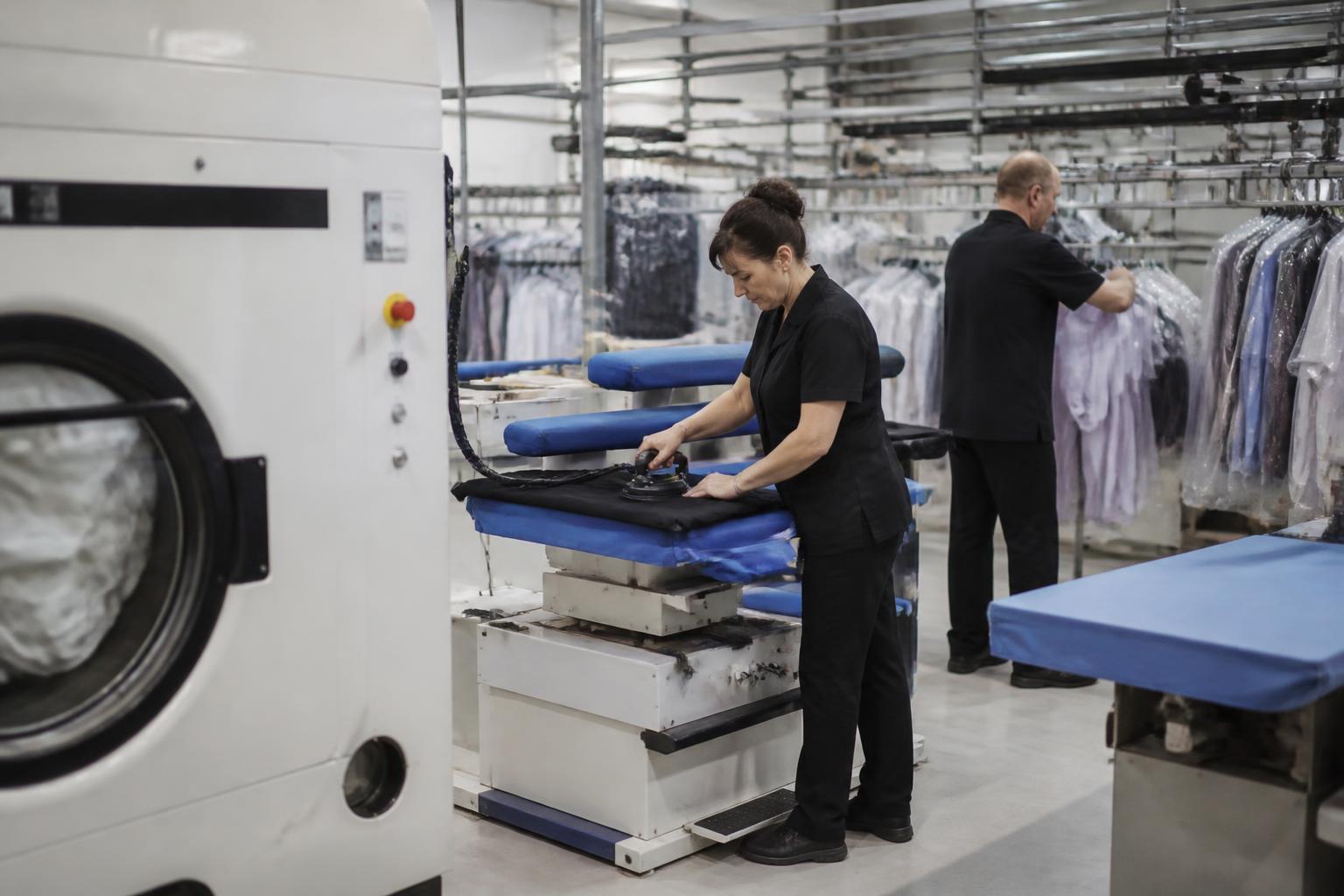
Run laundry contracts for hotels? Contract laundry for hotels and care homes can usually sit on the same policy if declared. See goods in transit cover for daily collections, or look at insurance for other local service businesses.
- High street dry cleaners with on-site plant: a shop counter at the front and machines, presses and a boiler behind
- Multi-branch groups with a central works: receiving shops sending garments to one processing plant, where a fire at the works stops every branch
- Commercial laundries for hospitality: linen, uniforms and guest laundry under contract to hotels, pubs and restaurants
- Laundry for care homes and clinics: residents' clothing and workwear for care and healthcare providers, where infection control and named items matter
- Specialist cleaners: wedding dresses, leather, suede, curtains, rugs and soft furnishings, often of high value
- Alteration and repair services: tailoring and repairs alongside cleaning, adding responsibility for cutting and altering customers' garments
- Workwear and uniform services: collection, cleaning and return of workwear for business customers, sometimes for facilities management firms
- Collection and delivery services: vans collecting from homes and offices, with garments in transit every day
How much does dry cleaner insurance cost?
Your sites, plant and the value of goods in your care set the premium. Here is what underwriters focus on.
Solvent type
Insurers ask which solvents you use, how they are stored and how waste is handled, as this affects fire and pollution risk.
Customers' goods value
The value of garments held at each site and in transit, including peaks before weddings and seasonal events, sets the goods in trust premium.
Fire controls
Lint cleaning routines, dryer maintenance, fire detection and separation between processing and shop areas all count.
Plant and boilers
The age, type and maintenance of dry cleaning machines and boilers shape the breakdown and inspection premiums.
Site history
Long established sites may have historic solvent contamination, and insurers ask about previous use and any ground surveys.
Claims and complaints
Past fire, theft or process damage claims, and how you handle customer complaints, are reviewed at renewal.
What dry cleaner insurance usually excludes
These are the exclusions dry cleaners most often run into.
- Process damage, such as shrinkage or colour loss, unless the policy includes it
- Items left uncollected beyond the period stated in your terms, under some policies
- Gradual solvent contamination, unless environmental liability cover is in place, and even then contamination already known about is usually excluded
- Breakdown of machines through wear and tear, unless machinery breakdown cover is added
- Fire where lint and dryer maintenance conditions were not followed
- Items above a set value per article, unless high value items are declared
- Collection vans while driven, which need fleet cover or a policy for each van
A dry cleaner policy or a standard shop policy?
Some dry cleaners are first insured on a general shop policy. These are the differences that matter.
| Feature | Dry cleaner policy | Standard shop policy |
|---|---|---|
| Customers' goods | Built in, with limits for goods held and in transit | Often limited or absent |
| Process damage | Can be included, with its own limit | Not included |
| Machinery and boilers | Breakdown and inspection available | Rarely included |
| Solvents and pollution | Underwritten with your processes in mind | May not reflect solvent use |
| Suits | Businesses that clean on site or run a works | Receiving shops only, with no plant |
How to get dry cleaner insurance quotes
Clear answers on plant, solvents and goods in your care mean fewer conditions on the final terms.
Map your sites
List each receiving shop and processing site, what happens at each and how work moves between them.
Detail your plant
Machine types, solvents used, boilers and pressure vessels, and your maintenance and inspection records.
Value goods in your care
Normal and peak values of customers' items at each site and in vans, and your highest value single items.
Gather fire and site details
Lint routines, fire detection, building construction and anything known about past solvent use at the site.
Compare the detail
Check customers' goods limits, process damage cover, breakdown and inspection, pollution terms and the interruption period.
Speak to a specialist broker
Share details of your shops, plant and customers, and a broker familiar with dry cleaners will compare terms.
Get a quoteDry cleaner insurance FAQs
How much does dry cleaner insurance cost?
It depends on your sites, solvents, plant and boilers, the value of customers' goods you hold, fire controls, turnover, wage roll and claims history. Improvements to lint routines and fire detection can help at renewal.
Are customers' clothes covered if there is a fire at my shop?
Yes, if your policy includes customers' goods in trust. Check the limit reflects the highest value of items you hold, including busy periods, and that it applies at every shop, at your works and in vans.
Is shrinkage or colour damage covered?
Only if your policy includes process damage cover. Many insurers limit it, apply a higher excess or exclude it altogether. Clear terms on your tickets and careful checks on care labels help with customer disputes either way.
Do I need my boiler inspected for insurance?
Usually, yes. Most businesses with steam boilers or pressure vessels need them examined periodically by a competent person under a written scheme, and insurers can arrange an engineer surveyor. Combining inspection with breakdown cover keeps the records and the cover in one place.
Does dry cleaner insurance cover solvent pollution?
Public liability usually covers sudden and accidental escapes only. Gradual leaks, often discovered years later, need environmental liability insurance. Insurers may ask about the history of the site, particularly if dry cleaning has taken place there for a long time.
What happens if my dry cleaning machine breaks down?
Without machinery breakdown cover, repairs and lost income from mechanical failure are usually not covered, because property policies exclude breakdown. With it, repair costs and the extra cost of sending work to another cleaner can be included.
Can I insure several shops and a central works on one policy?
Yes. Each site is listed with its own sums insured, and business interruption can be arranged so that a loss at the works covers the income lost across every receiving shop that depends on it.
Are garments covered while they are in our delivery vans?
Customers' goods cover can extend to transit, or you can add goods in transit insurance. Insurers usually set conditions for unattended vans, so check them. The vans themselves need separate motor cover.
How do I get a dry cleaner insurance quote?
Request a call through this page and our partner will pass you to a broker who arranges dry cleaning cover. Keep your site list, plant and solvent details, customers' goods values, turnover, wage roll and claims record close by for the call.
Compare cover for your dry cleaning business
Customers' goods, plant, solvents and premises insured by a broker who understands how dry cleaning works.