Business Fleet Insurance for company car fleets
One policy for the company cars, pool cars and car-derived vans your staff drive for work and, where you allow it, at weekends. Compare cover built around employee drivers, private use and the duty of care you owe to people who drive for the business.
- Company and pool cars on one schedule
- Private use for employees and named family
- Liability when staff drive their own cars for work
Reviewed October 2026 by the MyBusinessComparison.com editorial team
What is business fleet insurance?
Business fleet insurance is a fleet policy for the cars and light vans that employees drive as part of their job, such as company cars for sales and management staff, pool cars and engineers' vehicles. It covers every vehicle and approved driver on one policy, usually including private use.
It is a form of commercial fleet insurance, but the risk is different from a haulage or delivery fleet. Claims tend to come from employees driving long distances between appointments, often on unfamiliar roads, and from family members using the car at weekends. Insurers therefore focus on who drives, how far and what the business does to manage driver risk.
A business fleet policy can also protect the company when staff use their own cars for work, a gap many firms overlook until a claim arrives.
Business fleet insurance at a glance
- Suits
- Firms whose staff drive company or pool cars for work
- Vehicles
- Company cars, pool cars, car-derived vans and light commercials
- Drivers
- Any approved employee, often with spouses or partners added
- Use
- Business use, commuting and, where allowed, private use
- Often added
- Cover for staff driving their own cars on business
- Priced on
- Mileage, drivers, vehicle values and the fleet's claims experience
What does business fleet insurance cover?
Cover follows the cars and the people who drive them. These are the sections a company car fleet usually needs.
Company and pool cars
Comprehensive cover for every car on the fleet list, including new and replacement cars added during the year, usually without naming each one in advance.
Employee drivers
Any employee you approve to drive, within an agreed age range, with options to add spouses, partners or named family members for private use.
Private and commuting use
Social, domestic and pleasure use and travel to and from work, where your company car scheme allows it.
Grey fleet liability
Protects the company if an employee driving their own car on business causes an accident and their personal policy does not respond.
Electric and hybrid cars
Battery damage, charging cables and, on many policies, home charge points provided by the company.
Work-related road risk support
Help from many fleet insurers with licence checking, driver assessments and a driving for work handbook, aimed at the high mileage drivers who tend to generate more claims.
Accident management
A claims line that arranges recovery, repairs and a replacement car, and handles third party claims quickly to keep costs down.
Leased and salary sacrifice cars
Cars funded through contract hire or salary sacrifice, with the leasing company's interest noted and cover set at the level the agreement demands.
Covers that work alongside a company car fleet
- Group personal accident: injury benefits for employees who are hurt while driving on business
- Employers' liability: claims from employees injured at work, which motor cover does not replace
- Commercial legal expenses: recovering uninsured losses and defending motoring prosecutions
- Commercial vehicle insurance: heavier vans and specialist vehicles kept outside the car fleet
Which businesses use business fleet insurance?
It suits organisations where cars are a tool of the job and a perk of the role. These are the employers we see run company car fleets.
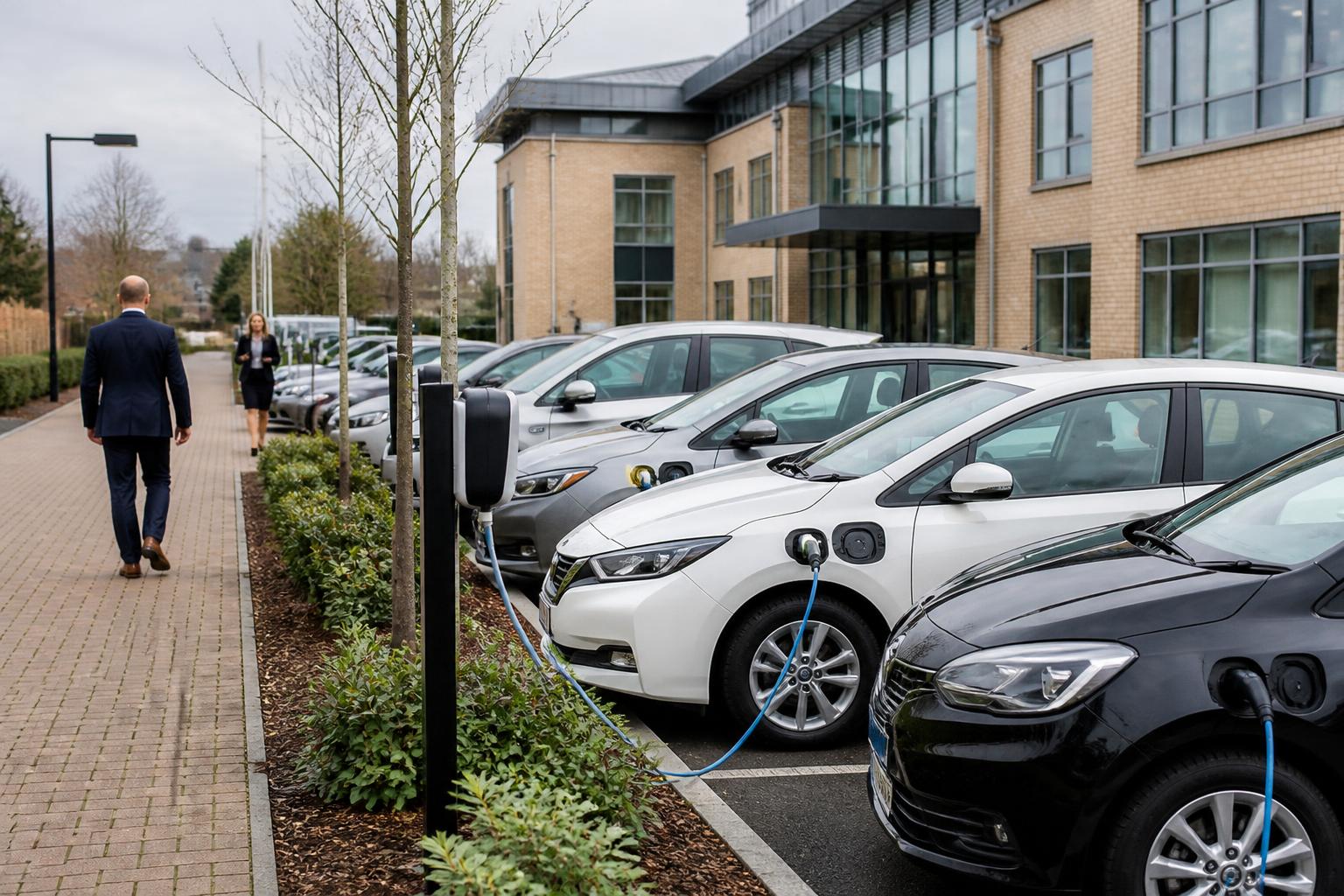
Running vans or lorries for deliveries? Goods-carrying and mixed fleets are explained under commercial fleet insurance, and a firm with a few vans and cars can start with small business fleet insurance.
- Sales-led businesses: field sales teams covering regions, with high annual mileage and frequent overnight stays
- Professional services firms: partners and managers driving to clients, often in higher value cars
- Healthcare and home care providers: clinicians and carers visiting patients, often with pool cars shared between shifts
- Engineering and service companies: engineers in car-derived vans and estates carrying tools and parts
- Construction firms: site managers, surveyors and estimators in company cars alongside the van fleet
- Recruitment agencies: consultants visiting clients and candidates across a wide area
- Security companies: mobile patrol and supervisory vehicles running at all hours
- Facilities management firms: area managers and mobile supervisors moving between client sites
- Technology and IT businesses: account managers and field engineers, often in electric cars
- Charities and public service contractors: pool cars for staff and volunteers who drive for the organisation
How much does business fleet insurance cost?
Company car fleets are priced on their drivers and mileage as much as on the cars. These are the factors insurers weigh most.
Fleet claims record
Once a fleet reaches a certain size, its own claims record over recent years becomes the main driver of price.
Who drives the cars
Ages, experience, convictions and whether family members are included. Allowing young or unnamed drivers widens the risk.
Annual mileage
High mileage sales and service roles spend far longer on the road than office based staff with a pool car.
Car values and specification
Executive and electric cars cost more to repair and replace, which lifts the own damage element.
Private use
Weekend and holiday use by employees and their families adds exposure, especially for younger drivers.
Driving for work controls
Licence checks, driving policies, training and telematics show insurers that driver risk is being managed.
What business fleet insurance does not usually cover
Most disputes on company car fleets come down to who was driving and why.
- Drivers outside the agreed age range, or family members not added to the policy
- Employees driving without a valid licence, or after the business was told of a ban
- Carrying passengers for a fare, or delivering goods for other firms, which company car policies usually exclude
- Damage to employees' own cars used on business, which only their own motor policy can cover
- Personal belongings and laptops left in cars, which usually need business equipment cover
- Fines, penalty points and speeding prosecutions, though legal expenses cover may pay defence costs
- Wear and tear, mechanical failure and damage to a car's battery from age or normal use
Company car fleet or staff using their own cars?
Many firms run both. This is how a fleet policy compares with relying on employees' own cars, often called the grey fleet.
| Feature | Business fleet policy | Grey fleet |
|---|---|---|
| Who insures the car | The company, on one policy | Each employee, on a personal policy |
| Business use cover | Built into the fleet policy | Depends on each employee's own policy |
| Control of vehicle standards | The company chooses and maintains the cars | Age and condition vary by employee |
| Claims experience | Builds a record the company owns | Sits with each employee |
| Company exposure | Managed through one insurer | Can fall on the company if personal cover fails |
How to compare business fleet insurance
Fleet insurers want to understand your drivers and how you manage them. Have this ready.
List the cars
Make, model, value and whether each car is owned, leased or provided through a salary sacrifice scheme.
Describe the drivers
Roles, ages, licence history and whether spouses or family will drive.
Set out how cars are used
Business mileage, commuting, private use and any trips abroad.
Request claims experience letters
Claims records from your current insurer covering recent years, with notes on larger claims.
Show your driver policy
Licence checks, eyesight and fitness to drive checks, training and telematics, and what you do after an incident.
Get company car fleet cover arranged
Tell us about your cars, drivers and how they are used, and a fleet broker will compare cover.
Compare quotesBusiness fleet insurance FAQs
How much does business fleet insurance cost?
It depends on the number and value of cars, the drivers, annual mileage, private use and the fleet's claims experience. Two firms with similar cars can pay very different amounts if one allows young family members to drive and the other does not.
Can employees' partners drive the company car?
Usually, yes, if you add them. Many business fleet policies allow spouses or partners for private use, sometimes with age limits. Anyone not named or allowed under the policy is not covered, so it is worth confirming this before cars are handed over.
Does business fleet insurance cover private use?
It can. Most company car schemes include social, domestic and pleasure use and commuting, and the policy is set up to match. If cars are for business use only, tell the insurer, as this affects the price and the cover.
What is grey fleet cover?
It protects the company if an employee causes an accident while driving their own car on business and their personal policy fails to respond, for example because business use was not included. It does not insure the employee's car itself.
Do I still need employees to have business use on their own cars?
Yes. Grey fleet cover is a backstop for the company, not a replacement for the employee's own insurance. Checking that staff who drive for work have business use on their policy is a basic part of managing driver risk.
Do leased company cars need special cover?
Leasing and salary sacrifice agreements usually require comprehensive cover with the leasing company's interest noted. Some also expect cover for the gap between the insurance payout and the amount still owed if a car is written off, which a broker can arrange.
How is a business fleet different from a commercial fleet policy?
It is the same type of policy, set up for cars driven by employees rather than vans and lorries carrying goods. That changes the questions insurers ask, with more focus on drivers, private use and mileage. The commercial fleet insurance page covers mixed and goods fleets.
What driver checks do insurers expect for company car drivers?
Many fleet insurers expect licence checks when someone joins and at regular intervals after, a written driving for work policy, and a review after any at-fault accident. High mileage drivers may be offered training. Evidence of these checks supports better terms.
How do I get a business fleet insurance quote?
Gather your car list with lease details, the roles and ages of your drivers, the private use you allow and recent claims experience, then submit them from this page. A broker who sets up company car fleets takes the enquiry from there.
Ready to compare business fleet insurance?
Company cars, pool cars and the people who drive them, on one policy arranged by a fleet specialist.