Manufacturing and Engineering Insurance for UK manufacturers
Insurance for factories, fabricators and engineering firms with staff, machinery and products in the market. Compare a manufacturing programme through specialist brokers who know how production risks are surveyed and rated.
- Plant, machinery and lost production on one programme
- Products liability with export markets declared
- Recall, inspection and breakdown sections available
Reviewed October 2026 by the MyBusinessComparison.com editorial team
What is manufacturing and engineering insurance?
Manufacturing and engineering insurance is a package of business cover built around a production business: its factory and machinery, the stock it holds, the profit lost if production stops, and liability for employees, visitors and the products it makes. Most firms buy it as a combined policy with specialist sections added.
There is no single standard product. A broker usually starts with a commercial combined policy and adds the sections your processes call for, such as products liability with exports declared, machinery breakdown, engineering inspection or product recall. Larger groups often run one master programme listing every plant, warehouse and office.
Insurers price manufacturing risk on what you make and how you make it. A plant running hot work, spray finishing or dust-producing processes is underwritten very differently from a clean assembly line, so a detailed description of each site matters more than the size of the business.
Manufacturing insurance at a glance
- Typical buyers
- Factories, fabricators, process plants and engineering firms with staff and machinery
- Usual base
- A commercial combined policy with manufacturing extensions
- Must have
- Employers' liability, required for nearly every firm with staff
- Key additions
- Products liability, machinery breakdown, engineering inspection and recall
- Underwriters focus on
- Processes, fire protection, panel construction, exports and claims
- Often placed separately
- Fleet, marine cargo, trade credit and directors' cover
Which policies do manufacturers usually combine?
Few manufacturers buy a single product off the shelf. These are the covers a broker typically puts together for a production business, often on one schedule with the sections linked.
Factory buildings and plant
Fire, explosion, flood, storm and impact damage to production units, offices and stores, plus the machinery and tooling inside. Moulds, dies and patterns held at a customer's or supplier's site can usually be added.
Read more about commercial property cover
Business interruption
Lost gross profit while production is rebuilt or moved elsewhere. Specialist machines can take a long time to replace, so many manufacturers choose an indemnity period beyond a year, with extensions for damage at a key supplier or customer.
Read more about business interruption insurance
Products liability
Injury or property damage caused by goods you make, assemble or supply, including components built into someone else's product. Exports have to be declared, and sales to North America are often restricted or rated separately.
Read more about products liability insurance
Employers' liability
Injury and disease claims from staff. Insurers look closely at noise, vibration, dust, fumes and manual handling, because industrial disease claims can surface many years after the exposure.
Read more about employers' liability cover
Machinery breakdown
Sudden mechanical or electrical breakdown of presses, CNC centres, compressors and production lines, which the property section does not pay for. It can include the profit lost while a machine is repaired.
Read more about machinery and equipment insurance
Engineering inspection
Periodic examination of pressure systems, lifting equipment, extraction plant and other machinery by an insurer's engineer, with reports kept for your records and your customers' audits.
Read more about engineering inspection and breakdown
Product recall
Costs of withdrawing a faulty or contaminated batch, including notification, transport, disposal and, on wider policies, your customers' own recall costs and lost profit.
Read more about product recall insurance
Goods in transit and cargo
Finished goods and raw materials on your own vehicles or with carriers in the UK, and imported or exported consignments under a marine cargo policy.
Read more about goods in transit insurance
Environmental liability
Pollution from spills, leaking storage or fire water run-off, with clean-up of your own land available on some policies. General liability sections usually limit pollution cover to sudden incidents.
Read more about environmental liability insurance
Trade credit
Protection for your debtor book if a major customer becomes insolvent or does not pay, which matters when a handful of accounts make up much of your turnover.
Read more about trade credit insurance
Further covers manufacturers add
- Directors' and officers' insurance: claims against the board from shareholders, lenders, creditors or enforcement bodies
- Cyber cover: ransomware and outages that stop production planning, stock control or connected machinery
- Fleet insurance: delivery lorries, vans and company cars on one motor policy
- Professional indemnity: design, specification or technical advice you give alongside the products you make
- Group personal accident and travel: benefits for staff injured at work or travelling to customers and suppliers abroad
Which manufacturing and engineering businesses do we cover?
Underwriters group manufacturers by process rather than by size. These are the sub-sectors brokers place most often, with the issue each one is assessed on.
Part manufacturer, part distributor? Many firms both make and import goods. See wholesale and distribution insurance or the full list of industries we cover.
- Precision and general engineering: toolrooms, CNC machining and subcontract engineering, where one defective component can stop a customer's line
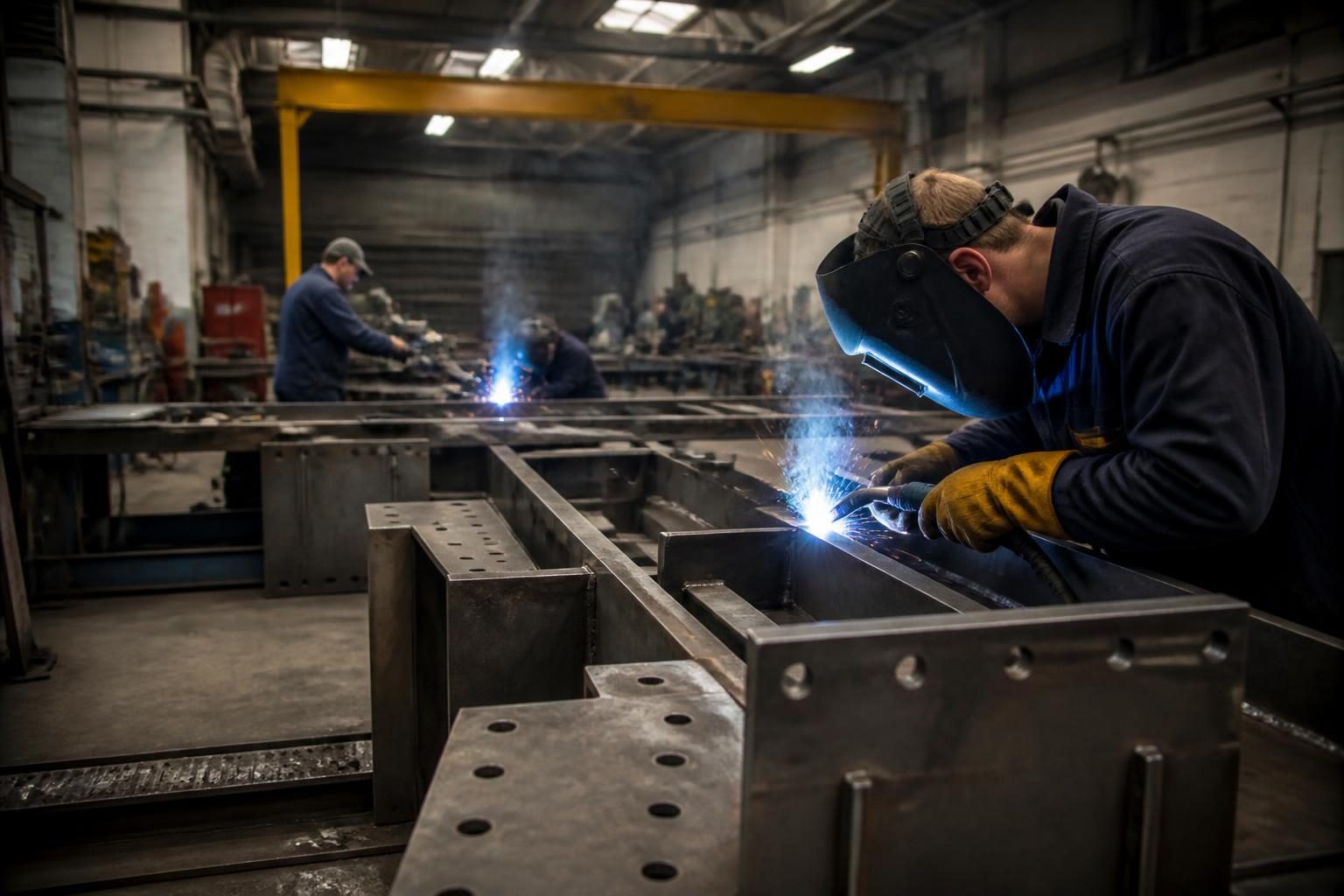
- Metal fabrication and welding: hot work, cutting and structural steel, with any work on customers' sites declared to the insurer
- Nuts, bolts and screws manufacturers: fastener makers cold forming, threading and heat treating in volume, where a batch failing in a structure, vehicle or machine can lead to large products and recall claims
- Food and drink production: contamination, allergen and labelling risks, often with recall cover demanded by retail customers
- Plastics, rubber and composites: moulding and extrusion with heat, stored polymers and high fire loads
- Chemicals, coatings and adhesives: flammable materials, hazardous substance storage and pollution exposure
- Printing and packaging: paper and board stock, solvent inks and reliance on a few large presses
- Timber, joinery and furniture: wood dust, extraction systems and spray finishing, all areas fire surveys focus on
- Electronics and electrical assembly: high value components and products that end up inside other manufacturers' goods
- Automotive and aerospace suppliers: tiered supply chains with demanding contract terms and limits set by the customer
- Textile and clothing makers: stock that peaks with each season and dyeing or finishing processes
- Contract and private label manufacturers: goods made to a customer's specification, where the contract decides who carries the liability
- Machinery and equipment builders: products installed and commissioned at customers' premises, raising design and professional indemnity questions
- Medical and laboratory device makers: products used on patients or in testing, which many insurers will only cover on specialist terms
- Building products and materials: bricks, glazing, panels and fixings whose failure can show up long after installation
How much does manufacturing and engineering insurance cost?
Premiums are built site by site and section by section, so two manufacturers with similar turnover can pay very different amounts. These factors weigh most with underwriters.
Processes on site
Heat treatment, welding, spraying, woodworking and anything that creates combustible dust raise the fire rating. Clean assembly and light machining sit at the other end of the scale.
Building construction
Insurers ask whether walls and roofs contain insulated panels with combustible cores. These panels narrow the market, while fire breaks or replacement improve the terms on offer.
Fire and security protection
Sprinklers, automatic detection, hot work permits, thermal imaging of electrics and waste control are all credited. Survey recommendations left open count against you.
Products and markets
What the products do, where they end up and which countries you export to drive the products liability rate. Safety-critical parts and North American sales get the closest scrutiny.
Values and interruption exposure
Rebuild costs, machinery values and gross profit, together with the indemnity period chosen and any single machine the whole site depends on.
Wage roll and claims record
Employers' liability is rated on wages split between manual and clerical staff, and on past injury and disease claims and what was done about them.
Gaps manufacturers often find in their cover
Every insurer sets its own exclusions. These are the ones that tend to matter in a production business.
- The cost of repairing or replacing your own faulty product, which products liability does not pay for
- Recall and withdrawal costs, unless a product recall policy is in place
- Mechanical or electrical breakdown under the property section, which needs machinery breakdown cover
- Gradual pollution and long-term contamination, often limited to sudden and accidental events
- Products exported to North America, unless declared to and accepted by the insurer
- Financial loss when a product simply fails to perform as promised, unless an efficacy or financial loss extension is added
- Losses linked to breached conditions, such as hot work permits or insulated panel requirements
One manufacturing package or separate policies?
Most established manufacturers run a single combined programme, but some sections are still placed on their own. This is how the two approaches differ.
| Feature | Manufacturing package | Separately placed policies |
|---|---|---|
| Fire at the main plant | Property and lost profit settled by one insurer under linked sections | Property and interruption may sit with different insurers and adjusters |
| Products claims | Products cover written with knowledge of your plant and processes | A specialist products insurer may offer wider terms for complex exports |
| Several factories | Every plant and store listed on one schedule | Each site renewed and surveyed on its own timetable |
| Surveys | One survey programme across the group | Several insurers may each want their own visit |
| Usually suits | Most manufacturers with a mix of property and liability risk | Firms with one very specialist exposure, such as aerospace or medical products |
How to arrange manufacturing insurance
Underwriters ask more questions of manufacturers than of most sectors. Preparing these points shortens the process and helps the broker present the risk properly.
Describe each process
Raw materials, machinery, heat sources, waste and any work carried out away from your sites, plant by plant.
Set out products and markets
What you make, who buys it, what it ends up in and the countries it reaches, including indirect exports through distributors.
Confirm values and lead times
Rebuild and machinery values, gross profit, and how long it would take to replace your critical equipment.
Share risk improvements
Recent survey reports, fire protection upgrades, maintenance and inspection records, and health and safety controls.
Review contracts and limits
Customer and supplier terms often set liability limits, recall obligations and indemnities that the programme has to match.
Talk to a manufacturing specialist
Tell us about your sites and processes and a specialist broker will compare cover for you.
Compare quotesManufacturing and engineering insurance FAQs
How much does manufacturing insurance cost?
It depends on your processes, building construction, fire protection, products, export markets, values and claims history. Each section is rated separately and then added together, so a food producer and a metal fabricator of similar size can pay very different amounts. A broker can show which sections drive the cost.
Do manufacturers need products liability if they only make components?
In most cases, yes. A component that fails can cause injury or damage once it is built into someone else's product, and claims can be brought against every business in the supply chain. Customers commonly ask for evidence of products liability cover before placing orders.
Does manufacturing insurance cover machinery breakdown?
Not under the standard property section, which responds to events such as fire or flood. Sudden mechanical or electrical breakdown needs a machinery breakdown or engineering section, which can also cover the profit lost while the machine is out of action.
Will my policy cover products sold into North America?
Often only if declared. Many products liability sections exclude or limit sales to North America because claims there tend to be more costly, while others cover them for an extra premium. Tell the broker about direct and indirect exports, including goods sold on through distributors.
What will an insurance surveyor look at in a factory?
Surveyors usually review building construction and any insulated panels, fire detection and sprinklers, electrical testing, hot work controls, waste and housekeeping, dust extraction and security. Their recommendations can become conditions of cover, so completing them on time and keeping evidence matters.
How long an indemnity period does a manufacturer need?
Long enough to rebuild, replace machinery, recommission production and win back customers. For many manufacturers that is well beyond twelve months, especially where specialist machines are built to order or planning consent is needed. A broker can test the figure against your real lead times.
Is product recall included in a standard manufacturing policy?
Usually not. Products liability pays for injury and damage to others, not the cost of pulling stock from shelves. Food, drink, automotive and consumer goods makers often buy a separate recall policy, sometimes because a retail customer requires it.
Can a group with several factories have one policy?
Yes. Many insurers write a single programme listing each plant, warehouse and office with its own values, while liability is rated on the group's combined turnover and wage roll. That keeps cover consistent and gives one renewal date across the business.
How do I get a manufacturing insurance quote?
Request one through this page and a broker who places factory risks takes it from there. The first things they ask for are a process description for each site, values, turnover by market, wage roll, claims history and your latest survey reports.
Ready to review your manufacturing insurance?
Cover for plant, products and people, arranged by a broker who understands how factories are underwritten.