Drainage Contractors Insurance for drainage and drain service firms
Drainage contractors insurance for firms that jet, survey, line, repair and install drains with their own crews and vans. Compare cover written around flooding claims, buried services, confined spaces and the costly kit carried on every van.
- Liability for flooding, pipe damage and service strikes
- Jetting units, CCTV cameras and lining kit covered
- Employers' liability for chamber and sewer work
Reviewed October 2026 by the MyBusinessComparison.com editorial team
What is drainage contractors insurance?
Drainage contractors insurance is cover for businesses that install, clear, survey and repair drains and sewers. It usually brings together public and employers' liability, cover for jetting and camera equipment, contract works and plant, and is set up for the claims drainage work produces: flooding, damaged pipes, struck services and sewage pollution.
Insurers split drainage firms by what they actually do. Reactive clearance and CCTV surveys are rated very differently from deep sewer connections, no-dig lining or agricultural land drainage, so the proposal needs an honest turnover split. General excavation and site preparation sit on our groundwork contractors insurance page, and large sewer and utility schemes under civil engineering insurance.
Drainage contractors insurance at a glance
- Suits
- Drain service, drainage installation and land drainage firms with crews and vans
- Core sections
- Public liability, employers' liability, equipment, contract works and plant
- Compulsory part
- Employers' liability for engineers, operatives and labour-only crews
- Key questions
- Dig depth, confined space entry, lining systems, tankering and survey reports
- Priced on
- Turnover split, wage roll, equipment values, depth of work and claims
- Separate cover
- Tankers, jetting vans and combination units on a fleet policy
What does drainage contractors insurance cover?
Drainage firms normally combine the sections below. Every section carries its own limit and excess, and insurers often attach conditions to jetting, lining and work near live services.
Public liability
Injury to the public and damage to third party property, such as a blockage cleared the wrong way that backs sewage into a customer's basement, or a reinstated trench that sinks under a parked car.
Read more about public liability insurance
Existing pipes and buried services
Damage to neighbouring pipes and to gas, water, power and fibre lines struck while digging. Most liability policies exclude the length of drain actually being worked on, so a pipe fractured during high pressure jetting is worth raising with the broker.
Employers' liability
Injury and illness among engineers and operatives, including incidents in manholes and chambers, infections from sewage contact, and vibration or noise from breakers and jetting equipment.
Read more about employers' liability cover
Jetting and survey equipment
Van-mounted jetting units, CCTV crawlers, push rod cameras, sondes and locators, lining inversion kit and robotic cutters, covered against theft and damage at the yard, in vans and on site.
Read more about business equipment insurance
Contract works
New drainage runs, manholes, soakaways, interceptors and treatment plants under construction, including trench collapse, flooded excavations and theft of pipe and fittings from site.
Read more about contract works cover
Plant
Mini diggers, dumpers, trenching machines and pumps, owned or hired in, with the ongoing hire charges if hired plant is stolen or written off.
Read more about plant and machinery insurance
Pollution
Sudden escapes of sewage, fuel or silt into watercourses and surface water drains, including clean-up costs claimed by a third party. Gradual pollution needs a separate policy.
Read more about environmental liability insurance
Survey reports and design
Errors in CCTV survey reports, drainage layouts and soakaway designs, where a client relies on your findings and suffers a financial loss. This falls under professional indemnity rather than public liability.
Read more about professional indemnity insurance
Other cover drainage firms often add
- Commercial vehicle insurance: for jetting vans, tankers and combination units on the road
- Commercial legal expenses: for unpaid invoices and claims that a survey missed a defect
- Group personal accident: fixed benefits for operatives hurt or taken ill after sewer and chamber work
- Engineering inspection: thorough examination of tripods, winches and harnesses used for chamber entry and rescue
Which drainage firms is this cover for?
Drainage is a broad trade, and buyers range from reactive drain services to farm drainage specialists.
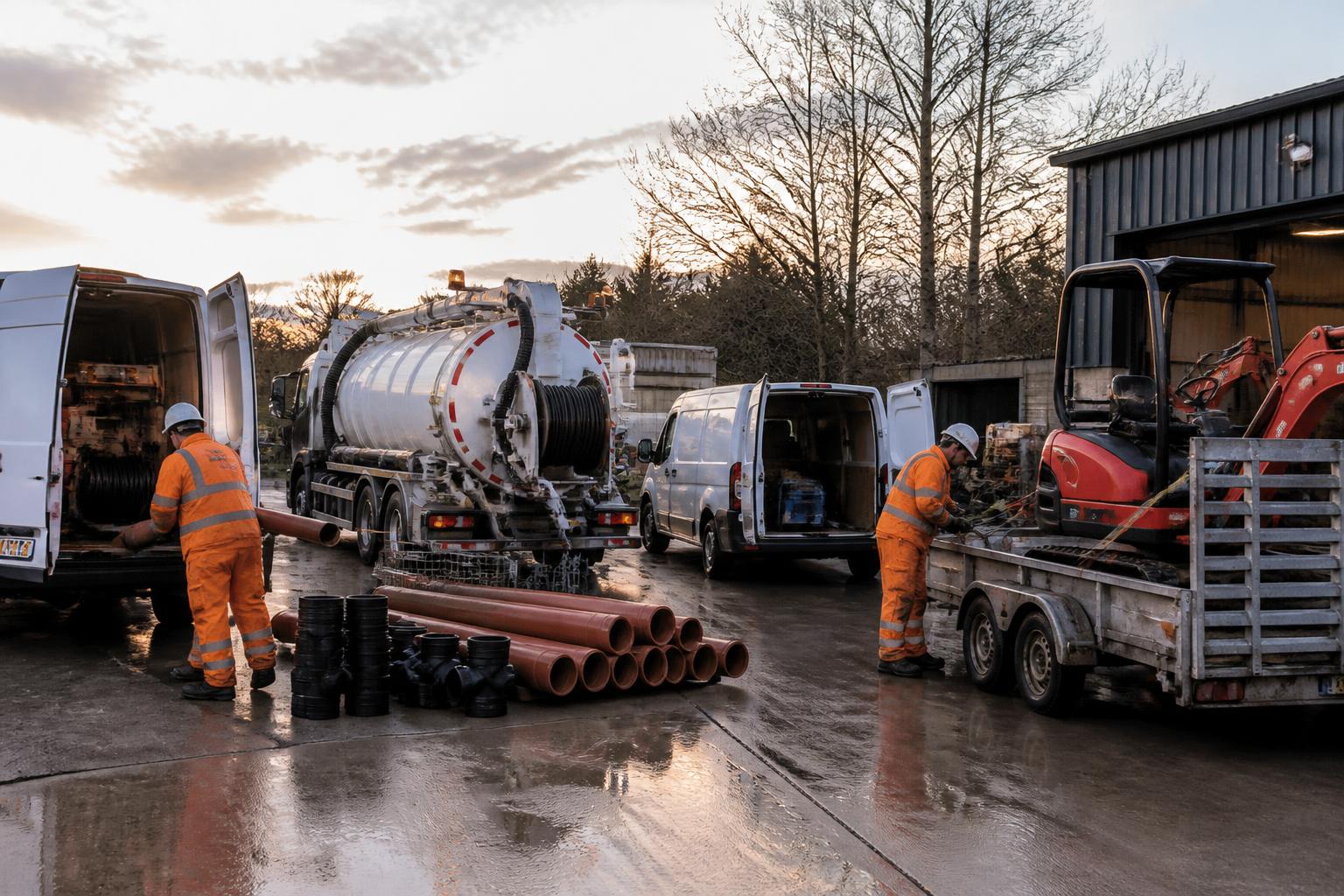
Digging more than drains? Foundations, oversite and site preparation are covered on our groundwork contractors page, and the full list of trades sits on our trades insurance hub.
- Drain clearance and jetting companies: reactive call-outs and planned maintenance for commercial landlords, letting agents and facilities companies
- CCTV drain survey firms: pre-purchase, adoption and condition surveys, where report errors bring professional indemnity into play
- No-dig repair and lining contractors: patch repairs, full lining and lateral reinstatement carried out inside existing pipes
- Drainage installation contractors: new foul and surface water systems, manholes and connections for housebuilders and developers
- Land drainage contractors: field drains, mole draining, ditching and outfalls for farms and estates, whose own land and buildings sit under farm insurance
- Septic tank and treatment plant installers: package treatment plants, septic tanks, soakaways and drainage fields for rural homes and businesses
- Tankering and emptying firms: cesspit, septic tank and interceptor emptying, with tank cleaning and waste transport questions to answer
- Sustainable drainage installers: attenuation tanks, permeable systems and swales on commercial and residential schemes
- Drainage divisions of plumbing firms: drain services run alongside plumbing work within one business
How much does drainage contractors insurance cost?
Premiums follow the type of drainage work, how deep you go and how close you work to live services. These factors carry the most weight.
Mix of work
Jetting and CCTV surveys, no-dig lining, new installation, land drainage and tankering are each rated differently. A clear turnover split avoids paying for activities you do not carry out.
Depth and excavation
Shallow garden repairs attract less weight than deep connections in the road, where trench support, traffic and buried services all come into play.
Confined space entry
Whether operatives enter manholes and sewers, the training they hold and the rescue arrangements in place all affect the employers' liability rating.
Equipment values
Jetting units, camera systems and lining kit can be worth more than the vans carrying them. Overnight security and trackers matter to the equipment premium.
Survey and design work
Firms that issue survey reports or design drainage need professional indemnity, priced on fee income and the kind of reports produced.
Claims record
Flooding, pipe damage and service strike claims are examined closely, along with what has changed since in procedures or equipment.
What drainage contractors insurance does not usually cover
Drainage claims tend to be refused for the same handful of reasons. These are worth understanding before you need to claim.
- The length of pipe actually being worked on, unless an extension for it has been bought
- Putting right your own faulty lining, joints or pipe laying
- Excavation deeper than the policy limit without the insurer's prior agreement
- Damage to buried services where the policy's conditions on tracing them first were not followed
- Gradual seepage and long-term contamination, which falls under environmental liability cover
- Errors in survey reports or drainage designs, unless professional indemnity is in place
- Tankers and jetting vans on the public road, which need commercial vehicle or fleet cover
- Jetting or camera kit stolen from a van that lacked the locks or alarms set out in the policy
Installing new drainage or servicing existing drains: what changes?
Many firms do both, but insurers look at the two sides of the trade differently. Knowing which side most of your turnover falls on helps when comparing quotes.
| Feature | Installing new drainage | Servicing existing drains |
|---|---|---|
| Typical work | New runs, manholes, connections, treatment plants and soakaways | Jetting, rodding, CCTV surveys, lining and patch repairs |
| Main liability risk | Striking buried services and undermining roads or neighbouring property | Flooding a property or fracturing an old pipe during cleaning |
| Employers' risk | Trench collapse, plant and manual handling | Confined spaces, sewage contact and high pressure water |
| Key cover sections | Contract works, plant and public liability | Equipment, public liability and professional indemnity for reports |
| What insurers ask | Dig depth, trench support and how services are traced | Jetting pressures, lining systems and chamber entry procedures |
How to compare drainage contractors insurance
A drainage proposal goes more smoothly when the detail is ready. These are the five things to prepare.
Split your turnover
Break it down between clearance, surveys, lining, new installation, land drainage and tankering.
Describe your excavation
State the deepest work you expect this year, how trenches are supported and whether you work in the highway.
Set out entry procedures
Explain whether staff enter chambers and sewers, their training, gas monitoring and rescue arrangements.
Schedule equipment and vehicles
List jetting units, cameras, lining kit and plant with values, plus every van and tanker for motor cover.
Check client contracts
Send the insurance clauses from framework agreements with water companies, councils and facilities firms, including any required limits.
Quotes for drainage firms
Tell us what your crews do and a broker who handles drainage risks will compare terms for you.
Compare coverDrainage contractors insurance FAQs
How much does drainage contractors insurance cost?
It depends on your mix of work, how deep you dig, whether staff enter confined spaces, the value of your jetting and camera equipment and your claims history. A firm doing mainly CCTV surveys is rated quite differently from one making deep sewer connections in the road.
Does drainage contractors insurance cover land drainage work?
Yes, if it is declared. Field drainage, mole draining, ditching and outfalls are usually rated as a separate activity, and insurers ask about the machinery used, overhead power lines across farmland and damage to existing field drains. Tell the broker what share of turnover comes from agricultural work.
Am I covered if a jetting job floods a customer's property?
Usually, under public liability, where the flooding was accidental and caused by your work. What is often not covered is repairing the drain you were working on, or redoing work that was faulty. Job records and before and after footage help show what happened.
Is a pipe that breaks during jetting covered?
Often not, because standard liability cover excludes the property being worked on. Old clay and pitch fibre pipes can fail under high pressure water, so some insurers offer an extension for damage to the drain itself, usually with a higher excess. Ask whether your policy includes it.
Do I need professional indemnity for CCTV drain surveys?
Usually, yes. A home buyer, developer or water company may rely on your survey report, and if it misses a defect the client's loss is financial rather than physical damage. Public liability does not pay for that, so firms issuing reports or designing drainage normally add professional indemnity.
Does the policy cover staff working in manholes and sewers?
Employers' liability covers injury and illness among your staff, including in confined spaces, but insurers want to know about this work at the outset. Expect questions about training, gas detection, rescue equipment and supervision. Undisclosed confined space work can cause problems at claim time.
Are septic tank and treatment plant installations covered?
They can be. Installing septic tanks, package treatment plants and drainage fields is usually treated as drainage installation, with contract works cover for the tank and pipework while on site. Insurers may also ask whether you service the plants after handover.
Does the policy cover our jetting vans and tankers?
Not on the road. Vans, tankers and combination units need motor insurance, often on a fleet policy. The drainage policy can cover the jetting unit and camera equipment carried in them, provided the values are declared and the security conditions are met.
How do I get a drainage contractors insurance quote?
Begin with the quote form linked here and a drainage specialist broker will call to go through your work. Having your turnover split, deepest planned excavation, confined space procedures and an equipment list to hand means insurers can be approached on that first call.
Ready to compare drainage contractors insurance?
Cover for your crews, your jetting and survey kit and the drains you clear and lay, placed with insurers that understand drainage work.