Scaffolding Insurance for scaffolding contractors
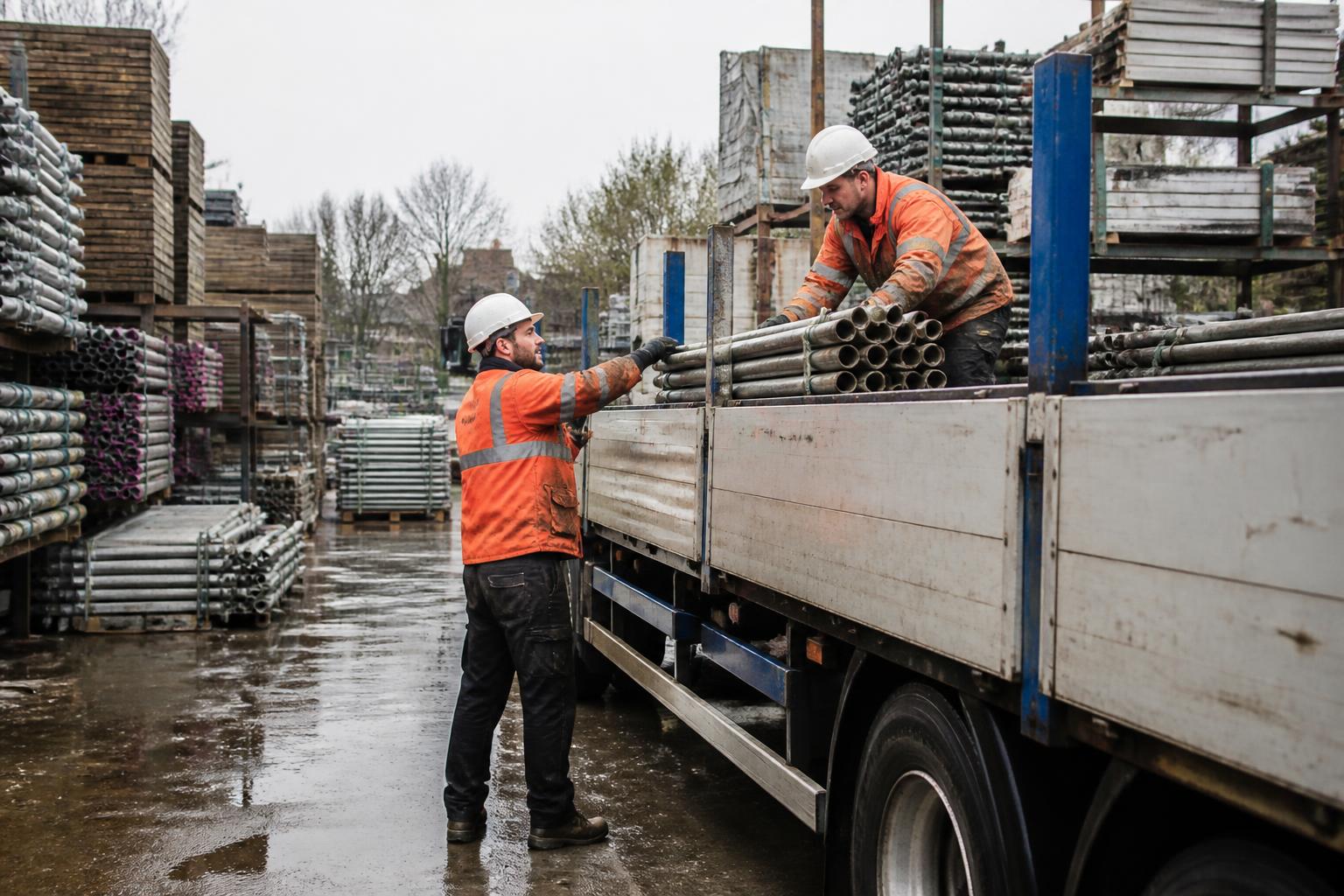
Scaffolding insurance for scaffolding contractors with erection gangs, a yard full of tube, fittings and boards, and scaffolds standing on hire across many sites. Compare cover for the structure while you build it, while it stands and while your stock is out on hire.
- Liability while scaffolds are erected, altered and struck
- Cover for tube, fittings, boards and system stock out on hire
- Limits that satisfy main contractors and highway licences
Reviewed October 2026 by the MyBusinessComparison.com editorial team
What is scaffolding insurance?
Scaffolding insurance is cover for scaffolding contractors against injury and damage claims arising from the access they erect, plus loss of their own scaffold stock. It usually combines employers' liability for the gangs, public liability while scaffolds are built, used and struck, and cover for tube, fittings, boards and system scaffold.
What sets scaffolding apart is that your liability does not end when the gang leaves. A scaffold can stand on hire for months while other trades use it, so insurers want to know how you hand it over, how often it is inspected and who is allowed to alter it.
Scaffolding insurance at a glance
- Suits
- Scaffolding contractors, temporary roof and access firms, and safety netting contractors
- Core covers
- Employers' liability, public liability and cover for scaffold stock
- Compulsory part
- Employers' liability for employed and labour-only scaffolders
- Key underwriting points
- Heights, sites, hire terms, inspections, training cards and design
- Often asked for
- Proof of public liability by main contractors and councils before work starts
- Usually separate
- Scaffold wagons, which go on a fleet or goods vehicle policy
What does scaffolding insurance cover?
Scaffolding firms usually bring the following covers together. Limits and conditions vary between insurers, particularly for stock out on hire.
Employers' liability
Scaffolders hurt during erection, alteration or striking, from falls between lifts to crushed hands and back injuries from loading wagons.
Read more about employers' liability insurance
Public liability during erection
A dropped clip or board hitting a pedestrian, or tube swinging into a shop window, while your gang is building or taking down a scaffold.
Read more about public liability insurance
Liability while the scaffold stands
Injury or damage caused by a scaffold you erected and left on hire, such as a sheeted scaffold failing in high wind or a collapse onto a neighbouring roof.
Scaffold stock on hire
Tube, fittings, boards, system components, sheeting and ladders at customers' sites, against theft, loss and damage. Many insurers set a limit per site.
Yard stock and equipment
Stock racked in your yard and depot, along with the forklifts and loaders used to move it, against fire, theft and storm.
Read more about plant and machinery cover
Scaffold design
Errors in calculations or drawings for non-standard scaffolds, temporary roofs and loading bays, where your firm produces the design.
Read more about professional indemnity insurance
Hoists and temporary roofs
Goods hoists, rubbish chutes and temporary roof structures you supply, where an accident can damage the building or injure other trades.
Safety netting and fall arrest
Liability for nets, soft landing systems and edge protection installed by your teams, if a system fails to catch or protect someone.
Extras scaffolding contractors consider
- Fleet insurance: scaffold wagons and crew vans under one renewal
- HGV insurance: larger flatbeds above the weight most van policies allow
- Group personal accident: set payouts for scaffolders injured on site
- Commercial legal expenses: chasing unpaid hire, retentions and disputed variations
Which firms is scaffolding insurance for?
It suits established firms that erect access for others or hire out their own scaffold. Typical buyers include:
Roofing or building work too? Roof work by your own crews is a different risk, covered on our roofers insurance page. For whole building projects see builders insurance.
- Commercial scaffolding contractors: tube and fitting or system scaffolds on offices, hospitals and industrial sites for main contractors
- Housing scaffolders: plot scaffolds for housebuilders, often moving from one plot to the next every few days
- Domestic and repair scaffolders: access for roofers, painters and builders on occupied homes, often over pavements under a council scaffold licence
- Safety netting contractors: installing and inspecting fall arrest nets, debris nets and soft landing systems inside buildings under construction
- Temporary roof and encapsulation firms: weather protection over refurbishments, heritage buildings and listed buildings
- Industrial and petrochemical scaffolders: access in refineries, power stations and plants, where site rules and higher limits apply
- Edge protection and access hire firms: barrier systems, towers and stair towers supplied with or without erection
- Scaffolders on infrastructure jobs: bridge, rail and highway structures for civil engineering contractors
How much does scaffolding insurance cost?
Scaffolding is underwritten as a high hazard trade, and premiums reflect both your labour and the scaffolds left standing on other people's sites. Insurers weigh these points.
Wage roll and labour-only gangs
Employers' liability normally makes up the bulk of the premium, priced on what you pay directly employed and labour-only scaffolders.
Heights and complexity
Maximum height, cantilevers, loading bays and temporary roofs all increase the rate, as does work over busy public areas.
Sites and sectors
Housing, commercial, industrial and rail work are each rated differently, and some sectors need specific agreement.
Value of stock out on hire
The more tube, fittings and boards you have on sites, the more the stock section costs, especially in areas with frequent theft.
Training and inspection
Insurers favour firms whose scaffolders hold recognised training cards and who keep inspection and handover records.
Claims experience
Collapses, falls and dropped objects count heavily. Showing what changed after each claim makes a difference.
What scaffolding insurance often excludes
These are the gaps that most often catch scaffolding contractors out.
- Damage caused after other trades altered or overloaded your scaffold without your agreement, depending on your hire terms
- Stock left on sites without the security conditions in the policy, or theft that cannot be traced to a specific site
- Wear, corrosion and bent tube from normal use, which is a running cost rather than an insured loss
- Design of non-standard scaffolds, unless professional indemnity has been arranged for that work
- Driving scaffold wagons on public roads, which is a matter for commercial vehicle cover or a fleet policy
- Work on railways, airports or offshore sites, unless declared and agreed in advance
- Fines and penalties, such as charges for breaching the terms of a scaffold licence
During erection or standing on hire: where does the risk sit?
Scaffolding claims fall into two phases, and policies treat them differently. Knowing which phase a job is in helps you check the cover and your hire terms.
| Feature | Erecting, altering and striking | Standing on hire |
|---|---|---|
| Who is on the scaffold | Your own gang | Other trades and the client's workers |
| Main claims | Falls of scaffolders and dropped materials | Collapse, wind damage, misuse and changes made without approval |
| Who is usually responsible | Your firm | Shared, depending on the hire contract and handover records |
| Policy section that responds | Employers' and public liability | Public liability, plus stock cover for loss and theft |
| What insurers ask | Training, harness use and safe systems of work | Handover certificates, inspection frequency and tagging |
How to compare scaffolding insurance
Gather these details before speaking to a broker so insurers can be approached in one go.
Count your scaffolders
List employed scaffolders, labour-only gangs and supervisors, with annual cost and training held.
Value your stock
Give the replacement value of tube, fittings, boards and system scaffold, and how much is usually out on hire.
Describe the work
Show the split between housing, commercial, industrial and infrastructure work, and the maximum heights involved.
Share your hire terms
Provide the conditions you hire scaffolds on, including handover, inspection and alteration clauses.
Explain design and claims
Say who designs non-standard scaffolds, and give details of past claims and what has changed since.
Quotes for scaffolding firms
Tell us about your gangs, stock and the sites you work on, and a broker familiar with scaffolding risks will compare cover.
Get a quoteScaffolding insurance FAQs
How much does scaffolding insurance cost?
Premiums depend mostly on your wage roll, maximum heights, the sectors you work in, the value of stock out on hire and your claims history. A firm erecting tall commercial scaffolds over city pavements pays a different rate from one doing two-lift housing scaffolds.
Am I covered after the scaffold is handed over?
Usually, under the public liability section, for injury or damage caused by the scaffold itself. Whether a claim sticks with you often depends on your hire terms and records, such as a signed handover, inspection tags and proof that others altered it without permission.
Does scaffolding insurance cover stock stolen from site?
It can, if the policy includes your stock on hire. Many insurers set a limit per site and expect stock to be secured where possible. Thefts discovered only at the end of a long hire, with no record of when they happened, can be harder to claim.
What public liability limit do councils ask for a scaffold licence?
Councils usually set a minimum public liability limit before they will grant a scaffold licence for the highway, and many ask for an indemnity or to be noted on the policy. The figure varies between councils, so check each authority's requirement before applying.
Are safety netting contractors covered by scaffolding insurance?
Yes, many scaffolding policies can include safety netting contractors, but the work must be declared. Insurers ask about rigging methods, net testing and inspection, because a net failing to arrest a fall leads to a serious injury claim.
Do I need professional indemnity for scaffold design?
If your firm prepares calculations or drawings for non-standard scaffolds, temporary roofs or loading bays, yes. Liability policies usually exclude design errors, so a design that fails needs professional indemnity to respond to the claim.
Can labour-only scaffolders be covered on my policy?
Yes. Labour-only scaffolders are normally treated as your employees for employers' liability purposes, so their cost goes into your wage roll declaration. Bona fide subcontractors are expected to hold their own policies, and you will be asked whether you see their certificates.
Are my scaffold wagons covered?
Not by the scaffolding policy. Wagons and vans are insured under motor policies, and most scaffolding firms with several vehicles use a fleet policy. Stock carried on them may be covered by the stock section or by separate goods in transit cover.
How do I get a scaffolding insurance quote?
Start by pressing the quote button. A broker who handles scaffolding contractors will call to go through your gangs, stock values, heights, hire terms and claims, then put the risk to insurers with an appetite for access work.
Ready to compare scaffolding insurance?
Cover for your gangs, the scaffolds you leave standing and the stock out on hire, set to the sites you work on.