Stonemasons Insurance for stonemasonry firms
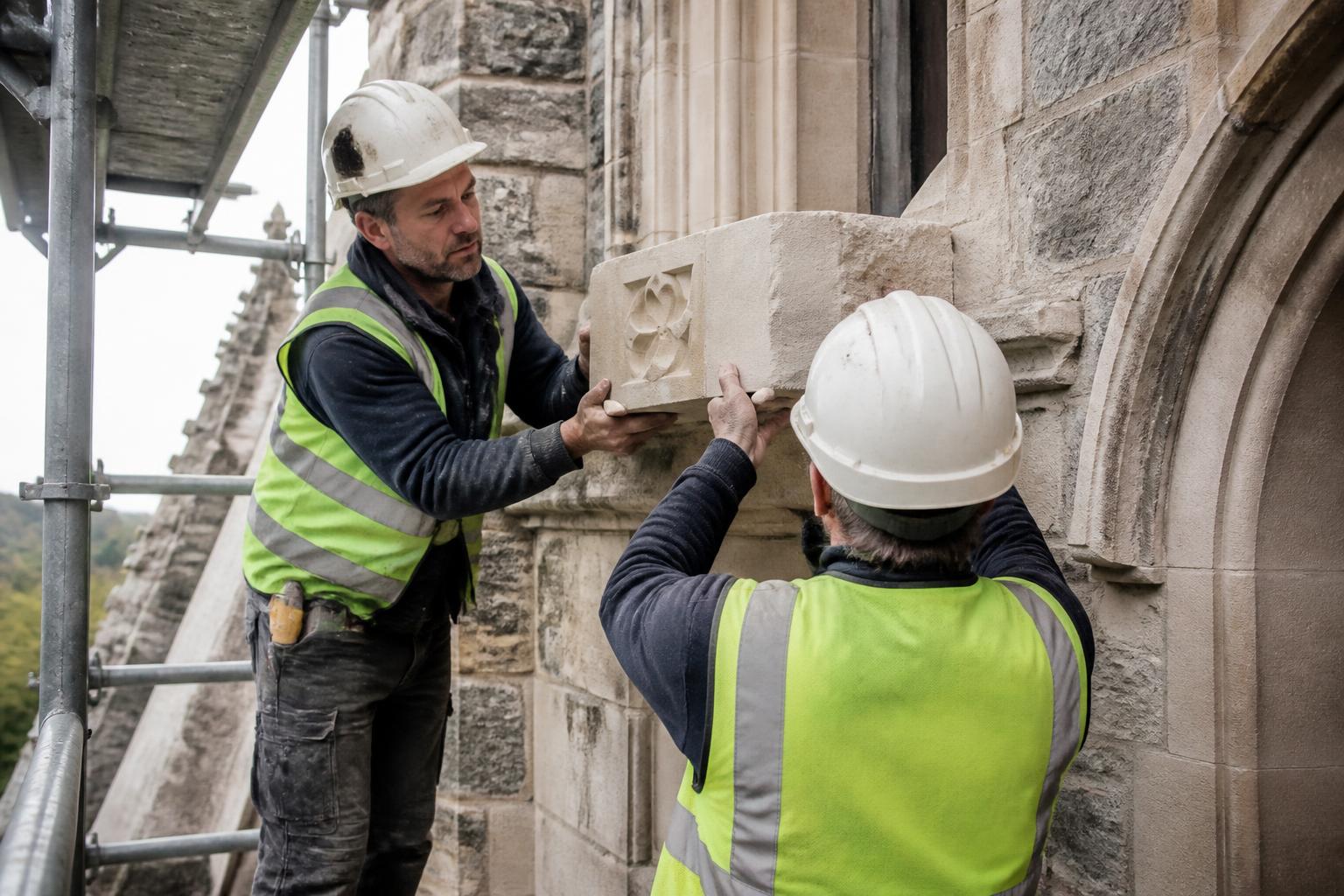
Stonemasons insurance for stonemasonry firms running a banker shop and fixing teams, from restoring cathedrals and cleaning facades to cladding new buildings and fixing memorials. Compare cover for the dust, the weight and the irreplaceable buildings you work on.
- Employers' liability that recognises silica dust in the workshop
- Public liability for work on historic and occupied buildings
- Stone stock, saws and lifting gear in the yard and on site
Reviewed October 2026 by the MyBusinessComparison.com editorial team
What is stonemasons insurance?
Stonemasons insurance is cover for stonemasonry firms that cut, carve, fix, clean and restore natural stone. It usually combines employers' liability for masons exposed to dust and heavy lifting, public liability for work on other people's buildings and land, and cover for the workshop, machinery, stone stock and finished pieces.
Most stonemasonry firms do two different jobs: shaping stone in a workshop and fixing it on site. Insurers look at each separately, because a dusty saw shop and a team on a cathedral scaffold carry very different risks.
Firms that mainly lay brick and block are better suited to bricklayers insurance, which is built around housebuilding gangs.
Stonemasons insurance at a glance
- Suits
- Stonemasonry, restoration, cladding, cleaning, walling and memorial firms with staff
- Core covers
- Employers' liability, public and products liability, workshop and stock
- Compulsory part
- Employers' liability for workshop and site masons
- Key underwriting points
- Dust control, heritage work, heights, heat work and cleaning methods
- Often added
- Goods in transit, lifting equipment inspection and contract works
- Priced on
- Wage roll, turnover split by activity, stock values and claims history
What does stonemasons insurance cover?
Stonemasonry firms usually build their policy from the sections below, weighted by how much of the work happens in the workshop and how much on site.
Employers' liability
Masons and labourers injured or made ill at work, including lung disease from silica dust, vibration injuries from hand tools and crush injuries when moving blocks.
Read more about employers' liability insurance
Public liability
Injury to others and harm to third party property, for example a falling coping stone or cleaning run-off staining a neighbour's paving. Cover for the section of building under repair is often restricted, so check that clause.
Read more about public liability insurance
Products and completed works
Claims after the work is done, such as a cladding panel or memorial coming loose and injuring someone, or a fixing failing in a parapet.
Read more about products liability insurance
Workshop and yard
Your workshop, saws, splitters, overhead cranes, dust extraction and office, with business interruption if a fire stops production.
Read more about commercial combined insurance
Stone stock and finished pieces
Raw blocks, slabs and carved or finished work in the yard, in transit and stored on site before fixing.
Goods in transit
Finished stone and memorials on your own lorries and vans, which are heavy, fragile and often irreplaceable.
Read more about goods in transit insurance
Lifting equipment inspection
Regular inspection of overhead cranes, hoists and lifting gear in the workshop, with breakdown cover for production machinery.
Read more about engineering inspection and breakdown cover
Tools and site equipment
Carving tools, grinders, cleaning rigs, lifting tackle and pointing equipment on site and in vehicles.
Extras stonemasonry firms consider
- Contractors' all risks: stonework in progress where the contract puts the risk on you
- Commercial vehicle insurance: crane-equipped lorries and vans carrying stone
- Environmental liability: cleaning chemicals and slurry reaching drains or watercourses
- Legal expenses cover: disputes over variations and payment on restoration contracts
Which firms is stonemasons insurance for?
It suits established firms whose work is mainly in natural stone, whether in the workshop, on site or both. Typical buyers include:
Paving or landscaping instead? Stone paving and patios are covered on our driveway and patio installers insurance page, and garden walls within wider schemes under landscapers insurance.
- Stonemasonry and restoration contractors: repairing and replacing stone on churches, country houses, civic buildings and listed buildings
- Stone cladding contractors: fixing stone facades and rainscreen panels to new offices, hotels and apartment blocks for main contractors
- Stone cleaning and restoration specialists: chemical, steam and abrasive cleaning, mortar repair and consolidation of historic facades
- Dry stone walling firms: building and rebuilding field walls, retaining walls and estate boundaries, often for farms and estates
- Monumental masons: memorials, headstones and plaques made in a workshop and fixed in cemeteries and churchyards, often with a showroom
- Architectural stone workshops: cutting and carving window surrounds, steps, fireplaces and features to order
- Stone worktop and interior fabricators: templating, cutting and fitting stone in kitchens and bathrooms, often with high-silica materials
- Masonry repair and pointing contractors: lime pointing, stitching and repairs on occupied buildings, often working with scaffolding contractors
How much does stonemasons insurance cost?
Stonemasonry premiums depend heavily on the mix of workshop and site work. Underwriters focus on the following.
Activity split
Insurers rate workshop cutting, site fixing, cladding, cleaning, walling and memorial work differently, so a clear turnover split matters.
Dust control
Wet cutting, extraction, face fit testing and health checks for workers exposed to dust all influence the employers' liability rate.
Heritage and height
Work on listed buildings, cathedrals and tall facades raises the potential size of a damage claim and the fall risk.
Cleaning methods
Abrasive and chemical cleaning are rated more heavily than gentle steam or water methods because of damage and run-off risks.
Stock and machinery values
The value of saws, cranes, stone stock and finished work sets the property part of the premium.
Claims experience
Past dust disease, injury or damage claims count against you, while evidence of improvements counts in your favour.
What stonemasons insurance commonly excludes
These are the exclusions stonemasonry firms run into most often.
- Replacing stone you cut wrongly, carved badly or fixed out of line, as faulty workmanship is not covered
- Damage to a historic surface caused by a cleaning method that was not declared to the insurer
- Natural weathering, frost damage and gradual decay of stone after the work is complete
- Fires from heat work, such as lead welding or torching membranes behind copings, when the insurer's hot works precautions were ignored
- Gradual pollution from repeated washing of slurry into drains
- Design of fixings or structural repairs, which needs professional indemnity cover
- Lorries and vans while driven, which belong on a fleet policy or separate motor cover
Banker masonry or fixer masonry: what changes?
Banker masons work stone in the workshop, while fixer masons set it on site. Many firms do both, and insurers price the two parts in different ways.
| Feature | Banker masonry in the workshop | Fixer masonry on site |
|---|---|---|
| Main injury risk | Silica dust, noise and vibration from saws and tools | Falls from scaffold and lifting heavy stone into place |
| Main liability risk | Fire and dust affecting neighbouring units | Damage to historic buildings and falling stone |
| Property at risk | Machinery, stock and finished pieces in the yard | Tools, lifting tackle and stone waiting to be fixed |
| What insurers ask | Extraction, wet cutting, health checks and crane inspection | Heights, heritage work, cleaning methods and heat work |
| Typical policy sections | Employers' liability, workshop, stock and breakdown | Public and products liability, tools and contract works |
How to compare stonemasons insurance
Gather these details first so the broker can present your stonemasonry firm accurately.
Split your turnover
Divide income between workshop production, site fixing, cladding, cleaning, walling and memorials.
Describe dust controls
Explain how stone is cut, the extraction and wet cutting used, and any health checks for workers.
Value the workshop
Give the value of machinery, overhead cranes, stone stock and finished pieces awaiting delivery.
List site work
Note heritage projects, maximum heights, cleaning methods and any heat work.
Gather claims details
Set out any previous claims, particularly dust disease or damage to historic buildings, and what changed afterwards.
Quotes for stonemasonry firms
Tell us about your workshop, site teams and the type of stone work you do, and a broker used to masonry risks will compare cover.
Get a quoteStonemasons insurance FAQs
How much does stonemasons insurance cost?
It depends on your mix of workshop and site work, dust controls, the heritage value and height of buildings you work on, cleaning methods, machinery and stock values, and claims history. A memorial workshop is priced very differently from a firm cladding tall city buildings.
Does stonemasons insurance cover silica dust claims?
Yes, claims from employees who develop lung disease from dust fall under employers' liability. Because these claims can be large and arise years later, insurers ask in detail about wet cutting, extraction, masks, face fit testing and health checks.
Are monumental masons covered for memorials falling over?
Usually, under products and completed works liability, if a memorial you fixed falls and injures someone. Insurers ask whether you follow recognised fixing standards and keep records, and many burial authorities ask memorial fixers to register and show proof of public liability.
Does stonemasons insurance cover stone cleaning and restoration?
It can, provided stone cleaning and restoration are declared along with the methods used. Abrasive and chemical cleaning carry a higher risk of damaging the stone or neighbouring property, and some insurers apply conditions such as trial panels before work begins.
Is dry stone walling covered?
Yes, dry stone walling can be included. Insurers will ask whether you build retaining walls, which carry more risk than field walls, and how you prevent livestock escaping through gaps while a wall is being rebuilt.
Does it cover stone cladding on new buildings?
Stone cladding work can be covered, including liability if a panel falls after completion. Insurers ask about heights, fixing systems and who designed them. If your firm designs the fixings, professional indemnity is usually needed alongside the liability cover.
Is damage to a listed building covered?
Accidental damage you cause to a listed or historic building is normally covered by public liability, though many policies limit cover for the part being worked on and excesses for heritage work may differ. The cost of redoing faulty work is not covered, and some insurers ask for method statements on major projects.
Are finished pieces covered while being delivered?
Only if you have goods in transit cover or a transit extension on your policy. Carved stone and memorials are heavy and fragile, so insurers ask how loads are secured and lifted, and may set conditions for crane offloading.
How do I get a stonemasons insurance quote?
Use the button on this page to start, giving a few details of your stonemasonry firm. A broker who places masonry risks will follow up on your workshop, site work, dust controls and claims, then compare terms from suitable insurers.
Ready to compare stonemasons insurance?
Cover for your workshop, your fixing teams and the historic buildings in your care, from a broker who understands stone.