Civil Engineering Insurance for infrastructure contractors
Works, liability and plant cover for contractors who dig, pipe, pave and build in open ground. Compare policies that deal properly with buried services, vibration damage and the limits your highway, utility and rail clients set.
- Damage to buried cables and pipes covered on clear terms
- Vibration and removal of support written into the liability cover
- Heavy plant, temporary works and open excavations insured
Reviewed October 2026 by the MyBusinessComparison.com editorial team
What is civil engineering insurance?
Civil engineering insurance is cover arranged for contractors who build roads, bridges, drainage, utility networks and other infrastructure. It combines works, public and employers' liability and plant cover, with terms for the risks civil works bring: striking buried services, vibration and loss of support to nearby property, and flooding of open excavations.
A standard building contractors' policy is written with buildings in mind and often restricts exactly those risks. Civil engineering policies are underwritten around the depth you dig, the plant you run and where you work, from verges and carriageways to rail corridors and riverbanks.
Civil engineering insurance at a glance
- Suits
- Highways, utilities, drainage, groundworks and structures contractors
- Core covers
- Contract works, public and employers' liability, plant
- Key extensions
- Underground services, vibration and removal of support, temporary works
- Priced on
- Contract values, type and depth of works, plant and where you work
- Often set by
- Highway, utility and rail clients, who fix minimum liability limits
- Sits elsewhere
- Tippers and road-going plant, which belong on a motor policy
What does civil engineering insurance cover?
Civil engineering policies follow the same structure as other construction cover, but the extensions and conditions are where they differ.
Contract works
Roads, pipelines, culverts, retaining walls and structures under construction, including washout and collapse of open excavations caused by storm or flood.
Read more about contractors' all risks cover
Underground services
Damage to buried cables, pipes and ducts you strike while digging, and the third party losses that follow, subject to safe digging conditions.
Vibration and removal of support
Damage to neighbouring buildings and land from piling, compaction, excavation or lowering of groundwater, which many standard liability policies restrict.
Public liability
Injury to road users, pedestrians and residents near your works, and damage to their property, at the limits your clients require.
Read more about public liability insurance
Employers' liability
Injury to your operatives from plant, trench collapse, traffic and manual handling, and illness from dust, noise and vibration.
Read more about employers' liability insurance
Plant and equipment
Owned and hired excavators, dumpers, rollers, cranes and pumps, on site and in transit, with hire charges after a loss.
Read more about plant and machinery insurance
Temporary works
Shoring, cofferdams, falsework and haul roads, which are often expensive to replace if they fail.
Design and temporary works design
Professional indemnity for design you carry out on design and build schemes or for your own temporary works.
Read more about professional indemnity insurance
Sudden pollution
Third party claims and clean up after a sudden spill of fuel, concrete washout or silt into a watercourse, usually under the liability section, with separate cover for wider clean up duties.
Read more about environmental liability insurance
Other covers civils firms arrange
- HGV insurance: tippers, grab lorries and low loaders that move spoil and plant
- Commercial combined cover: the depot, stores, workshop and offices you run from
- Management liability: defence costs for directors facing safety investigations
- Group personal accident: benefits for operatives off work after an injury
Who needs civil engineering insurance?
Any contractor whose work is mostly in the ground or on public infrastructure. These are the firms we see placing civil engineering cover.
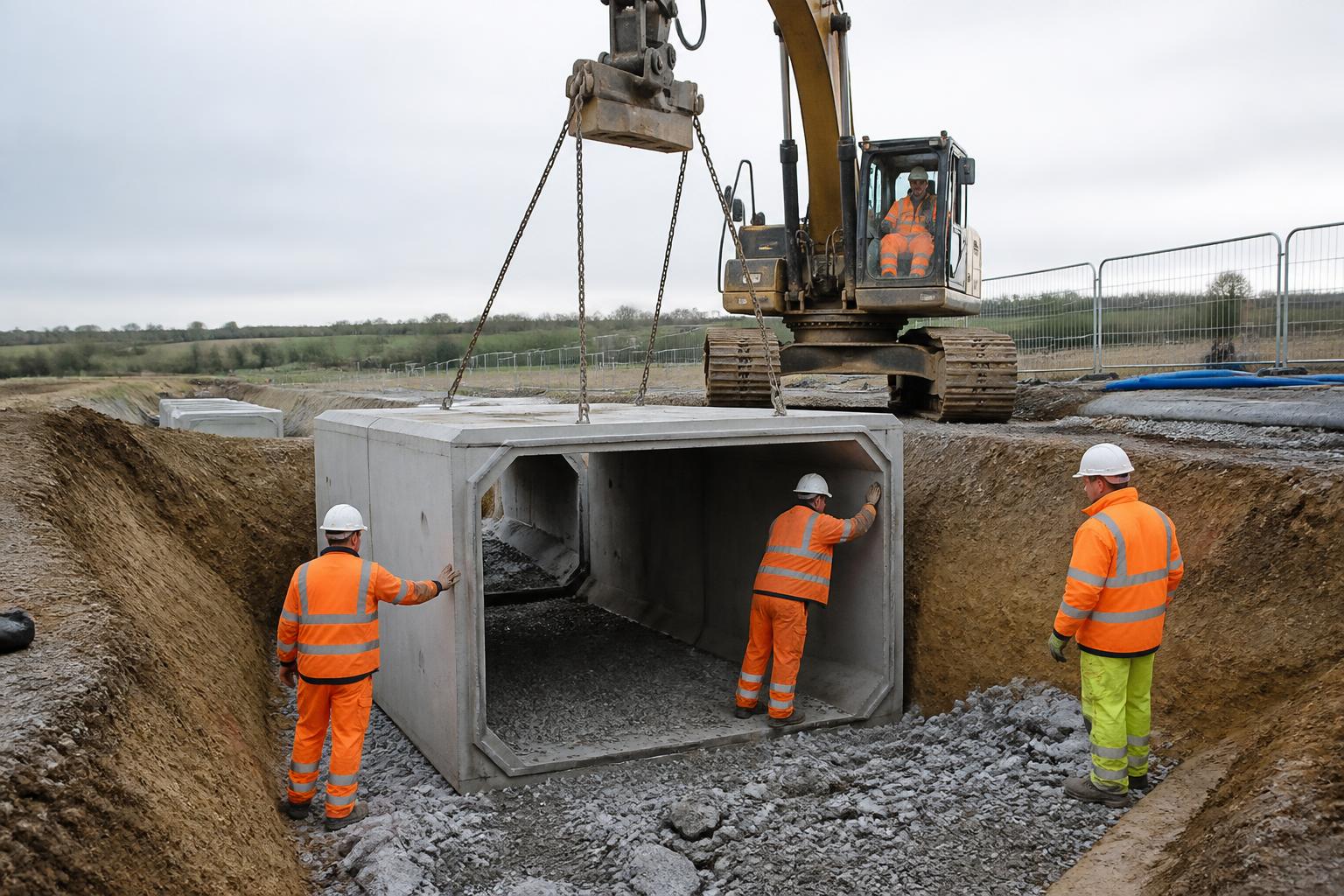
Building contractor rather than civils? Firms mainly putting up buildings are better served by a main contractor programme; the construction and engineering hub lists every option.
- Highways contractors: resurfacing, kerbing, junction improvements and traffic management on live roads
- Utility contractors: water, gas, power and telecoms connections and streetworks for network operators
- Groundworks contractors: foundations, slabs, drainage and external works on building sites
- Drainage and sewer contractors: new drainage, sewer rehabilitation, tankering and jetting
- Rail contractors: track, drainage, structures and lineside work, where clients set high liability limits
- Bridge and structures contractors: bridges, culverts, retaining walls and concrete structures
- Piling and foundation specialists: where vibration, heave and design responsibility all need careful cover
- Flood defence and marine contractors: river walls, coastal defences and work over or beside water
- Renewables infrastructure contractors: solar farms, cable routes and substations
- Plant hire with operators: excavation and lifting work carried out for other contractors
How much does civil engineering insurance cost?
Underwriters price civil engineering on what you dig, where you dig and what you dig with. These are the points that shift the premium.
Type of works
Resurfacing and external works are rated differently from deep drainage, piling, tunnelling or work over water, and some activities are referred to specialist insurers.
Depth and location
Maximum excavation depth, work on live carriageways, rail corridors and airports, and proximity to older buildings all carry weight.
Contract values and turnover
The annual value of works and your largest single contract set the works section; turnover drives the liability rating.
Plant values and security
Heavy plant left on open sites is a theft target, so trackers, immobilisers and secure compounds are reviewed.
Liability limits demanded
Rail, highway and utility clients often require higher limits than building work, which adds to the liability premium.
Service strike and claims record
Insurers look closely at past cable and pipe strikes and how your permit to dig process has changed.
What civil engineering insurance does not cover
Civil engineering claims tend to fail on conditions and restrictions. These are the ones that catch contractors out.
- Damage to buried services where safe digging conditions were not followed, such as checking plans and scanning before excavating
- Vibration or removal of support damage, unless the extension has been bought and any pre-start survey condition met
- The normal cost of pumping out groundwater or managing expected ground conditions
- Tunnelling, work over water or on rail infrastructure, unless declared and agreed
- Gradual pollution and contaminated land clean up, which need environmental liability cover
- Errors in permanent works design, unless professional indemnity is in place
- Tippers, low loaders and plant driven on public roads, which need motor cover
Civil engineering cover or a standard building contractors' policy?
Groundworks and civils firms are sometimes placed on a building policy. The difference shows up when something goes wrong underground.
| Feature | Civil engineering policy | Standard building policy |
|---|---|---|
| Buried cables and pipes | Written in, with clear safe digging conditions | Often limited or carries a high excess |
| Vibration and loss of support | Available as an extension with a set limit | Often excluded or tightly limited |
| Works in open ground | Rated for washout, flooding and collapse of excavations | Rated with buildings in mind |
| Heavy plant | Earthmoving and lifting plant included | Often written for smaller plant and tools |
| Where you work | Highways, rail and utility sites considered | Often excludes rail and airside work |
How to compare civil engineering insurance
Civils underwriters ask detailed questions. Answering them up front gets you firmer terms and fewer restrictions.
Describe your works
Types of work, maximum depths, any piling, tunnelling or work over water, and the share of turnover from each.
List clients and limits
Highway, utility, rail and private clients, with the liability limits and insurance terms each one requires.
Show your digging controls
Your permit to dig process, service plans, cable locating equipment and operator training.
Value your plant
Owned and hired plant, security measures and where machines are kept overnight.
Compare the extensions
Check underground services terms, vibration limits, temporary works cover and excesses before comparing price.
Got a framework renewal coming up?
Describe your works, plant and clients, and a civils specialist will line up terms from insurers that write this work.
Get a quoteCivil engineering insurance FAQs
How much does civil engineering insurance cost?
It depends on the type and depth of your works, where you work, contract values, plant values, the liability limits your clients demand and your record of service strikes and claims. Piling, rail corridors and marine work attract higher rates than surfacing or external works. Your broker can explain which of these is pushing the price up.
Does the policy cover striking an underground cable or pipe?
Usually, yes. Damage to the service and the third party losses that follow are covered, but many insurers set a higher excess for service strikes and require you to check plans and scan before digging. Missing those steps can put a claim at risk.
What is removal of support cover?
It covers damage to neighbouring land or buildings caused by excavation, piling, vibration or lowering the water table. Many standard liability policies exclude or restrict it, so civil and groundworks contractors usually buy it as an extension with its own limit.
Do we need cover for temporary works design?
If your engineers design shoring, cofferdams, falsework or haul roads, a failed design that causes no physical damage falls outside both the works and liability sections. Professional indemnity insurance covers it, and some insurers offer a limited design extension for contractors who design only temporary works.
Can we work on railways or airports under our policy?
Only if the insurer has agreed it. Many contractors' policies exclude rail and airside work unless declared, and rail clients usually ask for higher liability limits. Tell the broker before you tender so the cover and limits can be arranged in time.
Is flooding of open excavations covered?
Damage to the works from storm or flood is normally covered under the contract works section, subject to the excess. The routine cost of pumping out groundwater you would expect on site is not, because it is a normal part of the job rather than insured damage.
Does the policy pay for a fuel spill into a river?
Most liability policies cover sudden, identifiable pollution incidents, including clean up for third parties. Gradual seepage and clean up of your own site are usually excluded, which is where environmental liability insurance comes in.
How are tippers and low loaders insured?
Vehicles that travel on public roads need motor cover, usually under an HGV policy or a fleet policy. Plant that only works on site can sit on the plant section, but check how machines driven between sites are insured.
How do I get a civil engineering insurance quote?
Ask for terms from this page and a broker who handles civil engineering accounts will set up a call. It speeds things up to have your types of work, maximum depths, contract values, client limits, plant schedule and service strike record to hand.
Ready to compare civil engineering insurance?
Works, liability and plant cover written for what happens in the ground, arranged by brokers who know infrastructure contracts.