Roofers Insurance for roofing contractors
Roofers insurance for roofing firms running crews on pitched, flat and industrial roofs, from re-roofing housing estates to torch-on and single ply work on commercial buildings. Compare cover that reflects heat work, open roofs and the heights your teams work at.
- Liability for water getting in while a roof is stripped
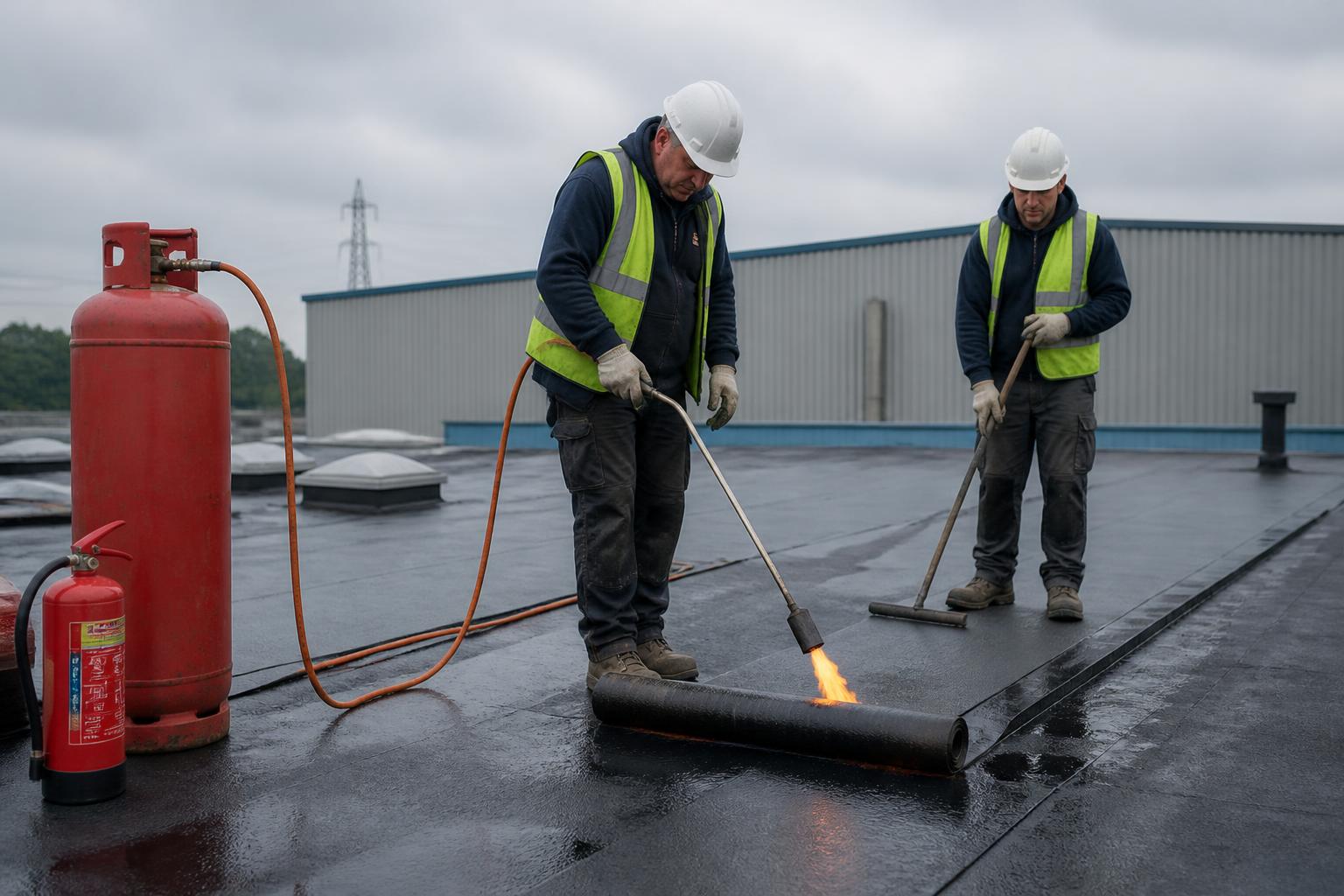
- Heat work for torch-on felt, hot bitumen and lead
- Employers' liability for crews working at height
Reviewed October 2026 by the MyBusinessComparison.com editorial team
What is roofers insurance?
Roofers insurance is a trade policy for roofing contractors that combines public liability, employers' liability and cover for tools, plant and materials. It is written around the hazards roofing creates: falls from height, objects dropped from the roof, fires started by heat work and rain damage while a roof is open.
The detail that matters most is how the policy treats heat and water. Insurers ask whether your crews use torches, hot bitumen or lead welding, and many attach conditions such as clearing combustibles, keeping extinguishers to hand and watching the area once the work stops. Most also expect stripped roofs to be properly sheeted or covered at the end of each day.
Firms that also build extensions or carry out general building work are usually better placed on builders insurance, and erecting your own scaffold is a separate risk that has to be declared.
Roofers insurance at a glance
- Suits
- Roofing contractors with employed crews, vans and housing, commercial or industrial contracts
- Core covers
- Public liability, employers' liability, tools, plant and materials on site
- Compulsory part
- Employers' liability, for firms with staff or labour-only crews
- Key underwriting points
- Heat work, maximum working height, fragile roofs and asbestos
- Common conditions
- Hot works precautions and temporary weatherproofing of stripped roofs
- Usually set by
- Main contractor, housing association and local authority contract terms
What does roofers insurance cover?
Roofing firms usually put these covers together on one schedule. Each has its own limit, and several carry conditions that are specific to roof work.
Public liability
Injury to the public and damage to property you do not own, from a slate falling onto a parked car to a fire spreading into a roof void from a torch.
Read more about public liability insurance
Employers' liability
Roofers and labourers injured at work, including falls through fragile roof lights, slips from ladders and back injuries from carrying bundles of tiles.
Read more about employers' liability cover
Heat work
Liability for fires started by torch-on felt, hot bitumen boilers or lead welding, provided the hot works conditions on the policy were followed on the day.
Contract works
The new roof and materials fixed or waiting on site, against storm, theft and fire before handover, including stripped areas under temporary cover.
Read more about contractors' all risks insurance
Tools and site equipment
Nail guns, slate cutters, gas torches, bitumen boilers, ladders and roof ladders kept on site, in lock-ups and in vans overnight.
Hired-in access and plant
Cherry pickers, scissor lifts, hoists and material lifts on hire, where the hire terms make you responsible for damage, theft and the rental owed.
Read more about plant and machinery insurance
Materials and lead
Tiles, slate, membranes, insulation boards and sheet lead delivered to site. Lead is a regular target for thieves, so many insurers set separate limits for it.
Completed work
Claims after the job is finished, such as a ridge tile coming loose in a gale and injuring someone, or a poorly dressed flashing letting water into the property below.
Read more about products and completed works cover
Extras roofing firms often add
- Commercial vehicle insurance: crew vans and tippers carrying ladders, waste and materials
- Fleet insurance: one policy once you run several vans, a flatbed and a hoist trailer
- Group personal accident: set payments to roofers injured in a fall, whoever was at fault
- Commercial legal expenses: disputed final accounts, retentions and employment claims
- Commercial combined insurance: a yard holding stock, skips and plant alongside your office
Which roofing firms is roofers insurance for?
It suits roofing contractors whose income comes mostly from work on roofs and roof drainage. Typical buyers fall into these groups.
Scaffold or building work too? If your firm erects scaffolding for other trades, see scaffolding insurance. Firms taking on whole projects should look at insurance for construction companies.
- Pitched roofing contractors: tiling and slating crews on new-build estates, re-roofing programmes and private housing
- Flat roofing specialists: torch-on felt, mastic asphalt, liquid systems and single ply membranes on schools, flats and shops
- Industrial roofing and cladding firms: profiled metal sheeting, roof lights and over-cladding on warehouses and factory units, often from cherry pickers
- Guttering and fascia board installation firms: replacing fascias, soffits, gutters and downpipes, often on occupied homes from towers or a hired scaffold
- Heritage roofers and leadworkers: natural slate, stone tiles and traditional leadwork on churches and listed buildings
- Housing repair and planned maintenance contractors: roof repairs for councils and housing associations, alongside property maintenance work
- Roofers on loft and extension projects: roofs for firms doing loft conversions and extensions, as a subcontractor
- Green and blue roof installers: drainage layers, planting and water attenuation systems on commercial roofs
- Roofers fitting solar mounts: fixing frames and making roofs watertight around panels for solar installation firms
How much does roofers insurance cost?
Roofing is rated as a higher hazard trade, so underwriters look closely at how your crews work. These points move the premium most.
Heat work
Firms using torches, hot bitumen or lead welding pay more than those using only cold-applied systems, and some insurers will not take heat work at all.
Height and roof type
Maximum working height, fragile roofs and industrial sheeting all count. Domestic re-roofing is usually rated more gently than large commercial roofs.
Wage roll and crews
The employers' liability premium follows the pay of employed roofers and labour-only crews, so accurate figures matter.
Turnover and contract mix
Turnover drives the public liability rate, and the split between housing, commercial and heritage work changes it.
Asbestos and stripping
Removing old roofs that may contain asbestos cement, or stripping large areas at once, adds risk the insurer will want to understand.
Claims record and controls
Past water ingress or fire claims weigh heavily. Written hot works permits, edge protection and daily sheeting checks help.
What roofers insurance commonly leaves out
Roofing claims are often declined or cut back for the reasons below, so they are worth checking before work starts.
- Rain damage to the building and its contents where a stripped roof was not adequately covered, depending on the policy conditions
- Fires from heat work where the hot works conditions, such as a fire watch after the torch is put away, were not followed
- Putting right your own faulty roofing, such as replacing slates fixed with the wrong nails or relaying a membrane that failed
- Removing or disturbing asbestos cement sheets, unless declared and agreed; many policies exclude asbestos altogether
- Erecting scaffolding for other trades, which needs specialist scaffolding insurance
- Jobs higher than the height limit shown on your schedule, or on high risk sites such as airports and railways, unless agreed
- Specifying roof build-ups or drainage design for a fee, which needs professional indemnity insurance
Cold-applied roofing or heat work: what changes?
The roofing systems you install change how insurers see your firm more than almost anything else. This is how the two sides of the trade usually compare.
| Feature | Pitched and cold-applied roofing | Torch-on, hot bitumen and lead |
|---|---|---|
| Main liability risk | Falling materials and rain getting in | Fire spreading into the building, plus rain getting in |
| Policy conditions | Sheeting stripped roofs and securing materials | Hot works permits, extinguishers and a fire watch after work stops |
| Insurer appetite | Accepted by most trade insurers | Fewer insurers, often with a higher excess for fire |
| What the underwriter asks | Roof types, heights and crew size | Who is trained, which torches are used and how permits are recorded |
| Typical buyers | Tiling, slating, fascia and gutter firms | Flat roofing, mastic asphalt and leadwork specialists |
How to compare roofers insurance
Roofing proposals raise a lot of questions, so having these answers ready shortens the process.
Split your work by roof type
Show how turnover divides between pitched, flat, industrial, heritage and fascia or gutter work.
Describe any heat work
List the processes, how often they happen, who is trained and how hot works permits are issued and kept.
Confirm heights and access
State the highest roofs your crews work on and the access used: hired scaffold, towers, cherry pickers or your own.
Gather contract terms
Note the liability limits and weatherproofing duties in your main contractor and housing contracts.
Set out your claims history
Explain each past claim, especially water ingress or fire, and what changed in your procedures afterwards.
Quotes for roofing contractors
Describe your roofing work, crews and heat processes, and a broker who places roofing risks will compare cover.
Get a quoteRoofers insurance FAQs
How much does roofers insurance cost?
There is no set figure. The premium depends on whether you do heat work, the heights and roof types you work on, your wage roll, turnover and claims record. A firm laying torch-on felt on commercial roofs is priced very differently from one replacing tiles on houses.
Does roofers insurance cover rain getting in while the roof is stripped?
Usually, as long as the policy conditions were met. Most insurers expect stripped areas to be covered with suitable sheeting or temporary roofing at the end of each day and before forecast bad weather. Where that was not done, a water damage claim can be reduced or declined.
Does roofers insurance cover torch-on and hot bitumen work?
Only if you declare it and the insurer agrees. Policies that accept heat work almost always have hot works conditions attached, and breaching them can leave a fire claim uncovered. Some insurers decline heat work entirely, so this is the first thing a broker will ask.
Does roofers insurance cover guttering and fascia board installation?
Yes, guttering and fascia board installation is normally treated as part of the roofing trade. Declare it, along with the access you use, because fascia work often happens on occupied homes from towers or a hired scaffold, which affects the public liability risk.
Is my firm covered for putting up its own scaffold?
Not automatically. Many roofing policies cover working from scaffold that others erect but exclude erecting it yourself. If your crews put up towers or tube scaffold, declare it so the insurer can agree it, or look at cover written for scaffolding firms.
Does an insurance-backed warranty replace roofers insurance?
No. An insurance-backed warranty protects your customer's roof warranty if your firm stops trading. Roofers insurance protects your firm against liability claims and losses. Many flat roofing firms offer both, but they are separate products bought for different reasons.
Are falls through fragile roofs covered?
Injuries to your own workers are covered by employers' liability, and injuries to others by public liability. Expect questions on how you protect roof lights and fragile sheets, such as covers, netting or staging, and poor controls can affect the terms offered.
What public liability limit do roofing contractors usually need?
It depends on your contracts. Commercial main contractors, councils and housing associations often specify a minimum in the tender documents, and it is commonly higher than domestic work would need. Read the insurance clause in each contract and settle the limit with your broker before you sign.
How do I get a roofers insurance quote?
Send a short outline of your roofing firm through this page. A broker who places roofing risks will follow up for detail on heat work, heights, crews, turnover and past claims, then approach suitable insurers for you.
Ready to compare roofers insurance?
Cover for heat work, open roofs and crews at height, matched to the roofing contracts your firm signs.