Goods in Transit Insurance for firms that move stock
Cover for the loads on your vehicles, whether they are your own stock or goods you carry for customers. Compare policies arranged around your routes, commodities and contract terms by brokers who place transit risks for distributors and carriers.
- Loss or damage while goods are on the move
- Loading, unloading and overnight stops included
- Carriers' liability matched to your trading terms
Reviewed October 2026 by the MyBusinessComparison.com editorial team
What is goods in transit insurance?
Goods in transit insurance covers loss of or damage to goods while they are being carried by road, including loading, unloading and short stops along the way. It protects either your own stock on your vehicles or, for carriers, your legal liability for customers' goods in your care.
Motor insurance does not cover the load. A van or lorry policy pays for the vehicle and third party claims, so if the vehicle is broken into, crashes or catches fire, the goods inside need their own cover. Limits are set per vehicle and per load, so they need to match the most valuable consignment you move, not the average.
Goods in transit insurance at a glance
- Suits
- Distributors, manufacturers, contractors and carriers moving goods by road
- Two bases
- Own goods cover, or carriers' liability for customers' goods
- Limits
- Per vehicle and per load, sometimes per annum as well
- Typical conditions
- Locked vehicle, alarm and immobiliser, rules on unattended and overnight parking
- Priced on
- Commodities, load values, routes, security and claims
- Not included
- The vehicle itself, which needs separate motor cover
What does goods in transit insurance cover?
Cover usually runs from the moment goods are loaded until they are delivered, subject to the limits and security conditions on your schedule.
Goods on your own vehicles
Theft, fire, collision and overturning while stock is carried in your own vans and lorries, up to the limit for each vehicle.
Loading, unloading and handling
Damage while goods are lifted on or off the vehicle, including by forklift or tail lift at your site or the customer's.
Theft from the vehicle
Theft following forcible entry to a locked vehicle, provided the security conditions were met. This is the section insurers scrutinise most.
Overnight and temporary storage
Goods left on a vehicle overnight or held briefly at a depot during the journey, usually where the vehicle is in a locked building or secure compound.
Read more about warehousing and storage insurance
Carriers' liability
For hauliers and couriers: your liability to customers for their goods, on the conditions of carriage you trade on. Limits are often set by weight or by consignment.
Read more about HGV and haulage insurance
Subcontracted carriers
Goods moved by hauliers or couriers you hire, either as an extension of your policy or as a check that the subcontractor holds adequate cover.
Read more about courier insurance
Refrigerated loads
Deterioration of chilled or frozen goods after a breakdown of the vehicle's refrigeration unit, where this extension has been added.
Debris removal and reloading
Costs of clearing spilled goods, reloading onto a replacement vehicle and getting the consignment to its destination.
Covers that often sit alongside transit insurance
- Marine cargo: overseas shipments, including the sea and air legs that road transit policies leave out
- Fleet insurance: the vans and lorries themselves, on one policy
- Commercial combined: stock at your premises, which a transit policy does not cover
- Trade credit insurance: unpaid invoices if a customer fails after the goods have been delivered
Who needs goods in transit insurance?
Any business whose stock spends time on a vehicle, or that carries other people's goods for payment. These are the firms that buy it most.
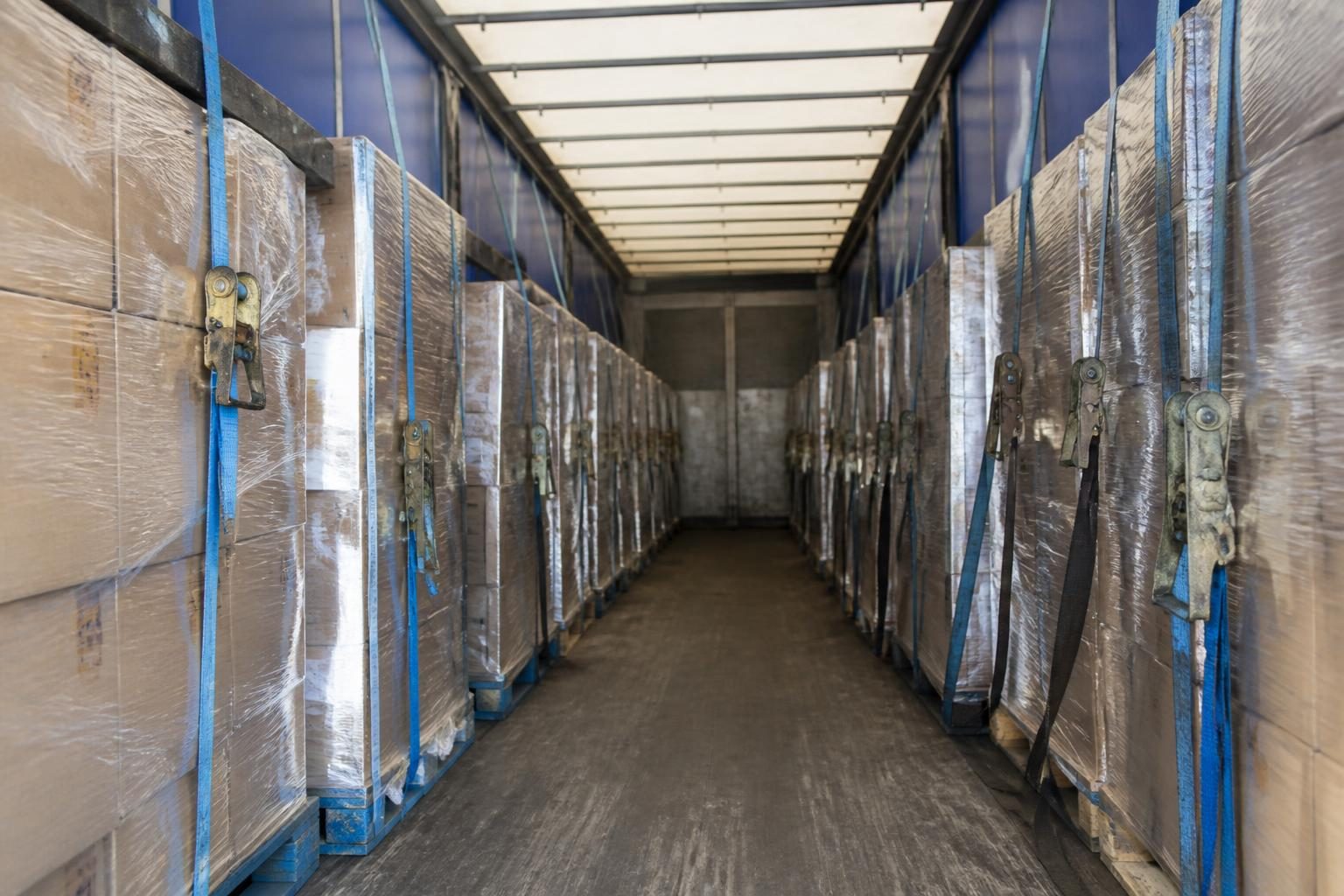
Moving goods overseas? Sea and air shipments, and most international road journeys, are covered under marine cargo insurance rather than a road transit policy.
- Wholesalers and distributors: daily delivery rounds with mixed loads and high stock values on each vehicle
- Manufacturers: finished goods to customers and components between sites
- Hauliers and logistics firms: carriers' liability for customers' goods on the terms in each contract
- Courier and same day delivery firms: parcels and multi-drop work where cover follows each consignment
- Firms carrying goods for payment: any business moving other people's goods needs carriers' cover for the load and hire and reward use on the vehicles
- Electrical and building services contractors: cable, switchgear and plant carried between stores and sites
- Builders merchants: timber, aggregates and materials delivered on flatbeds and crane lorries
- Retailers with home delivery: furniture, white goods and electricals delivered and installed
- Events and production companies: staging, sound and lighting kit moving between venues
- Medical and pharmaceutical suppliers: temperature controlled and high value products with strict handling terms
- Farms and food producers: produce and livestock feed, often with refrigerated or bulk loads
- Removal and storage firms: household and office contents, usually on specific conditions of carriage
How much does goods in transit insurance cost?
Insurers price transit cover on what is being carried and how exposed it is. These factors make the biggest difference.
What you carry
Tobacco, alcohol, electronics, metals and pharmaceuticals attract thieves and carry higher rates and stricter conditions than building materials or packaged food.
Load values
The maximum value on any one vehicle sets the limit you need. An occasional high value load should be declared rather than averaged out.
Routes and parking
Urban multi-drop work, long distance trunking and overnight parking away from base each carry different theft risks.
Vehicle security
Alarms, immobilisers, tracking, deadlocks and secure parking. Some commodities are only insurable with specific measures in place.
Conditions of carriage
For carriers, the conditions you trade on set how much liability you accept, and higher contractual limits mean higher premiums.
Claims history
Theft and damage claims over recent years, and what changed in packing, routes or security afterwards.
What goods in transit insurance does not cover
Transit claims are often declined on conditions rather than cover. These are the points to check.
- Theft from a vehicle left unattended and unlocked, or with keys left in or on it
- Theft overnight where the vehicle was not parked as the policy requires
- Poor packing or loading, and damage from the nature of the goods themselves
- Loss from delay, loss of market or penalties for late delivery
- Goods that disappear with no evidence of how or when
- High value or target commodities not declared to the insurer
- Damage to the vehicle, which needs commercial vehicle or fleet cover
- Goods carried by sea or air, which need marine cargo cover
Own goods cover or carriers' liability?
Which form you need depends on whose goods are on the vehicle. Many firms need both.
| Feature | Own goods cover | Carriers' liability |
|---|---|---|
| Whose goods | Your own stock and materials | Customers' goods carried for payment |
| What triggers a claim | Loss or damage to your goods | Your legal liability to the goods owner |
| Settlement basis | Usually cost or replacement value | What you owe under your conditions of carriage |
| Typical buyers | Wholesalers, manufacturers, contractors | Hauliers, couriers, removal firms |
| Linked motor cover | Business use on the vehicle policy | Hire and reward use on the vehicle policy |
How to compare goods in transit insurance
Transit underwriters want detail about the goods and the journey. This makes quotes faster and claims smoother.
List what you carry
Describe each type of goods and flag anything high value, fragile, temperature controlled or attractive to thieves.
Set realistic limits
The highest value on any one vehicle and any one load, including peaks such as seasonal stock.
Explain your journeys
Local or national, single or multi-drop, overnight stops and whether you use subcontractors.
Send your contract terms
Carriers should share the conditions of carriage they trade on and any customer contracts that raise liability.
Read the security conditions
Check alarm, immobiliser, unattended vehicle and overnight parking rules before you choose.
Get goods in transit cover arranged
Tell us what you carry, where and how much, and a specialist broker will compare cover.
Compare quotesGoods in transit insurance FAQs
How much does goods in transit insurance cost?
It depends on what you carry, the maximum value per vehicle, your routes, vehicle security and claims history. Target goods such as electronics or alcohol cost far more to insure than building materials of the same value.
Does my van or lorry insurance cover the goods inside?
No. Motor policies cover the vehicle and third party claims, not the load. Some policies include a small amount for tools or personal belongings, but stock and customers' goods need their own transit cover.
What is the difference between own goods and carriers' cover?
Own goods cover pays for loss of or damage to your own stock. Carriers' cover pays what you are liable for when customers' goods are lost or damaged in your care, which depends on your conditions of carriage.
Are goods covered if the vehicle is left overnight?
Usually only if it is parked where the policy allows, such as a locked building or secure compound, with alarms set. Theft from a vehicle parked in the street overnight is a common exclusion.
Does goods in transit cover subcontracted hauliers?
Some policies extend to goods moved by subcontractors you hire, often at a lower limit. Many firms also ask subcontractors for evidence of their own cover. It is worth agreeing with the broker how subcontracted loads are handled.
Can goods in transit be added to a commercial combined policy?
Yes. Many commercial combined policies include a transit section for modest values. Firms moving high value or frequent loads usually get better limits and terms from a standalone policy.
Is goods in transit insurance compulsory?
It is not compulsory, but many customer contracts require carriers to hold it at a stated limit. Without it, a single theft can leave a firm paying for a full load of its own or a customer's goods.
Does it cover goods sent abroad?
Most road transit policies cover the UK only, though some extend to Europe. Shipments by sea or air, and many international road journeys, need marine cargo insurance instead.
How do I get a goods in transit insurance quote?
Send an enquiry through the quote button and a transit broker will call you back. It speeds things up to have a list of what you carry, maximum load values, routes, vehicle security and any conditions of carriage ready.
Ready to compare goods in transit insurance?
Cover for every load, set at the right limit, arranged by a broker who understands distribution and haulage.