Marine Cargo Insurance for importers and exporters
Cover for goods you buy from or sell to other countries, from the supplier's door to your warehouse, by sea, air or road. Compare single shipment and annual open covers through brokers who arrange cargo insurance for trading businesses.
- Door to door cover across sea, air and road legs
- Annual open cover for regular shipments
- Your share of general average costs handled
Reviewed October 2026 by the MyBusinessComparison.com editorial team
What is marine cargo insurance?
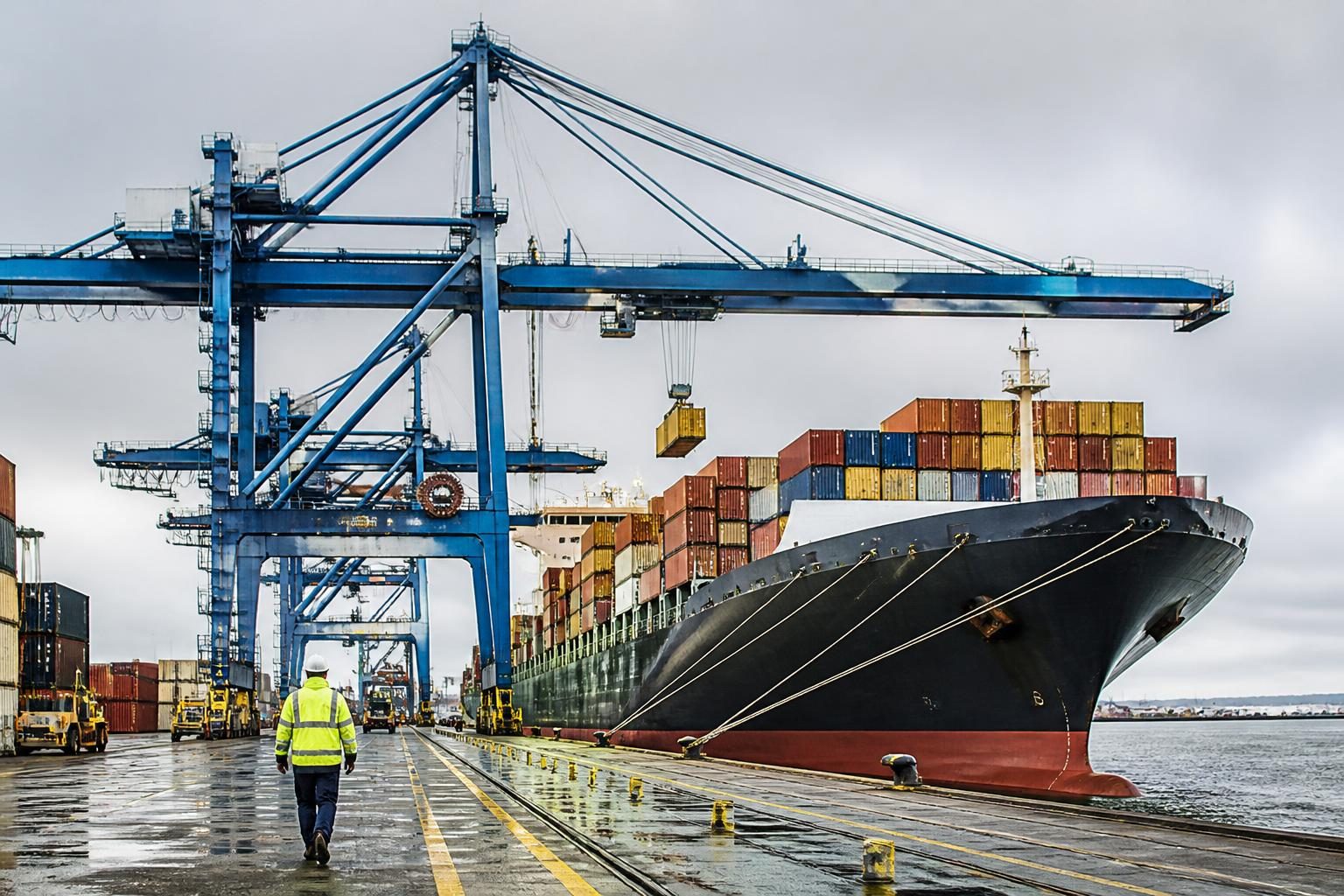
Marine cargo insurance covers goods against loss or damage while they are being shipped between countries by sea, air, road or rail. Despite the name it is not limited to ships: a typical policy follows the goods from the seller's premises to the buyer's, including storage in transit.
Carriers accept only limited liability for the goods they move, and their liability is usually limited per package or by weight rather than by value. Without cargo cover, an importer or exporter can lose most of the value of a consignment and still have to contribute to a shipowner's costs after a casualty at sea.
Who arranges the insurance depends on the trade terms in your sales or purchase contract. Under some Incoterms the seller insures; under others, the risk passes to the buyer as soon as the goods leave the supplier.
Marine cargo insurance at a glance
- Suits
- Importers, exporters, manufacturers and distributors trading overseas
- Forms
- Single shipment policy or an annual open cover for regular trade
- Cover basis
- Usually all risks, with named perils options for some goods
- Insured value
- Typically invoice value plus freight, insurance and an agreed margin
- Priced on
- Annual shipment values, commodities, routes, packing and claims
- Often added
- War and strikes cover, and stock held in warehouses
What does marine cargo insurance cover?
Cargo policies are written on standard market clauses, adapted to your goods. These are the elements most trading businesses need.
Sea freight
Loss or damage to containerised, bulk or break bulk cargo, including water damage, heavy weather, fire, sinking and containers lost overboard.
Air and road legs
Air freight and the road journeys at each end, so cover does not stop at the port or airport.
Warehouse to warehouse
Cover from the moment goods leave the supplier's premises until delivery to your own or your customer's warehouse, including normal storage in transit.
Read more about warehousing and storage insurance
General average
Your share of the costs when a shipowner sacrifices cargo or incurs expense to save the voyage. The insurer usually provides the security needed to release your goods and pays your contribution.
Theft and non-delivery
Theft of whole containers or packages, pilferage and goods that never arrive, subject to the policy terms.
Sue and labour costs
Reasonable costs you incur to prevent or reduce a loss, such as re-packing damaged goods or moving them to safety.
Increased value and duty
Additional cover for the uplift in value on arrival, and for duty and taxes already paid on goods that are lost.
Exhibitions and samples
Goods sent to trade shows overseas, and samples carried by sales staff, while away and on the return journey.
Extensions and related covers to consider
- Stock throughput: one policy for goods in transit and in storage at your own and third party sites, used by larger importers
- War and strikes clauses: commonly added to the cargo policy, with war cover usually only while goods are on board the vessel or aircraft
- Trade credit insurance: overseas buyers who fail to pay after the goods are delivered
- Product recall cover: the cost of withdrawing imported goods that turn out to be faulty or contaminated
Who needs marine cargo insurance?
Any business that owns goods while they are on a ship, plane or international truck, or has agreed to insure them for a buyer.
Only moving goods within the UK? Domestic road journeys are usually covered by goods in transit insurance, which is priced per vehicle rather than per shipment.
- Importers and wholesalers: regular container loads from overseas suppliers, often under an annual open cover
- Manufacturers: raw materials and components shipped in, finished goods shipped out, and machinery sent for installation abroad
- Retailers importing their own ranges: seasonal stock shipped in volume ahead of peak trading
- Engineering and project firms: high value plant and equipment shipped to sites overseas, sometimes as project cargo
- Technology and electronics businesses: servers, devices and components that are high value and attractive to thieves
- Medical and pharmaceutical suppliers: temperature sensitive products shipped by air with tight handling requirements
- Food, drink and agricultural exporters: perishable goods where delay and temperature control matter
- Exporters selling on insured terms: firms that agree to insure goods for their overseas buyers as part of the sale price
- Event and exhibition companies: stands, equipment and display goods sent to overseas shows and returned
- Freight forwarders arranging cover for clients: forwarders often offer cargo cover to customers, separate from their own liability policy
How much does marine cargo insurance cost?
Cargo premiums are usually a rate applied to the value shipped, adjusted for the risk. These factors move the rate most.
Annual shipment value
Open covers are priced on the total value you expect to ship over the year, declared and adjusted as shipments happen.
Commodity
Fragile, perishable, high value and theft-prone goods carry higher rates than robust, low value cargo.
Routes and conveyance
Origin, destination, transhipment points and whether goods travel by sea, air or road all affect the risk.
Packing and containers
Full container loads packed and sealed by the supplier usually rate better than mixed groupage or loose cargo.
Clauses and excess
All risks cover costs more than named perils, and a higher excess per shipment can reduce the premium.
Shipment loss record
Previous damage, theft and shortage claims, and what was done to improve packing or routing afterwards.
What marine cargo insurance does not cover
Standard cargo clauses share a common set of exclusions. These cause the most declined claims.
- Insufficient or unsuitable packing, including containers stowed by you, or by your supplier before cover began
- Inherent vice, such as goods that rot, rust or deteriorate by their own nature
- Delay, even if caused by an insured event, and loss of market as a result
- Ordinary leakage, loss in weight or volume, and normal wear and tear
- Insolvency or financial default of the carrier, which standard clauses exclude in some circumstances, such as where the risk was known when goods were loaded
- War, strikes and civil commotion, unless the extra clauses are added
- Shipments to sanctioned countries or parties
- Goods once they reach their final warehouse, which need commercial property or commercial combined cover
Marine cargo or goods in transit insurance?
The two are often confused. Which one you need depends on where the goods travel and how.
| Feature | Marine cargo | Goods in transit |
|---|---|---|
| Journeys | International, by sea, air, road or rail | Mainly UK road journeys |
| Usual buyers | Importers, exporters and traders | Distributors, contractors and carriers |
| Policy basis | Standard market cargo clauses | Insurer's own transit terms |
| General average | Covered | Not relevant to road journeys |
| Typical limit | Per shipment or per conveyance | Per vehicle and per load |
| Linked cover | Trade credit for overseas buyers | Fleet cover for the vehicles |
How to compare marine cargo insurance
Cargo underwriters price on detail. Sharing this up front gets you accurate terms.
Check your trade terms
Confirm which Incoterms you buy and sell on, so you know when the risk is yours and when your supplier or buyer insures.
Estimate annual values
The total value of goods you expect to import and export over the year, and the largest single shipment.
Describe goods and packing
What you ship, how it is packed and whether containers are full loads or groupage.
Map your routes
Origin and destination countries, ports and airports, and any stops or transhipment points.
Agree how declarations work
On an open cover, check how and when shipments are declared, the per conveyance limit and any storage period.
Get marine cargo cover arranged
Tell us what you ship, where from and how often, and a specialist broker will compare cover.
Compare quotesMarine cargo insurance FAQs
How much does marine cargo insurance cost?
It is usually priced as a rate on the value shipped, so the total depends on your annual shipment values, the goods, routes, packing and claims record. Fragile or high value goods on long routes cost more to insure than robust goods on short ones.
Does marine cargo insurance only cover sea freight?
No. Most policies cover goods by sea, air, road and rail, and the land journeys at each end. The name comes from the marine insurance market where the cover is written.
Is the shipping line responsible if my goods are damaged?
Only up to a limited amount, usually worked out per package or by weight rather than by value, and carriers have many defences. For lighter, high value goods the carrier's liability can be a small fraction of the invoice value.
What is general average?
When a shipowner sacrifices cargo or spends money to save a ship in danger, every cargo owner on board shares the cost. Your goods are held until you provide security. A cargo policy provides that security and pays your share.
What is an open cover?
An annual arrangement that covers every shipment within agreed limits automatically. You declare shipments, monthly or as they happen, and the premium is adjusted to the values declared. It suits businesses that ship regularly.
Do I need cargo insurance if my supplier insures the goods?
Possibly not, but check. Under some trade terms the supplier's cover is minimal and only protects them. Many importers buy their own cover so that claims are handled by their own insurer in the UK.
Does marine cargo insurance cover delays?
No. Delay and loss of market are excluded under standard cargo clauses, even if the delay was caused by an insured event. Some specialist policies offer limited cover for delay, but it is rare.
Does it cover goods stored at a port or warehouse?
Normal storage during transit is usually covered for a limited period. If goods are held longer, or you keep stock at third party sites, a stock throughput policy or warehouse cover may be needed.
How do I get a marine cargo insurance quote?
Make an enquiry through the quote button and a cargo broker will follow up. Have your trade terms, annual shipment values, commodity details, routes and any previous claims to hand.
Ready to compare marine cargo insurance?
Door to door cover for the goods you import and export, arranged by a broker who places cargo risks for trading businesses.