Security Business Insurance for guarding, patrol and monitoring firms
Liability for officers on client sites, keyholding, patrol vehicles and monitoring centres, arranged for security companies with licensed teams and contracts to meet. Specialist brokers compare cover from insurers that understand guarding risks.
- Wrongful arrest and assault allegations covered
- Keyholding, alarm response and lost key cover
- Patrol vans and control room equipment protected
Reviewed October 2026 by the MyBusinessComparison.com editorial team
What is security business insurance?
Security business insurance is specialist cover for companies that guard, patrol, monitor or control access to other people's property. It combines public liability with extensions for wrongful arrest and assault allegations, employers' liability for officers, cover for failing to prevent a loss, keyholding, vehicles and control room equipment.
Security work puts officers between clients and people intent on causing harm, so claims look different from most service businesses. A shoplifting suspect alleges false imprisonment, a missed patrol is blamed for a warehouse break in, or a door supervisor is accused of using excessive force. Standard liability policies often exclude these situations.
Clients usually set minimum limits in their contracts and expect an indemnity in their favour, so the policy has to match each service you sell, not just your largest contract.
Security business insurance at a glance
- Suits
- Guarding, door supervision, keyholding, mobile patrol and monitoring companies
- Core policies
- Security liability, employers' liability, fidelity, vehicles and equipment
- Compulsory part
- Employers' liability, for firms employing officers
- Key extensions
- Wrongful arrest, assault, defamation, lost keys and failure to prevent loss
- Insurers ask about
- Services, licensing, staff screening, sites guarded and contract terms
- Usually excluded
- Armed work and cash in transit, unless specially arranged
Which policies does a security company need?
These are the policies most security firms combine. The extensions on the liability section matter as much as the limit itself.
Security public liability
Injury and damage caused by officers, extended to wrongful arrest, false imprisonment, assault allegations and defamation arising from their duties.
Read more about public liability insurance
Employers' liability
Officers injured confronting intruders, assaulted on the door, hurt lone working at night or suffering stress after an incident. Any security company employing officers will need it.
Read more about employers' liability insurance
Failure to prevent loss
Claims that a missed patrol, late alarm response or poor advice allowed a theft, fire or flood at a client site. Often written as professional or contract liability.
Read more about professional indemnity insurance
Keyholding and lost keys
The cost of replacing locks and access systems if client keys are lost or stolen, plus liability for sites you hold keys to.
Fidelity cover
Theft by your own officers from the premises they are there to protect, which liability cover does not pay.
Read more about crime and fidelity insurance
Patrol and response vehicles
Mobile patrol cars and vans on the road at all hours, often driven by several officers on shift.
Read more about commercial vehicle insurance
Control room and equipment
CCTV, radios, body cameras and monitoring centre systems against damage and theft, plus lost income if the control room goes down.
Read more about business equipment insurance
Cyber
Hacked monitoring systems, ransomware and leaked client site data, including access codes and alarm details.
Read more about cyber insurance
Other cover security firms often add
- Fleet insurance: one policy once the business runs several patrol vehicles
- Group personal accident: benefits for officers injured on duty, often written into contracts
- Legal expenses cover: employment tribunals and contract disputes
- Business interruption: lost income if your office or control room is put out of action
Which security businesses do we help?
Underwriters price each security service differently, so it helps to see where your work sits. Brokers regularly place cover for all of the services below.
Install alarms or locks? See alarm and CCTV installers insurance and locksmith insurance for cover built around installation work.
- Static manned guarding firms: officers on fixed sites such as offices, construction sites, warehouses and hospitals
- Door supervision companies: pubs, bars and nightclubs, where assault and ejection claims are the main concern
- Event security and stewarding: festivals, stadiums and concerts with crowd control and searching
- Keyholding and alarm response firms: attending activations out of hours and holding keys for many sites
- Mobile patrol companies: vehicles visiting multiple sites through the night, with lone workers
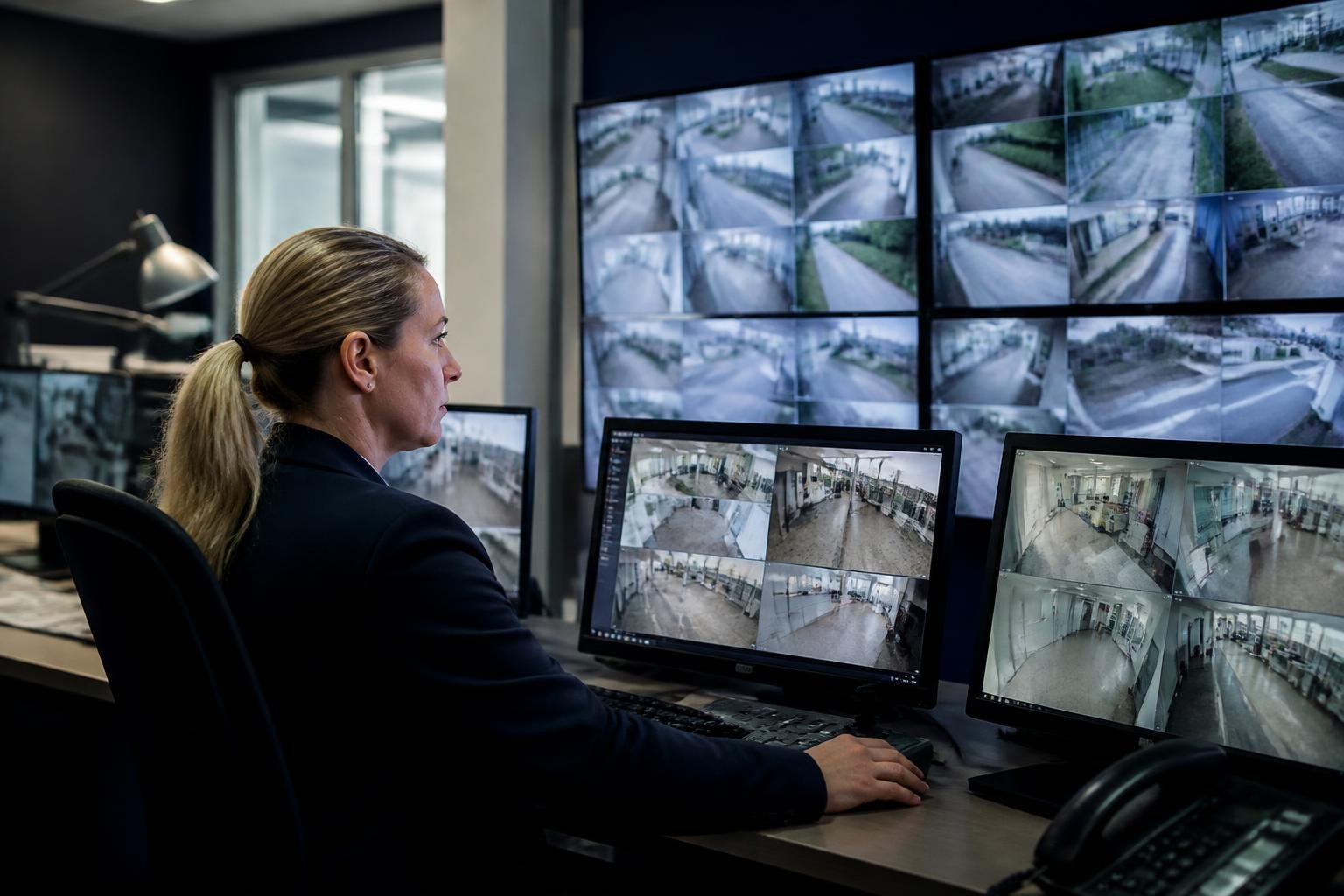
- CCTV and remote monitoring centres: watching client cameras and alarms, then calling police or keyholders
- Retail security and store detectives: loss prevention in shops, where detention of suspects drives most claims
- Vacant property security firms: guarding, inspections and protection of empty buildings, linked to unoccupied property insurance
- Close protection operators: personal protection work, which insurers treat as a specialist risk
- Security dog handlers: officers working with dogs, where the dog's actions must be covered too
- Concierge and front of house security: reception and access control in corporate and residential buildings
- Security within facilities contracts: guarding supplied alongside cleaning and maintenance under one FM contract
How much does security business insurance cost?
What your officers actually do on site drives the price. These six points shape most security quotes.
Services provided
Door supervision, events and retail detention carry more weight than static guarding or concierge work.
Officer numbers and wage roll
Officer headcount and pay drive employers' liability, and many insurers ask for actual payroll figures once the year ends.
Turnover and contract types
Guarding liability is priced mainly on fees earned, with night time economy and event income carrying a heavier rate.
Screening and training
How officers are licensed, vetted and trained, including screening to the British Standard for security staff.
Limits and contract terms
Higher limits and indemnities required by large clients increase the premium.
Claims and incidents
Past claims and how incidents are logged, investigated and reported to the insurer.
What security insurance often does not cover
Terms differ by insurer. Security companies are most often caught out by the points below.
- Armed guarding, and cash or valuables in transit, unless specially arranged
- Services not declared to the insurer, such as taking on door supervision or event work mid year
- Officers working without the licence their role requires
- Deliberate harm or excessive force outside the officer's duties
- Work overseas, offshore or in hostile environments
- Theft by your officers, unless fidelity cover is in place
- Liability taken on under a contract beyond what the policy would otherwise pay
Specialist security policy or standard public liability?
Standard liability policies are not designed for officers who detain, search and eject people. The table shows where they fall short.
| Feature | Specialist security policy | Standard public liability |
|---|---|---|
| Wrongful arrest and false imprisonment | Included as standard or by extension | Usually excluded |
| Assault allegations against officers | Covered while acting in their duties | Often excluded |
| Failure to prevent a loss | Professional or contract liability section available | Not covered |
| Lost client keys | Keyholding extension available | Rarely included |
| Contract requirements | Built for indemnities and limits clients ask for | May fail contract checks |
| Usually suits | Firms providing guarding, patrol, door or monitoring services | Businesses with no security operations |
How to arrange security business insurance
Insurers want a clear picture of each service. Preparing this information shortens the process.
Break turnover down by service
Show guarding, door, events, patrol, keyholding and monitoring income separately.
Describe your officers
Numbers, licensing, screening, training and how lone workers are supported.
List key sites and contracts
High value or sensitive sites, the limits clients ask for and any indemnity clauses.
Include vehicles and equipment
Patrol vehicles, dogs, CCTV, radios and control room systems with their values.
Compare extensions, not just limits
Check wrongful arrest, assault, keyholding, failure to prevent loss and any services excluded.
Speak to a security insurance specialist
Describe your services, officer numbers and contracts, and a broker who places security risks will compare cover.
Get a quoteSecurity business insurance FAQs
How much does security business insurance cost?
It depends on your services, officer numbers, wage roll, turnover, screening and training, the limits your contracts need and your claims history. A concierge firm and a door supervision company of the same size are priced very differently because their claim patterns differ.
Does public liability cover a security guard detaining someone?
Not always. Many standard policies exclude wrongful arrest and false imprisonment. A security liability policy extends cover to these allegations when officers are carrying out their duties, which matters most for retail, door and event work.
What if a break in happens on a site we guard?
Your client's property insurer usually pays for the damage, then may try to recover the cost from you if it believes your officers were negligent. Cover for failing to prevent a loss is designed for that claim, so it is worth confirming it is included.
Do security companies need employers' liability?
Yes, if you employ officers. Most businesses with employees must hold employers' liability cover, and security work brings real injury risk, from assaults to slips on night patrols.
Is keyholding covered by a standard policy?
Usually not in full. A keyholding extension pays to change locks and reset access systems after keys go missing, and covers liability when officers attend sites. Insurers expect keys to be coded and securely stored.
Are security dogs covered?
They can be, if declared. Insurers ask about the number of dogs, their training and the handlers' experience. Without declaration, injury caused by a dog may fall outside the liability cover.
Can door supervision be added to an existing guarding policy?
Often, but it must be declared because the insurer rates it separately. Some insurers decline door work or set extra conditions, such as body cameras or incident logs, so tell the broker before taking on new venues.
Do we need professional indemnity as a security firm?
Many firms do, especially if they carry out site risk assessments, design security plans or advise clients. Professional indemnity covers financial loss caused by negligent advice, which liability cover does not.
How do I get a quote for security business insurance?
Use the request form here and a broker who places guarding and monitoring risks will contact you. They will want turnover split by service, officer numbers and wage roll, screening procedures, client contract requirements and claims history.
Compare cover for your security company
Guarding liability, officers, keys, vehicles and control rooms arranged together by a broker who knows security contracts.