Construction and Tradesman Insurance for building and trade firms
Liability, tools, plant and contract works cover for trade firms that send teams out to other people's sites every day. Compare packages built around your trades, your workforce and the contractors you work for.
- Public and employers' liability matched to your contracts
- Tools and plant covered on site, in vans and at the yard
- Labour-only and bona fide subcontractors handled properly
Reviewed October 2026 by the MyBusinessComparison.com editorial team
What is construction and tradesman insurance?
Construction and tradesman insurance is a package of covers for building and specialist trade firms that work on other people's sites and property. It usually combines public and employers' liability, cover for tools, plant and materials, and contract works, arranged around the trades you carry out and the people you employ.
It is aimed at firms that run crews, vans and a yard, working directly for homeowners and businesses as well as subcontracting to main contractors. The trades you declare, the heights and depths you work at and how you use subcontractors shape both the cover and the premium.
Firms that run whole projects as the main contractor usually need a wider programme, covered on our construction company insurance page.
Construction and tradesman insurance at a glance
- Suits
- Building and specialist trade firms with crews, vans and a yard
- Core covers
- Public, employers' and products liability, tools, plant and contract works
- Compulsory part
- Employers' liability once you employ staff, often including labour-only subcontractors
- Priced on
- Trades declared, wage roll, turnover, working heights and depths, claims
- Often checked by
- Main contractors and commercial clients before you start on site
- Not included
- Vans on the road, which need their own motor or fleet cover
What does construction and tradesman insurance cover?
Pick the sections your work needs. Main contractors will usually ask to see the liability limits, so set them from your contracts rather than habit.
Public liability
Injury to clients, site visitors and the public, and damage to their property, caused while your teams are working. Damage to the building you are working in is a common claim.
Read more about public liability insurance
Employers' liability
Injury or illness suffered by your employees at work, including labour-only subcontractors working under your direction. Falls, manual handling and dust exposure are common causes of trade claims.
Read more about employers' liability insurance
Completed works liability
Claims that arise after you have left site, such as a leak from a joint you made or a fitting that fails and causes damage months later.
Read more about products liability cover
Tools and equipment
Hand and power tools, test equipment and access kit, wherever your crews keep them, subject to the security conditions in the policy.
Contract works
Your own work and materials on site until handover, where your contract makes you responsible for them.
Read more about contractors' all risks insurance
Own and hired-in plant
Mixers, mini diggers, scaffold towers and access platforms you own or hire, including continuing hire charges after a loss.
Read more about plant and machinery insurance
Vans and pickups
Your vehicles are insured on a separate motor policy, which a broker can arrange alongside the trade package.
Read more about commercial vehicle insurance
Personal accident
Weekly benefits and lump sums for staff injured on or off the job, which helps keep a skilled team when someone is off work.
Read more about group personal accident cover
Legal expenses
Legal costs for employment claims, tax enquiries and some contract disputes, though many policies limit construction adjudication.
Read more about commercial legal expenses insurance
Other covers trade firms add
- Professional indemnity: where you design heating, ventilation or structural elements as well as installing them
- A combined policy for your yard: buildings, stock and workshop contents at the base you work from
- Fleet insurance: once you run several vans, often with any driver cover
- Environmental liability: spills of oil, chemicals or slurry beyond the limited pollution cover in most liability policies
Which trade firms buy construction and tradesman insurance?
Insurers rate each trade differently, so the trades you declare matter more than your job title. These are the construction firms this cover is built around.
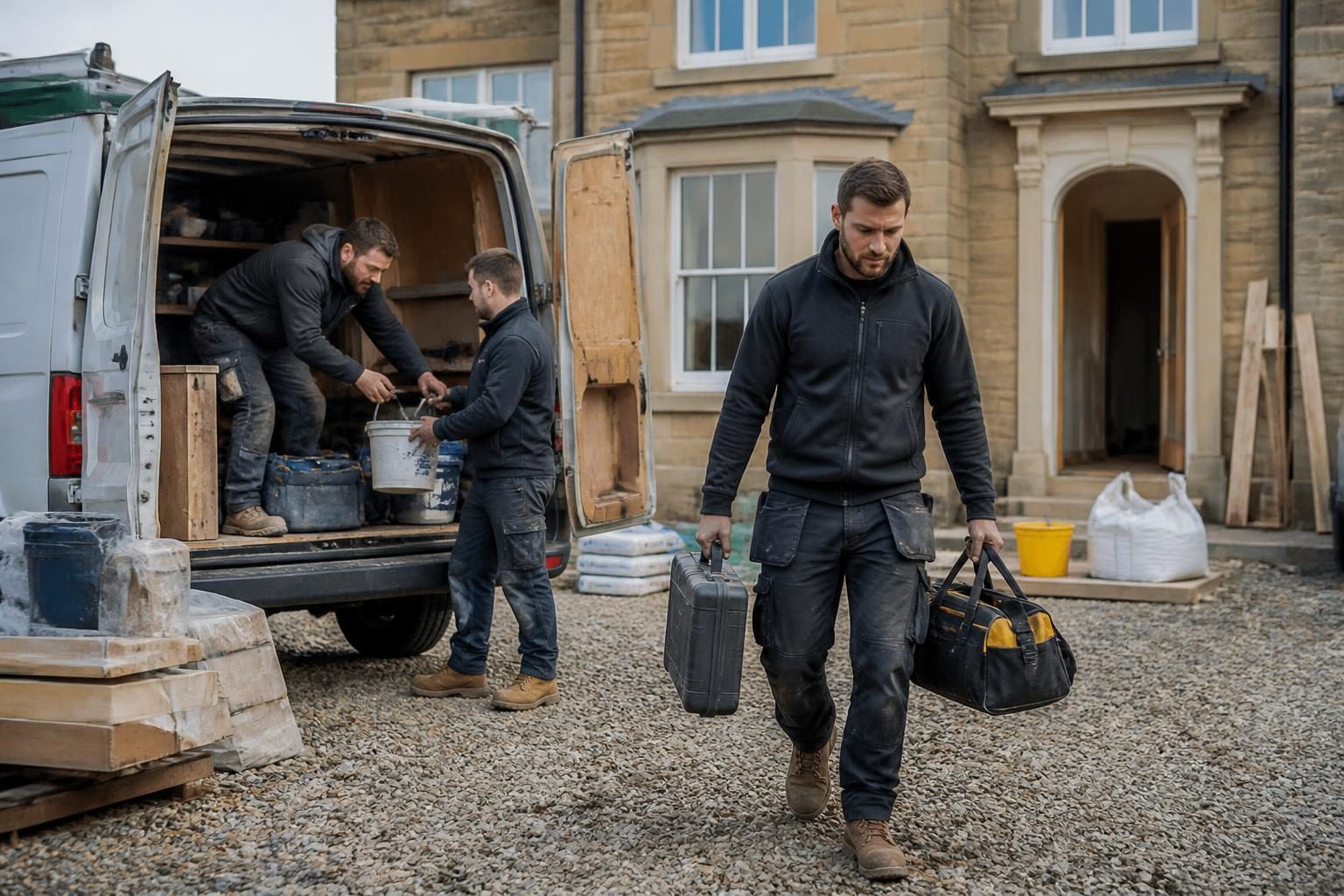
Trade not listed? Most building and installation trades can be placed. See our trades insurance hub for trade-specific pages.
- General builders: extensions, conversions and refurbishment for homeowners, landlords and businesses
- Bricklaying firms: gangs working on housing sites and commercial frames, often as subcontractors
- Groundwork contractors: excavation, drainage and foundations, where underground cables and pipes are the main risk
- Plastering and drylining firms: boarding, skimming and rendering on new build and refurbishment sites
- Tiling firms: wall and floor tiling in homes, hotels and commercial fit outs
- Flooring contractors: screeds, resin and finished floors, where adhesive and screed faults surface later
- Glazing firms: windows, curtain walling and shopfronts, often working at height
- Fencing contractors: post driving and boundary work, with the risk of striking buried services
- Gas and heating engineers: boiler and heating installs, where heat work and completed works claims stand out
- Air conditioning engineers: installation and servicing in offices, shops and data rooms
- Property maintenance firms: planned and reactive repairs for landlords, housing associations and facilities companies
- Electrical contractors: installation, testing and inspection, covered on its own page
How much does construction and tradesman insurance cost?
Trade packages are rated on what your teams actually do on site. These are the details insurers weigh most.
Trades declared
Roofing, demolition, scaffolding and work involving heat or asbestos removal are rated much higher than decorating or joinery. Every trade you carry out needs declaring.
Wage roll and labour mix
Manual and clerical wages are rated separately. Labour-only subcontractors count towards the manual figure; bona fide subcontractors with their own insurance are rated more lightly.
Turnover and client type
Commercial, public sector and domestic work carry different exposures, and higher limits demanded by some contracts add to the liability premium.
Heights and depths
Most policies set a maximum working height and depth. Raising them to fit your work changes the price, but working beyond them can leave you uninsured.
Tools, plant and van security
The values you insure, where kit is kept overnight and whether vans have deadlocks or tool safes all affect the tools and plant sections.
Claims history
Injury claims from staff and damage to clients' property are looked at closely, along with what you changed afterwards.
What construction and tradesman insurance does not cover
Trade claims are most often turned down for breaching a condition rather than an exclusion. Check these first.
- Jobs that take your teams higher off the ground, or deeper into it, than the limits shown on your schedule
- Damage from heat work such as welding or torch-on roofing when the policy's hot works conditions were not followed
- Work on airports, railways, offshore sites or power stations unless declared and agreed
- Claims involving bona fide subcontractors who had no insurance of their own, where the policy requires you to check it
- Tools left in an unattended van overnight, unless the vehicle and storage meet the policy terms
- Coming back to strip out and redo your own faulty work
- Asbestos exposure and removal, unless specifically agreed
- Design errors, which need professional indemnity cover
Your own trade package or the main contractor's cover?
Many subcontractors assume the main contractor's insurance covers them on site. It rarely covers everything, and often not what matters most.
| Feature | Your own trade package | Main contractor's cover |
|---|---|---|
| Injury to your employees | Covered under your employers' liability | Not usually, unless they treat your team as their own labour |
| Damage you cause to others | Your public liability responds | Their insurer may pay, then look to recover the cost from you |
| Your tools and plant | Covered on site, in transit and at the yard | Not covered |
| Your work before handover | Covered where your contract makes you responsible | Sometimes covered if the works policy includes subcontractors |
| Other jobs and clients | Every contract you take on | Only that contractor's site |
How to compare construction and tradesman insurance
A clear picture of how your teams work gets you accurate terms and avoids gaps at claim time.
Write down every trade
Include occasional work such as heat work, small demolition, roofing or work at height, not just your main trade.
Split your labour
Direct employees, labour-only subcontractors and bona fide subcontractors, with wages or payments for each.
Check your contract demands
The liability limits, contract works responsibility and any indemnities main contractors and clients ask for.
Value your kit
Tools, plant and hired-in equipment, and how vans and the yard are secured overnight.
Read the conditions
Compare height and depth limits, hot works rules, tools in vehicles terms and subcontractor checks before comparing price.
Pricing up a new contract?
Tell us your trades, team size and the work you take on, and a specialist broker will compare packages.
Get a trades quoteConstruction and tradesman insurance FAQs
How much does construction and tradesman insurance cost?
It depends on the trades you declare, your wage roll and labour mix, turnover, working heights and depths, and the value of tools and plant. A roofing or heat work firm pays more than an interior trade of the same size. Ask the broker to break the premium down by section.
What public liability limit do main contractors ask for?
It varies by contractor and project, and commercial and public sector work usually asks for higher limits than domestic jobs. Check the subcontract order or pre-qualification form and set your limit to the highest requirement you regularly meet, rather than raising it job by job.
Are labour-only subcontractors covered under our employers' liability?
In most cases, yes. If you direct their work and they often use your kit and materials, insurers regard them as part of your workforce, so their wages belong in the employers' liability declaration. Genuinely independent firms bringing their own crew, equipment and cover sit outside it.
Does the main contractor's insurance cover me on their site?
Not fully. It will not cover injury to your own staff or your tools, and if you cause damage their insurer may recover the cost from you. Some works policies include subcontractors for damage to the works, but you still need your own liability cover.
Are tools left in vans overnight covered?
Often, but only on strict terms. Many policies require the van to be locked and fitted with approved security, or parked in a locked compound or garage. Some exclude tools in vehicles overnight altogether, so compare this condition carefully if your teams take vans home.
Why do insurers ask about heat work?
Welding, grinding, soldering and torch-on roofing start fires that can destroy a whole building. Most policies require hot works permits, fire extinguishers on hand and a fire watch after work stops. Breaching these conditions can mean a fire claim is not paid.
Are we covered for a job after we have left site?
Yes, if your policy includes completed works or products liability. It covers injury or damage caused by work you have finished, such as a leak from a fitting you installed. Most policies respond to injury or damage that happens while they are in force, so keep cover continuous.
Can our vans go on the same policy?
Not usually. Vans used on the road need a motor policy. A broker can arrange commercial vehicle insurance or a fleet policy alongside the trade package, with tools cover sitting on the trade policy.
How do I get a construction and tradesman insurance quote?
Tap the quote button and a trades broker will ring you. Jot down every trade you carry out, wages for staff and payments to subcontractors, turnover, tools and plant values, the heights and depths you work at, and recent claims.
Ready to compare construction and trades cover?
Liability, tools, plant and works cover built around how your teams really work, set up by brokers who deal with trade firms week in, week out.