Dry Lining Insurance for partition and ceiling contractors
Dry lining insurance for subcontractors running fixing gangs across several sites, with board, track and towers to protect. Compare cover that matches the insurance clauses in the subcontracts you sign.
- Liability for partitions and ceilings during and after the job
- Employers' liability for fixers, tapers and labourers
- Board, metal stud and access towers covered
Reviewed October 2026 by the MyBusinessComparison.com editorial team
What is dry lining insurance?
Dry lining insurance is cover for contractors who install plasterboard linings, metal stud partitions and suspended ceilings. It joins public and products liability for harm to people and property, employers' liability for fixers, tapers and labourers, and cover for board, track and access equipment, set around the subcontracts you sign.
Most dry lining firms work as subcontractors on commercial and residential projects, with gangs on several sites at once. The claims that concern insurers are a ceiling grid or heavy board falling on someone, partitions that do not give the fire or acoustic performance specified, and injuries from lifting board and working off podiums.
Wet plastering and external render sit on our plasterers insurance page. This page is for firms whose work is mostly framing, boarding, ceilings and taping and jointing.
Dry lining insurance at a glance
- Suits
- Dry lining, partition and ceiling contractors with fixing gangs
- Core covers
- Public and products liability with employers' liability
- Often added
- Contract works, board and materials, towers and podiums, tools
- Insurers ask about
- Fire-rated and acoustic systems, ceiling heights and labour-only gangs
- Priced on
- Wage roll, labour-only spend, turnover, system types and claims
- Set by
- The limits and insurance clauses in each main contractor's subcontract
What does dry lining insurance cover?
Dry lining firms usually combine the sections below. The main contractor's project policy decides how much of the works and materials cover you actually need to buy.
Public liability
Injury and damage on site, such as a ceiling tile dropping in an occupied office, a board trolley gouging a finished floor, or a visitor tripping over track offcuts.
Read more about public liability insurance
Products and completed work
Problems after handover: a suspended ceiling coming down, partitions cracking because deflection heads were left out, or heavy fittings pulling off a wall with no pattress behind it.
Read more about completed work cover
Fire-rated and acoustic systems
Walls, linings and ceilings built to a tested fire or sound specification. A gap in fire stopping or the wrong board can lead to large claims, so insurers want this work declared.
Employers' liability
Shoulder and back injuries from lifting and fixing board overhead, falls from podiums and towers, cuts from metal track and dust from sanding joints.
Read more about employers' liability insurance
Contract works
Boarding and ceilings installed but not handed over, damaged by water from an unfinished roof, by vandalism or by other trades.
Read more about contractors' all risks cover
Board and materials
Plasterboard, metal stud, track, ceiling grid and tiles in your store or delivered to site, high in value and easily spoiled by damp.
Access equipment
Owned and hired towers, podiums and powered access, including continuing hire charges after loss or damage.
Read more about plant and machinery insurance
Tools
Screw guns, cordless drills, laser levels, board lifters and taping tools in vans and site containers.
Read more about business equipment cover
Other cover interior contractors consider
- Professional indemnity: for partition layouts, fire or acoustic system selection, or design passed down by the main contractor
- Trade credit insurance: protection if a main contractor fails while owing you for completed work
- Commercial legal expenses: contra charges, disputed valuations and withheld retentions
- Group personal accident: a benefit for fixers injured and unable to work
Which interior contractors is dry lining insurance for?
Firms earning most of their turnover from board, stud and ceiling systems, usually as subcontractors on someone else's project.
Fitting out whole interiors? Firms that deliver complete retail or office interiors belong under shop fitters insurance. Other trades are listed on the trades hub.
- Dry lining contractors: boarding, dot and dab linings and taping and jointing on housing, student accommodation and commercial projects
- Partition contractors: metal stud and timber partitions, shaft walls and fire-rated compartment walls in offices, hospitals and flats
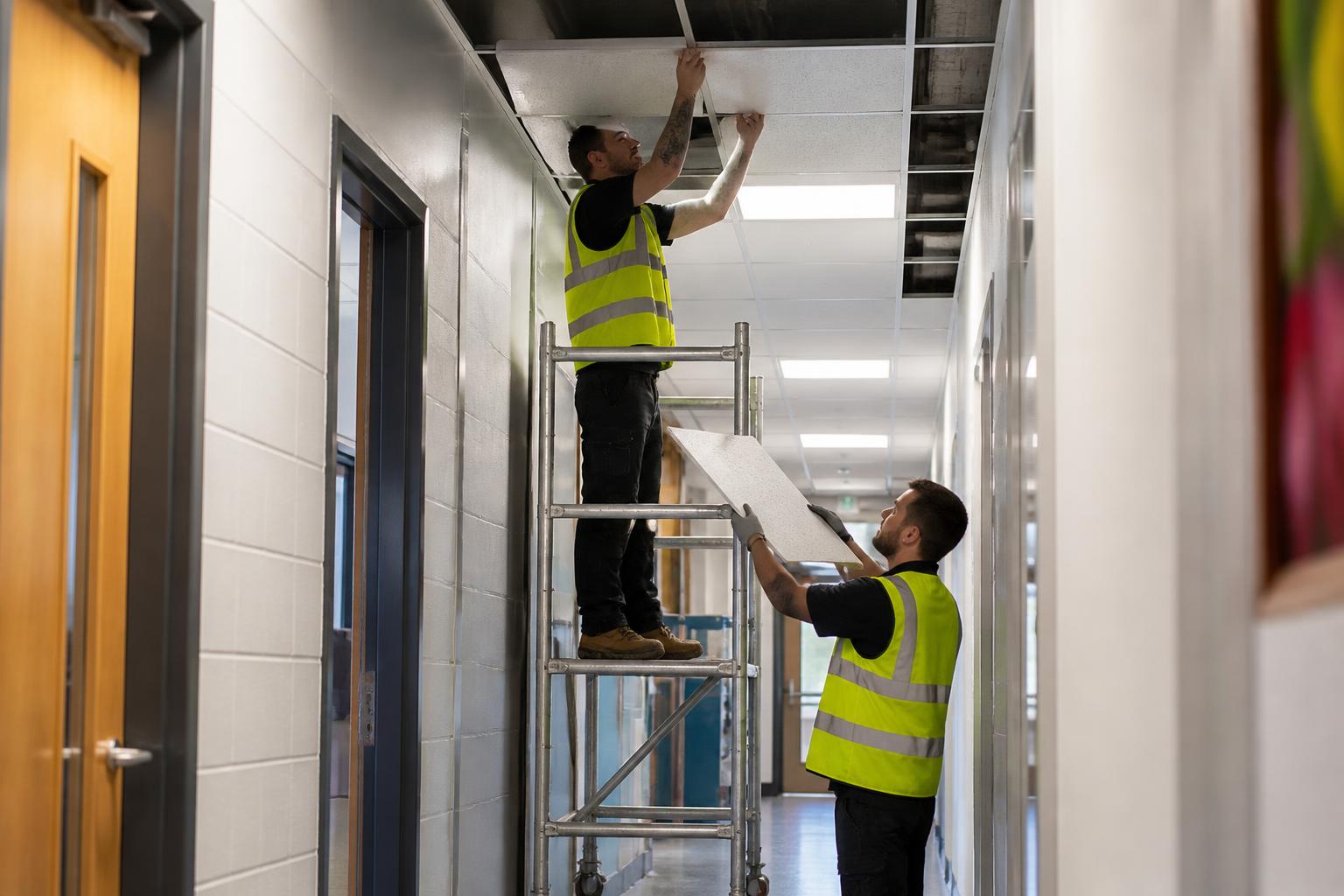
- Ceiling contractors: suspended grid ceilings, plasterboard ceilings on metal furring, bulkheads and access panels
- Taping and jointing specialists: finishing board joints and corners ready for decoration, often for larger dry lining firms
- Housing dry lining subcontractors: boarding whole developments for house builders, where programme pressure is high
- Fit-out dry liners: partitions and ceilings within office and retail fit-outs for shop fitters and main contractors
- Demountable partition installers: relocatable office partitions and acoustic booths; glazed screens and partitions sit with glaziers insurance
- Dry liners adding fire stopping: sealing service holes through walls they have built; dedicated passive fire firms see fire protection engineers insurance
How much does dry lining insurance cost?
The way you engage fixers and the systems you install move the premium more than anything else. Insurers look at the following.
Direct staff and gangs
Employers' liability is rated on wages plus labour-only payments, so the balance between employed fixers, gangs and insured subcontractors matters.
Fire and acoustic systems
The share of turnover from fire-rated walls, ceilings and fire stopping changes the completed work rating.
Ceiling heights and access
High atrium and warehouse ceilings worked from powered access are rated above standard floor-to-ceiling work from podiums.
Supply and fix or labour only
Supplying materials adds stock and products exposure, while labour-only work shifts more risk to the main contractor.
Contract size and demands
Larger projects bring higher liability limits, collateral warranties and stricter insurance clauses.
Claims history
Ceiling falls, damaged finished work and lifting injuries are reviewed alongside the changes you made.
What dry lining insurance does not cover
Several of these sit outside any insurance policy, so they need managing through the contract instead.
- Putting right your own cracked joints, poor finishes or walls out of line
- Fire-rated work that was not declared, or built to a system other than the one specified
- Design responsibility passed down in a subcontract, unless professional indemnity is in place
- Liquidated damages for late completion, which liability policies do not pay
- Contra charges from the main contractor for cleaning, rework or delays
- Asbestos found when stripping out existing ceilings and partitions, beyond any limited cover
- Board stolen from an open floor where the policy requires locked storage
The main contractor's project policy or your own cover?
On larger projects the main contractor often insures the works. That does not replace your own policy, and the subcontract decides where the line falls.
| Feature | Main contractor's project policy | Your own policy |
|---|---|---|
| Partitions and ceilings before handover | Often covered if the subcontract says so, subject to an excess that may be passed to you | Your contract works section, where the project policy does not include your work |
| Board delivered to site | Included by many project policies once on site | Needed for materials in your store, in transit and on sites without a project policy |
| Injuries to your fixers | Not covered | Your employers' liability |
| Injury or damage to others | Not covered | Your public liability |
| Your tools and towers | Not covered | Your tools and plant sections |
| Problems after handover | Cover usually ends at completion | Your products and completed work cover |
How to compare dry lining insurance
A broker can approach insurers straight away with these details ready.
Break down the work
Dry lining, partitions, ceilings, fire and acoustic systems, demountables and any fire stopping, as shares of turnover.
Show how you engage fixers
Direct employees, labour-only gangs and subcontractors with their own cover, with evidence for the last group.
Read the subcontracts
Required limits, insurance clauses, who carries the excess and any design responsibility.
List access and storage
Maximum ceiling heights, powered access used and how materials are stored on site.
Record claims and controls
Past claims, quality checks, photos taken before ceilings are closed up and fire stopping inspections.
Quotes for dry lining contractors
Share your work mix, gangs and main contractors, and a broker who places interior trades will gather terms.
Compare coverDry lining insurance FAQs
How much does dry lining insurance cost?
Wage roll, labour-only spend, turnover, the share of fire-rated and acoustic work, ceiling heights and claims history set the price. A ceiling contractor working in high atriums is rated differently from a housing dry liner, and a broker can show which factors weigh most for you.
Does dry lining insurance cover partition contractors and ceiling contractors?
Yes. Partition contractors, ceiling contractors and taping and jointing specialists are usually placed on the same type of policy as dry liners. Tell the broker the mix, as suspended ceilings and fire-rated walls are rated slightly differently from standard boarding.
Is fire-rated partition work covered?
It can be, if declared. Fire-rated walls and ceilings must be built exactly to the tested system, and errors can contribute to serious losses. Insurers may ask about training, product approval and how work is inspected before it is closed up.
Are we covered if a suspended ceiling collapses after handover?
Injury and damage caused by a collapse is normally covered under completed work liability. The cost of reinstalling the ceiling itself is usually not, and if the collapse came from your own design choice, professional indemnity would be the relevant cover.
Does the main contractor's insurance cover our work?
Sometimes, but only partly. A project policy may cover the works and materials on site, often with an excess passed down to you. It will not cover injuries to your fixers, injury or damage to others, your tools or your work after handover.
Can we insure against a main contractor not paying us?
Trade credit insurance can cover unpaid invoices if a main contractor becomes insolvent. Insurers set a credit limit for each customer, so it suits firms with large balances owed by a few contractors. Disputes over valuations are a matter for legal expenses cover instead.
Are liquidated damages for late completion covered?
No. Liquidated damages and contra charges are contractual penalties, not accidental injury or damage, so liability policies do not pay them. They are managed through programme, records and contract negotiation rather than insurance.
Does dry lining insurance cover skimming and wet plaster work?
A small amount alongside boarding is usually accepted if declared. Dry lining insurance is rated on stud, board and ceiling systems, so a firm whose work is mainly wet plaster, skimming or external render is better placed on a plastering policy, where render and finish claims carry more weight.
Do dry lining firms need professional indemnity?
Only if you take on design. Subcontracts increasingly pass down responsibility for partition layouts, fire and acoustic system choice or deflection details. Liability cover will not pay for a design error, so check each contract and ask the broker about professional indemnity.
How do I get a dry lining insurance quote?
Complete the quick quote form and a broker experienced with interior contractors will follow up. It helps to have your work mix, payroll and labour-only figures, main contract requirements, access equipment list and any claims ready.
Ready to compare dry lining insurance?
Cover for dry lining, partition and ceiling contractors that matches what your main contractors require.