Solar Panel Installation Insurance for installation firms
Insurance for solar PV and battery storage installers running crews, vans and a warehouse of panels, inverters and batteries. Compare cover for domestic, commercial rooftop and ground-mounted work through brokers who know the renewables trade.
- Roof damage, water ingress and fire claims after handover
- Panels, inverters and batteries covered in store, in transit and on site
- Design cover for system sizing and generation estimates
Reviewed October 2026 by the MyBusinessComparison.com editorial team
What is solar panel installation insurance?
Solar panel installation insurance protects firms that design and fit photovoltaic systems and battery storage. The package normally includes liability to the public and to customers after handover, employers' liability, contract works, cover for tools and stock, and professional indemnity for system design, arranged to suit domestic, commercial rooftop or ground-mounted work.
The claims that worry insurers in this trade tend to arrive after the crew has left. A badly sealed roof penetration can let water in for months before anyone notices, and a poor DC connection or a battery fault can cause a fire long after commissioning. Falls from roofs are the main employers' liability concern.
Insurers ask about the heights you work at, who erects the scaffolding, how much battery storage you fit and hold in stock, and whether you design systems or install to someone else's design.
Solar installation cover at a glance
- Suits
- Installation firms with crews, vans, stock and project contracts
- Main sections
- Public, products and employers' liability, contract works and stock
- Must have
- Employers' liability for your installers and office staff
- Trade specific
- Roof leaks, DC and battery fires, work at height, high value stock
- Often required by
- Commercial clients, main contractors, developers and certification bodies
- Arranged separately
- Insurance-backed workmanship warranties for domestic customers
What does solar panel installation insurance cover?
Most solar installers combine the covers below, each set at a level that matches the projects you take on. Conditions on heights and electrical work are common.
Public liability
Accidents during an install that hurt someone or damage property, such as cracked roof tiles, a dropped panel damaging a car or a vehicle striking a customer's gate.
Read more about public liability insurance
Products and completed works
Claims made after the system is commissioned, including water damage from a failed roof fixing and fire traced to an inverter, isolator or connector you supplied and fitted.
Read more about products liability insurance
Employers' liability
Injury to your installers and electricians, with falls from height, manual handling of panels and DC electrical work the main concerns for insurers.
Read more about employers' liability insurance
Contract works
Panels, mounting systems, cabling and batteries on site until handover, against theft, storm and accidental damage. Ground-mounted projects usually need a much higher sum insured.
Read more about contractors' all risks insurance
Stock and warehouse
Panels, inverters and batteries held at your premises. Lithium battery storage is a fire concern for property insurers, so separation and charging arrangements will be asked about.
Read more about commercial property insurance
Professional indemnity
Claims that a system was undersized, wrongly specified or produced less than the generation estimate you gave, and errors in roof loading or structural assessments.
Read more about professional indemnity insurance
Tools and test equipment
Insulation testers, PV analysers, drills and roof access kit, protected on site, at your premises and in secured vehicles.
Read more about business equipment insurance
Goods in transit
Pallets of panels and batteries carried from your warehouse to site, where a single load can be worth more than the van carrying it.
Read more about goods in transit insurance
Extra protection solar firms often add
- Hired-in plant: scaffold towers, cherry pickers and telehandlers hired for larger roofs and ground-mounted sites
- Commercial legal expenses: consumer complaints, payment disputes and employment claims
- Cyber insurance: customer data, online sales and remote monitoring portals
- Group personal accident: income support for crew members hurt in a fall from a roof
Which solar businesses is this cover for?
Solar firms range from domestic installers to contractors building large arrays, and insurers treat each very differently. These are the businesses we see most.
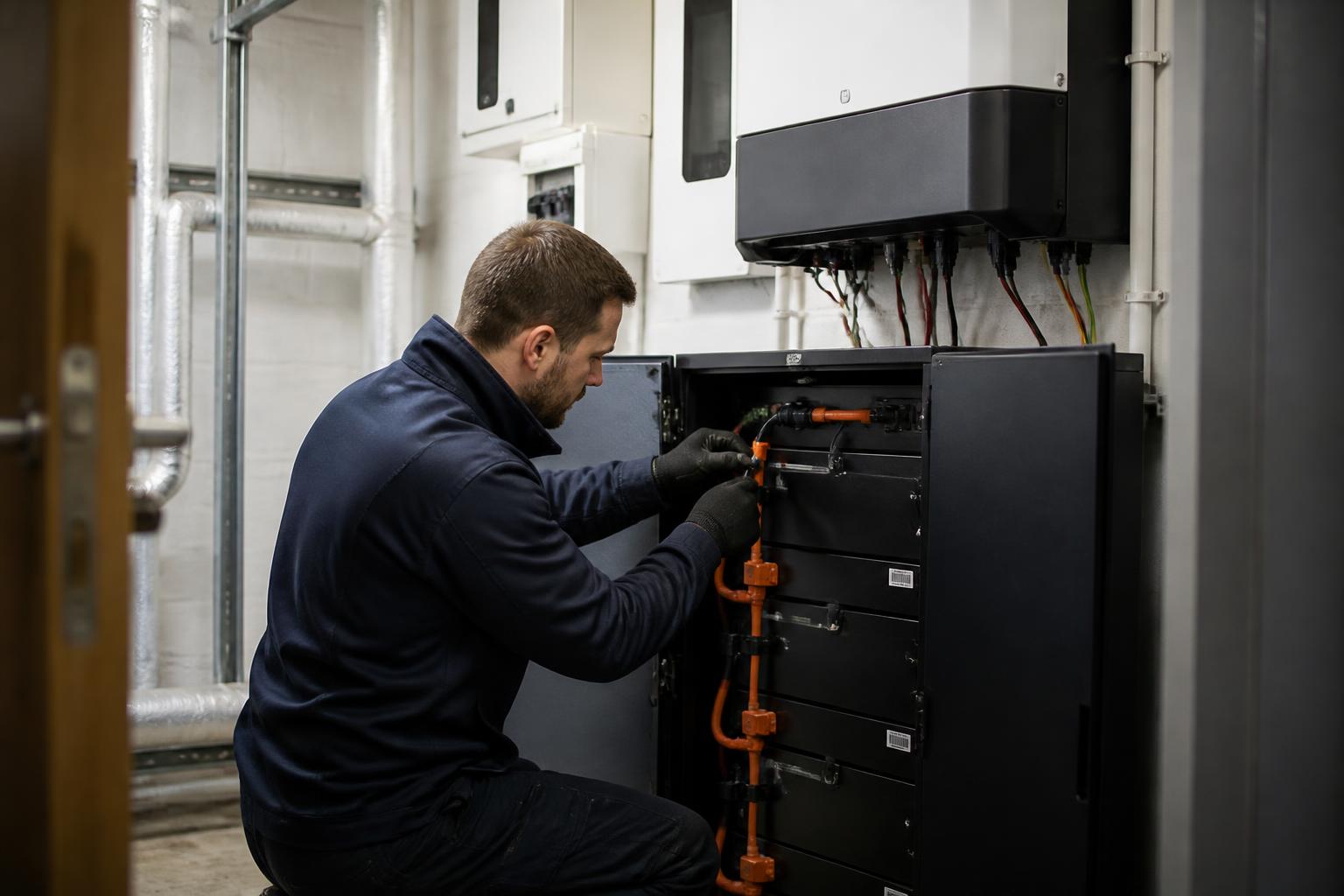
Fit heat pumps or EV chargers too? Tell the broker about every renewable product you fit. See also electrical contractors insurance or browse cover for trade firms.
- Domestic PV installers: rooftop systems for homeowners and landlords, often sold with battery storage and installed by several crews at once
- Commercial rooftop installers: larger arrays on offices, schools, retail parks and industrial units, often under a main contractor or a client's own terms
- Ground-mounted solar contractors: solar farms with piling, trenching and cabling, often alongside construction companies, where contract works values and underground services become major risks
- Battery storage specialists: home and commercial batteries, where fire safety, ventilation and manufacturers' installation rules all matter to insurers
- Electrical contractors adding solar: firms that have moved into PV alongside rewires, testing and EV charge points
- Roofing and building firms fitting PV: contractors who fit integrated panels as part of re-roofing or new build work
- Installers working for developers: PV fitted to new homes and commercial schemes for property developers as part of a wider build contract
- Operation and maintenance contractors: inspecting, cleaning and repairing arrays for solar farm owners and commercial clients
How much does solar panel installation insurance cost?
Every solar firm is rated on its own facts. Insurers start with your wage roll and turnover, then adjust for the type of install and how you manage the risks below.
Install type and height
Ground-mounted work, single storey commercial roofs and tall domestic roofs carry different fall and damage risks. Policies commonly cap the height your crews may work at.
Scaffolding arrangements
Using a separately insured scaffold contractor, with edge protection on every job, is viewed more favourably than erecting your own access.
Battery work and storage
The number of batteries you fit and hold at your premises affects both the liability and property premiums.
Design responsibility
Firms that design systems and give generation estimates need professional indemnity, and the turnover from design work is rated on its own.
Stock and contract values
The value of panels and batteries in store, in transit and on site sets the property, transit and contract works premiums.
Subcontractors and claims
How you use subcontracted roofers and electricians, whether they carry their own cover, and your past claims all count.
Common exclusions in solar panel installation insurance
These are the exclusions solar firms run into most often after a claim.
- Roof work above the maximum height in your policy, unless the insurer has agreed to it in advance
- The cost of replacing your own defective panels, fixings or wiring, as opposed to the damage they cause
- A shortfall in generation or the customer's financial loss, unless you hold professional indemnity insurance
- Putting work right under a workmanship warranty you gave the customer, which stays your own cost while you are trading
- Panels and inverters stolen from site or from vans overnight where the security conditions were not met
- Strikes on buried cables or pipes during ground-mounted work where services were not located first
- Crew vans and pickups while driven, which are insured under a separate vehicle policy
Domestic installs or commercial and ground-mounted projects?
The same firm can do both, but insurers look at each type of work in a different way.
| Feature | Domestic rooftop | Commercial and ground-mounted |
|---|---|---|
| Main risks | Roof damage, leaks and falls | Contract works values, plant and underground services |
| Contract terms | Consumer terms and warranty requirements | Indemnity clauses, retentions and named insurance requirements |
| Liability limits | Usually chosen by the firm | Set by the client or main contractor, often high |
| Design cover | Useful for sizing and estimates | Usually required, especially for structural and electrical design |
| Contract works | Short jobs, low values on site | High values held on site for weeks or months |
How to get solar panel installation insurance quotes
Solar is a fast moving trade, so insurers want current figures and a clear view of where you are heading.
Break down your installs
Show the split between domestic, commercial rooftop, ground-mounted and battery work, and your projected turnover for each.
Explain your access and heights
Who supplies scaffolding, your maximum working height and how edge protection is managed.
Value your stock
The maximum value of panels and batteries in store, in a single van load and on your largest site.
Collect your contract terms
Liability limits, indemnity clauses and insurance conditions from clients and main contractors.
Compare cover in detail
Check height limits, completed works cover, battery and stock conditions, design cover and any subcontractor requirements.
Talk to a renewables specialist
Give us an outline of your installs, crews and stock, and a renewables broker will search for suitable terms.
Compare quotesSolar panel installation insurance FAQs
How much does solar panel installation insurance cost?
It depends on your wage roll, turnover, the mix of domestic, commercial and ground-mounted work, your working heights, battery installs, stock values and claims history. Ground-mounted work and battery storage tend to attract the closest scrutiny.
Does my policy cover roof leaks that appear after an installation?
Products and completed works cover usually responds to water damage caused by your installation, such as a failed flashing or fixing. The cost of redoing your own work is normally excluded, so only the resulting damage is paid.
Is fire from a solar or battery system covered?
Fire damage caused by a fault in work you carried out, or equipment you supplied, would normally fall under products and completed works liability. Insurers will ask about your battery installs and training, and some apply specific conditions to battery storage.
Do solar installers need professional indemnity insurance?
Yes, if your firm designs systems, assesses roof loadings or gives customers generation estimates. A system that produces less than projected has not caused injury or damage, so a claim for the shortfall falls outside liability cover and needs professional indemnity.
Is an insurance-backed warranty the same as my liability insurance?
No. An insurance-backed warranty protects your domestic customer if your firm stops trading before the warranty period ends, so the workmanship promise can still be honoured. Your liability insurance protects your business against claims for injury and damage. Industry certification schemes and consumer codes commonly expect installers to offer this kind of warranty.
Is there a height limit on solar installation insurance?
Usually. A height cap is common, and work above it is excluded unless the insurer agrees. Commercial roofs and tall buildings may need the limit raised, so give the broker the height of your typical and largest jobs.
Are panels and batteries covered while stored at our warehouse?
Yes, if you insure them as stock on a property or combined policy. Expect questions about the quantity of lithium batteries held, how they are separated from other goods and whether any are charged on site.
Do subcontracted roofers and electricians need their own insurance?
Insurers usually expect bona fide subcontractors to hold their own public liability, and many make checking that cover a condition of yours. Labour-only workers you direct and equip are usually counted as employees when employers' liability is worked out.
How do I get a solar panel installation insurance quote?
Begin with the enquiry on this page and a broker who places renewables installers will get in touch. With your install split, turnover, wage roll, maximum heights, stock values, client contract terms and claims record to hand, insurers can be approached on the first call.
Compare cover for your solar installation business
Liability, contract works, stock and design cover arranged for installers who work on roofs and fields every day.