Commercial Property Insurance for owners and occupiers
Insurance for the buildings your business owns or occupies, and for the fixtures, plant and improvements inside them. A specialist broker can compare cover for offices, shops, factories and industrial units.
- Buildings insured for their full rebuild cost
- Contents, fixtures and tenant's improvements
- Loss of rent or income after insured damage
Reviewed October 2026 by the MyBusinessComparison.com editorial team
What is commercial property insurance?
Commercial property insurance covers physical loss or damage to business buildings and their contents, such as offices, shops, factories and warehouses. It pays to repair or rebuild the premises, replace damaged fixtures and equipment, and can include lost rent or income and liability for injuries on the property.
The same policy is bought by owner-occupiers, by tenants whose lease makes them responsible for the building, and by tenants who only need to insure their fit-out and equipment. What matters is who carries the risk under the lease or title, so the first job is to establish exactly which parts of the property are yours to insure.
Cover is written on either a defined perils basis, listing events such as fire, storm, flood and theft, or an all risks basis that covers accidental damage unless it is specifically excluded. The difference matters most for sudden, one-off accidents that do not fit a named peril.
Commercial property insurance at a glance
- Bought by
- Owner-occupiers, landlords and tenants with repairing obligations
- Buildings basis
- Full reinstatement cost, not market or purchase value
- Main sections
- Buildings, contents, rent or income, property owners' liability
- Cover basis
- Defined perils or all risks, depending on the insurer
- Common conditions
- Alarm maintenance, unoccupancy limits, security of the premises
- Often required by
- Mortgage lenders and landlords as a term of the loan or lease
What does commercial property insurance cover?
Premises cover is put together section by section. The schedule names every building and shows the value and excess that applies to each part.
Buildings
The structure, roof, walls, floors and permanent fixtures, plus outbuildings, yards, car parks, fences and gates. Most policies also pay demolition, site clearance and professional fees on top of the rebuild.
Read more about industrial property cover
Contents and fit-out
Office furniture, shop fittings, machinery, IT and stock. Tenants can insure the improvements they have paid for, such as partitions, lighting and flooring, even where the landlord insures the shell.
Loss of rent
Rent the owner cannot collect while insured damage makes the building unfit to use, for the indemnity period chosen. Lease terms often require this to cover several years of rent.
Read more about insurance for commercial landlords
Business interruption
For businesses trading from the building, the profit that falls away and the cost of keeping customers served from elsewhere during repairs.
Read more about business interruption cover
Property owners' liability
Claims from visitors, contractors or neighbours hurt, or whose belongings are damaged, through the state of your building, such as a slipped roof tile or a broken step.
Read more about public liability insurance
Accidental damage
On an all risks policy, sudden damage that no named peril describes, such as a forklift striking a wall or a sprinkler head knocked off during a fit-out.
Trace and access
The cost of finding a hidden leak and making good the floors or walls opened up to reach it, which can exceed the damage the water caused.
Glass and shopfronts
Plate glass, glazed doors and shopfront signage, with emergency boarding up so the premises stay secure overnight.
Alternative premises
Reasonable costs of moving into temporary accommodation while the building is rebuilt, often linked to the interruption section.
Extensions to consider for your premises
- Terrorism cover: damage and lost rent from terrorist acts, which standard property sections exclude
- Engineering inspection and breakdown: inspections of lifts, boilers and pressure plant, with cover for sudden breakdown
- Business equipment cover: high value machinery and portable equipment taken away from the premises
- Listed building cover: rebuilding with matching materials and specialist trades where the building is listed
- Mixed use property cover: buildings with shops or offices below and flats above on one schedule
Who needs commercial property insurance?
Any business that owns its premises, or has taken on responsibility for them under a lease, needs this cover. These are the owners and occupiers it is most often arranged for.
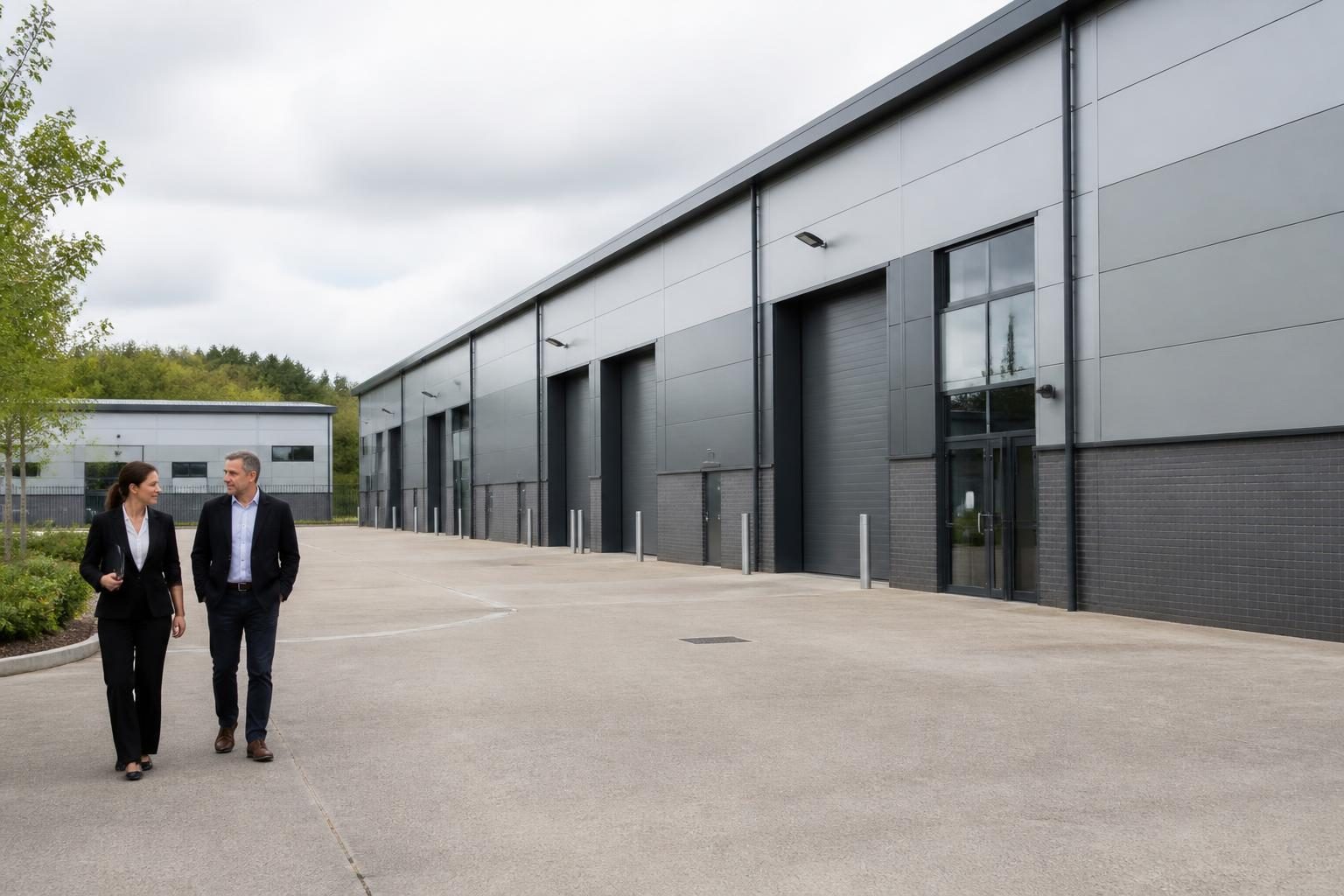
Letting the building rather than using it? Owners that let units to tenants usually need a commercial landlord policy, which adds rent cover and owner's liability.
- Manufacturers that own their factory: production halls, plant rooms and stores where a fire would stop output as well as damage the building
- Professional firms with freehold offices: period town houses and modern office buildings where the rebuild cost and fit-out are the main values
- Retailers holding long leases: shop units where the lease passes buildings and shopfront responsibility to the tenant
- Companies letting units to tenants: owners that need rent and liability cover as well as the building itself
- Property companies with several buildings: a single schedule that keeps sums insured and renewal dates in step
- Hotel and restaurant owners: older buildings, commercial kitchens and guests on site, where heat sources weigh on the rating
- Clinics and care providers: purpose-built premises with medical equipment and specialist fit-out
- Leisure operators: gyms, venues and attractions with large open structures and high footfall
- Owners of industrial units: steel-framed units and trade counters, where construction and occupation drive the price
- Owners of harder to place buildings: properties with flood history, subsidence, combustible panels or unusual construction
- Rural businesses with commercial buildings: converted barns and diversified farm buildings now let or used for trade
How much does commercial property insurance cost?
Property premiums are worked out building by building. Insurers look at what it would cost to rebuild, what it is made of, what happens inside and where it sits.
Rebuild value
The declared reinstatement cost is the base the rate is applied to, so an accurate figure from a recent valuation keeps the premium and any claim on a sound footing.
Construction
Brick and concrete buildings rate more favourably than timber, thatch or insulated panels with a combustible core, which insurers ask about in detail.
Occupation
A solicitor's office and a woodworking shop in identical buildings carry very different fire risks, so the use of every floor is declared.
Location
Flood maps, subsidence history and local crime levels all feed into the rating, and some postcodes attract higher excesses for specific perils.
Fire and security protection
Monitored alarms, sprinklers, a current fire risk assessment and good management of waste and hot work are all credited.
Cover basis and excess
All risks costs more than defined perils, and a larger voluntary excess or a higher subsidence excess can bring the premium down.
What commercial property insurance does not cover
Premises claims are reduced or turned down most often for the reasons below.
- Wear and tear, rot, rust and gradual deterioration, including roofs that leak through age rather than storm damage
- Underinsurance: if the sum insured is below the true rebuild cost, many insurers reduce the claim in proportion
- Damage while the building is empty beyond the period the policy allows; longer gaps need unoccupied property insurance
- Theft without forcible entry or exit, on most defined perils policies
- Defective design, materials or workmanship, although resulting damage elsewhere may be covered
- Terrorism, unless the optional terrorism section has been added
- Injuries to your employees, which are a matter for employers' liability insurance
Commercial property insurance or a commercial combined policy?
Both insure buildings, but they are built for different jobs. A property policy focuses on the premises; a combined policy wraps the whole trading business around them.
| Feature | Commercial property | Commercial combined |
|---|---|---|
| Built around | The building and what is fixed to it | The trading business and its activities |
| Liability included | Property owners' liability for the premises | Employers', public and products liability |
| Income protected | Lost rent, or gross profit if occupied | Gross profit and increased cost of working |
| Stock and transit | Contents at the premises only | Stock, money and goods in transit |
| Typical buyer | Owners, landlords and property companies | Manufacturers, wholesalers and contractors |
How to arrange commercial property insurance
Insurers price property on detail. Gathering these points first avoids delays and gaps in cover.
Check what the lease says
Confirm whether you or the landlord insure the structure, which perils are required and whether the landlord's interest must be noted.
Get a reinstatement valuation
A chartered surveyor's rebuild assessment is the most reliable basis for the buildings sum insured, and worth refreshing every few years.
Describe the building
Age, wall and roof construction, any insulated panels, listed status, floor area and the use of each part.
Record protections and risks
Alarm and sprinkler details, flood or subsidence history, nearby hazards and any vacant floors.
Weigh the cover basis
Compare all risks against defined perils, the excesses, the indemnity period for rent or income and any conditions attached.
Premises to insure?
Send the address, use and rebuild value of your premises, and a broker who places property risks will look at the options.
Compare quotesCommercial property insurance questions
How much does commercial property insurance cost?
Each building is rated on its own merits, so prices vary widely. The rebuild value, construction, use, location, protections and claims history all count, as does the choice between all risks and defined perils. Your broker can explain which of these weighs most on your figures.
Do I insure the building or does my landlord?
The lease decides. Many commercial leases have the landlord insure the structure and recharge the premium to the tenant, while full repairing and insuring leases can pass that duty to the tenant. Either way, tenants usually still insure their own contents and improvements.
How do I work out the buildings sum insured?
Use the full cost of rebuilding from the ground up, with clearing the site and fees for architects and surveyors added, rather than the market value. A reinstatement valuation from a chartered surveyor is the most dependable source, and many insurers offer a day one basis that allows for building cost inflation.
What does day one reinstatement mean?
It is a basis where you declare the rebuild cost at the start of the policy year and the insurer allows an uplift for inflation during the year and the rebuild. The premium is based mainly on the declared value, and the uplift helps protect against falling short when costs rise.
Is my building covered if it becomes empty?
Only for a limited period. Most policies restrict cover or apply extra conditions once a building has been unoccupied for a set number of days, often thirty to sixty. Tell the insurer before that point, or move the building onto a specialist unoccupied policy.
Does commercial property insurance cover flood?
Flood is usually included as a standard peril, but buildings in high risk areas may face a larger flood excess, a limit or an exclusion. Flood resilience measures and evidence of past claims being repaired well can help a broker secure better terms.
Will an insurer cover a building with composite panels?
Often, yes, but insurers want to know the panel type, whether the core is combustible, how much of the building uses them and how the premises are protected. Some panels are harder to place, and a specialist market may be needed.
Can I add a mortgage lender to my policy?
Yes. Lenders normally ask for their interest to be noted on the buildings section, so they are told about cancellations and any large claim. Give your broker the lender's name and loan reference when you request a quote.
How do I get a commercial property insurance quote?
Start with the quote button here. A broker who works with property insurers will call to go through the address, rebuild value, construction, use of each floor, security and past claims, then take the risk to market for you.
Ready to compare commercial property insurance?
Buildings, contents, rent and liability for the premises you own or lease, compared by a specialist property broker.