Garage Door Installers Insurance for door installation firms
Garage door installers insurance for firms fitting, automating and servicing garage doors, roller shutters and industrial doors, with installation crews, service engineers and a warehouse of stock. Compare cover for heavy doors, stored spring energy and the doors you leave working behind you.
- Liability for powered doors after installation and servicing
- Employers' liability for crews handling heavy doors and springs
- Door stock, motors and vans covered between jobs
Reviewed October 2026 by the MyBusinessComparison.com editorial team
What is garage door installers insurance?
Garage door installers insurance protects firms that fit, automate, repair and service garage doors, roller shutters and industrial doors. It combines public and products liability, cover for injured installers and engineers, and protection for door stock, tools and access equipment, with terms that reflect powered doors and spring tension.
The longest tail of risk in this trade sits with powered doors. A door that closes on a child, a car or a forklift driver can lead to a claim years after you fitted or last serviced it, so insurers look carefully at how you commission doors, test safety devices and keep service records.
Garage door installers insurance at a glance
- Suits
- Domestic and commercial door installers with crews, engineers, vans and a stock warehouse
- Core covers
- Liability to the public and for doors fitted, employers' liability, stock and tools
- Compulsory part
- Employers' liability for installers, engineers and warehouse staff
- Key underwriting points
- Powered doors, fire shutters, service contracts and electrical work
- Often added
- Goods in transit, hired access platforms and commercial vehicles
- Priced on
- Turnover split by work type, wage roll, stock values and claims record
What does garage door installers insurance cover?
Door installation firms usually put the following on one policy, with limits set to the contracts they hold and the type of doors they fit.
Public liability
Damage and injury while you are on site, such as an old up-and-over door falling onto a customer's car during removal or a ladder damaging a shop front.
Read more about public liability insurance
Products and completed work
Claims after a door is fitted or serviced, such as an automatic door closing on someone because a safety edge failed, or a shutter dropping when a spring breaks.
Read more about products liability insurance
Employers' liability
Installers and engineers injured at work, including injuries from wound springs releasing, doors falling during fitting and falls from access platforms.
Read more about employers' liability insurance
Door stock and motors
Doors, panels, motors, control units and spare parts in your warehouse, showroom and vans, against fire, theft and damage.
Goods in transit
Doors and shutters carried to site on your vans and trailers, where large panels are easily damaged in loading or transit.
Read more about goods in transit cover
Hired access platforms
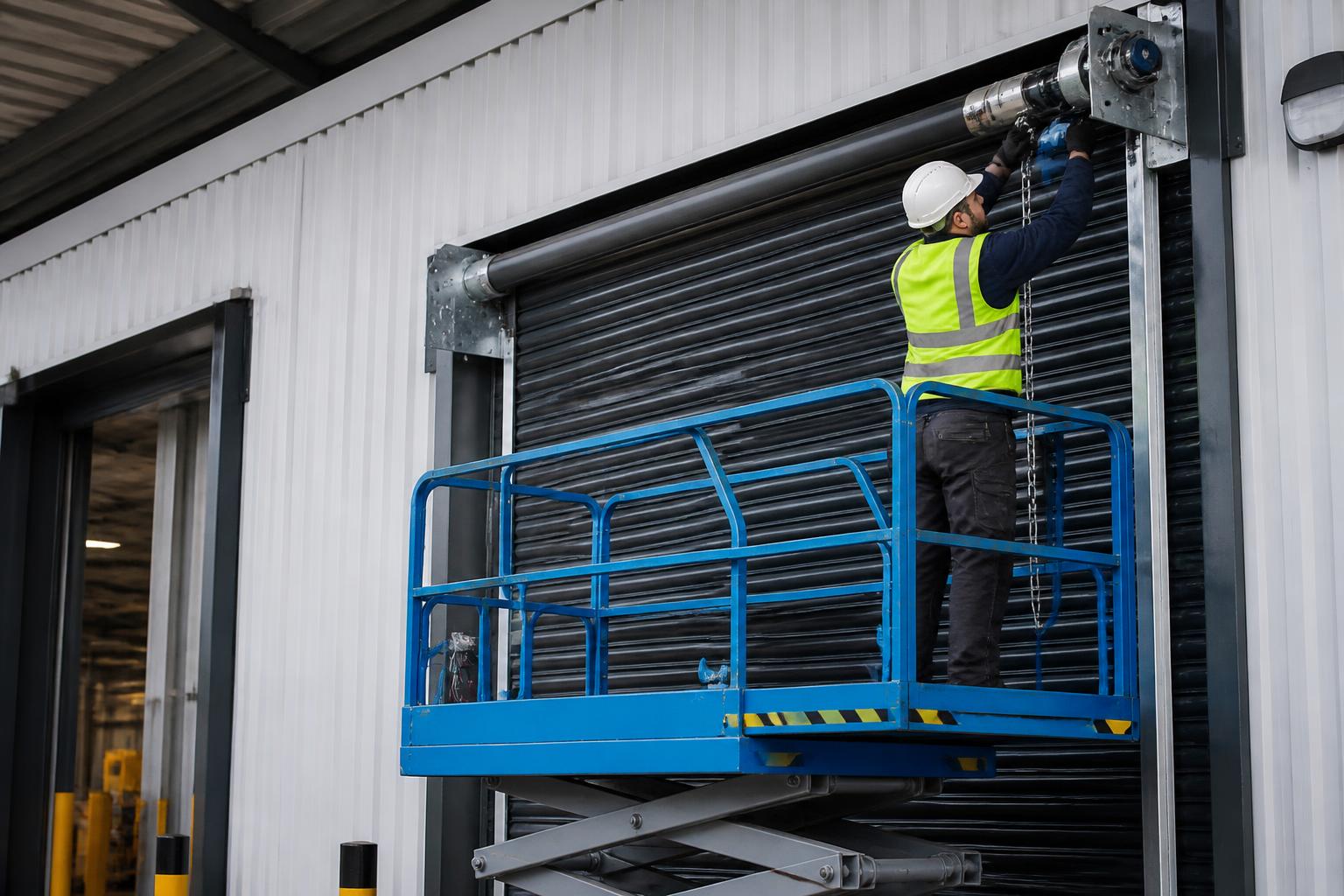
Scissor lifts and cherry pickers hired for commercial and industrial doors, where the hire terms leave you responsible for damage and theft.
Read more about plant and machinery insurance
Tools and equipment
Spring winding bars, drills, welders and test meters, wherever they are kept between jobs.
Showroom and warehouse
Display doors, the warehouse, office and stock, plus lost income while a damaged showroom or warehouse is out of use.
Read more about commercial combined insurance
Extras door installation firms consider
- Fleet insurance: installation vans and service vehicles on one policy
- Group personal accident: set payouts for installers hurt at work
- Legal expenses cover: disputes with customers, suppliers and staff
- Professional indemnity: specifying fire shutters or door systems for a fee
Which firms is garage door installers insurance for?
It suits established firms whose main work is fitting, automating and maintaining doors and shutters. Typical buyers include:
Gates or windows too? Automated gates are covered on our fencing contractors insurance page, and glazed doors and windows by glaziers insurance.
- Garage door fitting companies: supplying and fitting up-and-over, sectional, roller and side-hinged doors for homeowners and housebuilders
- Roller shutter door installation firms: security shutters for shops, takeaways and units, often working over pavements
- Industrial door specialists: sectional, high-speed and fabric doors for factories, distribution centres and warehouses
- Door automation firms: fitting motors, controls and safety devices to existing doors
- Planned maintenance and repair contractors: service contracts for loading bay doors, dock levellers and shutters
- Fire shutter installers: fitting and servicing fire-rated shutters, which insurers treat as a higher risk
- Door installers working for housebuilders: fitting garage doors on new estates for house builders
- Door and loading bay manufacturers that install: making doors in a factory and fitting them, alongside manufacturing cover
How much does garage door installers insurance cost?
Premiums depend on the mix of doors you fit and service, and on how much of your income comes from powered and commercial doors. Insurers consider these points.
Type of doors
Manual domestic doors carry less risk than powered, industrial and high-speed doors, and fire shutters are rated separately.
Servicing work
Maintenance contracts extend your liability over many doors you did not fit, so insurers ask how much of your turnover they make up.
Wage roll
The employers' liability rate is applied to pay for installers, engineers and warehouse staff, including any labour-only fitters.
Stock values
The value of doors, motors and parts in your warehouse, showroom and vans sets the property premium.
Electrical work
Firms that wire in motors and controls themselves are asked about qualifications and testing.
Claims and records
Past entrapment or spring injury claims count heavily, while commissioning checks and service records help.
What garage door installers insurance does not cover
Door firms most often find gaps in these areas.
- Replacing a door that was fitted badly or ordered to the wrong size, as faulty workmanship is excluded
- Wear and tear on doors, springs and motors that you did not service or repair
- Fire shutter work, high-speed doors or door design that was not declared to the insurer
- Removing old doors, panels or garage linings containing asbestos, unless agreed in advance
- Theft of stock from vans left unattended without meeting the security conditions
- Electrical installation beyond connecting your doors, which may need electrical contractors insurance
- Installation and service vans when driven, which are insured under commercial vehicle insurance
Manual doors or powered doors: how the risk changes
Automating a door changes the liability your firm carries long after the job is done. This is how insurers usually view the two.
| Feature | Manual up-and-over and side-hinged doors | Powered roller and sectional doors |
|---|---|---|
| Main injury risk | Springs and heavy doors during fitting | Doors closing on people, vehicles or goods in use |
| When claims arise | Mostly during the installation | During use, often years after fitting or servicing |
| Key policy section | Public and employers' liability | Products and completed works liability |
| What insurers ask | Fitting methods and training | Safety devices, commissioning tests and service records |
| Extra skills involved | Mechanical fitting only | Electrical connection, controls and safety settings |
How to compare garage door installers insurance
These details help a broker show insurers the full picture of your door business.
Split your turnover
Divide income between domestic doors, commercial shutters, industrial doors, fire shutters and servicing.
Describe powered work
Explain how you commission automated doors, test safety devices and record handovers.
Count your staff
List installers, service engineers, warehouse staff and any labour-only fitters, with their annual cost.
Value stock and premises
Give the value of doors, motors and parts held, and details of your showroom and warehouse.
Bring claims details
Provide details of any past claims and what changed in your procedures afterwards.
Quotes for door installation firms
Outline your installations, service contracts and crews, and a broker who knows door installation risks will compare cover.
Get a quoteGarage door installers insurance FAQs
How much does garage door installers insurance cost?
It depends on the mix of doors you fit and service, how much powered and industrial work you do, your wage roll, stock values and claims record. A firm fitting manual garage doors is priced differently from one servicing high-speed doors in warehouses.
Does garage door installers insurance cover garage door fitting on new estates?
Yes, garage door fitting for housebuilders is covered when declared. Insurers ask about the volume of new-build work and whether you supply the doors, because faults across many identical doors can lead to several claims at once.
Is roller shutter door installation covered?
Yes, roller shutter door installation is a standard part of most door installer policies, but it must be declared. Insurers ask about shutter sizes, whether they are powered and whether you work over public pavements, as this affects the public liability risk.
Am I covered if an automatic door injures someone after I fit it?
Usually, under products and completed works liability. Insurers expect you to commission doors properly, test safety edges and photocells, and give customers instructions. Missing records can make a claim harder to defend.
Are my engineers covered when servicing doors I did not fit?
Yes, if servicing and repair work is declared. Your liability covers injury or damage arising from the work your engineers carried out, though insurers will want to know how you record what was checked, repaired or reported to the customer.
Does the policy cover springs breaking during installation?
Injuries to your staff from springs are covered by employers' liability, and damage to a customer's property by public liability. Insurers look for proper training and tools for tensioning springs, and the cost of the replacement spring itself is not covered.
Do I need cover for fire shutters?
If you fit or service fire shutters, declare it. A shutter that fails to close in a fire can lead to a large claim, so insurers rate it separately and ask about training, testing and records. Some insurers will not cover it at all.
Is stock in my vans covered overnight?
It can be, under a stock or goods in transit section, but most policies have conditions. Insurers usually expect vans to be locked, alarmed and parked securely, and some set limits on stock left in vehicles overnight.
How do I get a garage door installers insurance quote?
Give a short description of your door business in the enquiry form on this page. A broker who works with door installers will discuss your powered work, servicing, staff, stock and claims, then compare terms from insurers that accept this trade.
Ready to compare garage door installers insurance?
Cover for the doors you fit, the doors you service and the teams who do the work, matched to your contracts.