Heating Engineers Insurance for heating installation firms
Heating engineers insurance for firms that design, install, commission and service central heating and heat pump systems, with engineers on the road and servicing contracts to keep. Compare cover that recognises a heating claim is often about performance as much as damage.
- Liability for damage from heating installs and servicing
- Design cover for heat loss and system sizing
- Engineers, tools and van stock insured
Reviewed October 2026 by the MyBusinessComparison.com editorial team
What is heating engineers insurance?
Heating engineers insurance covers firms that design, install, commission and maintain heating systems, from boilers and radiators to heat pumps and underfloor heating. A typical policy pairs public and products liability with employers' liability for your engineers, adds tools and stock, and often includes professional indemnity for system design.
A heating complaint is not always about something breaking. A system can work as fitted and still leave rooms cold or bills high because the heat loss was underestimated or the emitters were undersized. That is a financial loss, which liability policies do not pay, so design cover matters more in heating than in most installation trades.
Insurers ask what fuels and technologies you work on, how much design you take on, your split between installation and servicing, and the certifications your engineers hold.
Heating engineers insurance at a glance
- Suits
- Heating installation and servicing firms with engineers and vans
- Core covers
- Liability to customers and the public, cover for engineers, tools and stock
- Often added
- Professional indemnity for heat loss calculations and design
- Trade specific
- Heat pump performance, commissioning, oil tanks, powerflushing
- Priced on
- Technologies, design role, install or service split, wage roll, claims
- Separate cover
- Engineers' vans on commercial vehicle insurance
What does heating engineers insurance cover?
Heating firms usually build a policy from these sections. The balance between them depends on how much you design and how much you service.
Damage while installing
Injury and property damage during the job, such as a dropped cylinder through a ceiling, a cable drilled while running pipework, or a refill flooding a hallway.
Read more about public liability insurance
Completed installations
Damage that appears after commissioning, for example an expansion vessel failing, a manifold leaking under a new floor or a pressure relief discharge left unpiped.
Read more about products liability insurance
Heat loss and system design
Claims that a system was wrongly sized or specified and cannot heat the building, or costs far more to run than the client was told.
Read more about professional indemnity insurance
Heat pumps
Air and ground source installs, including outdoor units, buffer tanks, cylinders and controls. Split systems add refrigerant handling, which needs engineers certified to handle refrigerants; sealed monobloc units usually do not.
Central heating services
Annual servicing, breakdown visits and planned maintenance on contract, where an engineer may be judged on a fault spotted or missed months earlier.
Oil and biomass systems
Oil tanks, supply lines and biomass boilers bring fire, smoke and pollution risks. A leaking oil tank can mean a costly ground clean-up.
Read more about environmental liability cover
Engineers and apprentices
Claims from staff for burns, falls in lofts, manual handling of boilers and cylinders, and exposure to dust and asbestos in older homes.
Read more about employers' liability insurance
Tools, analysers and stock
Powerflushing machines, pressing tools, analysers, thermal imaging cameras, and boilers or cylinders in vans and stores.
Read more about business equipment insurance
Larger installs in progress
Plant room upgrades and heat pump conversions on new build or refurbishment sites, protected until handover.
Read more about contractors' all risks cover
Other covers heating firms consider
- Commercial legal expenses: disputes over unpaid invoices, servicing contracts and customer complaints about performance
- Cyber insurance: remote monitoring of heat pumps and smart controls, and customer data held for service plans
- Goods in transit: heat pumps and cylinders collected from merchants and carried to site
- Engineering inspection: for firms with their own pressure equipment or lifting kit at the depot
Which heating firms is this for?
Heating businesses range from servicing specialists to design consultancies. Below are the heating businesses that most often come to us.
Gas boilers or air conditioning too? For gas appliance risks see gas fitters insurance, and for cooling see air conditioning engineers insurance. Or see the trades hub.
- Central heating installers: boiler swaps, radiators, cylinders and controls for homeowners, landlords and housing providers
- Central heating services firms: servicing, breakdown and planned maintenance contracts for homes, letting agents and small commercial buildings
- Heat pump installers: air and ground source systems for homes, new build developers and retrofit programmes
- Heating consultancy firms: heat loss surveys, system design and specification for clients, installers and surveying practices, where design cover comes first
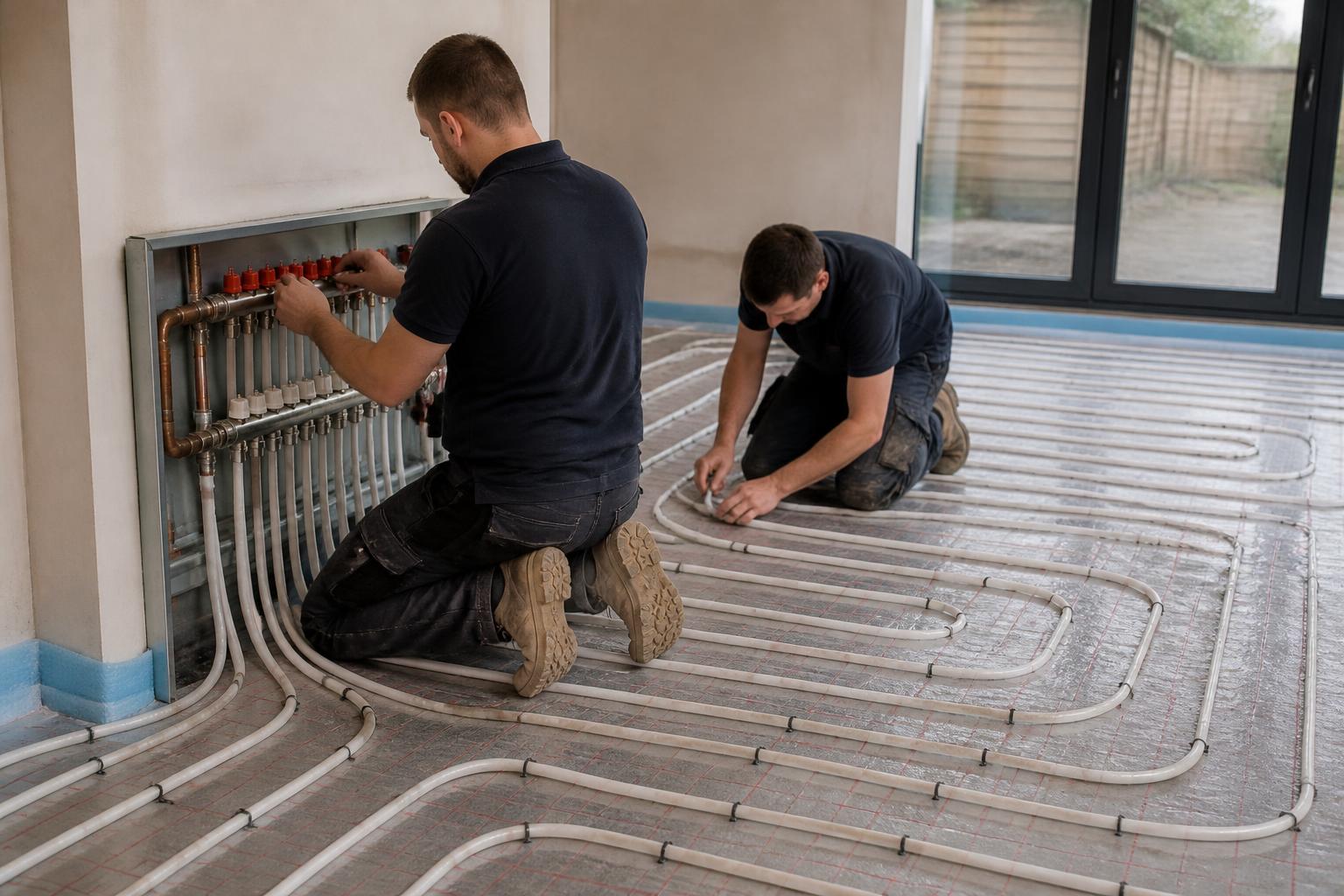
- Underfloor heating specialists: wet underfloor systems for new homes and extensions, working alongside flooring contractors and screeders
- Oil and off-grid heating engineers: oil boilers, tanks and biomass in rural homes, farms and estates
- Retrofit and energy upgrade contractors: heating upgrades alongside insulation and solar panel installation
- Heating firms that also take on plumbing: where the water and leak side of the business is explained on plumbers insurance
How much does heating engineers insurance cost?
Heating firms are priced on the technologies they handle and the responsibility they take for how a system performs. Insurers weigh the following.
Design responsibility
Firms that carry out heat loss calculations and size systems carry professional risk, and the share of design work shapes that premium.
Technologies
Gas, oil, biomass, heat pumps and underfloor heating are each viewed differently, and a shift towards heat pumps is worth telling the broker about.
Install or service
Servicing means frequent visits to occupied homes; installation brings completed work exposure and larger contract values.
Certification
Insurers ask which competent person schemes, heat pump certification and refrigerant qualifications your engineers hold.
Staff and turnover
Engineers' pay sets employers' liability, while turnover drives the public and products liability rate.
Claims record
Leaks after commissioning, oil spills and performance complaints all count. Show what you changed after each one.
What heating engineers insurance usually excludes
These exclusions come up most when heating firms make a claim. Check each against your own policy.
- A system that heats poorly or costs too much to run, unless professional indemnity is in place
- Putting right a faulty component you fitted, although the damage it goes on to cause is usually covered
- Gas work by engineers not registered for it, a risk set out on our gas fitters page
- Gradual oil leaks and pollution, unless the policy gives sudden and accidental cover or a separate pollution policy is bought
- Refrigerant work on split heat pumps by engineers without refrigerant handling certification, which some insurers exclude or restrict
- Powerflushing damage to old systems, which some insurers limit or cover only where the customer was warned in writing
- Engineers' vans on the road, which sit on a fleet policy
Boiler replacement or heat pump installation: what changes?
Many heating firms now fit both. Insurers see the two jobs differently, and the policy needs to keep up with the work.
| Feature | Boiler replacement | Heat pump installation |
|---|---|---|
| Typical job | Like-for-like swap on an existing system | New outdoor unit, cylinder and often larger radiators |
| Design involved | Usually limited | Heat loss calculation and emitter sizing on every install |
| Main complaint | Leaks and breakdowns | Cold rooms, high running costs and outdoor unit noise |
| Usual claim route | Public and products liability | Liability for damage, professional indemnity for performance |
| Certification asked about | Gas or oil registration | Heat pump certification and refrigerant qualifications |
How to compare heating engineers insurance
A heating proposal that sets out your design role and technologies gets quicker, cleaner terms.
Break down your work
Give turnover for boiler installs, heat pumps, underfloor heating, servicing contracts and consultancy.
Describe your design role
Say who carries out heat loss calculations, what software is used and what the client is told about running costs.
List certifications
Note the competent person schemes, heat pump certification and refrigerant qualifications held across the team.
Value tools and stock
Total test and flushing equipment, typical van stock, and heat pumps or cylinders held in stores.
Explain past claims
Cover leaks, oil spills and performance complaints, with what was paid and what changed.
Quotes for heating firms
Tell us what heating systems you install and service, and how much design you do, and a broker will compare cover.
Compare quotesHeating engineers insurance FAQs
How much does heating engineers insurance cost?
It turns on your design role, the technologies you install, your split of installation and servicing, certifications, wage roll and claims. A firm designing heat pump systems carries different risks from one servicing boilers on contract, so premiums differ even at similar turnover.
Does heating engineers insurance cover heat pumps?
It can, as long as heat pump work is declared. Insurers want to know whether you fit air or ground source, monobloc or split systems, who designs them and what certification your engineers hold. Some insurers ask for these details on a separate questionnaire.
Is a heat pump that does not heat the house properly covered?
Not by liability cover alone, because nothing has been damaged. If your firm calculated the heat loss or sized the system, professional indemnity is the cover that responds to a claim for the cost of putting it right, subject to its terms.
Do heating consultancy firms need different cover?
Yes. A heating consultancy that designs and specifies but does not install relies mainly on professional indemnity, with lighter public liability for site visits. Many firms mix design and installation, so the broker needs to know the share of each.
Are central heating services and maintenance contracts covered?
Servicing and breakdown work is normally part of a heating engineer's declared activities. Insurers look at how many visits you make and how faults are recorded, because a claim can follow a defect that an engineer is said to have missed.
Is powerflushing covered?
Usually, as part of heating work, but older systems can develop leaks once sludge is cleared. Many firms warn customers in writing before flushing, and insurers may ask how you assess a system first. Damage from a leak is a liability matter; replacing weak radiators may not be.
Are oil tank leaks covered?
Public liability often responds to a sudden, accidental spill caused by your work, though a sub-limit may apply. Slow leaks and clean-up of contaminated ground may need environmental liability insurance, so it is worth checking.
Can we add gas work to a heating engineers policy?
Yes, many heating firms are insured for both, provided engineers are registered for the gas categories they work on and the insurer is told. The specific risks of gas installations are covered on our gas fitters insurance page.
How do I get a heating engineers insurance quote?
Once you enquire here, a broker who arranges heating firms' insurance will ring to talk it through. Have your work split, design role, certifications, staff numbers, wage roll and any claims ready to discuss.
Ready to compare heating engineers insurance?
Liability, design and stock cover for heating firms, from boiler servicing to heat pump design.