Cavity Wall Insulation Insurance for insulation installers
Cavity wall insulation insurance for installer firms with survey teams, injection crews and vans working across funded schemes, housing providers and private homes. Compare cover that understands claims arriving long after the job is finished.
- Liability for damp, ventilation and property damage claims
- Cover for survey and suitability advice
- Employers' liability for installers working at height
Reviewed October 2026 by the MyBusinessComparison.com editorial team
What is cavity wall insulation insurance?
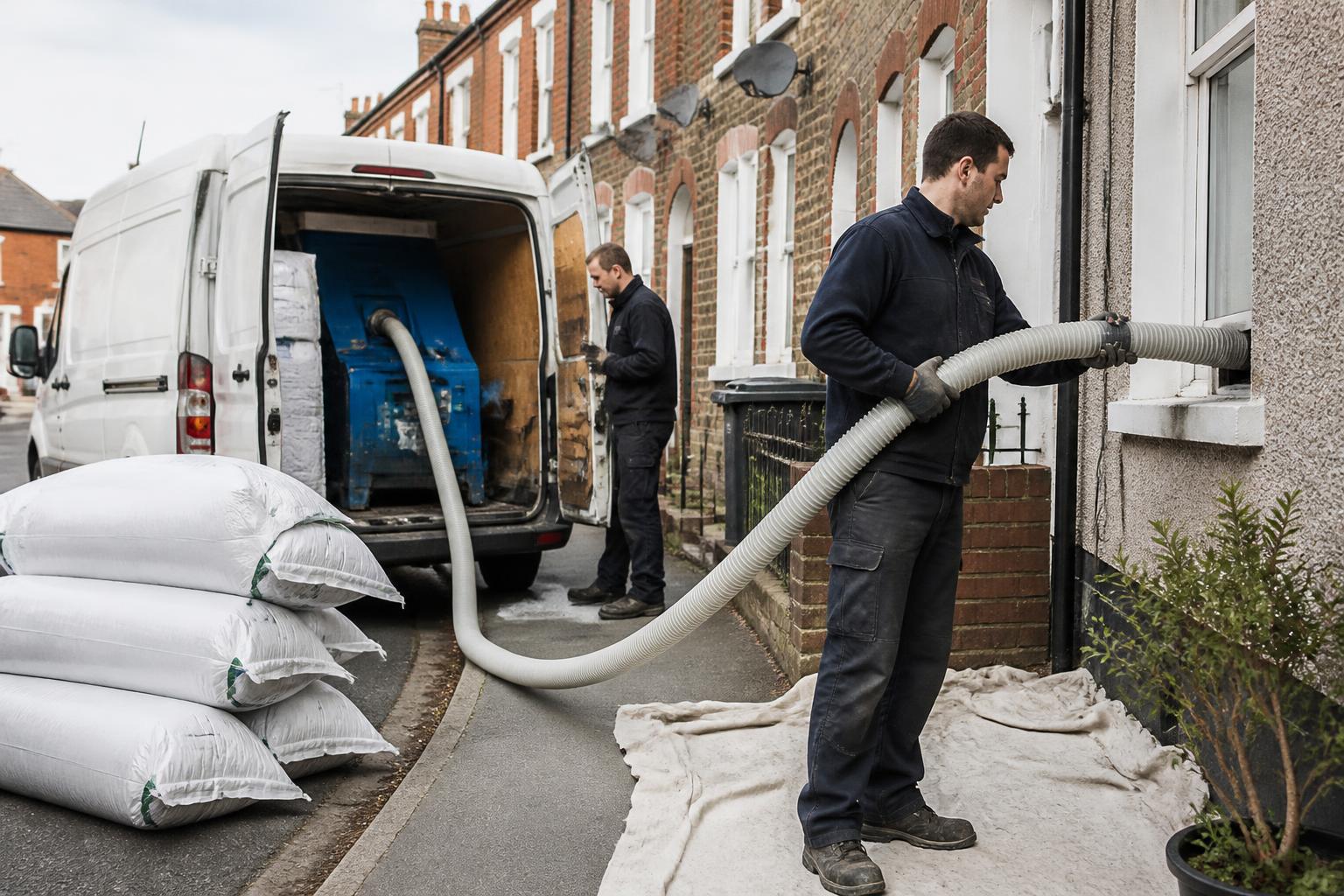
Cavity wall insulation insurance is cover for firms that survey, install or remove insulation in the cavities of external walls. It combines public and products liability for damage to customers' homes, such as damp, blocked ventilation or drilling damage, with employers' liability for your crews and cover for advice given at survey.
The main difficulty for insurers is time. Problems such as damp bridging across the cavity can take years to show, so a claim may arrive long after the job was signed off. Insurers therefore look hard at how you assess whether a wall is suitable, what materials you use and the records you keep for each property.
Many installer firms also fit loft, underfloor, internal or external wall insulation, and some now extract failed cavity fill. Each activity is rated separately, so tell the broker the full mix of work.
Cavity wall insulation insurance at a glance
- Suits
- Installer firms with surveyors, injection crews and vans
- Key sections
- Liability for work done and completed, plus cover for your crews
- Often added
- Professional indemnity for survey advice, tools, equipment and vans
- Main claim types
- Damp penetration, blocked vents, drilling damage and fill migrating
- Priced on
- Install numbers, materials, survey process, turnover, wage roll, claims
- Hard to place
- Extraction work and firms with a history of damp claims
What does cavity wall insulation insurance cover?
An installer's policy typically brings these parts together. Some insurers add their own conditions for insulation, such as survey and record-keeping requirements.
Public liability
Damage to customers' homes and neighbouring property while you work, such as drilling into a water pipe or cable, fill blown into a neighbour's cavity, or a ladder through a conservatory roof.
Read more about public liability insurance
Products liability
Damage that appears after the crew has gone, such as damp spreading through the fill to inner walls, or insulation blocking air bricks and underfloor ventilation.
Read more about products liability insurance
Combustion air and flues
Liability if fill or sealing work blocks a vent or flue serving a gas or solid fuel appliance. Insurers expect checks on every property with combustion appliances.
Survey and suitability advice
Claims that a wall should never have been filled because of exposure to driving rain, poor brickwork or a narrow cavity. Advice like this usually needs professional indemnity.
Read more about professional indemnity insurance
Employers' liability
Surveyors and installers hurt at work, from falls off ladders and towers to drilling injuries and irritation from fibre insulation dust.
Read more about employers' liability insurance
Machines and equipment
Blowing machines, compressors, drills and access equipment in vans and on site, against theft and damage.
Read more about business equipment insurance
Extraction work
Removing failed or damp insulation and remediating walls. Some insurers decline this activity or rate it separately, so it must be declared.
Other covers insulation firms consider
- Fleet insurance: survey cars and install vans on one policy
- Commercial legal expenses: disputes with scheme administrators, homeowners and suppliers
- Cyber cover: customer and property data held for funded scheme work
- Group personal accident: benefits for installers injured at work
Which firms need cavity wall insulation insurance?
It suits any established business installing, assessing or removing wall insulation. Typical buyers include the following.
Fitting other energy measures? See solar panel installation insurance, or browse the trades hub.
- Cavity wall injection firms: blown fibre and bead installers working through funded schemes, housing providers and private homeowners
- Multi-measure energy installers: cavity, loft, underfloor and solid wall insulation alongside solar and heating measures
- Extraction and remediation specialists: removing failed fill and repairing walls, often for other installers or homeowners with damp
- External and internal wall insulation contractors: solid wall systems with render finishes, where the overlap with plastering and rendering risk is large
- Retrofit assessors and coordinators: assessing homes and specifying measures, where professional indemnity matters more than liability
- Contractors on social housing programmes: large volumes of homes for housing providers, often with contract limits set by the client
- Building firms adding insulation: general contractors who fit insulation as part of wider work, usually under builders insurance
How much does cavity wall insulation insurance cost?
Insulation is a specialist class, and not every insurer writes it. The terms you are offered turn on the points below.
Work mix
Cavity injection, loft, underfloor, external wall and extraction work are each rated differently, and extraction can limit the insurers willing to quote.
Survey process
How you assess exposure, cavity width, brick condition and existing damp, and whether surveys are photographed and recorded, matters a great deal.
Materials used
Insurers ask which products you install and whether they carry third-party certification for the walls you fill.
Volume of installs
The number of properties a year and the spread between funded, housing provider and private work affect the liability rating.
Business size
Annual turnover sets the liability rate, while what you pay installers and surveyors sets employers' liability.
Claims history
Past damp and ventilation claims weigh heavily. Show what has changed, such as stricter survey criteria or added checks on vents.
Exclusions on cavity wall insulation insurance
Insurers differ, but most insulation policies limit or exclude the following.
- The cost of extracting and replacing insulation you installed badly, even where the damp damage it caused is covered
- Advice on whether a wall is suitable, which falls to a professional indemnity policy
- Extraction or remediation work that was not declared
- Damage that occurs after your liability cover has stopped, even if the install was done while you were insured
- Work at height beyond the limit on your schedule
- Products or systems not declared to the insurer, where the policy limits cover to those listed
- Survey cars and install vans while driven, which need commercial vehicle insurance
Public liability or professional indemnity for insulation claims?
Many insulation disputes sit between the two covers. Knowing which one responds helps you decide whether you need both.
| Feature | Public and products liability | Professional indemnity |
|---|---|---|
| Pays for | Physical damage and injury caused by your work | Financial loss from your advice or assessment |
| Typical claim | Damp damaging plaster and decoration after install | A wall wrongly assessed as suitable for fill |
| Usual trigger | Damage happening while the policy is in force | Claim made while the policy is in force |
| Who needs it | Every installer firm | Firms surveying, assessing or specifying measures |
| Gap if missing | Damage claims paid from your own funds | Advice-based claims rejected by the liability insurer |
How to compare cavity wall insulation insurance
Insulation is underwritten closely. Brokers get better terms when the proposal is complete.
Set out your work mix
Give the share of turnover from cavity, loft, underfloor, solid wall and extraction work.
Explain your survey process
Describe how a wall is assessed, who does it, what is recorded and how unsuitable properties are turned away.
List products and certification
Name the materials and systems you install and the certification or scheme membership you hold.
Give volumes and staff
Number of installs a year, survey staff, installers, turnover and wage roll.
Detail every past claim
Explain each damp or ventilation complaint, how it was resolved and what you changed afterwards.
Quotes for insulation installers
Explain your installs, survey process and crews, so an insulation specialist can look for terms.
Get installer quotesCavity wall insulation insurance FAQs
How much does cavity wall insulation insurance cost?
The price rests on your work mix, how thoroughly you survey, the materials you use, install volumes and your complaint record. Firms with strong survey records and no damp claims are offered better terms than those without.
Does my insurance cover damp claims years after an install?
It can, if cover is still in place. Most UK liability policies respond to damage that occurs while the policy is in force, so a damp claim from an older install usually falls on the policy current when the damage happened, not the one you held at the time of the work. Continuous cover and records of every survey and install matter for claims that surface late.
Do I need professional indemnity as an insulation installer?
If your staff assess whether a wall is suitable or specify the measure, yes, it is worth considering. A claim that the wall should never have been filled is about advice, which many liability policies exclude.
Is extraction of old cavity wall insulation covered?
Only if you declare it. Removing failed fill involves drilling, vacuum extraction and remedial work on damp walls, and some insurers decline it or rate it separately. Tell the broker how much of your work it is.
Are blocked vents and flues covered?
Damage or injury caused by insulation blocking a vent or flue is normally a liability claim. Because the consequences can be serious, insurers expect checks on every property with a combustion appliance and may ask how you record them.
Does the long-term warranty on an install replace insurance?
No. Long-term warranties issued at installation protect the homeowner and sit outside your own insurance, and the warranty provider usually expects the installer to put defects right first. They do not cover your firm's liability for injury, property damage or advice, so you still need your own policy.
What do insurers ask cavity wall insulation firms?
Expect questions on your survey process, products and certification, install volumes, work at height, extraction work, staff training and every past complaint or claim. Clear written procedures make placement easier.
Can I get cover after damp claims?
Usually, through a specialist broker, though terms may be tighter. Insurers want to see how each claim arose, how it was settled and what you changed, such as stricter exposure criteria or extra survey checks.
How do I get a cavity wall insulation insurance quote?
Follow the quote link on this page. A broker with insulation experience then contacts you, and written survey procedures, a product list, install numbers per year and an account of any damp complaints make the first conversation far more productive.
Ready to compare cavity wall insulation insurance?
Liability and advice cover for insulation installers, arranged by brokers who understand long-tail damp claims.