Machinery Installers Insurance for installation and service firms
Insurance for firms that deliver, position, install, commission and service machinery at customers' factories, garages, gyms and plant rooms. Compare cover for the machine in your care, the building around it and what happens after handover.
- Damage to customers' machines while you work on them
- Rigging, skating and lifting declared properly
- Liability for installations after handover
Reviewed October 2026 by the MyBusinessComparison.com editorial team
What is machinery installers insurance?
Machinery installers insurance protects firms that install, relocate, repair and maintain machinery on customers' premises. Most programmes join public and products liability with employers' liability, cover for the machine while it is in your care, tools and lifting equipment, and professional indemnity where you plan layouts or specify equipment.
The awkward claims involve the customer's own property. A press dropped from skates, a pump that floods a plant room after a service, or a vehicle lift that fails a month after commissioning can each lead to a large claim, and standard public liability often limits cover for property you are working on. Insurers ask how you move and lift machines and what checks you sign off at handover.
If you also design and build machines in your own workshop, see our engineering company insurance page.
Machinery installers cover at a glance
- Suits
- Installation, relocation and service firms with engineers, riggers and vans
- Core covers
- Public, products and employers' liability, tools and lifting kit
- Key extension
- Damage to property in your care, custody or control
- Underwriters ask
- Heaviest lifts, sectors served and handover checks
- Often required by
- Factory, garage group, leisure operator and facilities contracts
- Usually separate
- Breakdown of the machine itself, which the owner insures
What does machinery installers insurance cover?
An installer's cover has to follow the machine from delivery through commissioning and into years of use. These are the sections to look for.
Machines in your care
Damage to the customer's machine while you dismantle, move, install or service it. Many liability policies cap this, so the extension and its limit need checking against the values you handle.
Rigging and positioning
Liability arising from jacking, skating, lifting and craning machines into place, including damage to floors, doorways and services along the route.
Customers' buildings
Damage to the premises around the work, such as a plant room flooded by a pump you serviced or a slab cracked under a heavy machine.
Read more about public liability insurance
Installations after handover
Injury or damage caused later by a missing guard, a loose fixing or a fault in the wiring or pipework you connected.
Read more about products liability cover
Engineers and riggers
Crush and handling injuries, falls, contact with moving parts and work in pits and plant rooms.
Read more about employers' liability insurance
Tools and lifting kit
Skates, jacks, gantries, forklifts, test equipment and hand tools in vans, stores and on site.
Read more about business equipment cover
Installation works
The installation itself, and equipment your contract makes you responsible for, until it is handed over.
Read more about contract works cover
Machines in transit
Machines being delivered or relocated on your own vehicles, including loading and unloading.
Read more about goods in transit insurance
Layout and specification advice
Errors in floor loadings, layouts or equipment selection that leave a customer with a machine that does not fit or perform.
Read more about professional indemnity insurance
Other covers installers add
- Engineering inspection: thorough examination of your own lifting gear, gantries and forklifts
- Commercial vehicle insurance: engineers' vans and the rigging lorry
- Commercial legal expenses: disputes over commissioning sign-off, delays and retentions
Who needs machinery installers insurance?
It suits established firms whose engineers spend their days working on machines that belong to someone else. These are the businesses we see most.
Installing building services rather than machines? Wiring and power installations sit under electrical contractors insurance, or browse all trades.
- Machinery installation and relocation specialists: moving production lines, presses and machine tools within or between factories
- Machinery repair and maintenance contractors: planned maintenance and breakdown call-outs on production machinery, where a failed repair can stop a customer's line
- Pump servicing and installation firms: booster sets, sewage and drainage pumps, sprinkler pumps and process pumps, where a failure often means water damage
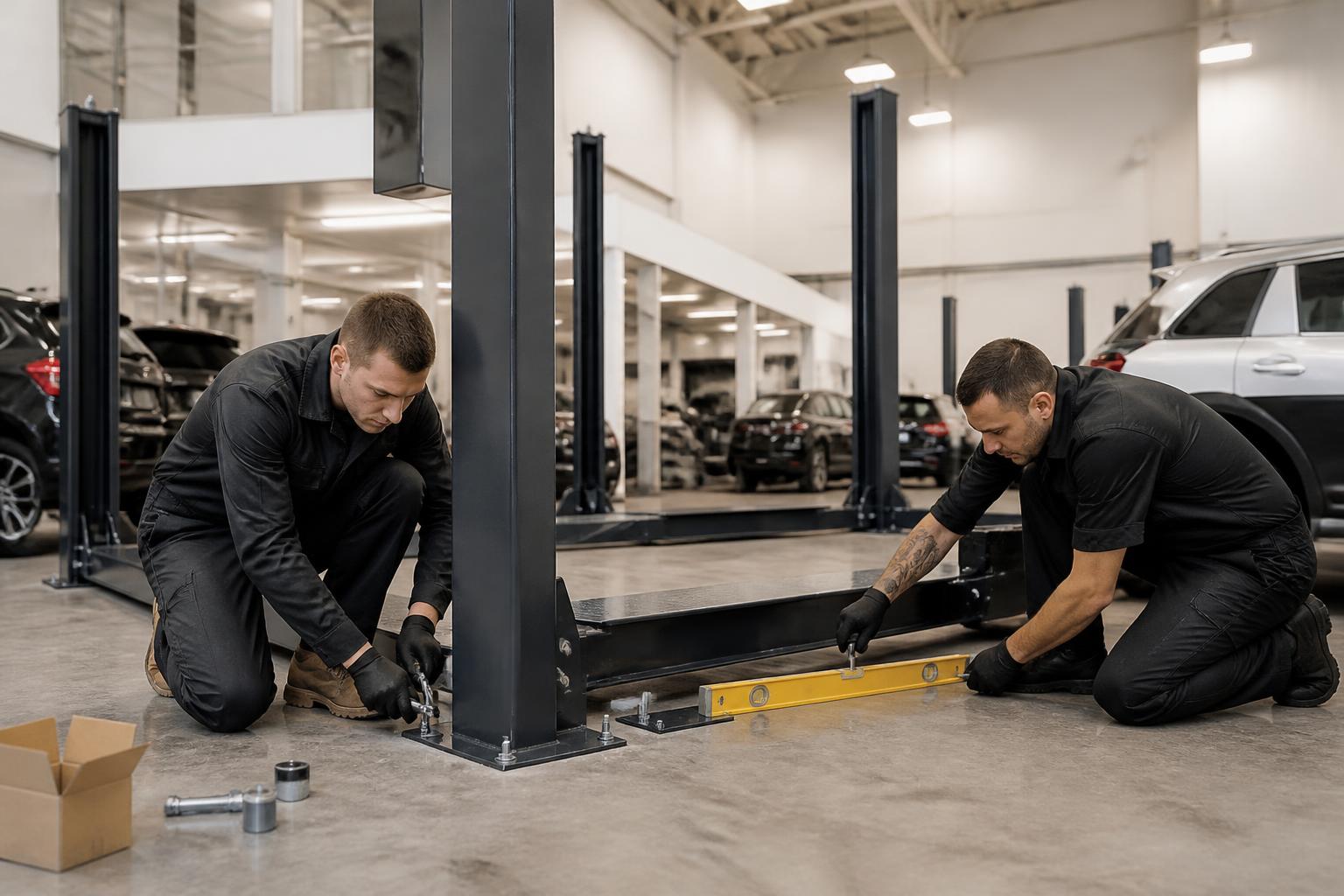
- Garage plant installers: vehicle lifts, tyre changers, wheel balancers, brake testers and compressors for garages and dealerships
- Gym equipment installers: treadmills, rigs, cable machines and fixed equipment for gyms and leisure centres, hotels and schools
- Commercial kitchen equipment installers: ovens, dishwashers and extraction, with servicing work covered on our catering equipment engineers page
- Conveyor and packaging line installers: conveyors, palletisers and wrapping machines in warehouses and food plants
- Compressor and air system engineers: compressors, receivers and pipework, which bring pressure risks during commissioning
- Laundry equipment installers: commercial washers, dryers and ironers for laundries, hotels and care homes
How much does machinery installers insurance cost?
The price reflects what you handle and what could go wrong after you leave. Underwriters look at these points first.
Value of machines in your care
The highest value machine you will have in your care at once sets the limit for that extension, and drives its share of the premium.
Lifting and moving methods
Whether you crane machines in or use skates and jacks, how heavy the loads are and who plans each lift.
Sectors served
Food plants, pharmaceutical sites, garages and gyms each bring different consequences when an installation goes wrong.
Mix of work
New installations, relocations and routine servicing are rated differently, so the turnover split matters.
Handover and records
Commissioning checklists, signed handovers and service records help defend claims and count with underwriters.
Claims and contract limits
Past claims, and the liability limits and indemnities customers write into contracts, shape the price.
What machinery installers insurance does not cover
Installation claims tend to fall into the gaps between policies. These are the ones to check.
- Damage to machines in your care above the limit of the care, custody or control extension
- A customer's lost production when nothing is physically damaged, unless a financial loss extension applies
- Correcting your own poor workmanship: the policy responds to the damage it causes, not to the fix itself
- Wear and tear on the customer's machine, which belongs on the owner's breakdown policy
- Lifting operations, work at height or confined space entry that was not declared
- Layout and specification mistakes, which need professional indemnity
- Liability taken on under a contract beyond your normal responsibility, unless the insurer has agreed it
Your policy or the customer's: who insures the machine?
Contracts decide where the risk for a machine sits during and after the work. This is how the two sets of insurance usually split.
| Feature | Your installer's cover | The customer's own insurance |
|---|---|---|
| What it protects | Your liability for damage you cause, and the works until handover | Their buildings and machinery against fire, theft and, if bought, breakdown |
| Machine dropped while being positioned | Care, custody or control extension, or contract works | May pay first, then recover the cost from you |
| Fault after handover causes a fire | Products liability, for damage your work caused | Pays the property loss, then looks to recover from you |
| Machine wears out or breaks down | Not covered | Covered only if they hold breakdown cover |
| Lost production after damage | Usually covered where your work caused the damage | Their business interruption may pay, then pursue you |
| What to check | Limits for property in your care and any contract indemnities | Whether they must insure the works and waive recovery against you |
How to compare machinery installers insurance
Underwriters want to picture the heaviest job you do. Gather these before asking for quotes.
Describe your work mix
Installation, relocation, repair and planned maintenance, with turnover for each and the sectors you serve.
State your heaviest lifts
Typical and maximum machine weights and values, and whether you rig, skate, jack or crane them.
Share contract terms
The indemnities, limits and insurance clauses in your main customers' contracts.
Show your handover process
Commissioning checklists, guarding checks, sign-off forms and service records.
List staff, tools and claims
Engineer numbers, wage roll, tool and lifting kit values, and recent claims with what changed.
Quotes for installation firms
Describe the machines you install and service, and a broker who covers engineering trades will compare cover for you.
Get a quoteMachinery installers insurance FAQs
How much does machinery installers insurance cost?
It depends on the value of machines in your care, how you lift and move them, the split between installation and servicing, the sectors you work in, your wage roll and your claims. A firm servicing gym equipment is rated very differently from one relocating heavy presses between factories.
Is the customer's machine covered if we damage it during installation?
Only if your policy covers property in your care, custody or control to a high enough limit, or contract works cover applies. Many standard liability policies exclude or cap this, which is why it is the first thing to raise with the broker.
Are we liable if a customer's production stops after our repair?
If your work caused physical damage, public or products liability usually covers the lost production that follows, subject to any limit on property you were working on. If the machine simply does not work as intended and nothing is damaged, that is pure financial loss, which needs a specific extension or professional indemnity.
Does machinery installers insurance cover pump servicing?
Yes, if declared. Insurers ask which pumps you service, such as sewage, sprinkler, booster and process pumps, because the usual claim is water damage when a pump fails or a seal leaks after a visit. Work in wet wells and pits also matters for employers' liability.
Is garage plant installation covered?
Yes, if declared, though insurers look at it closely because a vehicle lift failing with a technician underneath can cause serious injury. Limits need to reflect that, with products liability running after handover. Insurers also ask whether you carry out the periodic examinations of lifts, which brings inspection and advice exposure.
Does machinery installers insurance cover gym equipment installation?
Yes. The main risks are users hurt by equipment that was assembled or fixed incorrectly, and damage to floors and walls during fitting. Insurers ask about fixing methods, sign-off checks and whether you also service the equipment, as maintenance contracts keep the exposure running.
Is the installation itself covered by our public liability?
Not usually. Public liability responds to damage to property belonging to others, while the installation itself, and machines your contract makes you responsible for, sit under contract works cover until handover. The contract should say who must insure the works.
Are our riggers covered for lifting operations?
Employers' liability covers injury to your staff and public liability covers injury or damage to others during a lift, provided lifting is declared. Insurers want to know who plans lifts, the equipment used and the heaviest loads, and hired-in cranes need their own cover.
How do I get a machinery installers insurance quote?
Use the button on this page to send your details to a broker who covers engineering trades. Your work split, heaviest and most valuable machines, lifting methods, customer contract terms, wage roll and claims record are what they will ask for first.
Ready to compare machinery installers insurance?
Cover for the machine in your hands, the building around it and the years after handover.