Tank Cleaning Insurance for tank and pollution control contractors
Insurance for contractors that clean, empty, degas and decommission tanks, interceptors and vessels, and for teams that respond to spills. Compare liability, pollution and fleet cover through brokers used to confined space and hazardous waste work.
- Pollution cover beyond sudden and accidental escapes
- Confined space and flammable atmosphere work declared
- Vacuum tankers, jetting units and depot covered
Reviewed October 2026 by the MyBusinessComparison.com editorial team
What is tank cleaning insurance?
Tank cleaning insurance covers contractors that clean, empty and decommission fuel, oil, chemical, water and waste tanks. It usually combines public liability with pollution cover, employers' liability for confined space work, cover for vacuum tankers and equipment, and liability for waste while you carry it to a site permitted to accept it.
Many general liability insurers decline tank cleaning, or limit pollution to sudden and accidental escapes. That leaves gaps where they matter most: a slow leak from a tank you reinstated, residues washed into a drain, or contaminated water discharged in the wrong place. Insurers also look hard at gas testing, entry permits and rescue arrangements for every confined space job.
Gradual pollution and the clean-up of your own land are explained on our environmental liability insurance page, and routine commercial cleaning contracts on our cleaning and facilities management page.
Tank cleaning insurance at a glance
- Suits
- Tank cleaning services, interceptor servicing and pollution control contractors
- Core covers
- Public and pollution liability, employers' liability, plant and depot
- Key risks
- Confined spaces, flammable vapours and escapes of contaminants
- Insurer appetite
- Narrow, so most of this work goes through specialist brokers
- Priced on
- Tank contents, sectors, entry procedures, fleet and incident record
- Often required by
- Fuel retailers, utilities, industrial sites and councils
What does tank cleaning insurance cover?
Tank cleaning firms need liability, pollution and fleet cover that agree with each other. These are the sections a specialist programme brings together.
Contractors' pollution liability
Clean-up costs and third party claims when contaminants escape from tanks, hoses, tankers or drains during or after your work, including gradual escapes where the policy allows.
Read more about environmental liability insurance
Confined space entry
Operatives entering tanks, pits and interceptors, where toxic or flammable atmospheres and rescue are the main dangers.
Read more about employers' liability insurance
Fire and explosion
Liability when vapours ignite during cleaning, degassing or cutting into tanks, which insurers want described in detail before they agree to cover it.
Read more about public liability insurance
Vacuum tankers and jetting units
Motor cover for tankers and combination units on the road, and for the tanks and pumps on them while working.
Read more about HGV insurance
Waste in transit
Spills of sludge, oily water and other waste while you carry it, and while it is discharged at the receiving site.
Equipment and plant
Pumps, gas detectors, breathing apparatus, jetting kit, recovery tanks and spill equipment, in depots and on site.
Read more about business equipment insurance
Customers' sites
Damage to forecourts, plant rooms, tank linings and pipework while tanks are opened, cleaned and put back into use.
Emergency spill response
Call-outs to contain spills from road tankers, factories and drains, often at night and on live roads.
Depot and income
Buildings, workshop and stored equipment at your depot, plus lost income while a fire or flood keeps the depot shut.
Read more about a commercial combined policy
Reports and plans
Tank integrity reports, decommissioning plans and pollution assessments you provide to customers.
Read more about professional indemnity insurance
Other covers tank cleaning firms add
- Engineering inspection: examination of tanker pressure systems, winches and lifting gear
- Commercial legal expenses: defence costs in health and safety or environmental prosecutions
- Directors' and officers' insurance: directors pursued personally after a fatal incident or serious spill
- Group personal accident: lump sums for operatives injured on site
Who needs tank cleaning insurance?
It suits established contractors that work inside or around tanks, or clean up after something escapes from them.
Mostly drain work? Drain jetting, surveys and repairs are covered on our drainage contractors insurance page, or browse other trades.
- Fuel tank cleaning contractors: forecourt, depot and generator fuel tanks, including water removal and fuel polishing
- Interceptor and separator servicing: emptying oil interceptors at garages, car parks, depots and industrial estates
- Industrial tank and vessel cleaning: process tanks, silos and vessels at factories and chemical sites, often during planned shutdowns
- Water tank cleaning and disinfection: cold water storage tanks in offices, hospitals and housing blocks, where water hygiene is the main concern
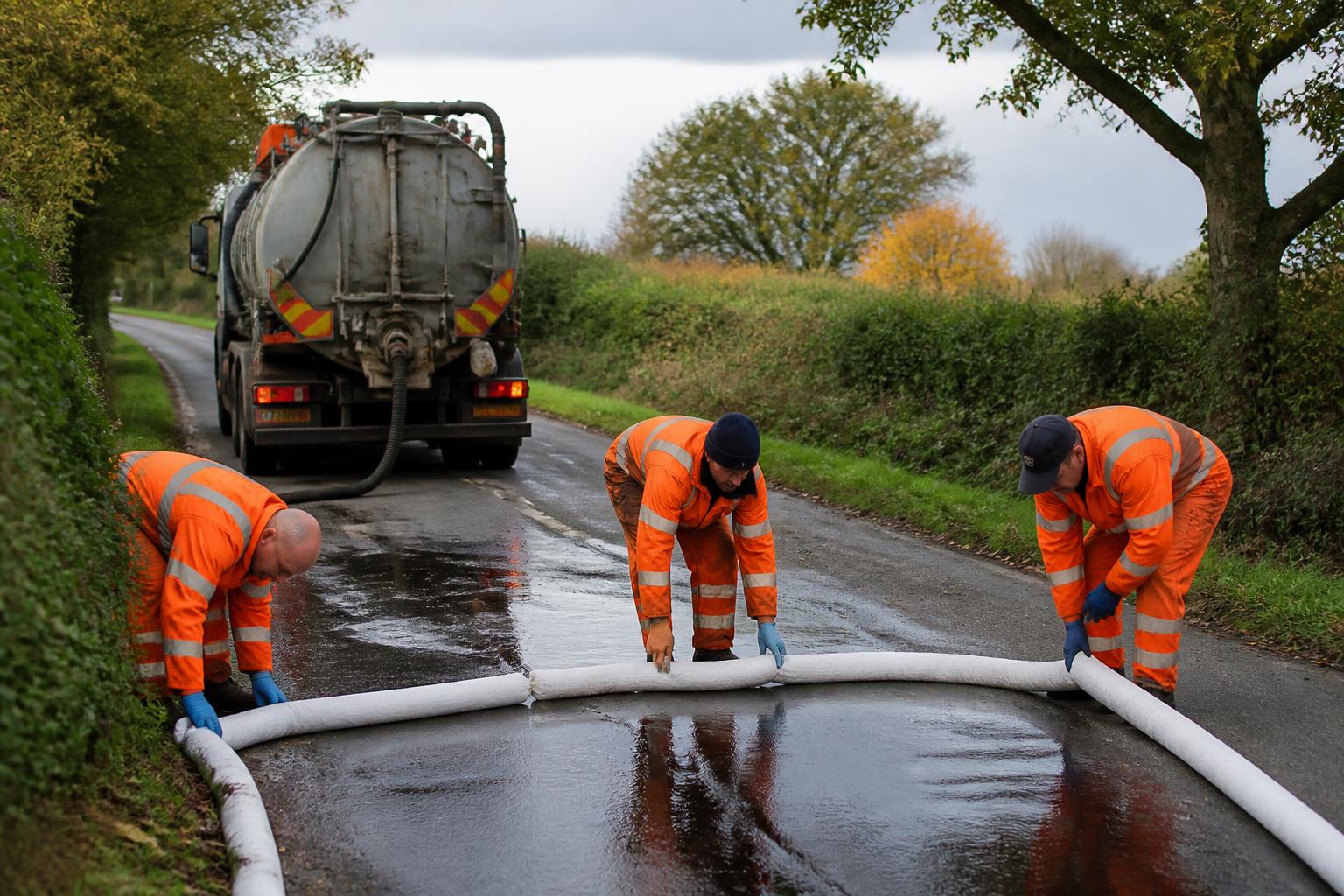
- Pollution control contractors: emergency spill response, booms and absorbents on roads, rivers and industrial sites
- Tank decommissioning specialists: degassing, filling and removing redundant tanks at forecourts and industrial sites
- Septic tank and cesspit emptying: domestic and commercial waste tanks on farms, rural properties and sites
- Liquid waste carriers: vacuum tankers collecting oily water, sludge and process waste, often alongside skip and waste firms
How much does tank cleaning insurance cost?
Few insurers write this work, and they price it on what is in the tank and how your people get inside. These factors carry the most weight.
What the tanks contain
Fuels, chemicals and hazardous sludge are rated far more heavily than drinking water or rainwater tanks.
Confined space entry
How often operatives enter tanks, gas testing, breathing apparatus, rescue teams and training records all weigh on employers' liability.
Pollution cover chosen
Sudden and accidental pollution only, or wider contractors' pollution cover with gradual escapes and clean-up costs.
Emergency response work
Out of hours spill response on roads and waterways adds to the liability exposure.
Fleet
The number and value of vacuum tankers and jetting units, drivers' records and motor claims.
Incidents and controls
Spills, near misses and how each was handled, with evidence of the changes made since.
What tank cleaning insurance does not cover
These are the gaps that catch tank cleaning firms out after an incident.
- Gradual pollution under a standard public liability policy, which usually covers only sudden, identifiable escapes
- Fines and penalties imposed by regulators, which policies do not usually pay
- Confined space entry or hot work the insurer was never told about
- Waste taken to a site that is not permitted to accept it
- Cleaning up your own contaminated depot, unless environmental cover includes your own site
- Damage to the tank or lining you are working on, which many policies limit
- Work offshore or on vessels at sea, unless agreed
Planned tank cleaning or emergency spill response?
Many firms do both. The insurance questions differ because the jobs start and end in very different ways.
| Feature | Planned tank cleaning | Emergency spill response |
|---|---|---|
| How the job starts | Booked, surveyed and permitted in advance | A call-out, often at night or on a public road |
| Main hazard | Entry into the tank and vapours inside it | Spreading contamination and traffic around the incident |
| Typical customer | Site owners, fuel retailers and facilities managers | Hauliers, highways teams and site owners |
| Pollution exposure | Escapes while emptying, cleaning and reinstating | Claims that containment was too slow or incomplete |
| How you are paid | Agreed contract price | Often billed to the polluter or their insurer afterwards |
How to compare tank cleaning insurance
Specialist insurers want detail before they quote. Have this ready for the broker.
List the tanks you work on
Contents, sizes, sectors and whether operatives enter them or clean from outside.
Explain your safe systems
Gas testing, permits, breathing apparatus, rescue arrangements and training.
Set out your fleet
Vacuum tankers, jetting units and support vans, with drivers and motor claims.
Describe waste handling
Your waste carrier registration, where waste goes and how transfers are recorded.
Share your incident record
Spills, claims, near misses and any enforcement notices, with what changed after each.
Quotes for tank and pollution contractors
Tell us which tanks you clean and how your teams work, and a broker who places pollution risks will compare cover.
Get a quoteTank cleaning insurance FAQs
How much does tank cleaning insurance cost?
It depends on what the tanks contain, how often your teams enter them, the pollution cover you need, any emergency response work, your fleet and your incident record. A firm cleaning drinking water tanks is priced very differently from one degassing fuel tanks at forecourts.
Why do some insurers refuse tank cleaning work?
Tank cleaning combines confined space entry, flammable atmospheres and pollution, three risks many general insurers avoid. A smaller group of specialist insurers write it, usually after reviewing your safe systems, training and incident history, which is why a specialist broker helps.
Does public liability cover a fuel spill during tank cleaning?
Usually only if the escape is sudden and accidental, such as a hose failing while a tank is emptied. Slow leaks and contamination discovered later often fall outside it. Contractors' pollution cover, or an environmental policy, closes that gap.
Do pollution control contractors need different cover?
Emergency spill response adds risks that planned tank work does not: working on live roads and waterways, deciding quickly how to contain a spill, and claims that containment failed. Declare response work so the liability and pollution sections reflect it.
Are explosions during degassing covered?
Liability for fire and explosion can be covered if degassing and any hot work are declared and the insurer's conditions are followed, such as a gas free certificate before cutting. Undeclared hot work on fuel tanks is a common reason for a claim to fail.
Does tank cleaning insurance cover water tank disinfection?
It can. Cleaning and disinfecting cold water storage tanks brings water hygiene claims if bacteria such as legionella are later found, so insurers ask about methods, testing and records. Some treat the work as advice, which may need professional indemnity.
Who is responsible for waste after we remove it from a tank?
Your duty of care for the waste continues after it leaves the customer's site, through transit and transfer to a site permitted to accept it, so spills in transit or delivery to the wrong site can lead to claims and enforcement. Check the policy covers pollution in transit and keep waste transfer records.
Are our vacuum tankers covered on the tank cleaning policy?
Not for road use. Road use falls under the motor policy for each tanker, normally an HGV policy, and the liability policy deals with what happens when the pump and hoses are working. Make sure the two policies agree on who covers a spill while the tanker is discharging.
How do I get a tank cleaning insurance quote?
Your enquiry from this page reaches a broker who handles pollution risks. They will ask what tanks you clean, your entry procedures, fleet details, waste routes, the pollution limits customers require and your incident record.
Ready to compare tank cleaning insurance?
Liability, pollution and fleet cover that work together, placed with insurers that understand tanks and spills.