Handyman Insurance for handyman and repair firms
Insurance for handyman companies and small repairs firms sending several operatives out to homes, lettings and small businesses every day. Compare cover built around the tasks your teams carry out, the vans they drive and the tools they carry.
- Liability for the many small jobs your teams take on
- A clear list of permitted tasks agreed with the insurer
- Tools and van kit covered for every operative
Reviewed October 2026 by the MyBusinessComparison.com editorial team
What is handyman insurance?
Handyman insurance is a trade policy for businesses that carry out small repairs, fixing and assembly jobs in homes and commercial premises. For a firm with several operatives it normally combines public liability, employers' liability, tools cover and products liability for completed jobs, written around an agreed list of tasks the insurer is happy to cover.
That task list matters more than in any single trade. Insurers usually accept jobs such as shelving, flat-pack assembly, curtain poles, decorating, gutter clearing and minor plumbing, then exclude or separately rate gas work, roofing, structural alterations and electrical work beyond simple like for like replacements. A job outside the list can leave a claim uninsured.
The most common claims are ordinary but costly: a drill through a hidden pipe while fitting a TV bracket, a heat gun starting a fire while stripping paint, or a grab rail that pulls out of the wall weeks later.
Handyman insurance at a glance
- Suits
- Handyman and small repairs firms with several operatives and vans
- Core covers
- Public and products liability, employers' liability and tools
- Compulsory part
- Employers' liability, for most firms with employees
- Key detail
- The list of permitted tasks agreed with the insurer
- Typical claims
- Drilled pipes and cables, heat gun fires, fixings that fail after the visit
- Usually separate
- Vans, on a fleet policy or individual van cover
What does handyman insurance cover?
A handyman firm's policy is usually built from the sections below, each with its own limit, and all of them tied to the tasks you have declared.
Public liability
Damage and injury caused during a job, such as water pouring from a pipe drilled while hanging a mirror, or a customer tripping over a toolbag left in a hallway.
Read more about public liability insurance
Products and completed works
Claims after you leave, such as a wall cabinet that falls because the fixings did not suit the wall, a TV bracket that gives way, or a stair rail that pulls loose.
Read more about products liability cover
Employers' liability
Claims from operatives hurt at work, such as ladder falls while clearing gutters, cuts from power tools and back injuries carrying furniture and materials.
Read more about employers' liability insurance
Tools and equipment
Drills, saws, multi-tools, ladders, pressure washers and the consumables each van carries, insured on jobs and in locked vehicles subject to overnight conditions.
Read more about business equipment insurance
Heat work
Using blowlamps to solder pipe joints or heat guns to strip paint is treated as heat work by many insurers, with conditions such as fire extinguishers on hand and a check before leaving.
Customers' items being worked on
Many policies exclude damage to the very thing you are working on, such as an expensive wardrobe broken during assembly. An extension can add some cover for it.
Vans
The vans your operatives drive between jobs. Once you run several, a single policy with one renewal and any driver cover is usually easier to manage.
Read more about commercial vehicle insurance
Keys held for customers
Some handyman firms collect keys from landlords or elderly customers. Cover for changing locks if those keys are lost is not usually part of a liability section and normally needs adding.
Extra cover handyman firms consider
- Crime and fidelity: theft by an operative from a customer's home, which liability policies do not cover
- Commercial legal expenses: recovering unpaid bills and handling complaints about the standard of a job
- Group personal accident: income for operatives off work after an injury
- Commercial property: your office, stores and stock of materials at your base
Which handyman businesses is this for?
Handyman work is varied, and so are the businesses doing it. These are the firms we arrange handyman insurance for most often.
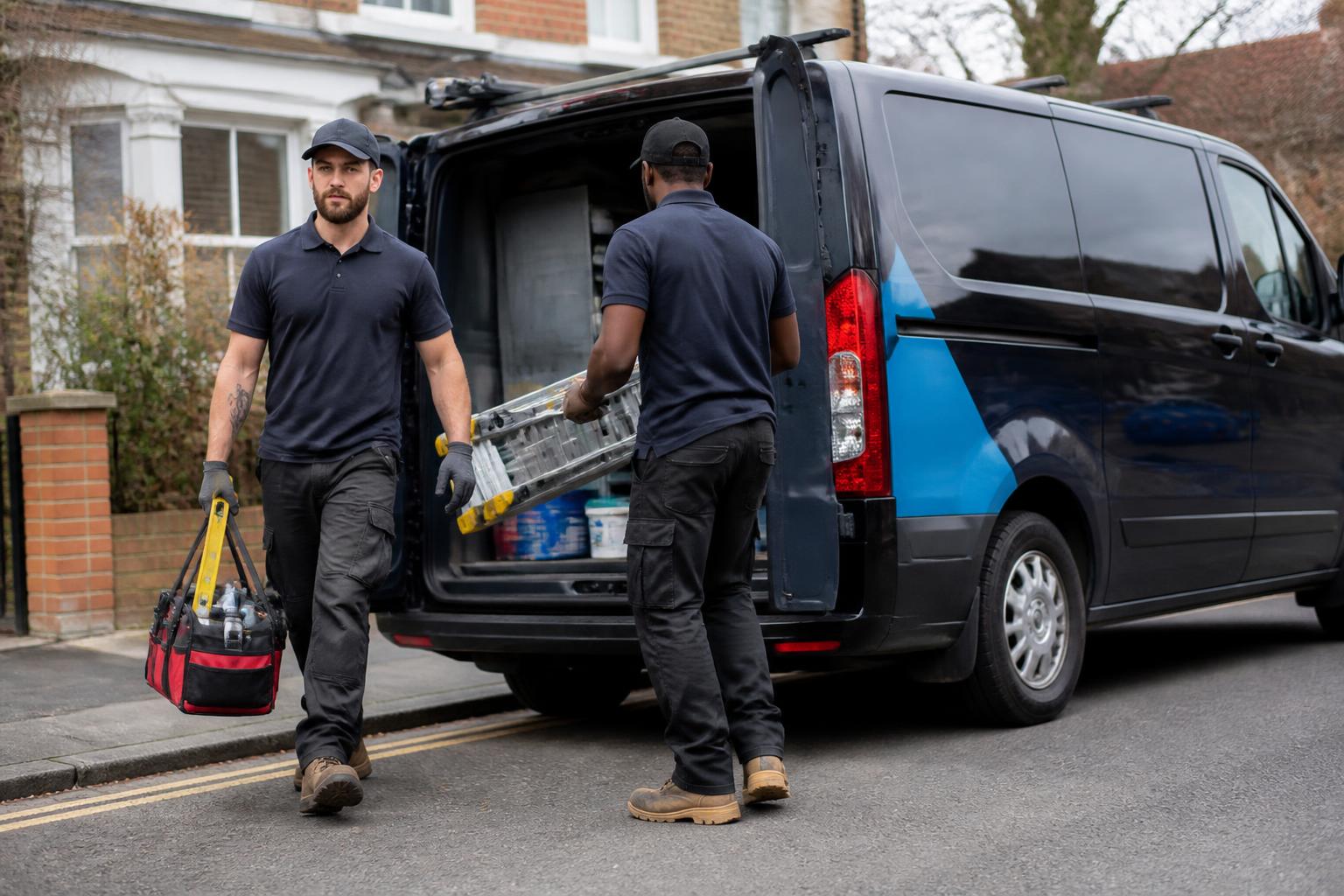
Maintenance contracts? Firms working under term contracts for landlords and agents may be better served by property maintenance insurance. See also other trade guides.
- Local handyman companies: several employed operatives covering a town or city, booked by homeowners and small businesses for odd jobs
- Handyman franchise networks: franchised territories under one brand, where the franchisor sets minimum cover for each franchisee
- Handyperson services for older people: small repairs, grab rails and safety fittings for older and vulnerable customers, often funded through councils or charities
- Repairs teams for landlords and letting agents: small repairs between tenancies and quick fixes reported by tenants, booked job by job rather than under a term contract
- Office and small business handyman services: shelving, signage, furniture assembly and minor repairs for offices and shops
- Furniture assembly and installation firms: flat-pack assembly and wall fixing for retailers and their customers
- Property maintenance contractors: firms moving from one-off jobs to term maintenance contracts
- Handyman firms with locksmith services: teams that also change locks and fit door hardware
How much does handyman insurance cost?
Handyman cover is priced on what your teams actually do. These are the factors that make the most difference.
Task list
Each extra task, especially plumbing, electrical, heat work and work at height, adds to the rating, so insurers price against the list you declare.
Number of operatives
Employers' liability is rated on wages, and public liability on turnover or headcount, so team size drives much of the premium.
Height limits
Gutter clearing and work from ladders or towers raise the risk. A lower declared height limit can keep the price down, but jobs above it will not be covered.
Customers
Work for older and vulnerable customers, landlords or commercial clients changes what can go wrong and what clients ask for.
Tools and vans
The value of tools per van and how vans are secured overnight shape the tools premium.
Claims record
Frequent small claims for drilled pipes and fixings that fail can push up the price, as can a large fire or water damage claim.
What handyman insurance does not usually cover
Handyman claims most often fail on the points below. Check each one against the jobs your operatives actually take on.
- Any job outside the agreed task list, such as roofing, gas or rewiring taken on to help a customer
- Work above the height limit set in the policy
- Damage to the item being worked on, such as furniture being assembled, unless extended
- Fires from heat work where the policy's conditions were not followed
- Asbestos disturbed while drilling or removing old fittings
- Redoing a job that was done badly, as opposed to the damage it causes
- Theft from a customer by an operative, unless crime cover is added
Employed operatives or self-employed handymen?
Many handyman firms use a mix of staff and self-employed operatives. Insurers treat the two differently, and the choice changes what you need to insure.
| Feature | Employed operatives | Self-employed handymen you send out |
|---|---|---|
| Employers' liability | Required, rated on their wages | Usually needed too if you direct their work and supply materials |
| Public liability | Covered under your policy | Insurers often want them to hold their own cover as well |
| Tools | Firm's tools insured on your policy | Their own tools, insured by them |
| Who the customer claims against | Your firm | Usually your firm, as the business they booked |
| Checks insurers expect | Training, vetting and supervision | Proof of their insurance and competence for each task |
How to get handyman insurance quotes
A precise task list and headcount gets you a policy that matches your jobs, without surprises at claim time.
Write down every task
List everything your operatives do, including occasional jobs, and the share of turnover from each.
Set your height limit
Note the highest work you do, such as gutters and first floor windows, and the access equipment used.
Count your operatives
Employed operatives, self-employed handymen and office staff, with wages or payments.
Describe your customers
Homeowners, older people, landlords, agents and businesses, and any contracts that set insurance requirements.
Check tools and vans
Value the tools per van and record how vans are kept overnight.
Handyman firm? Compare cover
Tell us about your handyman teams and the jobs they do and a specialist broker will compare cover.
Get a quoteHandyman insurance FAQs
How much does handyman insurance cost?
It depends on your task list, number of operatives, height limit, customers, tool values and claims record. A firm doing plumbing, heat work and gutters will usually pay more than one focused on assembly and decorating. A broker can show which tasks drive the price.
What jobs can a handyman policy cover?
Whatever you declare and the insurer accepts. Shelving, assembly, decorating, curtain poles, minor plumbing, gutter clearing and small carpentry are commonly accepted. Gas work, roofing, structural changes and most electrical work are excluded or rated separately, and some need qualified operatives.
Are we covered if an operative drills through a hidden pipe or cable?
Usually, yes. Public liability normally covers the water or electrical damage that follows, such as ruined ceilings and contents. Insurers expect pipe and cable detectors to be used, and the repair to the pipe itself is often small enough to fall within your excess.
Does handyman insurance cover electrical work?
Only what you declare and the insurer accepts. Many policies allow simple like for like replacements, such as a light fitting, but exclude new circuits and consumer unit work. If you offer more, the operative will need suitable qualifications and the work must be declared.
Is stripping paint with a heat gun covered?
It can be, but many insurers class it with blowlamp work and set rules, such as clearing combustibles, keeping an extinguisher close and checking the area afterwards. Paint stripping fires in older homes are a known cause of large claims, so declare it.
Do we need employers' liability for self-employed handymen?
Often, yes. If you direct their work, supply materials or they work under your brand, insurers usually treat them as employees for this purpose. Most businesses with employees must hold employers' liability insurance, so include them in your declarations.
Are customers' items damaged during assembly covered?
Not always. Many liability policies exclude damage to the property you are working on, which can include the furniture being assembled. An extension can add some cover, so it is worth asking if assembly is a large part of your work.
Does the policy cover work for older and vulnerable customers?
Yes, if declared, but insurers will ask how operatives are vetted and supervised. Grab rails and safety fittings that fail can cause serious injuries, so they look closely at fixing methods. Crime cover can respond if an operative steals from a customer.
How do I get a handyman insurance quote?
Ask for one through this page and a broker who arranges cover for handyman firms will call to go through the jobs you take on. A complete task list, height limit, operative numbers, wage roll, turnover, tool values and claims history let them approach suitable insurers without delay.
Compare handyman insurance for your team
Liability, tools and vans for handyman firms, written around the jobs your operatives really do.