High Risk Property Insurance for hard to place buildings
Cover for commercial buildings that standard insurers decline or restrict, because of their claims history, location, construction or the trade inside. Compare options through brokers who work in the specialist market.
- Options after a refusal, cancellation or large claim
- Flood, subsidence and non-standard construction considered
- Risk improvements that can bring better terms over time
Reviewed October 2026 by the MyBusinessComparison.com editorial team
What is high risk property insurance?
High risk property insurance is cover for commercial buildings that standard insurers will not quote for, or will only cover with heavy restrictions. It is arranged with specialist insurers that accept risks such as frequent claims, flood or subsidence history, combustible construction, hazardous trades or a gap in cover, usually with tailored excesses and conditions.
It sits within commercial property insurance but is placed differently. A broker presents the risk with evidence of what has changed, such as repairs, new defences, better security or a different tenant, and negotiates terms that can often be improved at later renewals.
Being declined by one insurer does not mean a building cannot be insured. It usually means the risk needs explaining in more detail to an insurer with the right appetite.
High risk property insurance at a glance
- Suits
- Commercial buildings refused or restricted by standard insurers
- Common reasons
- Claims, flood, subsidence, construction, trade, vacancy or owner history
- Typical terms
- Higher excesses, specific conditions and sometimes narrower cover at first
- Placed with
- Specialist insurers and underwriting agencies that assess each risk individually
- Disclosure
- Full and clear disclosure matters even more than usual
- Way back
- Evidence of improvements can widen the choice at renewal
What does high risk property insurance cover?
Cover can be broad once a specialist insurer accepts the risk. The difference is usually in the excesses and conditions attached to each section.
Buildings cover
Fire, storm, theft, malicious damage and other insured events, though the peril behind the restriction may carry a separate, higher excess.
Flood cover
Available for many buildings with a flood history, often with a higher flood excess and credit for resilient repairs, flood doors or barriers.
Subsidence
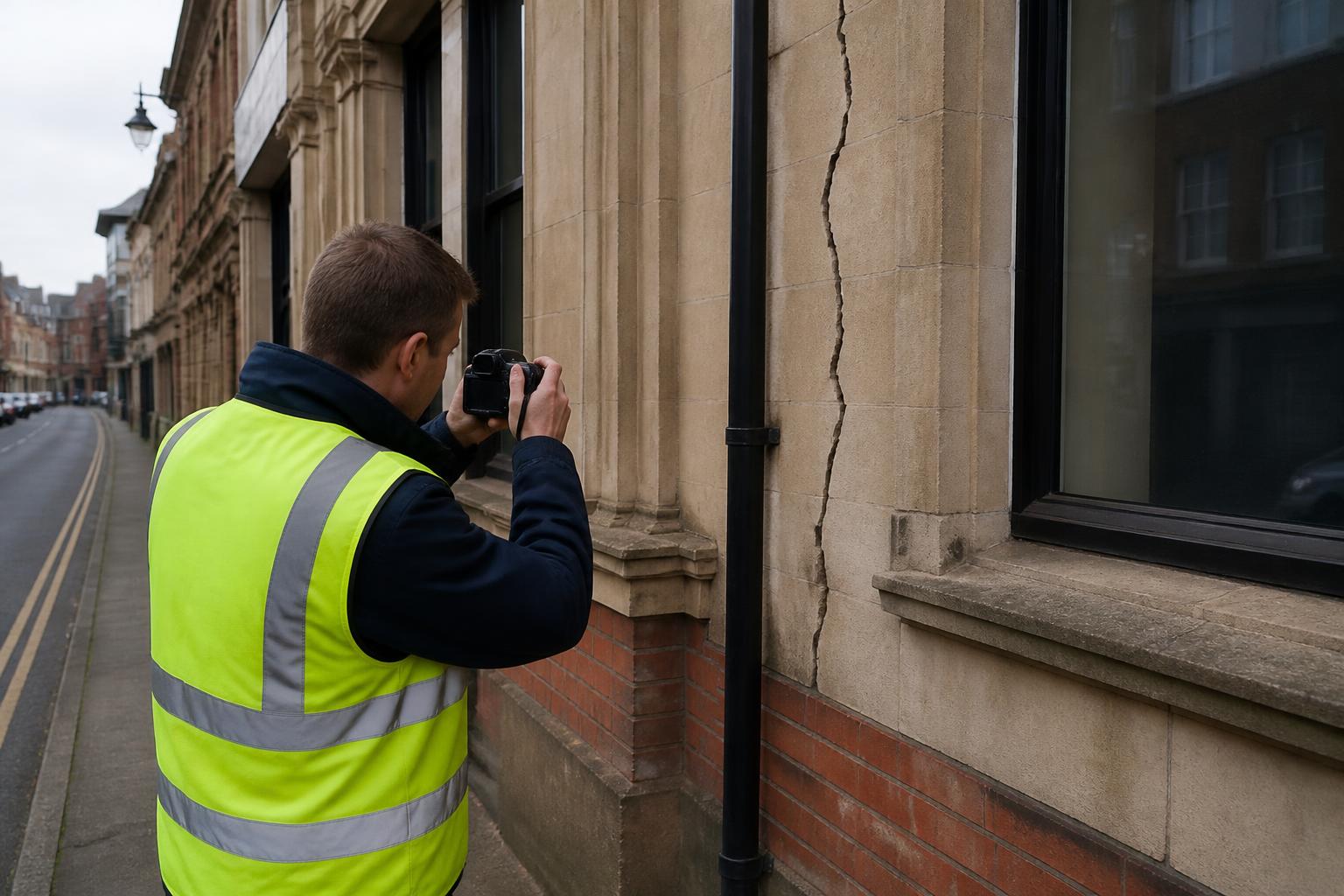
Buildings with past movement can often regain cover once repairs are signed off by an engineer and monitoring shows the building is stable.
Higher hazard occupancies
Buildings housing takeaways, nightclubs, woodworking, recycling or vehicle repairs, where conditions on fire protection and housekeeping are common.
Read more about industrial property insurance
Loss of rent and income
Lost rent or gross profit after an insured loss, so a restricted building is not left without income protection.
Read more about business interruption insurance
Property owners' liability
Injury and damage claims from people on or near the premises, which most specialist insurers include alongside the property sections.
Read more about public liability cover
Long empty or run down buildings
Cover for buildings that have stood empty for a long time or are in poor condition, usually on restricted terms with inspection conditions.
Read more about unoccupied property insurance
Owners with a difficult history
Companies whose directors have past insolvencies, cancelled policies or convictions, placed with insurers that assess each case on its facts.
Other covers to check on a high risk building
- Terrorism cover: often still available separately even where the main property section is restricted
- Legal expenses insurance: for disputes with tenants, contractors or neighbours
- Engineering inspection: where insurers want evidence that plant, wiring or boilers are inspected
- Environmental liability: for sites with fuel storage, waste or past industrial use
Which properties end up in the high risk market?
Most are ordinary commercial buildings with one feature that standard insurers will not accept. These are the cases we see most.
Not sure your building is high risk? Many buildings can still go on standard terms. Start with commercial property insurance or the commercial property and landlord insurance hub.
- Buildings with a recent large claim: a fire, flood or escape of water loss that has led the current insurer to withdraw
- Properties in flood risk areas: riverside, coastal or low lying buildings, including those flooded before
- Buildings with subsidence history: past movement, underpinning or large trees close to the foundations
- Combustible or non-standard construction: timber frame, thatch, composite panels or combustible cladding
- Takeaways, nightclubs and late night venues: where cooking, crowds or late hours raise the fire and malicious damage risk
- Recycling, waste and scrap businesses: stockpiles, machinery and processes that many insurers will not cover
- Listed and thatched buildings: high rebuild costs and specialist repairs
- Buildings in poor repair: awaiting refurbishment, with defects that limit the cover available
- Owners refused cover or cancelled: a past cancellation, unpaid premium or declined claim to explain
- Portfolios with one difficult building: a single hard to place property holding up the rest of the schedule
How much does high risk property insurance cost?
Premiums are higher than standard cover, but the excess and conditions often matter more. These are the factors specialists weigh.
The reason for the restriction
A single old claim is treated very differently from repeated recent losses or a building in an area that floods often.
What has changed since
Repairs, flood resilience, new alarms or a change of tenant are the strongest arguments for better terms.
The excess you can carry
Accepting a larger excess on the problem peril, such as flood or subsidence, can bring cover that would otherwise be refused.
Construction and condition
Combustible materials, poor roofs and deferred maintenance push the price up; documented repairs bring it down.
Trade and occupancy
Hazardous uses, late opening and vacancy are rated individually by each specialist insurer.
Quality of the presentation
A clear file with surveys, photographs, engineer's reports and a claims explanation helps underwriters price with confidence.
What high risk property insurance often excludes or restricts
Specialist terms are tailored to the problem. Read these points carefully on any quote.
- The peril behind the restriction, such as flood or subsidence, excluded at first or subject to a much higher excess
- Losses connected to a missed security, inspection or housekeeping condition
- Long term vacancy beyond the agreed limit, unless unoccupied cover terms are in place
- Wear and tear, and defects already known before cover started
- Gradual pollution on former industrial or waste sites, which needs environmental cover
- Anything not disclosed when cover was arranged, which may cut a claim or void the policy
- Vehicles kept on site and driven on the road, covered instead by vehicle insurance
Specialist high risk cover or the standard market?
Standard insurers suit most buildings. The specialist market is for those they will not take. This is how the two differ.
| Feature | Specialist high risk market | Standard commercial market |
|---|---|---|
| Underwriting | Each risk assessed individually by an underwriter | Rated against set criteria |
| Appetite | Accepts claims, flood, subsidence and unusual construction | Declines or restricts many of these |
| Excesses | Often higher, sometimes set per peril | Standard excesses |
| Conditions | Specific conditions tied to the risk | Fewer, more general conditions |
| Typical buyer | Owners refused or restricted elsewhere | Owners of a clean, conventional building |
How to place a high risk property
A hard to place risk is won or lost on the presentation. These steps give an underwriter what they need.
Explain why it is high risk
Be open about refusals, cancellations, claims or conditions imposed elsewhere. Gaps found later cause far more trouble.
Show what has changed
Repairs, engineer's reports, flood defences, new alarms, a new tenant or different management.
Gather the evidence
Photographs, surveys, certificates, the claims history and any letters from previous insurers.
Decide the excess you can carry
Agreeing a higher excess on the problem area can open up options.
Plan for the next renewal
Meet every condition on time and keep records, so a clean year can be used to improve terms.
Talk to a specialist property broker
Tell us about the building and why it has been hard to insure, and a specialist broker will look for cover.
Find coverHigh risk property insurance FAQs
How much does high risk property insurance cost?
Usually more than standard cover, but by how much depends on why the building is high risk, what has changed since, the excess you accept and the quality of the information provided. A building with one explained claim and documented repairs can sometimes be placed close to standard terms.
Can I get cover after my insurer refused to renew?
Often, yes. Specialist insurers look at the reason for the refusal and what has been done about it. Give your broker the full background, including any letters from the previous insurer, so the risk can be presented honestly and placed with the right market.
Is flood cover available for a commercial building that has flooded before?
In many cases, yes, usually with a higher flood excess. Evidence of flood resilience, such as raised electrics, flood doors, non-return valves or a flood plan, can improve the terms. Buildings in areas that flood very often may only get flood cover with a substantial excess.
Can a building with subsidence history be insured?
Usually, once the cause has been dealt with. Insurers want to see the engineer's report, details of repairs or underpinning, any certificate of structural adequacy and evidence the building is stable. Recent or ongoing movement makes cover harder, and the subsidence excess is often higher.
What counts as non-standard construction for a commercial building?
Anything other than brick, stone or concrete walls under a slate, tile or concrete roof is often treated as non-standard. Common examples are timber frame, thatch, large areas of flat felt roof, and insulated panels with combustible cores. Each is rated individually.
Do directors' past insolvencies or convictions affect property insurance?
They can. Insurers ask about the background of the owners and directors, and some will not accept certain histories while specialist insurers judge each case on its facts. These must be disclosed, because a non-disclosure found after a claim can leave the policy void or the claim reduced.
Will my building stay in the high risk market for good?
Not necessarily. Many buildings move back to standard insurers after a few clean years, completed repairs or a change of use. Keeping records of improvements and meeting every policy condition gives your broker the evidence to approach a wider range of insurers at renewal.
Why are the conditions on my policy so specific?
Specialist insurers accept harder risks by tying cover to controls that reduce the chance of a loss, such as alarm monitoring, regular inspections or duct cleaning. Breaching a condition can affect a claim where the breach is connected to the loss, so keep proof that each one is met.
How do I get a high risk property insurance quote?
Start an enquiry here and a broker with access to specialist property insurers will discuss the building with you. Have the building details, the reason for any refusal or restriction, the claims history and evidence of improvements ready.
Find cover for a hard to place building
Specialist insurers for commercial buildings that standard markets decline, with a broker who presents the full story.