Grounds Maintenance Insurance for maintenance contractors
Grounds maintenance insurance for contractors running crews, mowers and vans on recurring contracts for councils, housing associations, schools, business parks and cemeteries. Compare cover built for flying stones, spraying, winter work and machinery left on trailers overnight.
- Liability for flying stone, spraying and slip claims
- Mowers and machinery covered on site, on trailers and at depots
- Employers' liability for permanent and seasonal crews
Reviewed October 2026 by the MyBusinessComparison.com editorial team
What is grounds maintenance insurance?
Grounds maintenance insurance is cover for contractors that look after land and open spaces under recurring contracts: mowing, hedge cutting, weed control, lawn treatment and site upkeep. Most policies join public and employers' liability to machinery and tools cover, and are designed for the claims maintenance crews generate, from stones thrown by mowers to herbicide drift and winter slips.
Insurers rate grounds maintenance on the activities in your contracts and the machinery you run. Gritting, tree work, gravedigging and spraying all need declaring. New landscape schemes and garden builds are covered on our landscapers insurance page instead.
Grounds maintenance insurance at a glance
- Suits
- Grounds maintenance contractors with crews, machinery and recurring contracts
- Core sections
- Public and employers' liability, machinery and tools, legal expenses
- Compulsory part
- Employers' liability, including seasonal crews and temporary workers you direct
- Key questions
- Spraying, gritting, tree work, gravedigging and roadside work
- Priced on
- Turnover, wage roll, machinery values, activities and claims
- Separate cover
- Crew vans and road-registered tractors on a fleet policy
What does grounds maintenance insurance cover?
Maintenance contractors usually combine the sections below. Activities such as gritting and gravedigging are often added only when declared, so check each one appears on the schedule.
Public liability
Injury and damage to the public and their property, most often stones and debris thrown by mowers and strimmers that break windows, chip cars or hit passers-by.
Read more about public liability insurance
Employers' liability
Injury and illness among crews, including ride-on mower rollovers on banks, vibration from strimmers and hedge cutters, noise and chemical exposure.
Read more about employers' liability insurance
Machinery and tools
Ride-on and pedestrian mowers, strimmers, hedge cutters, blowers and sprayers at depots, on trailers and on site. Theft from trailers is a familiar claim, so the security terms matter.
Read more about plant and machinery insurance
Spraying and weed control
Damage from herbicide drift onto neighbouring gardens or crops, or chemicals reaching watercourses. Insurers usually expect operators to hold spraying certificates and to use products only as their labels allow.
Read more about environmental liability insurance
Winter gritting and snow clearance
Slip claims on car parks and paths you treat under contract. Many insurers exclude this unless declared, and the contract terms on response times make a real difference.
Gravedigging and cemetery work
Grave excavation, shoring and backfilling, including damage to neighbouring memorials and graves and injury from collapse. Insurers treat this as a separate activity.
Completed work
Claims after the crew has left, such as a path left slippery with cuttings or a lifted edging stone that someone trips over later.
Read more about products liability cover
Vehicles and trailers
Crew vans, tippers, tractors and trailers on the road need motor cover. Ride-on mowers and compact tractors driven between sites on public roads usually need it too.
Read more about commercial vehicle insurance
Contract disputes
Disputes with clients over missed visits, performance deductions and terminated contracts, through legal expenses cover.
Read more about commercial legal expenses insurance
Other cover maintenance contractors add
- Group personal accident: fixed benefits for crew members injured at work, whatever the cause
- Fleet insurance: once crews run several vans, tippers and tractors
- Cleaning and facilities insurance: for firms whose contracts also include cleaning and site services
- Pest control insurance: if crews also deal with moles, rabbits and other pests on site
Which grounds maintenance contractors is this cover for?
Grounds maintenance runs on contracts, from a single business park to council-wide schedules. These are the contractors we hear from most.
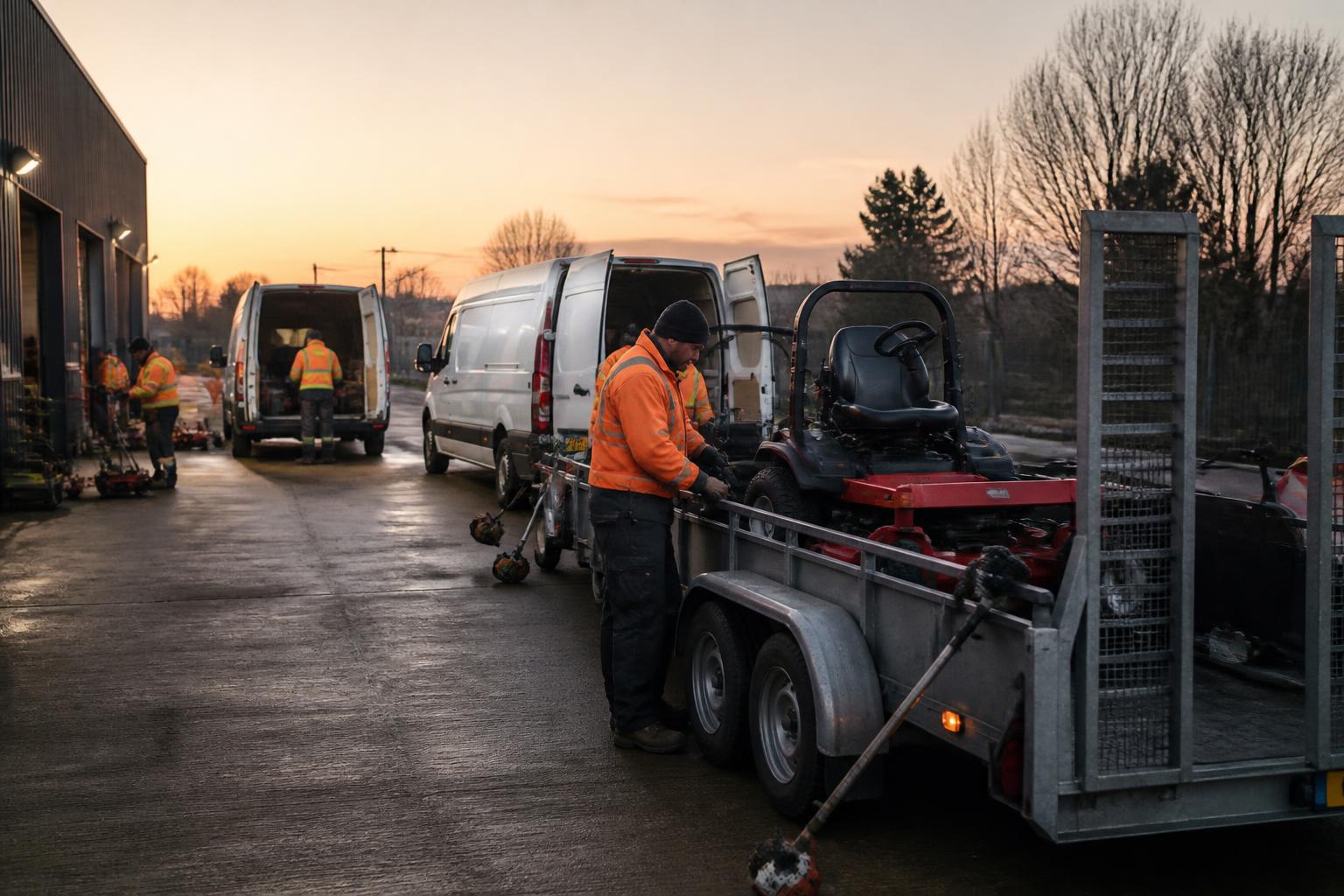
Building new schemes as well? Garden builds and landscape projects belong on landscapers insurance; every other trade is listed on the trades hub.
- Ground maintenance contractors: mowing, hedges, shrub beds and litter picking for councils, housing associations and commercial landlords
- Grass mowing contractors: verges, open spaces and large sites cut on a fixed schedule with ride-on and tractor-drawn mowers
- Lawn services companies: lawn treatment, feeding, weed control, scarifying and aeration on rolling programmes
- Gravediggers and cemetery contractors: grave excavation, backfilling and cemetery upkeep for councils, churches and burial grounds
- Sports turf maintenance firms: pitches, bowling greens and golf courses for schools and clubs, sometimes alongside sports surfacing contractors
- Winter maintenance contractors: gritting and snow clearance for retail parks, offices and hospitals
- Estate and rural maintenance contractors: verges, hedges and ditches for estates and landowners, who usually insure the land itself under farm insurance
- Facilities management subcontractors: grounds packages delivered within wider site service contracts for office and industrial estates
How much does grounds maintenance insurance cost?
The activities written into your contracts drive the price above all. Insurers also weigh the following.
Contract activities
Mowing and hedge cutting carry less weight than gritting, spraying, tree work or gravedigging, which insurers rate separately.
Machinery fleet
The value of mowers and tools, how they are stored and how often they stay on trailers overnight drive the machinery premium.
Wage roll and seasonal staff
Permanent crews, seasonal workers and temporary labour all count towards the employers' liability rating.
Where you work
Roadside verges, school grounds and busy public spaces raise the chance of flying stone and public injury claims.
Contract requirements
Councils and housing associations often ask for high liability limits and specific indemnity terms.
Claims record
Flying stone, slip and theft claims are reviewed, along with steps such as debris guards and pre-cut checks.
What grounds maintenance insurance does not usually cover
These gaps cause most of the problems maintenance contractors meet at claim time.
- Winter gritting and snow clearance, unless declared and accepted by the insurer
- Tree felling and climbing, which most policies exclude unless it is a declared activity
- Herbicide damage where operators did not hold the certificates the policy requires
- Machinery stolen from unsecured trailers or vans overnight, outside the policy's security terms
- Ride-on mowers and tractors on the public road, which need vehicle cover
- Penalties and deductions for missed or late visits under the contract
- Gradual pollution, which needs environmental liability insurance
Ride-on mowers on site or on the road: which policy applies?
Ride-on mowers, compact tractors and utility vehicles move between sites as well as working on them. Which policy responds depends on where the machine is.
| Feature | Working on site | Driving on the public road |
|---|---|---|
| Policy that responds | Machinery and public liability under the grounds policy | A motor policy, often on a fleet |
| Typical claim | A mower throws a stone through an office window | A tractor and trailer clips a parked car between sites |
| Theft and damage | Covered under the machinery section, subject to security terms | Covered under the motor policy if comprehensive cover is chosen |
| Driver checks | Training and competence records for operators | Driving licences in the right category for the vehicle |
| What insurers ask | Machine values, storage and debris guards | Registration, road use and how often machines travel |
How to compare grounds maintenance insurance
Maintenance proposals are built around your contracts. Prepare these five areas before asking for quotes.
List your contracts
Give clients, sites and contract values, and the activities in each, including any gritting, spraying or gravedigging.
Describe your crews
Give permanent and seasonal headcount, wage roll, training records and spraying certificates.
Schedule machinery
List mowers, tractors and tools with values, and how they are stored at depots and on trailers overnight.
Note road use
List vans, tippers and any ride-ons or tractors that travel on public roads.
Share contract terms
Send the insurance and indemnity clauses from your main contracts, including required limits.
Quotes for maintenance contractors
Tell us about your contracts, crews and machinery, and a broker who handles grounds maintenance will compare cover.
Get a quoteGrounds maintenance insurance FAQs
How much does grounds maintenance insurance cost?
Price depends on the activities in your contracts, the size and value of your machinery fleet, wage roll including seasonal staff, the sites you work on and your claims history. A firm mowing business parks is rated differently from one gritting hospital car parks and digging graves.
Are flying stone claims covered?
Yes, under public liability. Stones and debris thrown by mowers and strimmers are a familiar claim in the trade, damaging windows and cars or injuring people nearby. Insurers may ask about debris guards, pre-cut litter picks and how crews deal with members of the public.
Does grounds maintenance insurance cover gravediggers?
It can, if declared. Grave excavation brings collapse, shoring and damage to neighbouring memorials into the risk, so insurers treat it as a separate activity. Tell the broker how graves are dug, supported and backfilled.
Is winter gritting covered?
Not automatically. Many insurers exclude gritting and snow clearance unless declared, because slip claims can follow even when the work was done. Contract terms on response times and records of each treatment carry a lot of weight in defending those claims.
Does the policy cover lawn services and weed spraying?
Yes, if declared. Lawn treatment, feeding and weed control are common activities, but insurers usually expect operators to hold the right spraying certificates and may ask about the products used and how drift is controlled.
Do ride-on mowers need motor insurance?
Usually only when they are driven on public roads, including short hops between sites. On private sites, damage to the mower sits under the machinery section and harm it causes to others under public liability. If machines travel on the road, they usually need registering and adding to a motor or fleet policy.
Are mowers stolen from trailers covered?
Usually, if the security terms were met. Insurers often require trailers to be locked, immobilised or kept in a secure compound overnight, and some restrict cover for machinery left in vans. Check these terms against how your crews actually work.
Do seasonal workers need employers' liability cover?
Usually, yes. Insurers generally count seasonal, temporary and casual workers under your control as employees. Include their expected wages in your wage roll at the start of the policy, as it is often adjusted at the end of the year.
How do I get a grounds maintenance insurance quote?
Your enquiry from here is handed to a broker who places grounds maintenance contractors with suitable insurers. A list of contracts and activities, crew numbers including seasonal staff, a machinery schedule and details of any vehicles that use the road will let them approach insurers quickly.
Ready to compare grounds maintenance insurance?
Cover for your crews, your machinery and the sites you look after, placed with insurers that understand grounds maintenance contracts.