Plumbers Insurance for plumbing firms
Plumbers insurance for plumbing firms running teams of operatives, a fleet of vans and repair or installation contracts with housing providers, developers and commercial clients. Compare cover built around the claim plumbers see most: water where it should not be.
- Liability for leaks and floods after you leave site
- Employers' liability for plumbers and apprentices
- Van stock, fittings and tools insured
Reviewed October 2026 by the MyBusinessComparison.com editorial team
What is plumbers insurance?
Plumbers insurance is the set of covers a plumbing firm needs when it installs, repairs and maintains water supply, drainage pipework, sanitaryware and hot water systems. It centres on public and products liability for water damage and injury your work causes, with employers' liability for your plumbers and cover for tools, fittings and stock carried in vans.
Most claims against plumbing firms are about escaping water. A push-fit joint that was not fully seated, a compression fitting left loose or a pipe nail through a new run can flood a ceiling below, sometimes days after the job is signed off. In blocks of flats and commercial buildings one leak can reach several floors and other occupiers.
Insurers draw a firm line between the damage a leak causes, which liability cover usually pays, and the cost of redoing the faulty work, which it usually does not. Knowing where that line sits is the key to choosing a plumbing policy.
Plumbers insurance at a glance
- Suits
- Plumbing firms with employed plumbers, apprentices and vans
- Core covers
- Liability for work in progress and completed, staff injury, tools, van stock
- Main claim type
- Escape of water, during the job and after handover
- Priced on
- Repairs or installs, domestic or commercial, wage roll, turnover, claims
- Often added
- Contract works, legal expenses and professional indemnity
- Separate cover
- Plumbers' vans on a fleet policy
What does plumbers insurance cover?
Plumbing firms usually combine the sections below. Water damage runs through most of them, so check the limit and the excess each one applies to leaks.
Leaks while you are on site
Water damage and injury during the job, such as a drained-down system refilled with a valve left open, or a pipe cut in the wrong place under a kitchen floor.
Read more about public liability insurance
Leaks after handover
Damage that shows after you have gone, from a failed joint inside a wall to a waste connection that slowly soaks a ceiling below. This is the products and completed work section.
Read more about products liability cover
Your plumbers and apprentices
Injury and illness claims from staff, such as burns from soldering, back injuries lifting cylinders and baths, and cuts from cutting tools.
Read more about employers' liability insurance
Tools and test kit
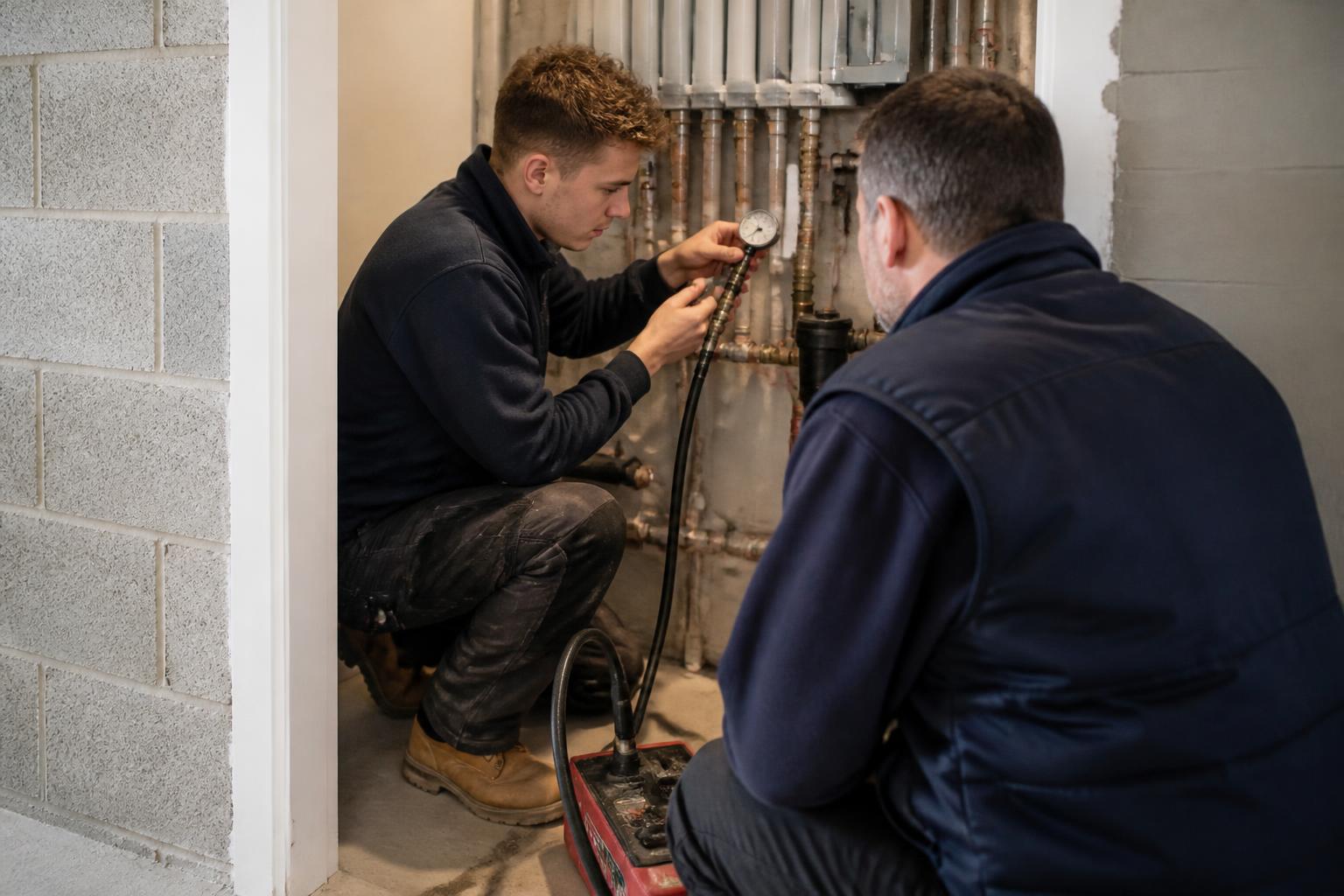
Press-fit tools, drain cameras, pipe freezers, pressure test pumps and power tools, at your base, on site and in locked vans.
Read more about business equipment insurance
Van stock and fittings
Copper, plastic pipe, valves, cylinders and sanitaryware in vans and stores. Overnight theft from vans is where most stock claims fail, so read the conditions.
Installation works in progress
First and second fix runs on new homes and refurbishments, insured until handover if they are stolen, burnt or damaged by another trade.
Read more about contractors' all risks insurance
Water softener installation
Softeners fitted on the rising main bring leak and connection risks of their own, plus products liability for units you supply. Tell the insurer if you sell and service them too.
Radiator repairs and replacements
Draining down, swapping valves and refitting radiators is a common source of leaks onto floors and ceilings. Most plumbing policies include it if it is part of the declared work.
Hot water and scalding
Claims from occupants scalded by hot water, often in care homes, schools and housing for older people, where mixing valves you fitted or serviced are expected to limit temperatures.
Other covers plumbing firms add
- Professional indemnity: for firms that design hot and cold water systems or advise on water hygiene
- Commercial legal expenses: payment disputes with developers and claims from former employees
- Group personal accident: fixed benefits for plumbers injured at work or away from it
- Commercial property insurance: for the yard, trade counter or stores where your stock is held
Which plumbing firms is this for?
It suits established plumbing businesses whose people work in other people's buildings. The plumbing businesses below make up most of the enquiries we pass on.
Fitting boilers or whole bathrooms? Boiler and gas appliance work sits on our gas fitters insurance page; complete bathroom refits are on bathroom fitters insurance. Or browse the trades hub.
- Reactive repair contractors: high volumes of leak, blockage and repair call-outs for housing providers and property maintenance firms
- New build plumbing subcontractors: first and second fix on housing developments, working to the programme of house builders
- Plumbing and heating engineers: firms covering both trades, with heating design picked up on heating engineers insurance
- Commercial plumbing contractors: washrooms, kitchens and water services in offices, schools, hotels and shops
- Water softener installers: fitting, supplying and servicing softeners and filtration for homes and businesses
- Radiator repair and replacement specialists: valve swaps, radiator upgrades and drain-down work, often on maintenance contracts
- Water hygiene and tank specialists: cold water storage tanks, temperature monitoring and flushing in larger buildings
- Drainage and soil pipework firms: above-ground waste and soil stacks, with below-ground work rated as drainage contractors
- Plumbing firms working for builders: subcontract packages for building contractors and refurbishment firms
How much does plumbers insurance cost?
Underwriters price each plumbing firm on its own jobs and its own leak record. These points carry the most weight.
Repairs or installation
Reactive repairs mean many visits to occupied homes; new build installation means fewer, larger jobs before anyone moves in. Insurers rate the two differently.
Where you work
Leaks in flats, offices and shops reach more people and property than a leak in a house, so a commercial or high-rise share raises the liability rating.
Leak claims record
Insurers look closely at escape of water claims, how often they happen and whether you changed fittings, testing or supervision afterwards.
Testing and sign-off
Pressure testing, recorded checks before handover and photos of concealed work count in your favour.
Wage roll and labour
Pay for employed plumbers sets employers' liability, and labour-only subcontractors are usually counted in too.
Heat work and asbestos
How often operatives solder or braze, and how they check for asbestos in older buildings, shape the terms offered.
What plumbers insurance usually excludes
These are the points where plumbing claims are most often reduced or declined.
- The cost of remaking a faulty joint or rerunning pipework, as opposed to the water damage it causes
- Gas work, which needs registered engineers and is rated separately: see gas fitters insurance
- Below-ground drainage and excavation that was not declared, which is rated as drainage contracting
- Fire from soldering or brazing where the heat work conditions were not followed
- Disturbing asbestos, such as old cisterns, pipe lagging or textured ceilings, without proper checks
- Financial loss from a hot water or water hygiene design, which needs professional indemnity
- Tools and stock stolen from a van left unlocked or parked outside the policy conditions
- Plumbers' vans on the road, which belong on commercial vehicle insurance
A joint fails: what does the policy pay?
Most plumbing claims split in two. The damage the water causes is usually covered, while putting the work itself right usually falls to you.
| Feature | Usually paid by the policy | Usually your firm's cost |
|---|---|---|
| Push-fit joint fails in a flat | Damage to that flat, the one below and their contents | Replacing the joint and the labour to redo it |
| Radiator valve left open on refill | Soaked floors, ceilings and furnishings | Your return visit to close and check the valve |
| Leak hidden inside a wall | Opening up and reinstating where needed to repair the damage | Opening up only to correct your own work |
| Fitting faulty when supplied | The damage, with the insurer pursuing the supplier | Swapping out the rest of the faulty batch |
| Damage found after cover lapsed | Nothing, unless a policy is in force when damage happens | The whole claim |
How to compare plumbers insurance
Plumbing proposals go further when the broker can see how you control leaks.
Split your turnover
Show the share from reactive repairs, new build installation, commercial work, softeners and any drainage.
Describe your buildings
Note how much work is in flats, high-rise blocks, care settings and occupied commercial premises.
Explain your testing
Set out how pipework is pressure tested, recorded and photographed before it is boxed in or handed over.
Count your people
Employed plumbers, apprentices, labour-only subcontractors, wage roll and how trainees are supervised.
List your leak claims
Give the cause, cost and outcome of each escape of water incident, and what changed afterwards.
Quotes for plumbing firms
Tell us about your plumbing teams, contracts and the work they do, and a broker who insures plumbing firms will compare terms.
Get a quotePlumbers insurance FAQs
How much does plumbers insurance cost?
It depends on your mix of repairs and installation, the buildings you work in, wage roll, turnover and leak claims record. A firm fitting new build pipework is rated differently from one answering repair call-outs in tower blocks, even at a similar size.
Does plumbers insurance cover a leak that floods the flat below?
Usually, yes. Your liability cover normally pays for damage to the flat below and its contents where your work caused the leak, up to the limit and after the excess. Replacing the failed fitting itself is normally your own cost.
Is a leak that appears weeks after the job covered?
It is normally covered under the products and completed work section, provided you held cover when the damage happened. That is why continuous cover matters, and why records of pressure tests and concealed work help defend a claim.
Does plumbers insurance cover water softener installation?
It can, if you declare it. Softener installs involve cutting into the rising main, bypass valves and drain connections, and supplying the unit brings products liability. Insurers want to know whether you also service softeners under contract.
Are radiator repairs covered by a plumbing policy?
Yes, as part of your declared work. Draining down, replacing valves and refitting radiators sit within normal plumbing activities. Leaks after refilling are a common claim, so many insurers expect checks before the system is left unattended.
Do plumbing and heating engineers need a different policy?
Not usually, but the policy must reflect both trades. Plumbing and heating firms are often insured on one package, with the heating share declared. Any work on gas appliances also needs registered engineers and the insurer told.
Do I need professional indemnity as a plumbing firm?
If you design hot and cold water systems, size cylinders and pumps or give water hygiene advice that clients rely on, it is worth having. A design that works poorly without causing damage is a financial loss that liability cover will not pay.
Are labour-only plumbers covered?
Usually under your employers' liability, because insurers treat labour-only subcontractors working under your direction like employees. Bona fide subcontractors with their own tools and cover are normally treated differently, so keep evidence of their insurance.
How do I get a plumbers insurance quote?
Fill in the short enquiry linked from this page; it goes to a broker who insures plumbing firms, who will then call you. Your turnover split, staff numbers, wage roll, testing routine and any escape of water claims let them approach insurers quickly.
Ready to compare plumbers insurance?
Plumbing firm cover built around escape of water: leaks, liability, staff and van stock, placed through a specialist broker.