Engineering Company Insurance for workshops and site engineers
Cover for engineering firms that machine, fabricate, install and maintain, in the workshop and at customers' sites. Compare policies that understand where your components end up and what happens when a machine stops.
- Workshop, machinery and customers' goods insured
- Products liability that follows components into end use
- Installation and maintenance work at customers' sites
Reviewed October 2026 by the MyBusinessComparison.com editorial team
What is engineering company insurance?
Engineering company insurance is a combined policy for firms that design, make, install or maintain engineered products and plant. It usually covers the workshop, machinery and stock, lost profit after damage or breakdown, and liability for staff, for work at customers' sites and for components once they leave your hands.
Insurers focus on two questions: what your products end up in, and what your engineers do away from the workshop. A bracket for a garden gate and a part for aircraft landing gear are very different risks, as are servicing a boiler and commissioning a production line.
If you run a factory making finished goods at volume, our manufacturing and engineering industry page sets out the wider cover factories combine.
Engineering company insurance at a glance
- Suits
- Fabricators, machine shops, installation and maintenance engineers
- Usual make up
- Workshop property, lost profit, staff, site work and products liability
- Work away
- Installation, commissioning and servicing at customers' premises
- Priced on
- Products and end uses, work away share, exports, values and claims
- Insurers ask about
- Aerospace, automotive, medical, offshore and North American sales
- Bought separately
- Professional indemnity, for design faults that cost a customer money
What does engineering company insurance cover?
Most engineering policies are built section by section around the workshop and the work your engineers do elsewhere.
Workshop buildings and contents
Fire, flood, theft and accidental damage to your unit, machine tools, jigs, patterns, raw material and finished stock.
Read more about commercial property insurance
Customers' goods in your care
Parts, tooling and machines sent to you for machining, repair or overhaul, which your contents cover may not include unless specified.
Machinery breakdown
Sudden electrical or mechanical breakdown of CNC machines, presses, compressors and lifting gear, often packaged with the inspections they need.
Read more about engineering inspection and breakdown cover
Business interruption
Lost gross profit when fire or a key machine failure stops production and orders go elsewhere.
Read more about business interruption insurance
Employers' liability
Injury and illness among your engineers and workshop staff, including hand arm vibration, noise and welding fumes.
Read more about employers' liability insurance
Public liability and work away
Injury and property damage when your engineers install, commission or service equipment at customers' sites, subject to heat work conditions.
Read more about public liability insurance
Products liability
Injury or damage caused by components and equipment you have made, supplied or repaired, wherever they end up.
Read more about products liability insurance
Installation all risks
Damage to plant and structures you are installing until the customer takes it over, a form of works cover for engineering contracts.
Read more about contractors' all risks insurance
Goods in transit
Components, tooling and finished equipment carried in your vehicles or sent by carrier.
Read more about goods in transit insurance
Covers engineering firms often add
- Professional indemnity: design errors and advice that cause a customer financial loss without physical damage
- Product recall: the cost of tracing and withdrawing faulty components from customers
- Cyber insurance: ransomware that locks CAD files or machine control systems
- Trade credit insurance: non-payment by customers on large orders
Who needs engineering company insurance?
Any engineering firm with a workshop, staff and customers relying on what it makes or fixes. Typical clients include the following.
Engineering in another sector? See manufacturing and engineering insurance or the construction and engineering hub.
- Precision engineers and machine shops: CNC turning and milling of parts for other manufacturers
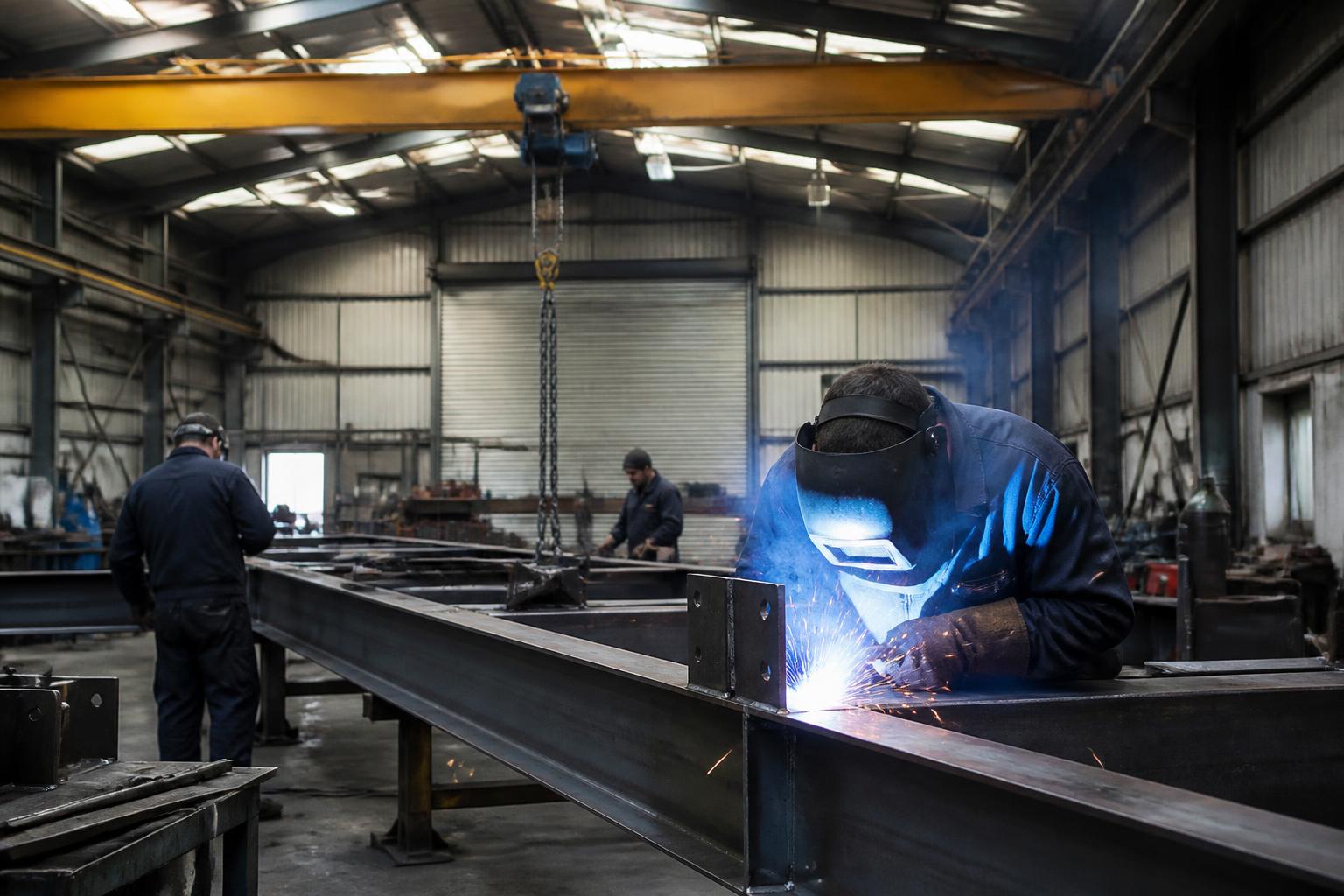
- Steel fabricators: structural steel, staircases, balustrades and frames, often installed on construction sites
- Installation and commissioning engineers: production lines, conveyors and process plant fitted at customers' factories
- Maintenance and repair engineers: planned servicing and breakdown call outs for industrial customers
- Lifting equipment engineers: supply, inspection and repair of cranes, hoists and lifting gear
- Hydraulic and pneumatic engineers: pumps, cylinders and systems for plant, vehicles and machinery
- Refrigeration engineers: cold rooms and refrigeration plant, where breakdown can spoil a customer's stock
- HVAC engineers: air handling and cooling plant in commercial buildings
- Toolmakers and pattern makers: high value tooling owned by customers and held in your workshop
- Agricultural engineers: repair and servicing of tractors and farm machinery
- Electrical engineering firms: panel building, controls and industrial electrical work
How much does engineering company insurance cost?
Two engineering firms with the same turnover can be rated very differently. These are the factors underwriters look at hardest.
Products and end uses
Components for aircraft, vehicles, medical devices or offshore installations are rated far more heavily than general engineering, and some need specialist insurers.
Work away share
The proportion of turnover earned at customers' sites, what your engineers do there and whether heat work is involved.
Export markets
Sales to North America and other markets with high claims costs are often rated separately or restricted.
Workshop values and protection
Machine tool values, fire protection, dust and swarf control and the state of electrical installations all count.
Machinery reliance
How long it would take to replace a key machine, and whether work could be subcontracted meanwhile, shapes the interruption cover.
Claims and quality systems
Quality accreditation, traceability and inspection records reassure insurers, alongside a clean claims history.
What engineering company insurance does not cover
Engineering claims are often refused for reasons that could have been fixed at renewal. Check for these.
- Damage to the part of the machine or plant you were actually working on, unless an extension has been agreed
- Components for aircraft, nuclear, offshore or medical use, unless declared and accepted
- Sales to North America, unless the insurer has agreed to cover them
- Replacing or reworking a faulty component you supplied; the policy pays for the harm it does, not the part itself
- A product that simply fails to perform, which needs professional indemnity or a financial loss extension
- Gradual wear and tear of your own machinery, as opposed to sudden breakdown
- Recalling components from customers, which needs product recall insurance
Products liability or professional indemnity for engineers?
Engineering firms often need both. The dividing line is whether anything was physically damaged.
| Feature | Products liability | Professional indemnity |
|---|---|---|
| What triggers it | Injury or physical damage caused by your product | Financial loss caused by your design or advice |
| Example | A weld fails and a platform collapses onto equipment | A conveyor you designed runs slower than specified and the client loses output |
| Who usually buys it | Every firm that makes, supplies or repairs equipment | Firms that design, specify or advise |
| Cost of fixing your work | Not usually covered | Not usually covered |
| Basis of cover | Injury or damage happening during the policy | Claims made during the policy |
How to compare engineering company insurance
Underwriters want to see what you make and where it goes. Having this ready gives you firmer terms.
Describe your products and end uses
What you make or repair, which industries it goes into and roughly how much turnover each one brings.
Set out your work away
Installation, commissioning and servicing at customers' sites, including any heat work and work at height.
Value the workshop
Rebuild cost, machine tools, stock, customers' goods and the gross profit at risk if production stops.
List export markets
Where products are sold, directly or through customers, especially North America.
Compare the conditions
Check property worked upon terms, heat work conditions, product exclusions and the breakdown cover before price.
Taking on a new customer sector?
Explain what you make, install or maintain and where it ends up, and an engineering specialist will compare terms.
Get a quoteEngineering company insurance FAQs
How much does engineering company insurance cost?
It depends on what you make or maintain, the industries your work ends up in, how much is done at customers' sites, exports, workshop values and claims. Aerospace and automotive components are usually rated more heavily than general fabrication. A broker can compare how insurers rate your mix.
Are we covered if our components end up in aircraft or vehicles?
Only if the insurer knows and has agreed. Many general policies exclude aerospace parts and restrict automotive, medical and offshore products. Declaring every end use, even indirect ones through your customers, avoids a claim being refused.
Does our liability cover damage to the machine we are repairing?
Often only in part. The component your engineer is actually handling is usually carved out, while harm to the rest of the customer's plant and premises is covered. Some insurers offer an extension for property being worked upon, which is worth asking about for maintenance work.
Do engineering firms need professional indemnity as well as products liability?
If you design, specify or advise, usually yes. Products liability covers injury and physical damage. When a design simply fails to perform and the customer loses money, only professional indemnity or a financial loss extension responds.
Are customers' goods in our workshop covered?
Not automatically. Parts, tooling and machines sent to you for work belong to your customers, and many contents sections only cover your own property. Ask for customers' goods to be added with a sum insured that reflects the highest value you hold.
Does the policy cover our CNC machines breaking down?
Not unless a machinery breakdown section is added. Fire and theft fall under the contents cover, but sudden mechanical or electrical breakdown does not. Adding business interruption for breakdown protects lost profit while a key machine is repaired or replaced.
Can we sell to customers in the USA and Canada?
Yes, if the insurer agrees to cover it. Many UK products liability policies exclude or limit North American sales because claims there cost much more, and some insurers will only include them on agreed terms and limits. Tell the broker about direct exports and products your customers sell on.
Is installation work at customers' factories covered?
Public liability covers injury and damage caused while your engineers are on site, usually with heat work conditions. Damage to the equipment you are installing before handover needs installation all risks or contract works cover.
How do I get an engineering company insurance quote?
Start with the quote button and an engineering broker will call you back. Useful details to gather: what you make and the industries it goes into, site work, export markets, workshop and machine values, turnover, wage roll and past claims.
Ready to compare engineering company insurance?
Workshop, products and site work covered together, arranged by brokers who ask where your components end up.