Commercial Fleet Insurance for growing fleets
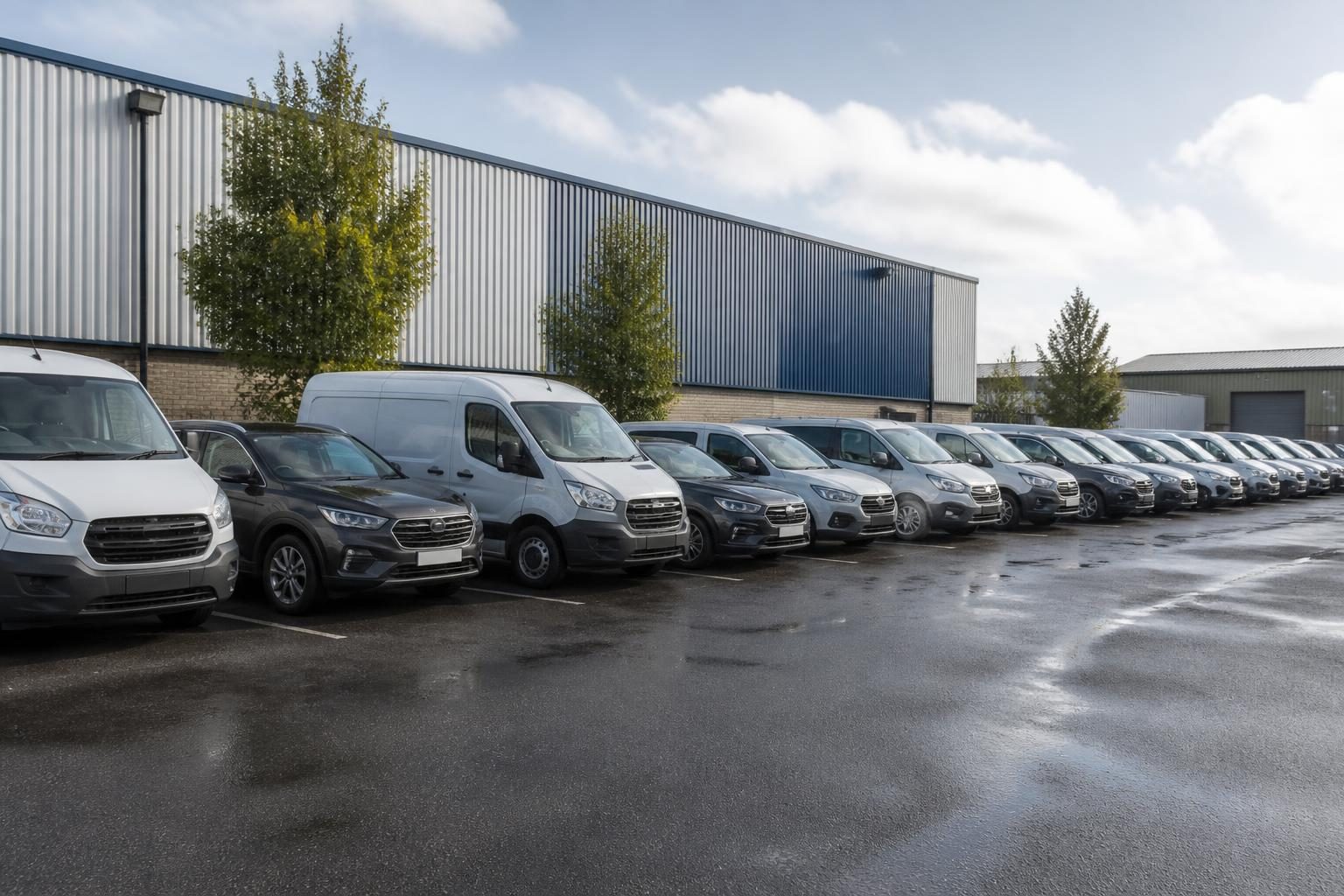
One motor policy for every car, van and truck the business runs, rated on how your fleet actually performs. Compare cover through specialist brokers who place fleets for operators with depots, contracts and drivers on the road every day.
- Cars, vans and heavier vehicles on one schedule
- Rated on your fleet's own claims experience
- Driver, risk and claims support built in
Reviewed October 2026 by the MyBusinessComparison.com editorial team
What is commercial fleet insurance?
Commercial fleet insurance is a single motor policy that covers all the vehicles a business owns, leases or hires, under one schedule and one renewal date. It can include cars, vans, lorries and specialist vehicles, and is priced on the fleet's overall claims record rather than on each vehicle and driver separately.
Every vehicle used on a public road must carry at least third party cover, so the motor section is compulsory. Most fleets choose comprehensive cover, or third party cover with the business carrying its own damage up to an agreed amount. Larger policies often cover any vehicle the business runs, with additions declared to the insurer at set points rather than one by one.
For an operator with a depot full of vehicles, the value is control: one set of driver rules, one claims process, one set of figures to manage, and an insurer that sees the fleet as a whole risk.
Commercial fleet insurance at a glance
- Suits
- Businesses running several vehicles from one or more depots
- Vehicles
- Cars, vans, lorries, minibuses and specialist vehicles, often mixed
- Compulsory part
- Third party liability for every vehicle used on the road
- Rated on
- Fleet claims experience, vehicle mix, use, drivers and risk controls
- Driver basis
- Any driver, usually with age, licence and experience conditions
- Arranged by
- A specialist fleet broker, often with a risk review
What does commercial fleet insurance cover?
A fleet policy is built around the motor cover every vehicle needs, then extended to fit how the business uses its vehicles. Check the schedule for the level of cover, the driving conditions and the excess on each vehicle type.
Third party liability
Claims for death or injury to passengers and other road users, and for damage to other people's vehicles and property. This is the part every vehicle on the road must have.
Accidental damage, fire and theft
Repair or replacement of your own vehicles after a collision, fire, theft or vandalism. Larger fleets often take a high own damage excess and manage smaller repairs themselves.
Any driver cover
Cover for any employee you approve to drive, within the age, licence and experience limits set by the insurer, so new starters do not need adding by name.
Hired and replacement vehicles
Short term hire vehicles, vehicles on loan from dealers and courtesy vehicles while yours are repaired, so the fleet keeps moving after an incident.
Trailers and towing
Liability for trailers while attached, with damage to the trailer itself available as an extension. Detached trailers left at a depot or customer site often need their own cover.
Legal costs and uninsured losses
Help recovering excesses, hire costs and lost use from a third party who caused the accident, and legal support if a driver faces a motoring prosecution.
Read more about commercial legal expenses cover
Windscreen and breakdown
Windscreen and glass repairs, often with a lower excess than other damage claims, plus roadside recovery for vehicles that cannot be driven.
Employee owned cars on business
Some policies protect the business if an employee's own motor insurance fails to respond while they drive for work, a gap that often goes unnoticed.
Covers that sit alongside a fleet policy
- Goods in transit: the loads your vehicles carry, which the motor policy does not cover
- Employers' liability: workplace injuries to staff away from the wheel, in the yard, workshop or warehouse
- Group personal accident: fixed benefits for drivers injured at the wheel, whoever is at fault
- Motor trade cover: for workshops that repair or prepare other people's vehicles as well as their own
Who uses commercial fleet insurance?
Any firm whose vehicles are central to how it earns money. These are the operators we most often see moving their vehicles onto a single fleet policy.
Running heavy goods or passenger vehicles? Specialist policies may suit better. See haulage insurance or minibus and coach cover.
- Contractors and construction firms: vans, pick ups, tippers and pool cars travelling between sites, often alongside plant cover
- Wholesalers and distributors: delivery vans and rigid trucks running regular routes from a central warehouse
- Facilities management companies: large numbers of liveried vans spread across contract sites and regions
- Building services contractors: engineers' vans carrying stock and equipment, often taken home overnight
- Security companies: patrol and response vehicles used around the clock
- Healthcare and care providers: pool cars for community staff and adapted vehicles for clients
- Farms and estates: road going tractors, pick ups and trailers alongside the farm car fleet
- Manufacturers: sales cars, service vans and delivery vehicles under one renewal
- Courier and delivery firms: multi drop vans carrying other people's goods for payment
- Head offices with company car schemes: executive and sales cars, where the driver group changes regularly
How much does commercial fleet insurance cost?
Fleet premiums are worked out on the fleet as a whole. Once a fleet has a few years of its own history, that record tends to outweigh every other factor.
Claims experience
Insurers compare what has been paid on your fleet with the premium charged over recent years. Frequent small claims can count against a fleet as much as one large one.
Vehicle mix and values
Heavier vehicles, high value cars and specialist bodies cost more to repair and can do more damage to others.
Use and territory
Urban multi drop work, long motorway runs, carrying for payment and trips abroad are each rated differently.
Driver profile
The age range allowed, licence checks, penalty point limits and how new drivers are vetted all feed into the price.
Risk controls
Telematics, forward and driver facing cameras, driver training and a written driving policy show the insurer the risk is managed.
Depots and overnight parking
Where vehicles are kept out of hours, how the depot is secured and how much vehicle value is parked together on one site.
What commercial fleet insurance will not pay for
Most fleet claim disputes come down to drivers, use and security conditions. Check these before renewal.
- Drivers outside the age, licence or experience conditions on the certificate
- Use the policy does not allow, such as carrying goods for payment on a policy written for own goods only, which needs hire and reward cover
- Theft where keys were left in or near the vehicle, or the vehicle was left running and unattended
- Mechanical or electrical breakdown, wear and tear, and tyre damage that is not part of a wider accident
- Goods and tools carried in the vehicles, which need goods in transit or equipment cover
- Use airside at airports, on track days or in competitions, unless the insurer has agreed
- Damage while the vehicle is working as a machine, such as a crane or tipper in operation, which often falls to public liability insurance
Fully insured fleet or carrying your own damage?
Larger fleets often stop insuring every repair. This is how a fully comprehensive fleet compares with one where the business carries its own damage costs.
| Feature | Fully comprehensive | Own damage carried by the business |
|---|---|---|
| Third party claims | Insured | Still insured, as the road cover requires |
| Repairs to your vehicles | Paid by the insurer above a modest excess | Paid by the business up to a high excess, or in full |
| Premium | Higher, as the insurer funds most repairs | Lower, reflecting the cost the business keeps |
| Cash flow | Predictable, with few repair bills to fund | Repair costs land on the business as they happen |
| Claims administration | Handled through the insurer | Often run in house or by an accident management firm |
| Usually suits | Fleets with high value or newer vehicles | Large fleets with steady, well understood repair costs |
How to compare commercial fleet insurance
Fleet insurers want evidence that the fleet is managed. Pulling this together before you go to market gives the broker more to work with.
Build an up to date vehicle list
Make, model, value, body type and use for each vehicle, including leased, hired and trailer units.
Get claims experience from your insurer
Ask your current insurer for a full claims history covering recent years, showing paid and outstanding claims.
Describe your drivers
Age range, how licences are checked, training given and any rules on mobile phones and hours at the wheel.
Show your risk controls
Telematics data, camera systems, maintenance routines and how incidents are reported and reviewed.
Compare more than the premium
Check driver conditions, excesses, hire vehicle terms, security conditions and how claims are handled day to day.
Ready to review your fleet?
Send us the shape of your fleet and its claims record, and a fleet broker will take it to insurers on your behalf.
Compare fleet quotesCommercial fleet insurance FAQs
How much does commercial fleet insurance cost?
There is no set figure. The premium mainly follows your claims experience, then the vehicles you run, how they are used and who drives them. A fleet with a clean record and visible risk controls is rated very differently from one with frequent claims, and the excess you are willing to carry also moves the price.
Are fleet vehicles covered when driven in Europe?
Usually, for limited trips. Many fleet policies give the minimum road cover needed abroad, with full cover for a set number of days if the insurer is told. Regular international work, especially goods vehicles carrying for others, needs agreeing with the insurer before the vehicles go.
Can any employee drive the vehicles?
Usually yes, if they meet the policy conditions. Most fleet policies allow any approved driver within set age, licence and experience limits. Younger or newly qualified drivers may be allowed with a higher excess or only on certain vehicles.
Does a fleet policy cover employees driving their own cars for work?
Not the cars themselves. Employees need business use on their own motor policy. Some fleet policies add cover that protects the business if an employee's own insurance fails to respond, which our business fleet insurance guide explains in more detail.
Can cars, vans and lorries go on the same fleet policy?
Yes. Mixed fleets are common, with each vehicle type rated on its own use. Heavy goods vehicles carrying for payment are sometimes better placed on a specialist haulage policy, which a broker can weigh up.
Do we keep our no claims discount when we move to a fleet policy?
Individual no claims discounts do not usually carry over as they are. Fleet insurers look at claims experience instead, so ask your current insurers for full claims histories. A good record across the vehicles still counts in your favour.
Do telematics and cameras reduce fleet premiums?
They can help. Insurers value systems that show how vehicles are driven and help settle disputed claims. The effect depends on how the data is used, so evidence of driver feedback and action taken counts for more than fitting the kit.
Are electric vehicles treated differently on a fleet policy?
Often, yes. Repair costs and parts supply can differ, and many insurers ask about charging at depots and homes. Check that charging cables, wall boxes and battery damage are covered and that the vehicle values are correct.
How do I get a commercial fleet insurance quote?
Send the fleet details through this page and our partner passes them to a broker who handles fleets. Including your vehicle schedule, claims experience reports, driver policy and any telematics summaries means insurers can be approached without waiting on paperwork.
Ready to compare commercial fleet insurance?
One policy for every vehicle the business runs, arranged by a broker who places fleets of your size.