Motor Trade Insurance for garages and dealers
Cover for the vehicles you sell, repair and move, plus the premises, staff and customers that come with running a motor business. Compare road risks and combined policies through brokers who place motor trade risks regularly.
- Customer cars and your own stock on the road
- Vehicles, tools and buildings covered on site
- Liability for faulty repairs and injured staff
Reviewed October 2026 by the MyBusinessComparison.com editorial team
What is motor trade insurance?
Motor trade insurance is a specialist policy for businesses that buy, sell, repair, service or move vehicles as their trade. It covers driving customers' vehicles and trade stock on the road, and can be extended to cover vehicles at your premises, the buildings, tools and your liability.
A standard motor policy names specific vehicles. A motor trade policy instead covers whatever vehicles pass through the business, within the limits you agree: who may drive, the maximum value of any one vehicle and how many can be on site. That is why garages, dealers and body shops cannot simply add customer cars to an ordinary fleet policy.
Most established motor businesses buy a combined policy. Smaller operations that work from someone else's premises sometimes buy road risks alone and arrange property cover elsewhere.
Motor trade insurance at a glance
- Suits
- Dealerships, garages, body shops, tyre centres, valeters and vehicle movers
- Two forms
- Road risks only, or motor trade combined with premises and liability
- Driver basis
- Named drivers, or any employee above an age set by the insurer
- Key limits
- Most valuable single vehicle, total vehicles on site, cover for trade plates
- Compulsory parts
- Third party cover on the road, and employers' liability with staff
- Common condition
- Keys locked away out of hours, often in a key safe
What does motor trade insurance cover?
A motor trade policy is built from sections. The road risks part is the core; the others turn it into a combined policy that covers the whole site.
Road risks
Driving customers' vehicles and your own trade stock on public roads for business purposes, from road tests after a repair to collecting a part exchange. Cover can be third party only, third party fire and theft, or comprehensive.
Trade plates
Use of trade plates to move untaxed or unregistered vehicles, provided the plates are used in line with the policy and the vehicle is in your custody for trade purposes.
Vehicles on your premises
Often called internal risks: damage to or theft of stock and customer vehicles while they are in the showroom, workshop or yard, up to the on-site limit you choose.
Tools, equipment and parts
Ramps, diagnostic kit, compressors, paint booths and parts stock. Vehicle lifts and air receivers also need regular inspection, which an engineering inspection policy can provide.
Read more about business equipment insurance
Liability to customers and visitors
Injury or damage to visitors, customers and the public, and claims arising from parts you fit or vehicles you sell.
Read more about public liability insurance
Defective workmanship
Damage or injury caused by faulty work, such as a wheel coming loose after a tyre change. It sits alongside products liability for parts you fit; the cost of redoing the work itself is usually not covered.
Employers' liability
Claims from technicians, sales staff and valeters injured at work. Most motor businesses with staff must hold it.
Read more about employers' liability cover
Buildings and business interruption
Showrooms, workshops and body shops under commercial property cover, plus the lost gross profit if a fire or flood closes the site.
Read more about business interruption insurance
Extensions motor traders often add
- Demonstration cover: customers driving vehicles on test drives, often with conditions on checking licences and accompanying the driver
- Commercial legal expenses: disputes with customers over faulty sales, staff claims and debt recovery
- Money and fidelity cover: cash and card takings on site, and theft by employees
- Goods in transit: parts and vehicles carried on your own transporters or recovery trucks
- Cyber cover: dealer management systems, customer finance data and online sales platforms
Which motor businesses need motor trade insurance?
Any business that looks after customers' vehicles, or drives trade stock on the road, is part of the motor trade. Insurers rate each type differently.
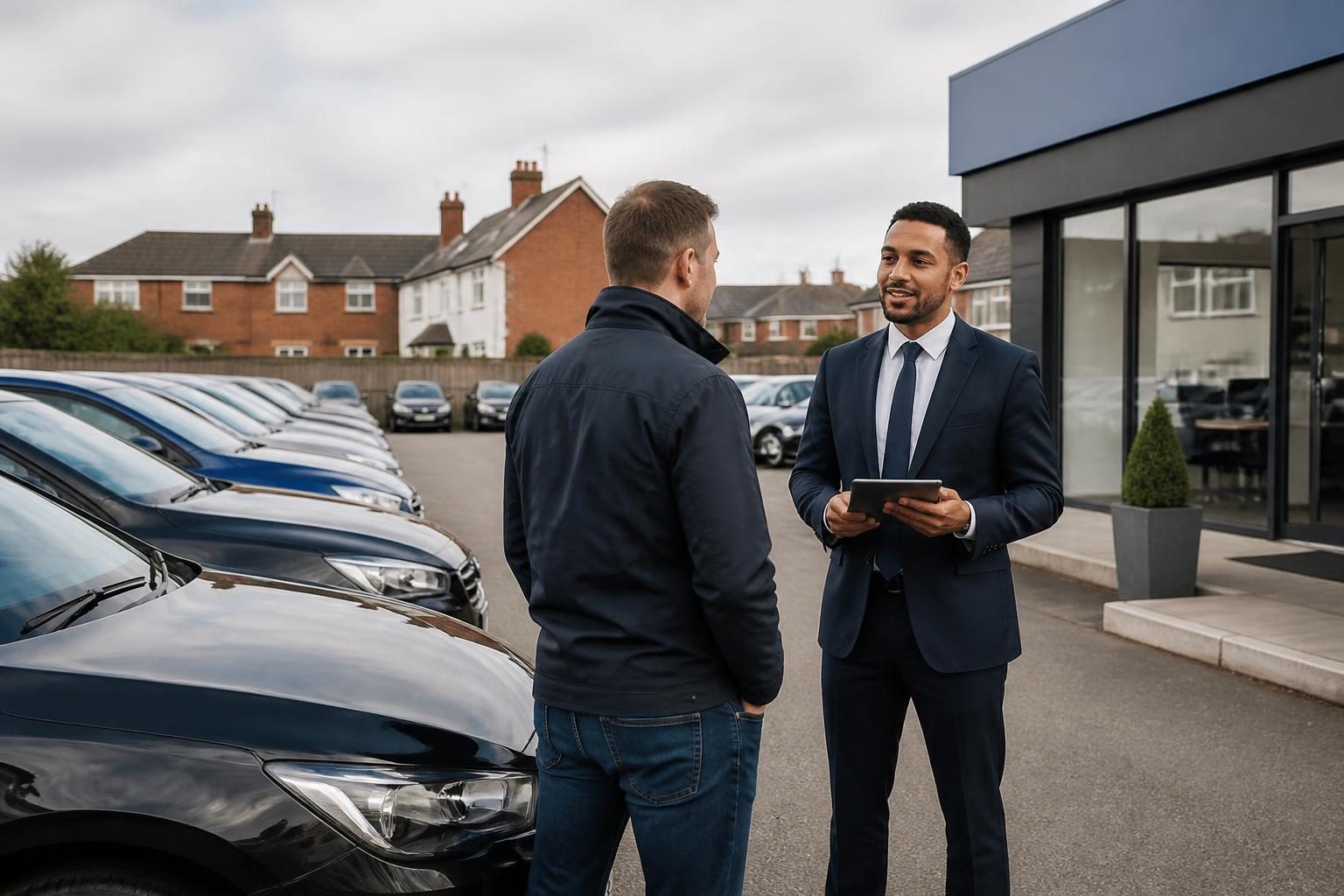
Run vehicles rather than trade in them? A business using its own cars and vans needs fleet insurance instead. Garages that also run their own recovery trucks or vans often hold both.
- Franchised and independent dealers: high stock values, demonstrators, part exchanges and staff driving stock between sites
- Used car dealers with a forecourt: vehicles stored outside overnight, test drives and key security
- Servicing and repair garages: customer cars on ramps, road tests and liability for repairs after collection
- Body shops and paint shops: spray booths and paint stores raise the fire risk, solvent spills can call for environmental liability cover, and customer cars stay on site for longer
- Tyre, exhaust and fast fit centres: high volumes of work and defective workmanship claims from wheel fitting
- MOT and diagnostic centres: short stays on site but a steady flow of customer vehicles and road tests
- Valeting and preparation centres: contract prep work for dealers and leasing firms, often at customers' sites
- Vehicle delivery and collection firms: drivers moving vehicles for dealers and lease firms; transporter loads may need goods in transit cover
- Recovery and breakdown operators: the cars on the back of the truck, with heavier recovery vehicles usually insured under HGV insurance
- Rustproofing and underbody protection services: cavity wax, underseal and corrosion treatments for dealers, fleets and private owners, with solvents and spray equipment on site and claims where treatment is blamed for later corrosion
- Specialist and classic car businesses: restoration, storage and sales of high value vehicles with agreed values
- Plant and agricultural dealers: machinery dealers whose stock includes road-going tractors and plant, alongside plant and machinery cover
- Fleet maintenance workshops: in-house or contract workshops servicing vehicles for fleet operators
How much does motor trade insurance cost?
Price depends on how much vehicle value is exposed, who drives and how well the site is secured. These factors move a motor trade premium most.
Type of motor trade
A tyre centre, a prestige dealer and a body shop present very different risks, so the trade description is the starting point for every insurer.
Driver list and ages
Ages, experience, convictions and whether cover is for named drivers or any employee. Young drivers and unrestricted use push the price up.
Vehicle values
The most valuable single vehicle and the total value on site and on the road. Prestige stock usually needs higher limits and tighter conditions.
Yard and key security
Fencing, gates, lighting, CCTV, alarms, key safes and whether vehicles are kept inside overnight.
Turnover and staff
Turnover drives the liability sections, and the number of employees and their roles shapes employers' liability.
Claims experience
Theft, road accidents and workmanship claims over recent years, and what changed after each one.
What motor trade insurance does not usually cover
Motor trade claims are most often refused for the reasons below.
- Theft by deception, such as a buyer leaving with a car after a fake payment, which many policies exclude or limit unless an extension is bought
- Vehicles stolen using keys that were not stored as the policy requires
- Unaccompanied test drives where licence and identity checks were not carried out
- Anyone at the wheel who falls outside the driver terms, such as a young valeter not on the policy
- Vehicles worth more than the single vehicle limit, or more vehicles on site than declared
- The cost of putting right faulty work, as opposed to the damage it causes
- Private use of trade stock by staff, unless the policy specifically allows it
- Your own business cars and vans, which belong on a fleet or commercial vehicle policy
Motor trade road risks or motor trade combined?
Most firms with their own premises need combined cover. This is how the two forms differ.
| Feature | Road risks only | Motor trade combined |
|---|---|---|
| Driving vehicles on the road | Covered | Covered |
| Vehicles at your premises | Not covered | Covered up to the on-site limit |
| Buildings, tools and parts | Not covered | Covered as optional sections |
| Public, products and employers' liability | Usually arranged separately | Included in one policy |
| Usually suits | Vehicle movers and firms working from customers' sites | Dealers, garages and body shops with their own site |
How to compare motor trade insurance
Motor trade underwriters ask detailed questions. Having these ready speeds up quotes and avoids gaps.
Describe the trade precisely
Say what share of the business is sales, servicing, bodywork or other work, and whether any work happens away from your site.
List drivers
Names, dates of birth, licence details and convictions, or the age range you want if cover is for any employee.
Set vehicle limits
The value of the most expensive vehicle you handle and the peak total on site and on the road.
Document site security
Fencing, lighting, alarms, CCTV and where keys are kept overnight. Photos help the underwriter.
Weigh conditions alongside price
Check deception cover, key conditions, test drive rules and the defective workmanship limit before choosing.
Get motor trade cover arranged
Tell us how your garage or dealership operates and a specialist broker will compare cover.
Compare quotesMotor trade insurance FAQs
How much does motor trade insurance cost?
There is no fixed price. Premiums depend on the type of motor trade, the drivers, the value of vehicles on site and on the road, security and claims history. A body shop and a car supermarket of similar turnover can pay very different amounts.
Do I need motor trade insurance to work on customers' cars?
Usually, yes. Driving customers' cars on the road needs motor trade road risks, because customers' own policies rarely cover a garage driving the car. Vehicles kept at your premises are your responsibility too, so cover against damage and theft while they are with you is worth having.
Does motor trade insurance cover test drives?
Many policies cover accompanied test drives as standard. Unaccompanied test drives are often excluded or come with strict conditions, such as checking the driver's licence and identity first. It is worth checking this section closely with the broker.
Can staff take trade vehicles home?
Some policies allow named staff to use trade vehicles for social, domestic and pleasure purposes, often with restrictions. If staff drive stock home, tell the insurer, as private use is excluded unless the policy specifically includes it.
Are customer vehicles covered while on my premises?
Only if your policy includes cover for vehicles on site, sometimes called internal risks. Road risks alone covers driving them, not damage or theft while they are parked in your yard or workshop.
What is theft by deception and is it covered?
It is losing a vehicle to a buyer who uses false payment or identity. Many motor trade policies exclude it or cover it only through an extension, which usually comes with conditions on checking cleared funds and identity before a vehicle is released.
Do I need motor trade insurance to use trade plates?
Yes. Trade plates let you move untaxed or unregistered vehicles for trade purposes, but the driver and vehicle must still be insured, and a motor trade policy is the usual way to cover that use.
Can I get motor trade insurance with previous claims?
In most cases. Underwriters will want the circumstances of each theft, accident or workmanship claim and the changes made since, such as new key safes, better lighting or tighter test drive checks.
How do I get a motor trade insurance quote?
Your request from this page reaches a broker who places garages and dealers. Be ready to describe the split of sales, servicing and bodywork, list your drivers, give your peak vehicle values and explain how keys and the site are secured.
Ready to compare motor trade insurance?
Road risks, vehicles on site, premises and liability, arranged by a broker who understands garages and dealerships.