Telecoms Engineers Insurance for network and cabling contractors
Insurance for telecoms contractors building and maintaining fibre, copper and wireless networks, from street cabinets and poles to office cabling and transmitter sites. Compare cover shaped around your crews, plant, test equipment and the terms network operators set.
- Liability for striking buried pipes and cables
- Fusion splicers, test kit and cable stock insured
- Crews working on poles, in chambers and at height
Reviewed October 2026 by the MyBusinessComparison.com editorial team
What is telecoms engineers insurance?
Telecoms engineers insurance is a package of covers for firms that install, splice, test and maintain communications networks. It usually joins public, products and employers' liability with protection for plant, test equipment and cable stock, and contract works, plus professional indemnity for network design and surveys, so street, building and mast work sit on one schedule.
The heaviest claims in this trade tend to come from underground work. A mini digger or mole that hits a gas main, water pipe or power cable can cause damage, injury and a long outage, and the network you were working on may itself fail, leaving businesses without broadband or phone lines. Many liability policies pay financial loss only when it follows physical damage, so the way a policy treats service outages deserves a close look.
Insurers want to know the split between internal cabling, street works, pole work and tower or mast climbing, whether you use directional drilling, and how much work is passed down to subcontract gangs.
Telecoms engineers cover at a glance
- Suits
- Network build, cabling and maintenance contractors with crews, plant and vans
- Core sections
- Public liability, employers' liability, plant and test equipment, contract works
- Must have
- Employers' liability for engineers, operatives and office staff
- Trade specific
- Underground service strikes, pole and mast work, chambers, network outages
- Insurers look for
- Cable avoidance tools, utility plans and trained street works operatives
- Covered elsewhere
- Power installation, on our electrical contractors insurance page
What does telecoms engineers insurance cover?
Telecoms contractors usually combine the sections below, with limits set by the network operators and main contractors they work for.
Public liability
Damage and injury caused by your crews, from a drill bit through a buried power cable to a cabinet door left open across a footpath. Cover for underground services often carries conditions about plans and cable detection.
Read more about public liability insurance
Splicing and test equipment
Fusion splicers, fibre test sets, cable locators and power meters are costly and attractive to thieves, so they need cover in vans, on site and overnight.
Read more about business equipment insurance
Plant, owned and hired in
Mini diggers, moles, directional drills, cable winches and pole erection vehicles, plus plant hired for a contract, where the hire terms usually make you responsible for loss or damage.
Read more about plant and machinery insurance
Employers' liability
Injury to engineers climbing poles and masts, working in underground chambers, handling cable drums or exposed to traffic in the road.
Read more about employers' liability insurance
Contract works
Duct, chambers, cabinets and cable you have installed but not yet handed over, damaged by flood, vandalism or another contractor digging through it.
Read more about contractors' all risks cover
Products and completed works
Claims after handover, such as a pole that leans into a road after poor backfilling, or a wall bracket that pulls away and drops cable onto a pavement.
Read more about products liability insurance
Professional indemnity
Errors in network design, route surveys, wayleave drawings or capacity planning that leave a client facing redesign costs or delay.
Read more about professional indemnity insurance
Network access and data
Engineers who log into customers' routers, switches or telephone systems remotely bring cyber exposure that a liability policy will not pick up.
Read more about cyber insurance
Vans and fleet
Engineering vans loaded with kit and cable, often parked at operatives' homes overnight, usually move onto a single fleet policy as numbers grow.
Read more about fleet insurance
Other cover telecoms contractors often add
- Group personal accident: benefits for engineers hurt on poles, masts or in chambers, whoever is at fault
- Commercial legal expenses: disputes over measured work rates, retentions and claw-backs with main contractors
- Goods in transit: cable drums, cabinets and hardware moved between depots and sites
- Engineering inspection: periodic examination of cable winches, lifting gear and access platforms
Which telecoms businesses is this cover for?
Telecoms work spans the street, the building and the tower. We arrange cover for firms in each of these areas.
Electrical or security work as well? Power and lighting installation is covered on our electrical contractors insurance page, and CCTV or alarm systems on our alarm and CCTV installers insurance page.
- Telecommunication engineers: installing, repairing and maintaining fixed line, fibre and wireless networks for operators and businesses
- Fibre network build contractors: full fibre roll-outs, from civils and duct laying to blowing fibre and splicing in chambers and cabinets
- Cable contracting firms: cable pulling, jointing and termination for network operators, utilities and main contractors
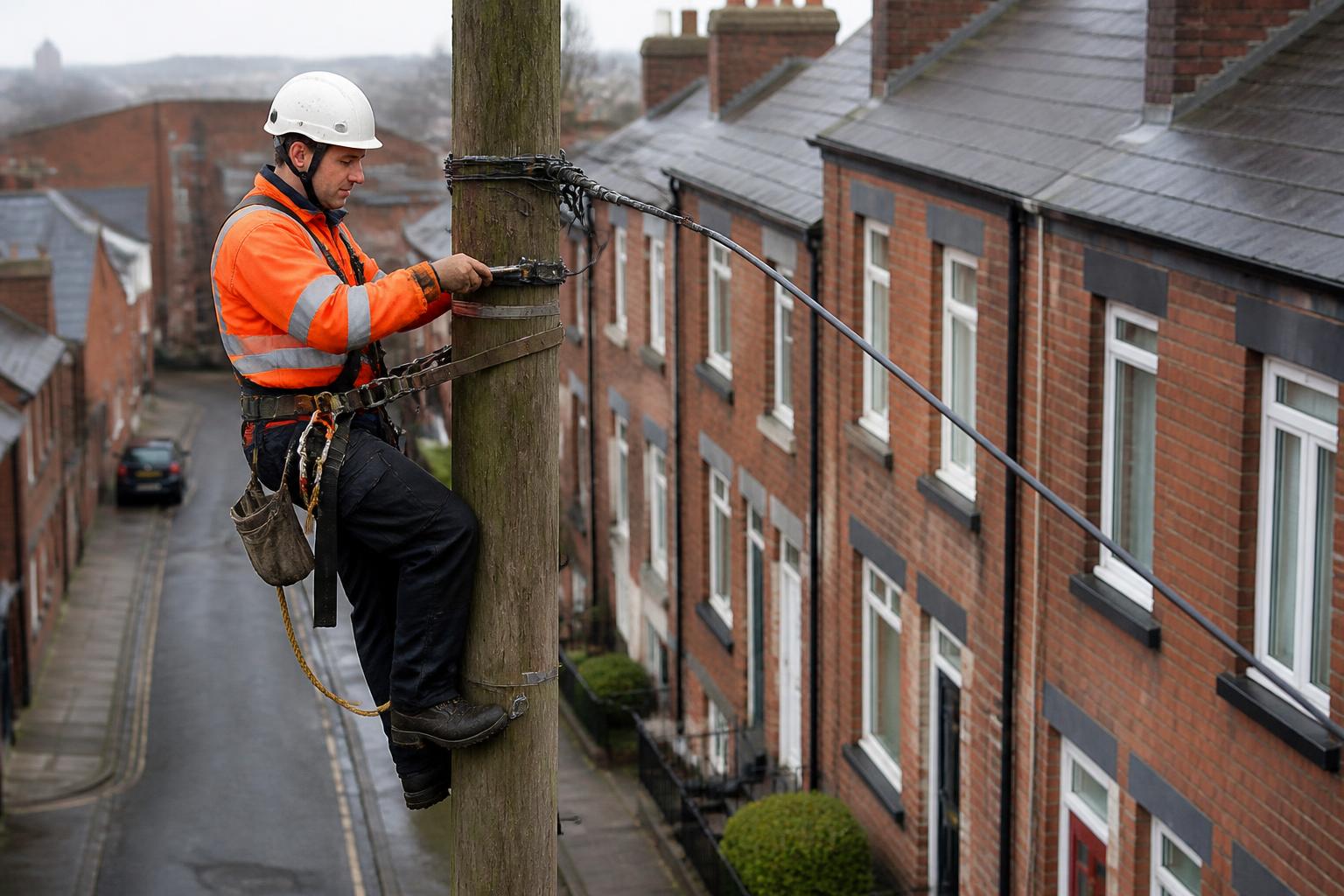
- Telegraph pole installation crews: erecting, replacing and recovering poles, and running overhead cable from pole to premises
- Telephone point installers: telephone and data outlets, extensions and line moves in offices, schools and housing schemes
- Structured cabling contractors: copper and fibre data cabling, comms rooms and cabinets for offices and data centres
- Broadcasting engineering firms: transmitter, antenna and studio systems for broadcasters, including work on masts and towers
- Mobile and wireless network contractors: rooftop and tower work installing antennas, small cells and in-building coverage systems
- Directional drilling and moling contractors: trenchless crossings under roads, railways and rivers for duct and cable routes, often alongside civil engineering contractors
- Aerial and satellite firms: TV reception and communal systems, which have their own page
How much does telecoms engineers insurance cost?
Turnover and wage roll set the base, but where your crews work matters more. These factors move the premium most.
Type of work
Underground civils and directional drilling are rated more heavily than internal cabling, because a single strike can damage several utilities at once.
Height
Pole, mast and tower work raises employers' liability rates, and insurers ask about climbing training, rescue plans and harness checks.
Who you work for
Contracts with network operators and their main contractors often demand higher limits and wider indemnities, which feed into the price.
Plant and kit values
The value of owned plant, hired-in machines and test equipment, and how it is secured overnight, sets the property sections.
Subcontracted gangs
Insurers check how much work is passed to subcontract crews and whether those crews carry their own liability cover.
Strike and claims record
Past cable and pipe strikes, how they were investigated and what changed afterwards weigh heavily with underwriters.
What telecoms engineers insurance usually excludes
These are the gaps that catch telecoms contractors most often.
- Strikes on buried pipes and cables when crews skipped the plan checks, scanning or hand digging the policy requires
- Financial loss from a network outage where nothing was physically damaged, unless the policy extends to it
- The cost of redoing your own faulty splicing, jointing or terminations
- Directional drilling, mast climbing or work on railway land that was not declared
- Hired-in plant, unless a hired-in plant section has been added
- Penalties for missing completion targets or service level agreements
- Hacking of customer systems through your remote logins, which needs separate cyber cover
Internal cabling or external network build?
Many telecoms firms do both, but insurers rate the two very differently. Knowing which side of the building line your turnover sits on helps explain a quote.
| Feature | Internal cabling and telephone points | External network build |
|---|---|---|
| Typical site | Offices, schools, data centres and housing | Roads, footpaths, poles, chambers and masts |
| Main liability risk | Damage to ceilings, decor and existing building services | Strikes on buried gas, water and power services |
| Employee risk | Ladders, ceiling voids and manual handling | Traffic, chambers, pole climbing and plant |
| Plant and kit | Hand tools, testers and termination kit | Diggers, drills, winches and splicing vehicles |
| Outage exposure | Usually limited to one building or client | Can cut service to many homes and businesses at once |
| Insurer questions | Ceiling void working and asbestos awareness | Cable detection, utility plans and street works training |
How to get telecoms engineers insurance quotes
Underwriters price telecoms risks on detail, so gather this before the broker approaches the market.
Split your turnover
Show income from internal cabling, external network build, pole work, mast work and drilling, plus maintenance contracts.
Describe underground controls
Explain how crews obtain utility plans, use cable detection and decide when to hand dig.
List plant and equipment
Owned and hired-in plant, splicing and test kit, with values and overnight storage.
Set out your labour
Directly employed engineers, subcontract gangs and agency staff, with wage roll and subcontract spend.
Check contract demands
Pull the liability limits, indemnities and insurance clauses from operator and main contractor agreements.
Talk to a broker who places telecoms risks
Tell us about your crews, plant and contracts and a broker who covers network contractors will compare terms.
Compare quotesTelecoms engineers insurance FAQs
How much does telecoms engineers insurance cost?
It depends on your mix of internal and external work, turnover and wage roll, plant values, how much is subcontracted, the limits operators and main contractors demand, and your claims record. Firms doing directional drilling, mast climbing or underground civils usually pay more than internal cabling contractors.
Am I covered if we damage a gas main or power cable while digging?
Usually, under public liability, provided you met the policy's conditions. Many insurers require utility plans, a cable avoidance tool and hand digging near known services. If those steps were skipped, a claim can be reduced or declined, so crews need to record them on every job.
Does telecoms engineers insurance cover telegraph pole installation?
It can, if pole work is declared. Insurers ask about climbing training, testing poles before climbing, rescue arrangements and the vehicles used for erection. Claims include falls, poles striking passers-by during erection and poles that lean or fail after handover.
What happens if we cut a fibre and businesses lose their broadband?
The network owner's repair costs are usually covered as property damage. Claims from businesses for lost trading are harder, because many policies only pay financial loss that follows physical damage to that business's own property. Ask the broker how your policy treats loss of service.
Is broadcasting engineering covered by a telecoms policy?
Often, yes. Transmitter, antenna and studio work can sit on the same policy, but insurers want to know about climbing on masts and towers, work at live transmitter sites and the value of broadcast equipment in your care.
Do telephone point installers need the same cover as network builders?
The sections are similar, but the risk is lower. Telephone point and data outlet work happens inside buildings, so the main claims are damage to decor, existing wiring and ceilings, and injuries from ladders. Rates usually reflect that difference.
Do we need cover for hired-in plant?
If you hire diggers, drills, winches or access platforms, the hire terms usually make you responsible for loss or damage, and sometimes for hire charges while a damaged machine is out of use. A hired-in plant section covers this, and many hire companies ask to see it.
Does the policy cover our subcontract gangs?
Your policy can cover liability arising from their work, but insurers expect subcontractors to hold their own public and employers' liability cover. Labour-only operatives you direct and supply with tools normally count as employees for this purpose, so include them in your wage roll.
How do I get a telecoms engineers insurance quote?
Press compare on this page to reach our partner, MyMoneyComparison.com, whose broker will arrange a call. Useful details: turnover by type of work, wage roll, subcontract spend, plant and kit values, underground working controls, contract limits and recent claims.
Compare cover for your telecoms business
Liability, plant, test kit and crew cover for firms that build and maintain the networks UK businesses rely on.