Courier and Delivery Business Insurance for delivery operators
Cover for courier and delivery companies with driver teams, van fleets and contracts to deliver. Specialist brokers bring hire and reward motor, parcels in transit and liability together for the way your rounds actually run.
- Hire and reward cover across the delivery fleet
- Parcels and consignments insured in transit
- Liability for doorstep, depot and in home deliveries
Reviewed October 2026 by the MyBusinessComparison.com editorial team
What is courier and delivery business insurance?
Courier and delivery business insurance is a package of cover for firms that carry other people's goods for payment. It combines hire and reward motor cover for the delivery vehicles, goods in transit for the parcels and consignments on board, and public and employers' liability for the people and property your drivers deal with.
Carrying goods for payment is rated as its own class of use, so a standard business van policy does not cover courier work. Our hire and reward insurance guide explains that distinction in more depth.
For an operator running dozens of drops per van every day, claims tend to be frequent and small: low speed scrapes, parcels stolen from vehicles and damage on the doorstep. Insurers price on how well those everyday losses are controlled.
Courier and delivery insurance at a glance
- Suits
- Courier, parcel, same day and last mile delivery companies
- Class of use
- Hire and reward: carrying other people's goods for payment
- Compulsory part
- Third party motor cover, and employers' liability for most firms with staff
- Core sections
- Fleet motor, goods in transit, public and employers' liability
- Driver models
- Employed, agency and subcontracted drivers, each treated differently
- Rated on
- Drops, mileage, areas, goods carried, drivers and claims
What does courier and delivery insurance cover?
A courier package is built around the vehicles and the goods. These are the sections most delivery operators combine, each with its own limits and conditions.
Hire and reward fleet motor
Third party, fire, theft and damage cover for vans, cars and motorcycles used to deliver for payment, usually on a fleet basis with any approved driver.
Read more about fleet insurance
Goods in transit
Loss of or damage to parcels and consignments while loaded, in transit and at the depot, with limits set per parcel, per vehicle and per incident.
Read more about goods in transit cover
Public liability
Claims from customers and passers by who are hurt, or whose property is damaged, during collection and delivery, including deliveries carried into homes and offices.
Read more about public liability insurance
Employers' liability
Injury and illness claims from your own drivers and depot workers, from lifting strains to slips at the hub. Most employers must hold it.
Read more about cover for your staff
Peak and hired vehicles
Short term hire vans added for seasonal peaks, and replacement vehicles while your own are repaired, so delivery promises are still met.
Temperature and time critical loads
Extended cover for medical samples, pharmaceuticals and chilled goods, where delay or temperature failure is the main risk.
Depot and sortation site
Buildings, racking, conveyors and scanners at the hub, which a motor policy will not touch.
Read more about commercial property insurance
Contract and uninsured loss support
Legal help recovering costs from third parties after accidents and with disputes over customer and network contracts.
Cover delivery firms often add
- Cyber insurance: booking platforms, driver apps and customer data that keep rounds running
- Personal accident: payments for riders and drivers hurt while out delivering
- Crime and fidelity: theft of parcels by staff, which goods in transit sections often exclude
- Business interruption: income lost while a damaged hub cannot sort or dispatch
Which delivery businesses need courier insurance?
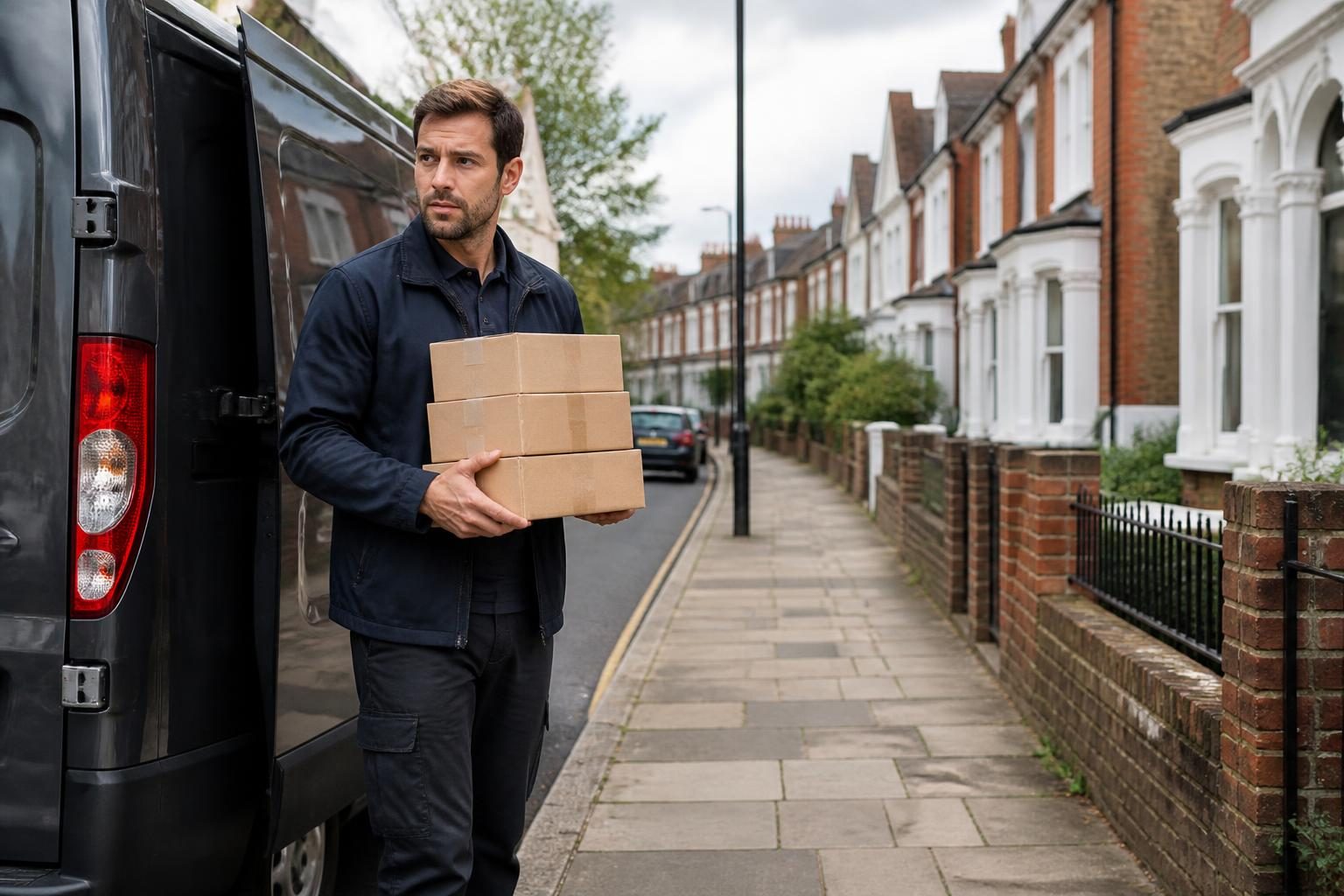
Any firm whose income comes from moving goods for others in light vehicles. These are the delivery models we see most often.
Moving full loads in heavy vehicles? That is usually rated as haulage. See HGV and haulage insurance.
- Same day courier companies: dedicated collections and urgent deliveries across a region or nationally
- Parcel delivery contractors: teams of drivers delivering on behalf of national networks, under their contract terms
- Two person and bulky goods delivery: furniture, white goods and installation for retailers, with handling inside customers' homes
- Medical and laboratory couriers: samples, pharmaceuticals and equipment for healthcare providers that cannot be delayed
- Restaurant and food delivery fleets: hot and chilled food delivered by employed riders and drivers
- Document and secure couriers: legal papers, data media and confidential items with a proven chain of custody
- Motorcycle courier firms: fast urban delivery, where rider protection and theft security matter most
- Fulfilment and logistics firms: storage, pick and pack and the final delivery to customers
How much does courier and delivery insurance cost?
Courier risks are high frequency, so insurers focus on volume and control. The points below carry the most weight.
Drops and mileage
More stops per day mean more parking, reversing and doorstep time. Insurers look at both the number of drops and the miles covered.
Delivery areas
Dense city centres bring more scrapes and theft; rural rounds bring longer distances and higher speeds.
Driver model
Employed drivers, agency drivers and subcontracted owner drivers carry different risks, and insurers ask how each is vetted.
Goods carried
General parcels are rated differently from electronics, pharmaceuticals or high value consignments.
Claims history
Frequent small motor and parcel claims shape the price, as does what you have done to reduce them.
Security and technology
Telematics, cameras, proof of delivery systems and vehicle security all help settle claims and deter theft.
What courier insurance usually excludes
Courier claims are often declined because of how vehicles and parcels were left. These are the exclusions to know.
- Theft of a van left with the engine running or keys inside while the driver is on a doorstep
- Unexplained shortages, where a parcel is missing with no evidence of theft or accident
- Cash, jewellery, phones and other high value goods above the limit agreed with the insurer
- Loss caused by late delivery, which goods in transit sections rarely cover
- Damage caused by poor packing by the sender
- Subcontracted owner drivers' own vans, which need their own hire and reward policy
- Theft by employees, unless crime cover has been arranged
Courier work or haulage?
Both carry other people's goods for payment, but insurers price them as very different risks.
| Feature | Courier and delivery | Haulage |
|---|---|---|
| Vehicles | Vans, cars, motorcycles and some light trucks | Rigid lorries, tractor units and trailers |
| Loads | Many small consignments for many recipients | Full or part loads for fewer customers |
| Operator's licence | Not needed for vans on UK only work, though heavier vans on paid international work may need one | Needed for heavy goods vehicles |
| Typical claims | Frequent low speed damage and parcel theft | Fewer but larger accidents and load losses |
| Goods cover basis | Limits per parcel and per vehicle | Limits per load, matched to conditions of carriage |
| Seasonal swings | Large peaks in vehicles and drivers | Steadier volumes under contract |
How to compare courier and delivery insurance
Delivery insurers want to understand how a working day runs. Having these details ready speeds things up.
Map your delivery model
Who your customers are, network contracts you hold, typical drops per round and the areas you cover.
List vehicles and drivers
Each vehicle and who drives it, separating employed, agency and subcontracted drivers.
Set your goods limits
Typical and maximum value per parcel and per vehicle, any high value or sensitive goods, and the limits customers require.
Gather claims records
Motor and goods claims over recent years, with notes on what has been done to prevent repeats.
Compare conditions, not just price
Check unattended vehicle terms, parcel limits, peak hire provision and how subcontractors are treated.
Ready to compare courier cover?
Outline your rounds, vans, drivers and delivery contracts, and a courier specialist will compare terms.
Get a courier quoteCourier and delivery insurance FAQs
How much does courier insurance cost for a delivery business?
Pricing follows your vehicles, drops and mileage, delivery areas, driver model, the goods you carry and your claims history. Firms with strong vehicle security and proof of delivery systems usually present a better risk, and peak season vehicle numbers also feed into the figure.
Do delivery vans need hire and reward cover?
Yes, if they carry other people's goods for payment. A van insured for carrying your own goods is not covered for courier work, so a claim during a paid delivery could be refused. Fleet policies can apply hire and reward use across every vehicle.
How are subcontracted owner drivers insured?
Owner drivers using their own vans usually need their own hire and reward motor policy, and it is worth checking before they start. Your goods in transit and liability cover may extend to their work for you, depending on the insurer.
Is parcel theft from our vans covered?
Usually, under goods in transit, if security conditions are met. Most insurers expect vehicles to be locked and attended or parked securely, and many exclude theft from vans left running or open. Unexplained shortages are rarely covered.
What cover do delivery networks require from contractors?
Networks normally set minimum levels of motor, goods in transit, public liability and employers' liability cover in their contracts. Requirements differ, so share the contract with your broker so limits are matched before you sign.
Can we add vans and drivers for peak season?
Yes. Most fleet policies allow hired and extra vehicles to be added, and any approved driver cover extends to new drivers within the policy conditions. Tell your broker early so hire vehicle limits and goods limits are high enough for peak volumes.
Are deliveries into customers' homes covered?
Damage or injury caused while carrying goods into a home, such as a scraped floor or a damaged doorframe, falls under public liability. Installation or assembly work may need declaring separately, as some insurers treat it as a different activity.
Can medical and temperature sensitive goods be insured?
Yes, but they need declaring. Medical samples, pharmaceuticals and chilled goods can be covered with suitable goods in transit terms, and insurers usually ask about packaging, temperature control and chain of custody records.
How do I get a courier and delivery insurance quote?
Select the quote button and a courier and delivery specialist will follow up. It helps to have the vehicle list, driver arrangements, network or customer contracts, typical parcel values and recent claims to hand when they call.
Ready to compare courier and delivery insurance?
Vehicles, parcels and liability insured together for delivery firms with drivers on the road every day.