Small Business Fleet Insurance for a handful of vehicles
For established firms running a few vans and cars that are tired of juggling separate policies and renewal dates. Compare a first fleet policy that covers every vehicle and driver on one schedule.
- Every van and car on one renewal date
- Staff drivers covered without naming each one
- Vehicles added or swapped during the year
Reviewed October 2026 by the MyBusinessComparison.com editorial team
What is small business fleet insurance?
Small business fleet insurance is a single motor policy for an established firm running a handful of vehicles, such as a few vans and a director's car. Instead of insuring each vehicle separately, every vehicle and approved driver sits on one schedule with one renewal date and one set of terms.
It is the entry point to commercial fleet insurance. The main difference from a larger fleet is how it is priced: with little fleet claims history of its own, a small fleet is rated mostly on the vehicles, the drivers and each vehicle's past claims, rather than on years of fleet experience.
The point at which a fleet policy becomes available varies by insurer. Some start from a very small number of vehicles, others want more, so the broker will check which insurers will quote for your current vehicle list.
Small business fleet insurance at a glance
- Suits
- Established firms with staff and a handful of vans, cars or light trucks
- Mixed vehicles
- Vans, cars and pick-ups usually sit on the same policy
- Drivers
- A short list of named drivers, or open driving for staff
- Priced on
- Vehicles, drivers, use and each vehicle's claims record
- Main benefit
- One renewal, one set of terms and simpler admin
- Not included
- Tools and stock in the vans, which need separate cover
What does small business fleet insurance cover?
A small fleet policy covers the same core risks as individual vehicle policies, with more flexibility about who drives and which vehicles are on it.
Vans and light commercials
Panel vans, dropsides, tippers and pick-ups used for the business, each with the level of cover that suits its age and value.
Read more about commercial vehicle insurance
Company and directors' cars
Cars used by owners, directors and managers, on the same policy as the vans rather than on separate private policies.
Named or open drivers
With only a few vehicles, a short list of named drivers can be the more economical choice; open driving suits firms where whoever is on shift takes the van.
Adding and swapping vehicles
New, replacement and hired vehicles covered as they arrive, usually with notice to the insurer within a set period and the premium adjusted.
Signwriting and racking
Many policies cover van racking, ladder racks and signwriting as part of the vehicle, up to a limit. Tools inside need their own cover.
Injury and damage to others
Injury to other people and damage to their property caused by your vehicles, which is the compulsory part of any motor policy.
Courtesy vehicle and recovery
A replacement van or car after an accident, and roadside recovery, so a breakdown does not stop the working day.
Theft of and from vans
Theft of the vehicle and damage caused by break-ins, subject to locks and overnight parking conditions.
Covers small fleet operators often add
- Tools and equipment cover: tools and kit carried in vans, which the motor policy usually excludes
- Goods in transit: stock and materials carried to customers and sites
- Public liability: injury or damage caused by your work at customers' premises
- Employers' liability: compulsory for most firms with staff, and separate from the fleet policy
Which firms suit a small business fleet policy?
Established businesses with a team, a base and a few vehicles that keep the work moving. These are typical.
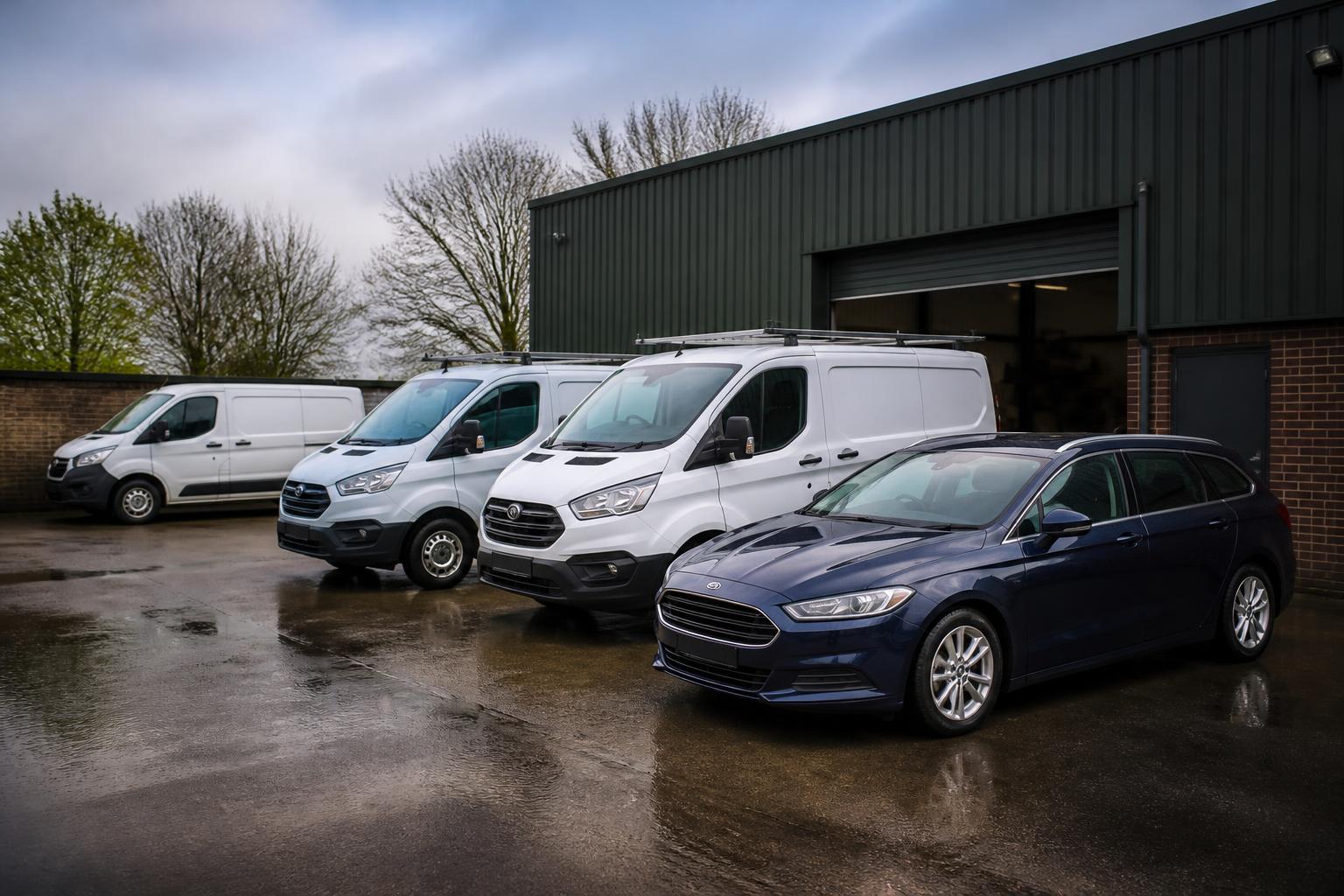
Running mainly company cars for staff? See business fleet insurance for company car schemes, or commercial fleet insurance for larger mixed fleets.
- Electrical and building services contractors: engineers in vans, plus a surveyor's or manager's car
- Building firms: a few vans and a pick-up moving crews and materials between jobs
- Property maintenance companies: reactive and planned maintenance teams on contracts with landlords and managing agents
- Commercial cleaning firms: vans carrying teams and equipment to client sites
- Engineering and installation firms: service engineers covering a region from one workshop
- Local wholesalers and suppliers: delivery vans running daily rounds to trade customers
- Retailers with delivery vans: furniture, flooring and appliance shops delivering and fitting
- Care and healthcare providers: pool cars and adapted vehicles shared between staff
- Hospitality groups: vans for catering, deliveries and moving stock between sites
- Farm and rural businesses: pick-ups and vans used across the farm and on the road
How much does small business fleet insurance cost?
Small fleets are priced on what each vehicle and driver brings, because there is little fleet history to go on yet. These factors count most.
Vehicle mix
Type, value and weight of each vehicle. A mix of vans and a high value director's car is rated vehicle by vehicle.
Named or open driving
Named drivers with clean records usually cost less than any driver cover, especially if younger staff would be included.
Previous claims
Claims on each vehicle's existing policy over recent years, and any fleet claims experience you already have.
Use and area
What the vehicles carry, how far they travel and where they are based.
Overnight security
Vans kept in a locked yard or at the business base usually rate better than vans parked at employees' homes.
Excess
Agreeing a higher excess on own damage claims can reduce the premium, as long as the business can absorb it.
What small business fleet insurance does not usually cover
A first fleet policy can change some rules your separate policies had. These are the points to check.
- Tools, stock and equipment left in vans, unless a tools or goods in transit section is added
- Staff who drive but are not on the named list, or fall outside the open driving terms
- Theft from vans left unlocked, or overnight in places the policy does not allow
- Vehicles added during the year but not reported to the insurer within the agreed period
- Carrying other people's goods for payment, which needs hire and reward cover
- Wear and tear, mechanical breakdown and tyre damage from normal use
- Fines, penalty points and speeding prosecutions
Small fleet policy or separate vehicle policies?
Most firms switch once renewal admin becomes a job in itself. This is how the two approaches compare.
| Feature | Small fleet policy | Separate policies |
|---|---|---|
| Renewal dates | One date for every vehicle | A different date for each vehicle |
| Drivers | Named list or open driving, set once for every vehicle | Named on each policy individually |
| New vehicles | Added to the schedule as they arrive | A new policy for each vehicle |
| Claims history | Builds a fleet record for the business | Sits on each vehicle's policy |
| Usually suits | Firms with a few vehicles and several drivers | Firms with a vehicle or two and fixed drivers |
How to switch to a small business fleet policy
Moving from separate policies takes a little planning. These steps keep cover continuous.
List every vehicle
Make, model, registration, value, weight and current renewal date for each one.
Decide who drives
Named drivers or any employee within an age range, and whether directors' families need cover.
Collect claims records
Ask each current insurer for claims experience on the vehicles you are moving.
Plan the switch date
Choose whether to bring vehicles over as each policy renews or move them all at once and cancel the rest.
Check the conditions
Compare excesses, overnight parking rules, tools cover and how quickly new vehicles must be reported.
Get a small fleet quote
Tell us about your vehicles and drivers and a fleet broker will compare cover for you.
Compare quotesSmall business fleet insurance FAQs
How much does small business fleet insurance cost?
It depends on the vehicles, drivers, use, overnight security and each vehicle's claims record. Because a new fleet has little history of its own, insurers rate it mostly on these details, so clean driving records and secure overnight parking carry real weight.
Is a fleet policy worth it with only a few vehicles?
Often, yes, mainly for the admin and the driver flexibility. Price can go either way, because insurers set their own minimum fleet size and some prefer to rate small fleets vehicle by vehicle. A broker can compare fleet terms against renewing your separate policies.
Can the directors' own cars go on the small fleet?
Usually, yes, if the cars are owned or leased by the business. Private use and family drivers can be added. Cars owned personally by directors normally stay on their private policies, with business use added.
What happens to our existing van policies when we switch?
You either cancel them when the fleet policy starts or bring each vehicle across at its own renewal. Cancelling early can mean a short period charge, so the broker will usually weigh that against the benefit of moving everything at once.
Are vans covered if staff take them home overnight?
Usually, provided the insurer knows. Vans parked at employees' homes are often rated differently from vans in a locked yard, and theft of tools or goods overnight may carry extra conditions. List where each van is kept overnight when asking for quotes.
Are tools in the vans covered?
Usually not by the motor policy itself. Tools and equipment carried in vans need tools and equipment cover, and most insurers set conditions on overnight storage and locks.
Can I add a vehicle part way through the year?
Yes. Most fleet policies cover new and replacement vehicles automatically for a short period, as long as you tell the insurer within the agreed time. The premium is adjusted for the rest of the policy year.
When does a small fleet become a larger fleet policy?
There is no fixed point. As a fleet grows and builds a claims record, insurers start pricing it on that experience rather than vehicle by vehicle. At that stage the broker will move you onto commercial fleet terms.
How do I get a small business fleet insurance quote?
Fill in the quote form behind the button and a fleet broker will phone you. Have each vehicle's registration and current renewal date, the people who drive them and the claims letters from your existing insurers to hand.
Ready to move your vehicles onto one policy?
One schedule, one renewal and cover for every approved driver, arranged by a broker who sets up first fleets.