Unoccupied Property Insurance for empty commercial buildings
Cover for commercial buildings standing empty between tenants, after a move or closure, or while plans are agreed. A specialist broker can compare policies for vacant shops, offices, pubs and industrial sites.
- Buildings cover once a standard policy runs out
- Owners' liability for visitors and trespassers
- Short or longer terms to fit the vacancy
Reviewed October 2026 by the MyBusinessComparison.com editorial team
What is unoccupied property insurance?
Unoccupied property insurance covers commercial buildings that are empty and not being used for business. It protects the structure against damage such as fire, storm and flood, and covers claims brought against the owner for harm the empty property causes, on terms that reflect the higher risk of arson, vandalism and undetected leaks.
Most standard property and landlord policies only keep full cover for a limited time after a building empties, often thirty to sixty days depending on the insurer. After that, cover may be cut back to a few perils, extra conditions apply, or the building is excluded altogether.
A specialist unoccupied policy picks up where that allowance ends. Cover usually starts at a restricted level and can be widened for well secured buildings, provided the owner keeps to the inspection and security conditions written into the policy.
Unoccupied property insurance at a glance
- Needed when
- A building is empty beyond the period its usual policy allows
- Cover levels
- Fire and limited perils as a minimum, wider cover on agreement
- Main conditions
- Regular inspections, utilities isolated, water drained, building secured
- Liability
- Property owners' liability for trespassers, visitors and neighbours
- Policy length
- Short terms for brief vacancies, or annual for longer ones
- Often arranged for
- Landlords, lenders, administrators and developers
What does unoccupied property insurance cover?
Cover is chosen in levels. The more secure and closely managed the building, the more of these sections an insurer will usually offer.
Fire, lightning and explosion
The minimum level of cover for any empty building, often extending to earthquake and aircraft impact, and the one that matters most given the risk of arson.
Wider damage cover
Storm, flood, escape of water, impact and theft damage, usually available where the building is inspected regularly, drained down and well secured.
Read more about commercial property insurance
Property owners' liability
Claims from anyone injured on or by the empty building, including trespassers and contractors, and damage to neighbouring property from falling masonry or water.
Read more about public liability insurance
Intruders and vandals
Deliberate harm caused by people breaking in, often offered only with boarding, alarms or a monitored security service in place, and sometimes subject to a higher excess.
Metal and fixture theft
Damage caused by thieves stripping lead, copper pipework, cabling and boilers, which can cost far more to put right than the metal is worth.
Debris removal and fees
Removing debris, taking down unsafe structures and paying surveyors and architects after a serious loss.
Emergency securing
Boarding up, replacing locks and making the building safe after a break-in or damage, so cover is not compromised.
Loss of rent on part-let buildings
Where some units are occupied and others empty, rent from the occupied space can still be protected after insured damage.
Read more about commercial landlord insurance
Related covers for empty buildings
- Terrorism cover: for vacant buildings where lenders or the location call for it
- Portfolio cover: empty buildings kept on a wider portfolio policy on agreed terms
- Listed building cover: vacant heritage buildings where reinstatement needs specialist materials
- High risk property cover: derelict, fire-damaged or long empty buildings that mainstream insurers decline
Who needs unoccupied property insurance?
Any owner of a commercial building that is empty for longer than its usual policy allows. These are the most common situations.
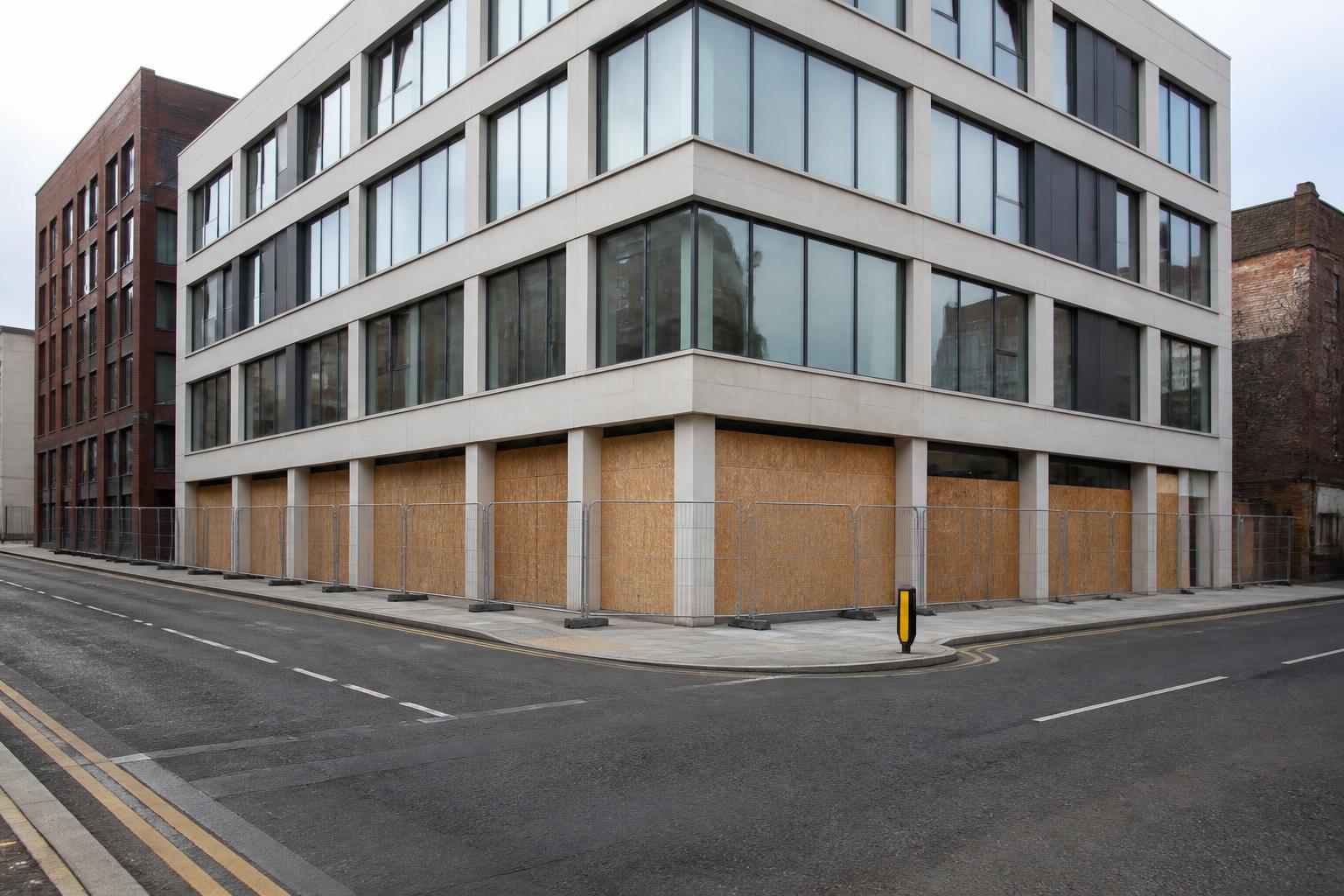
Works starting on the building? Once refurbishment begins, cover moves to property under renovation insurance.
- Landlords between tenants: shops, offices and units vacated at lease end while a new tenant is found
- Firms that have moved offices: former premises left behind after a move or merger, awaiting sale or letting
- Retailers that have closed branches: shop units vacated after a store closure, often with shutters, alarms and stock to clear
- Owners of closed pubs and restaurants: hospitality buildings shut for sale, redevelopment or a change of operator
- Insolvency practitioners and receivers: property taken under control when a company fails or a loan is enforced
- Lenders and asset managers: buildings repossessed or held while a sale is arranged
- Developers awaiting planning: buildings bought for redevelopment that stand empty until consent is granted
- Owners of vacant industrial sites: factories and warehouses closed after production moves or ends
- Executors and trustees: commercial property held in an estate or trust before sale
- Former banks, chapels and civic buildings: large or unusual buildings bought for conversion that sit empty for long periods
- Property companies with empty units: vacant space within a wider portfolio that needs specific terms
How much does unoccupied property insurance cost?
Empty buildings are priced on how likely they are to be targeted and how quickly a problem would be found. These factors carry the most weight.
Level of cover
Fire and limited perils cover costs less than wider cover including escape of water, malicious damage and theft.
Security
Boarding, steel screens, monitored alarms, CCTV and perimeter fencing reduce the arson and vandalism risk and widen the cover available.
Inspection routine
Regular recorded inspections, or a managing agent or guardian on site, show the insurer that problems will be found quickly.
Building condition
A sound, weatherproof building rates better than one with roof damage, missing glazing or signs of previous break-ins.
Location and history
Local arson and crime levels, prior incidents at the property and how long it has been empty all count.
Rebuild value and plans
The reinstatement cost sets the base, and a clear plan for letting, sale or development helps insurers understand how long the vacancy will last.
Unoccupied property conditions and exclusions
Empty building claims are most often declined because a condition was not met. These are the ones to watch.
- Damage discovered after inspections were missed or not recorded in the way the policy requires
- Frost damage and escape of water where the water supply was not turned off and the system drained
- Fire spread by rubbish, fly-tipped waste or combustible materials left inside or against the building
- Malicious damage, theft and escape of water when only fire and limited perils cover has been bought
- Damage while building or refurbishment work is under way, unless agreed, as works usually need contract works cover
- Gradual deterioration, damp, rot and storm damage to a roof already in poor repair
- Loss after security measures such as alarms, boarding or locks were removed or not maintained
Standard property policy or a specialist unoccupied policy?
Owners sometimes assume their usual policy carries on when a building empties. This is how the two compare once the vacancy runs on.
| Feature | Standard property policy | Specialist unoccupied policy |
|---|---|---|
| Empty period allowed | Limited, often a month or two | Written for the whole vacancy |
| Perils after that period | May be cut back or removed | Agreed at the outset by level of cover |
| Conditions | Unoccupancy terms added once empty | Inspection and security terms set out from the start |
| Liability | Usually continues within the policy | Property owners' liability included |
| Policy term | Annual, tied to an occupied building | Short terms or annual, to suit the plan for the building |
How to arrange unoccupied property insurance
Insurers need to be confident the building is secure and checked. Prepare these details before asking for terms.
Tell your current insurer early
Let them know the date the building emptied so you know when the usual cover changes.
Secure the building
Lock all entry points, consider boarding or screens, keep alarms active and clear out waste and stock.
Shut down the services
Turn off and drain the water system, isolate gas and leave only the electricity needed for alarms and lighting.
Set an inspection routine
Agree who will inspect, how often, what is checked and how each visit is recorded.
Explain your plans
Share whether you intend to let, sell, refurbish or redevelop and the expected timescale.
Building standing empty?
Explain how long the building has been empty and what happens next, and a specialist broker will look for suitable terms.
Get a quoteUnoccupied property insurance FAQs
How much does unoccupied property insurance cost?
The price follows the level of cover, the building's security and condition, the inspection routine, its location and history, and the rebuild value. Fire and limited perils cover is the entry level, while wider cover depends on how well the building is protected.
When is a commercial building classed as unoccupied?
Most policies treat a building as unoccupied once it has not been used for normal business for a set run of consecutive days. Some apply this to part of a building, such as an empty upper floor, so check how your current policy defines it.
What happens if I do not tell my insurer the building is empty?
Cover may be restricted or a claim may be refused. Vacancy changes the risk, and most policies require you to notify the insurer and follow unoccupancy conditions. Telling them early keeps your options open, including moving to a specialist policy.
How often does an empty building need to be inspected?
It varies by insurer and building, but weekly inspections, inside and out, are a common requirement, with some insurers accepting less frequent visits for well secured buildings. Each visit is usually logged with the date, the person inspecting and any issues found, and repairs are made promptly.
Does unoccupied property insurance cover squatters and vandalism?
Malicious damage by intruders can be covered at higher levels of cover, usually with security measures in place. Some policies, or a legal expenses policy, help with the costs of removing people occupying the building without permission; check the terms with your broker.
Can I insure a building that is only partly empty?
Yes. Where some floors or units are let and others vacant, such as a mixed use building with empty flats above, insurers can cover the whole building with conditions applied to the empty parts. Keep vacant areas secured and separately inspected.
Is a building under refurbishment covered by an unoccupied policy?
Usually only for minor works agreed in advance. Once significant refurbishment or structural work begins, a renovation policy or contract works cover is normally needed.
Can I get cover for a derelict or fire-damaged building?
Often, yes, through specialist insurers, though cover may be limited to liability and fire. Insurers will want photographs, security details and a clear plan for demolition, repair or sale.
How do I get an unoccupied property insurance quote?
Go through the quote button and a specialist broker will call you back. Note the date the building emptied, its rebuild value, condition, security, who inspects it and what you plan to do with it.
Ready to compare unoccupied property insurance?
Cover for empty commercial buildings until they are let, sold or redeveloped, compared by a specialist broker.