Carpenters and Joiners Insurance for carpentry and joinery firms
Carpenters and joiners insurance for firms running site carpentry teams, a joinery workshop, or both. Compare cover built around your machinery, your timber stock and the contracts you fix on.
- Liability for joinery on site and after it leaves the shop
- Employers' liability for carpenters and machinists
- Workshop machines, timber stock and site tools covered
Reviewed October 2026 by the MyBusinessComparison.com editorial team
What is carpenters and joiners insurance?
Carpenters and joiners insurance is cover for firms that cut, make and fix timber, on site or in a workshop. It usually combines liability for harm that your site work or finished joinery causes, employers' liability for your carpenters and machinists, and cover for tools, machinery, timber stock and work in progress.
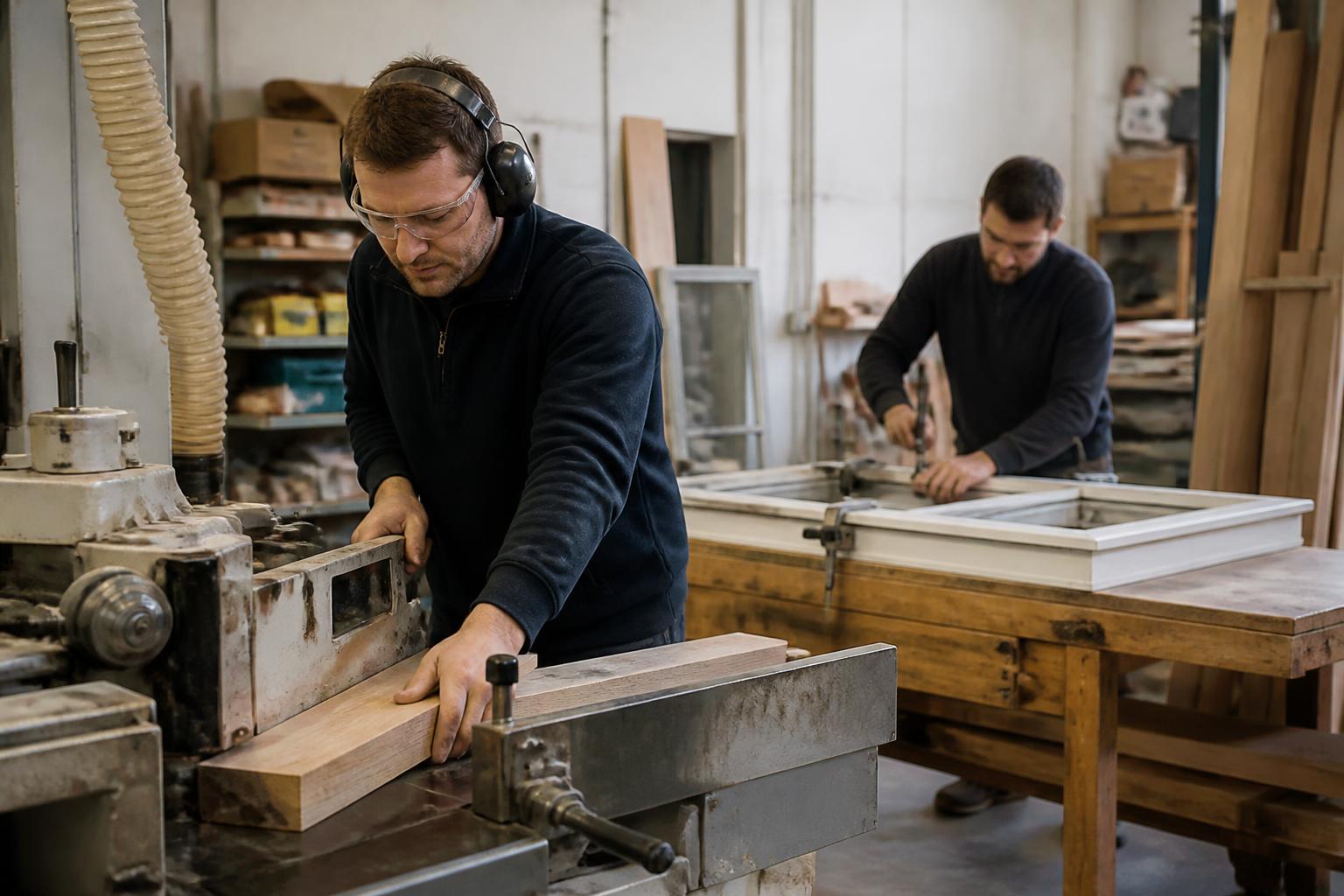
The risk splits two ways. Site teams doing first and second fix, roof timbers, stairs and doors face falls, power tool injuries and damage inside occupied buildings. A joinery shop making windows, doors, staircases and fitted furniture adds fire and dust, injuries at saws and spindle moulders, and products liability for every item that leaves the bench.
Insurers also ask whether you take on structural carpentry such as cut roofs, floor joists and timber frame, whether you build timber decking, and how much work goes to subcontractors. General contractors who run whole projects are covered on our builders insurance page.
Carpenters and joiners insurance at a glance
- Suits
- Carpentry contractors, joinery manufacturers and decking firms with employed teams
- Core covers
- Liability to the public, for products and to employees, plus tools and contract works
- Workshop additions
- Machinery, timber stock, finished joinery and the premises
- Insurers ask about
- Structural timber, machines, dust extraction, spraying and heat work
- Priced on
- Wage roll, turnover, the split between site and workshop, and claims
- Separate cover
- Vans and timber lorries on a fleet policy
What does carpenters and joiners insurance cover?
A carpentry or joinery firm's policy is built from these sections. Workshop-based firms lean on the property and machinery parts; site contractors lean on liability and contract works.
Damage and injury on site
Harm to people and property where you work, for example a balustrade giving way during the job, sawdust ruining a client's electronics, or offcuts left on a walkway tripping a visitor.
Read more about public liability insurance
Joinery after it leaves the bench
Claims after handover from joinery you make or fit, such as a staircase or balcony rail that fails, a fire door that does not hold back smoke and flame, or a deck that gives way under a crowd.
Read more about products liability cover
Carpenters and machinists
Injuries to carpenters, machinists and labourers: hand injuries at saws and spindle moulders, falls from roofs and scaffold during first fix, and illness linked to hardwood dust and noise.
Read more about employers' liability insurance
Workshop machinery
Panel saws, planer thicknessers, spindle moulders, CNC routers, edgebanders and dust extraction, insured for damage and, where added, sudden breakdown.
Read more about business equipment and machinery insurance
Timber stock and finished joinery
Seasoned hardwood, sheet materials and finished doors, windows and staircases waiting to be delivered, insured at your workshop and any store.
Read more about workshop property cover
Fixed joinery before handover
Joinery fixed but not yet handed over, such as a hand-made staircase or a run of sash windows, damaged by fire, flood, theft or other trades before completion.
Read more about contractors' all risks insurance
Site tools
Mitre saws, track saws, nail guns, routers and planers in vans and on site, with overnight cover subject to the security terms on your schedule.
Joinery in transit
Finished items carried to site in your own vehicles, protected against damage and theft on the road and while loading and unloading.
Read more about goods in transit insurance
Decking and external timber
Liability for decks, pergolas, steps and external balustrades, where poorly fixed joists, loose boards or rotting posts can lead to injury claims long after the build.
More cover joinery firms add
- Professional indemnity: where you design staircases, roof structures or bespoke joinery, or specify fire doors for a client
- Business interruption: income lost while a damaged joinery shop is repaired and its machines replaced
- Engineering inspection: periodic examination of dust extraction, compressors and lifting gear in the shop
- Commercial legal expenses: disputes over variations, payment and retentions with main contractors
Which carpentry and joinery businesses is this for?
Any established firm whose turnover comes mainly from working timber. Shop-fitting and multi-trade maintenance contractors have their own pages, linked below.
Fitting kitchens or furniture? Firms that mainly install kitchens or fitted furniture can see kitchen fitters insurance or furniture fitters insurance, or browse the trades hub.
- Site carpentry contractors: first and second fix on housing and commercial projects, as subcontractors to building contractors and house builders
- Joinery manufacturers: workshops making windows, doors, staircases and mouldings for builders and homeowners, often with a CNC router and a spray booth
- Bespoke and heritage joinery firms: panelling, hardwood staircases and sash windows for period homes, churches and listed buildings
- Structural and roof carpenters: cut roofs, joists and timber frame erection, where collapse and falls drive claims; roof coverings sit with roofers insurance
- Timber decking contractors: decks, steps and balustrades for homes, hotels and pub gardens, with liability that lasts long after the deck is built
- Fire door installers: fitting and maintaining fire doors in flats, schools and care homes, where insurers want evidence of training and third-party certification
- Shopfitting joiners: counters, display units and wall panelling made for fit-out firms; contractors who run the whole fit-out see shop fitters insurance
- Cabinet and fitted furniture makers: wardrobes, libraries and built-in storage made in the workshop and fitted in clients' homes and offices
- Carpentry teams on repair contracts: doors, floors and timber repairs in occupied homes; firms covering many trades use property maintenance insurance
How much does carpenters and joiners insurance cost?
No two carpentry firms are priced alike, because the workshop and the site teams are rated as separate risks. These are the points insurers weigh most.
Workshop or site
A joinery shop with spindle moulders and CNC routers carries different employers' liability and fire weightings from a team that only fixes on site.
Structural timber work
Cut roofs, floor structures and timber frame are rated above finishing carpentry, because a failure can bring down part of a building.
Fire protection in the shop
Dust extraction, daily waste removal, a separate spray booth, alarms and tidiness all count, and bigger shops are often visited by a surveyor.
Joinery sold to others
Turnover from items supplied to builders and other trades, particularly fire doors, staircases and balustrades, drives the products liability rating.
Wage roll and labour-only carpenters
Employers' liability is rated on wages for direct staff plus what you pay labour-only carpenters, who most insurers count as employees.
Claims history
Hand injuries, workshop fires and damage to clients' homes are looked at closely, along with the changes made afterwards.
What carpenters and joiners insurance does not cover
These are the gaps that catch timber trades out most often at claim time.
- Remaking or refitting joinery you got wrong, although damage it causes to other property may be covered
- Timber that warps, shrinks or rots because of moisture, poor seasoning or wear over time
- Structural or timber frame work left off the proposal
- Design of staircases, roof structures or load-bearing timbers, which needs professional indemnity insurance
- Workshop fires where conditions on extraction, waste or spraying were not followed
- Heat work on site, such as burning off old paint before refitting, outside the conditions on your schedule
- Vans and timber lorries, insured separately under commercial vehicle insurance
Finishing carpentry or structural timber: how insurers see the difference
Most carpentry firms do some of each. Insurers rate them differently, so the split needs to be described accurately when you ask for quotes.
| Feature | Finishing carpentry | Structural timber work |
|---|---|---|
| Typical work | Doors, frames, skirting, architraves, stair fitting and built-in storage | Cut roofs, floor and ceiling joists, timber frame and load-bearing stud walls |
| Main claims | Damage to finishes and contents in occupied buildings | Sagging or failed roofs and floors, and falls from height |
| Working height | Mostly from steps and podiums | Roof level, from scaffold and edge protection |
| When problems show | Usually during the job or soon after | Sometimes long after completion, as timbers move and deflect |
| Design input | Rarely any | Often working to an engineer's design; your own design needs professional indemnity |
| Rating | Standard carpentry rate | Rated higher and must be declared separately |
How to compare carpenters and joiners insurance
A broker can place a timber trades risk quickly with these details to hand.
Split the turnover
Show site fixing, workshop manufacture, structural timber, decking and fire door work as separate figures.
Separate the payroll
Workshop machinists, site carpenters, labour-only carpenters and subcontractors who carry their own cover.
Describe the workshop
Building construction, machines, dust extraction, any spray booth, waste storage, alarms and the value of timber held.
Check what clients require
Liability limits, fire door certification, collateral warranties and who insures the works under each contract.
Gather claims and controls
Past claims, machine guarding, training records and how you protect finished work on site.
Quotes for carpentry and joinery firms
Tell us how your work splits between the workshop and site, and a broker who knows timber trades will compare terms.
Compare coverCarpenters and joiners insurance FAQs
How much does carpenters and joiners insurance cost?
It depends on the balance of workshop and site work, any structural timber, wage roll, turnover, the joinery you sell to others and your claims record. A joinery manufacturer with a spray booth is rated very differently from a second fix team.
Does carpenters and joiners insurance cover our joinery workshop?
It can. The workshop building, machines, timber stock and finished items can be insured alongside liability, with breakdown cover for key machines. Insurers will ask about dust extraction, waste removal, spraying and fire protection, and may set these as conditions.
Does carpenters and joiners insurance cover timber decking contractors?
Yes, if decking is declared. Building decks, steps and balustrades is usually rated alongside other external carpentry. Insurers look at heights, whether decks are raised, and the fixings and timber used, because injury claims from a failed deck can arrive years later.
Are we covered if a staircase or balustrade we made fails after handover?
Injury or damage caused by the failure is normally covered under products and completed work liability. The cost of remaking the staircase itself usually is not, and if you designed it, a design fault is a matter for professional indemnity.
Do joiners need professional indemnity insurance?
Only where you design or advise. Joinery firms that produce drawings for staircases, roof structures or bespoke pieces, or specify fire doors, can face claims that a liability policy will not pay. Firms building purely to others' drawings rarely need it.
Are fire doors we supply and fit covered?
Supplying and fitting fire doors should be declared, as insurers treat it as a higher risk than standard doors. Many will want to see third-party certification for the installers and records for each door, because a poorly fitted fire door can contribute to a serious loss.
Are tools left in our vans overnight covered?
Often, but only on the policy's terms. Many insurers require tools to be in a locked vehicle with no visible items, and some limit overnight cover unless the van is garaged or in a secure compound. Check the limit per vehicle matches what your teams carry.
What is the difference between carpenters insurance and builders insurance?
Carpenters and joiners insurance is rated on timber work and, where relevant, a joinery workshop. A building contractor running whole projects with several trades needs a builders policy instead. If carpentry is only one of many trades you offer, a broker will usually place you as a builder.
How do I get a carpenters and joiners insurance quote?
Outline your firm in the enquiry here and a broker experienced with timber trades will ring to go through it. Have your turnover split, payroll, workshop details, machinery values, structural work and any claims ready to discuss.
Ready to compare carpenters and joiners insurance?
Cover for the site teams, the workshop and the joinery that leaves it, arranged by a broker who understands timber trades.