Damp Proofing and Timber Treatment Insurance for remedial treatment firms
Damp proofing and timber treatment insurance for remedial firms with surveyors, treatment teams and chemical stores. Compare cover for the advice in your reports as well as the work your technicians carry out.
- Liability for treatments that fail or cause damage
- Professional indemnity for damp and timber surveys
- Employers' liability for technicians handling chemicals
Reviewed October 2026 by the MyBusinessComparison.com editorial team
What is damp proofing and timber treatment insurance?
Damp proofing and timber treatment insurance is cover for remedial firms that survey and treat damp, dry rot and woodworm in buildings. It brings together public and products liability for harm your treatments cause, employers' liability for technicians handling chemicals, and professional indemnity for the diagnosis and recommendations in your survey reports.
Claims in this trade tend to arrive late. A chemical damp-proof course that fails, replastering that lets salts bloom through, or dry rot missed under a floor may not come to light until the house has changed hands. Insurers therefore look closely at how surveys are carried out and the records you keep for every job.
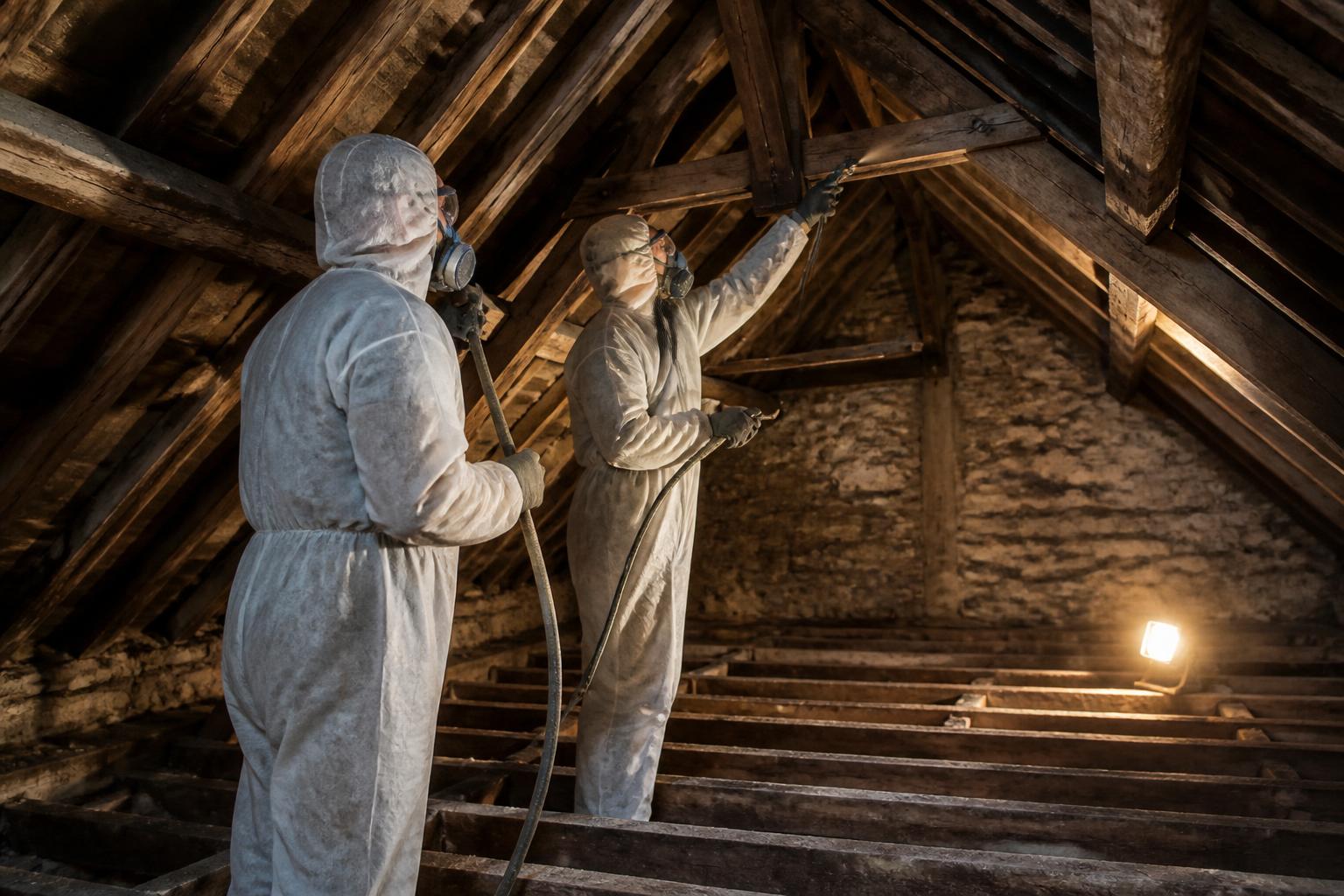
Timber treatment brings its own questions: which preservatives and insecticides you use, how occupants, pets and aquarium fish are protected from vapour, and how you check for roosting bats before treating a roof space. Basement waterproofing is usually rated as a separate activity.
Damp proofing and timber treatment insurance at a glance
- Suits
- Remedial damp, timber and waterproofing contractors with surveyors and treatment teams
- Core covers
- Public and products liability, employers' liability, professional indemnity
- Trade specific
- Misdiagnosis, chemical damage, vapour and late-emerging treatment failures
- Insurers ask about
- Survey practice, products used, basement work and warranty terms
- Priced on
- Turnover split, wage roll, survey volume and claims history
- Not included
- Honouring long-term workmanship warranties, which need separate backing
What does damp proofing and timber treatment insurance cover?
Remedial firms usually combine the sections below. Because survey advice and treatment work fail in different ways, the advice section matters as much as the liability sections.
Damage while treating
Damage and injury while you work, such as injection fluid tracking through to a neighbour's wall, a floor left unsafe after rotten joists are cut out, or plaster dust spread through an occupied home.
Read more about public liability insurance
Treatments that fail later
Damage after you leave, for example damp returning and spoiling new decoration and contents, or failed tanking letting water flood a converted basement.
Read more about completed work liability
Survey and report advice
Claims that a surveyor mistook condensation for rising damp, recommended work that was not needed, or missed active dry rot that a buyer later found.
Read more about professional indemnity insurance
Technicians and chemicals
Technicians affected by preservative vapour or skin contact with injection fluids, back injuries from hacking off plaster, and falls in lofts and cellars.
Read more about employers' liability insurance
Chemical and vapour incidents
Occupants or animals made ill by treatment vapour, fish killed by insecticide in a room with an aquarium, or a fire started where solvent-based products are still used near a heat source.
Injection kit and equipment
Injection pumps, pressure sprayers, moisture meters, borescopes, dehumidifiers and sump pumps, on site, in vans and in store.
Read more about business equipment insurance
Tanking and new timbers on site
Tanking, membranes, new timbers and replastering in place before handover, if flood, theft or vandalism spoils them.
Read more about contractors' all risks cover
Chemical spills
Clean-up when fluids leak from a van or store into drains or a watercourse. Liability policies usually cover only sudden incidents, so a wider pollution policy is worth discussing.
Read more about environmental liability insurance
Other cover remedial firms consider
- Commercial legal expenses: disputes with homeowners over whether a treatment worked, and unpaid invoices from agents
- Group personal accident: a benefit for technicians laid up after a fall in a loft or cellar
- Commercial property: your unit and chemical store, where insurers will ask about storage arrangements
- Fleet insurance: survey cars and treatment vans carrying fluids and kit
Which remedial businesses is this for?
Firms whose main income comes from diagnosing and treating damp, decay and insect attack in buildings, from survey-led practices to large treatment contractors.
Pest control as well? Rodent, insect and bird control in buildings is covered on pest control insurance. Browse other trades on the trades hub.
- Damp proofing contractors: chemical damp-proof courses, membranes and specialist replastering for homeowners, landlords and housing providers
- Dry rot and woodworm control specialists: cutting out and replacing decayed timber, with fungicidal and insecticidal treatment of roofs, floors and joinery
- Timber and wood preservation firms: spray and paste treatments that protect structural and joinery timbers in existing and new buildings
- Damp and timber surveyors: pre-purchase reports for buyers, lenders and solicitors, where the advice is the main exposure; general building surveyors see surveyors insurance
- Basement waterproofing contractors: cavity drain membranes, sump pumps and cementitious tanking in cellars and basement conversions
- Condensation and ventilation installers: positive input ventilation units and extract fans fitted to tackle condensation and mould
- Social housing damp and mould contractors: high volumes of surveys and repairs for councils and housing associations, with strict reporting on every case
- Remedial divisions of larger firms: damp and timber teams within building contractors and property maintenance companies
How much does damp proofing and timber treatment insurance cost?
Remedial firms are priced on the mix of advice and treatment they provide and how long claims can run. These factors carry the most weight.
Survey volume and use
How many reports you produce and who relies on them, especially buyers and lenders on a sale, drive the professional indemnity premium.
Treatment mix
Chemical damp-proof courses, timber treatment, basement waterproofing and ventilation work are each rated differently.
Products and methods
Water-based or solvent-based products, insecticides used near occupants and how fluids are applied all affect the liability rating.
Records for each job
Photographs, moisture readings and signed reports help insurers defend late claims, and firms that keep them are viewed more favourably.
Wage roll
Employers' liability follows wages for surveyors, technicians and plasterers, with chemical exposure and confined spaces taken into account.
Claims and complaints
Insurers look at past claims and at callbacks under your own warranties, even where no insurance claim was made.
What damp proofing and timber treatment insurance does not cover
Remedial claims often turn on these exclusions, so check how each policy handles them.
- Re-treating or redoing your own failed work, which falls to your firm or to a warranty backing scheme
- Survey and diagnosis errors, unless professional indemnity is in place
- Gradual pollution or contamination, as opposed to a sudden spill you can identify
- Mould and condensation claims, which some insurers exclude or limit
- Asbestos disturbed when hacking off old plaster or lifting floors, beyond any limited extension
- Basement tanking or products and methods that were not declared
- Treatment vans and survey cars, which belong on a commercial vehicle policy
Your own written warranty or an insurance-backed one?
Most remedial firms issue long-term warranties on their work. Neither kind replaces your business insurance, and they behave very differently if the firm closes.
| Feature | Firm's own warranty | Insurance-backed warranty |
|---|---|---|
| Who puts the work right while you trade | Your firm, at its own cost | Still your firm, under most schemes |
| If your firm stops trading | The homeowner has no one left to claim against | The scheme provider handles valid claims for the remaining term |
| How it is arranged | Nothing to buy, but every callback cost sits with you | A one-off payment per job, usually registered with the provider on completion |
| On a property sale | Buyers' solicitors often question it | Often what solicitors and lenders look for |
| Link to your business insurance | Your liability policy pays for damage caused, not for redoing the treatment | Separate from your liability policy, which still needs to be in place |
How to compare damp proofing and timber treatment insurance
Remedial risks are placed faster when the broker can see how advice and treatment are split.
Split turnover by activity
Damp proofing, dry rot, woodworm, timber preservation, basement waterproofing, ventilation and survey-only work.
Describe your surveys
Who carries them out, their training and qualifications, who relies on the reports and roughly how many you complete.
List products and methods
The fluids, creams, preservatives and membranes you use, and how occupants and animals are protected.
Explain your warranties
How long they run, whether they are insurance-backed and what records you keep for each property.
Gather claims and complaints
Including callbacks under warranty, with the cause and what you changed afterwards.
Quotes for remedial contractors
Outline your surveys, treatments and teams, and a broker used to remedial contractors will gather terms.
Compare coverDamp proofing and timber treatment insurance FAQs
How much does damp proofing and timber treatment insurance cost?
The price reflects your mix of surveys and treatments, the products you use, wage roll, turnover, any basement work and your record of claims and callbacks. Firms producing many pre-purchase reports pay more for professional indemnity, so a broker will look at each part separately.
Are we covered if damp comes back several years after treatment?
Damage caused by a failed treatment is usually a completed work claim, and liability policies generally respond under the policy in force when the damage happened. Professional indemnity usually works on the policy in force when the claim is made, so it needs to be kept running, or run-off bought if the firm closes.
Do damp and timber surveyors need professional indemnity?
Yes, in most cases. A report that misdiagnoses condensation as rising damp, or misses dry rot, can lead to claims for unnecessary work or a reduced sale price. Liability policies do not cover financial loss from advice, so professional indemnity fills that gap.
Does the policy cover dry rot and woodworm control?
Yes, when declared. Cutting out decayed timber, replacing it and applying fungicides or insecticides are standard remedial activities. Insurers will ask which products you use, whether you treat occupied homes and how you protect people, pets and fish from vapour.
Are we covered if a timber preservative makes someone ill?
Injury to occupants or neighbours caused by your treatment is normally a public liability claim. Insurers expect you to follow the product's instructions, ventilate properly and keep people and animals out for the required time, and they may ask to see your method statements.
Will our business insurance pay out on the warranties we give customers?
No. Liability insurance pays for injury and damage caused by your work, not for honouring a promise to put it right. Insurance-backed warranties sit with separate scheme providers, which usually step in only if your firm stops trading.
Is basement waterproofing covered by a standard damp proofing policy?
Not always. Tanking, cavity drain membranes and pumped systems in habitable basements carry larger claims if they fail, so many insurers rate them separately or ask for details. Declare the systems you install and whether you design them.
What if we find asbestos when stripping plaster or lifting floors?
Stop work and arrange specialist removal. Many liability policies exclude asbestos or offer only limited cover for accidental disturbance. Older properties can contain asbestos in plaster, textured finishes and floor tiles, so insurers expect checks before work starts.
How is damp proofing insurance different from plasterers insurance?
Remedial firms are rated on diagnosis, chemical treatment and long-running completed work claims, with specialist replastering as part of the job. Contractors whose work is mainly general plastering and rendering are placed under plasterers insurance instead.
How do I get a damp proofing and timber treatment insurance quote?
An enquiry through the quote form reaches a specialist in remedial contractor risks, who arranges a call. Have your activity split, survey details, products list, payroll, warranty arrangements and claims and callback history ready.
Ready to compare damp proofing and timber treatment insurance?
Cover for remedial firms that protects the advice in your reports as well as the treatments your teams apply.