Heating and Ventilation Contractors Insurance for HVAC firms
Heating and ventilation contractors insurance for mechanical services firms delivering heating, ductwork and ventilation packages on commercial and residential projects. Compare cover that meets main contract insurance clauses and the fire risks that come with ductwork.
- Liability limits set to match main contract terms
- Contract works for ductwork, plant and pipework on site
- Fabrication workshop, plant and operatives covered
Reviewed October 2026 by the MyBusinessComparison.com editorial team
What is heating and ventilation contractors insurance?
Heating and ventilation contractors insurance covers mechanical services firms that install heating pipework, plant rooms, ductwork and ventilation systems, usually as a package on a construction or refurbishment project. Policies for the trade usually join public and products liability with cover for operatives, contract works, the workshop, hired plant and often design.
The trade sits inside the construction programme. Main contractors set liability limits, ask to be named on your policy and expect your works to be insured until handover. The ventilation side adds risks of its own: ductwork passes through fire compartments, so fire dampers and fire stopping around penetrations can be scrutinised after a fire.
Insurers want to know your contract values, how much you design, whether you fabricate ductwork in your own workshop and the heights your operatives work at.
Heating and ventilation contractors insurance at a glance
- Suits
- Mechanical services firms with site teams, a workshop and project contracts
- Core covers
- Liability, operatives, contract works and workshop
- Often required by
- Main contractors, developers and facilities managers
- Trade specific
- Fire dampers, fire stopping, kitchen extract, ductwork at height
- Priced on
- Contract values, design share, wage roll, heights, workshop, claims
- Usually separate
- Company vans on a fleet policy
What does heating and ventilation contractors insurance cover?
Mechanical services firms usually combine these sections. Limits are often driven by the contracts you sign rather than your own choice.
Site liability
Third-party injury and damage during installation, for example a duct section dropped from a lift onto a worker below, or a flooded floor when a heating pipe is filled before joints are tested.
Read more about public liability insurance
Completed installations
Damage after handover, like condensation dripping from uninsulated ductwork onto ceilings, or a failed pipe joint in a plant room flooding a basement.
Read more about products liability insurance
Fire dampers and fire stopping
Claims after fire or smoke spreads through a wall where a damper did not close or a duct penetration was poorly sealed. Insurers look at who installed, tested and signed it off.
Ventilation
Mechanical ventilation with heat recovery in new homes, extract systems in flats and air handling in commercial buildings, where poor airflow can be blamed for damp and mould.
Ductwork installation
Hanging, jointing and supporting duct runs at height on access platforms, often in occupied buildings or above live ceilings and equipment.
Mechanical works awaiting handover
Air handling units, duct runs, pipework and plant installed but awaiting handover, insured if fire, flood, theft or another trade damages them.
Read more about contractors' all risks insurance
Hired plant and access
Scissor lifts, boom lifts and lifting gear hired in for installations. Hire terms usually leave the hirer responsible for damage to the machine.
Read more about plant and machinery insurance
Fabrication workshop
Ductwork fabrication lines, folders, guillotines and stock at your premises, with interruption cover if a fire stops production.
Read more about commercial property insurance
Operatives and fabricators
Claims from site and workshop staff for falls from access equipment, cuts from sheet metal, noise and vibration, and manual handling.
Read more about employers' liability insurance
Design responsibility
Contractor's design on airflow rates, duct sizing and heating loads, where an error leads to costly rework rather than damage.
Read more about professional indemnity insurance
Other covers mechanical contractors consider
- Trade credit insurance: if the main contractor becomes insolvent with valuations and retentions still unpaid
- Commercial legal expenses: adjudication and payment disputes on mechanical subcontracts
- Business interruption: lost profit if fire or flood stops your fabrication workshop
- Engineering inspection: examination of lifting equipment and pressure plant you own
Which firms need heating and ventilation contractors insurance?
It suits established mechanical services businesses delivering packages for other people's projects. These are the firms we arrange it for most often.
Cooling or domestic heating? Cooling systems are covered on air conditioning engineers insurance, and domestic heating and heat pump design on heating engineers insurance.
- Mechanical services subcontractors: heating, ventilation and pipework packages for main contractors on offices, schools and hospitals
- Ductwork installation contractors: installing and supporting ductwork, grilles and dampers on commercial projects
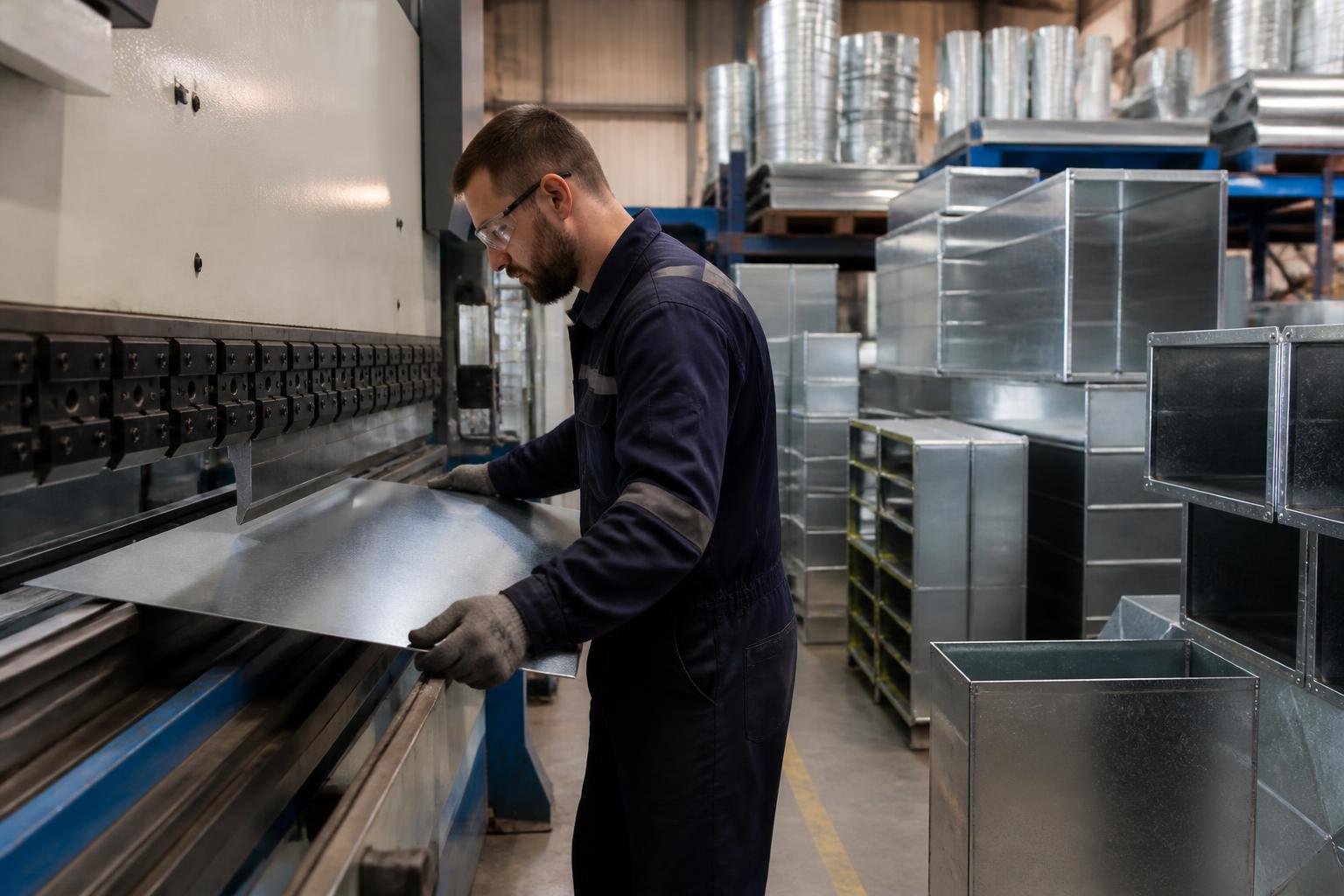
- Ductwork fabricators: manufacturing duct sections in a workshop for their own installers and other contractors
- Ventilation contractors: residential and commercial ventilation, including heat recovery systems in new homes for house builders
- Kitchen extract installers: canopies and extract ductwork for restaurants and hospitality groups, where grease fires are the main concern
- Fire damper testing and maintenance firms: inspecting and repairing dampers in occupied buildings for facilities managers
- Plant room and heating pipework contractors: boiler houses, pipework distribution and heat interface units on larger schemes
- Building services groups: firms combining mechanical, electrical and controls work across one contract
How much does heating and ventilation contractors insurance cost?
Mechanical services firms are rated mostly on the contracts they take on. These are the points insurers look at hardest.
Contract values
The largest single contract and your annual contract turnover set the contract works sum insured and influence the liability rating.
Liability limit required
Main contractors and public sector clients often set higher limits, and the premium follows the limit you need.
Ventilation and fire work
A large share of fire damper, fire stopping or kitchen extract work draws closer questions from insurers.
Design share
Contractor's design and design and build packages bring professional indemnity into the picture.
Heights and access
Working heights, the type of access equipment used and who supplies it all affect employers' and public liability.
Workshop and wage roll
A fabrication workshop adds premises, machinery and workshop staff to the rating, alongside site wages.
What heating and ventilation contractors insurance usually excludes
These are the gaps mechanical services firms meet most often at claim time.
- The cost of replacing your own defective ductwork or pipework, though resulting damage may be covered
- Design errors that cause financial loss, unless professional indemnity is in place
- Extra liability accepted under a subcontract, such as a wide indemnity to the main contractor, unless the insurer has agreed it
- Fire started by welding or brazing carried out without a hot work permit or outside the policy conditions
- Asbestos disturbed in plant rooms, risers or ceiling voids of older buildings
- Delay and liquidated damages claimed by the main contractor for finishing late
- Work above the height limit on the schedule, or on undeclared projects such as rail or nuclear sites
- Company vans and site vehicles while driven, which belong on a separate motor policy such as commercial vehicle cover
Ductwork and ventilation or heating pipework: how the risks differ
Heating and ventilation firms carry two different kinds of risk. Insurers look at the balance between them.
| Feature | Ductwork and ventilation | Heating pipework and plant |
|---|---|---|
| Typical damage claim | Falling duct sections, condensation drips, poor airflow | Leaks and floods from joints, valves and plant |
| Fire concern | Dampers, fire stopping and grease in kitchen extract | Heat work during brazing and welding |
| Where work happens | High-level runs on lifts, above ceilings | Plant rooms, risers and basements |
| Design question | Airflow rates and fire strategy | Heating loads and pipe sizing |
| Workshop exposure | Often a fabrication shop | Usually prefabricated modules only |
How to compare heating and ventilation contractors insurance
Fewer insurers write mechanical services, so a full proposal saves time. Prepare the following.
Gather contract clauses
Pull the insurance requirements from your main subcontracts, including limits, named insured and any design cover.
Split your work
Show turnover for ductwork, ventilation, kitchen extract, fire dampers, heating pipework and plant rooms.
Describe your design role
Say whether you install to others' designs, complete contractor's design or offer design and build.
Detail workshop and plant
Workshop rebuild and contents values, machinery, owned access equipment and how often you hire in.
Note heights and claims
Maximum working height, access methods and any fire, water or injury claims with what changed afterwards.
Quotes for mechanical contractors
Tell us about your mechanical packages, workshop and site teams, and a broker who handles building services firms will compare terms.
Compare quotesHeating and ventilation contractors insurance FAQs
How much does heating and ventilation contractors insurance cost?
It depends on contract values, the liability limit your clients require, how much ventilation and fire damper work you do, your design share, workshop values, wage roll and claims. A firm fabricating ductwork for hospitals is rated differently from one fitting extract fans.
Does the policy cover ductwork installation at height?
Yes, if your working heights are declared. Most policies set a maximum height, and insurers ask what access equipment your operatives use and how lifts and loads are planned. Falls and dropped objects are among the claims they look at most.
Are fire dampers and fire stopping covered?
Installing and testing dampers is usually covered if it is declared, but insurers ask detailed questions because the consequences of fire spreading through a compartment can be severe. Records of installation, testing and sign-off help defend a claim.
Do ventilation contractors face damp and mould claims?
They can. Where an extract or heat recovery system is said to have been undersized, wrongly installed or left unbalanced, occupiers and housing providers may blame it for damp. Damage claims fall under liability; design errors fall under professional indemnity.
Is kitchen extract ductwork treated differently?
Often, yes. Grease build-up in kitchen extract systems is a known fire risk, so insurers want to know if you install, clean or maintain them, and whether access panels and cleaning routes are designed in.
Can a main contractor be named on our policy?
Many insurers will note a main contractor's interest or provide an indemnity to them on request, as subcontracts often require. Check the exact clause in your contract and ask the broker to confirm what the insurer can offer before you sign.
Is our ductwork fabrication workshop covered?
It can be added to the same policy. Buildings, machinery, stock and work in progress at the workshop are insured as property, with business interruption if fire or flood stops production. Workshop staff are included in employers' liability.
Do we need professional indemnity as a mechanical contractor?
If you take on contractor's design, design and build or value engineering, usually yes. A system that fails to deliver the specified airflow or heat output causes financial loss, which liability cover does not pay.
How do I get a heating and ventilation contractors insurance quote?
Mechanical contractors can start here; the enquiry goes to a broker experienced with building services firms, who then calls. Your contract clauses, work split, design role, workshop details, heights and claims history give them what they need.
Ready to compare heating and ventilation contractors insurance?
Contract, liability and workshop cover for mechanical services firms, set to the terms your main contractors ask for.