Warehousing and Storage Insurance for logistics and storage operators
Cover for warehouses, the racking and handling equipment inside them, and the goods you store for yourself and for customers. A specialist broker can compare policies for logistics, fulfilment and storage operations.
- Customers' goods and warehouse keepers' liability
- Racking, forklifts and handling equipment
- Loss of storage income after a fire or flood
Reviewed October 2026 by the MyBusinessComparison.com editorial team
What is warehouse insurance?
Warehouse insurance brings together the covers needed by businesses that store goods, whether their own stock or goods held for customers. It insures the building, racking and handling equipment, the stock itself, liability for goods held on behalf of customers, lost income after damage, and injury claims from staff and visitors.
The part that sets it apart from ordinary premises cover is the treatment of other people's goods. A logistics firm can hold stock worth far more than its own buildings, and its exposure depends on the trading conditions it contracts under, so insurers want to see those terms before they quote.
Fire is the risk insurers study hardest. Tall racking, packaging, plastics, aerosols and batteries allow a fire to spread quickly, which is why sprinklers, detection, forklift charging areas and housekeeping carry so much weight in the underwriting.
Warehouse insurance at a glance
- Suits
- Logistics, fulfilment, cold storage, self storage and bonded warehouse operators
- Customers' goods
- Warehouse keepers' liability or goods in trust cover
- Main sections
- Buildings, racking, stock, income, employers' and public liability
- Insurers focus on
- Fire protection, stock type, security and trading conditions
- Stock values
- Can be declared periodically where levels rise and fall
- Arranged separately
- Vehicles on the road and goods carried in them
What does warehouse insurance cover?
Each section below has its own limit and excess. Most operators need the first five; the rest depend on what you store and how.
Warehouse buildings
The structure, loading docks, dock levellers, roller shutters, yard surfaces and perimeter fencing, insured for the full rebuild cost.
Read more about commercial property insurance
Racking and handling equipment
Pallet racking, mezzanines, conveyors and picking systems, including collapse or impact damage caused by a forklift strike.
Your own stock
Goods you own at the warehouse, with cover that can track seasonal peaks or be adjusted against regular stock declarations.
Warehouse keepers' liability
Your legal liability for loss of or damage to customers' goods, measured against the trading conditions you contract under, including the costs of defending a claim.
Business interruption
Lost storage and handling income, plus extra costs such as renting overflow space, while a damaged site is rebuilt.
Read more about business interruption insurance
Employers' liability
Claims from warehouse staff hurt in forklift accidents, falls from racking or manual handling. Cover is compulsory for most employers.
Read more about employers' liability insurance
Public liability
Injury or damage to visiting drivers, contractors and customers, including incidents in the yard and at the loading bays.
Read more about public liability insurance
Deterioration of stock
For chilled and frozen stores, spoilage caused by refrigeration breakdown or a failure of the public power supply.
Forklifts and yard plant
Accidental damage and theft of forklifts, reach trucks and sweepers on site. Use on public roads needs motor cover.
Read more about plant and machinery insurance
Cover to add for higher risk storage
- Goods in trust cover: damage cover for customers' goods whether or not you are at fault, often bought for high value clients
- Engineering inspection: thorough examination of forklifts, lifting gear and pressure systems, with breakdown cover
- Goods in transit: loads collected from and delivered to customers in your own or hired vehicles
- Cyber insurance: warehouse management systems taken down by ransomware, stopping picking and dispatch
- Trade credit insurance: protection against storage clients who fail owing you money
Who needs warehouse insurance?
Any business holding significant goods in storage, whether its own or other people's. These are the operators this cover is most often built for.
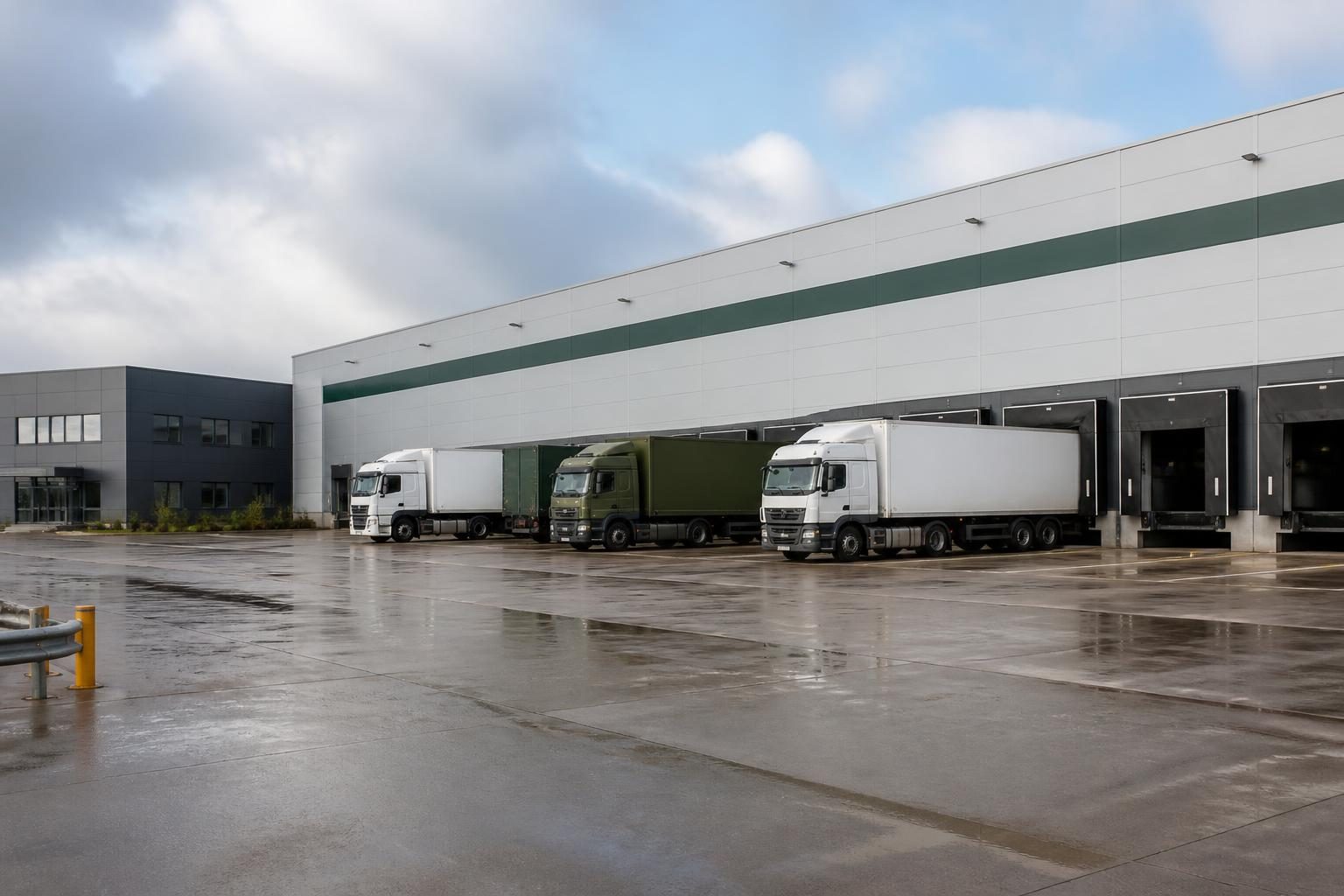
Moving goods as well as storing them? Loads on your own lorries need goods in transit cover, and the vehicles need a haulage policy.
- Third party logistics providers: contract warehousing for retailers and manufacturers, where customers' goods dominate the values
- E-commerce fulfilment centres: pick, pack and dispatch operations with mixed stock, packaging and battery-powered goods
- Cold store operators: chilled and frozen storage, where refrigeration failure and insulated panels shape the cover
- Self storage operators: rooms and containers let to businesses and the public, where the storage agreement decides who insures the contents
- Bonded warehouses: goods held under customs control, where duty on lost or damaged stock may need to be insured
- Wholesalers and distributors: large stocks of their own goods turning over quickly, with seasonal peaks
- Manufacturers with finished goods stores: raw materials and finished stock held on or near the production site
- Hauliers with cross dock facilities: short term storage and transhipment alongside a lorry fleet
- Freight forwarders and importers: goods landed from overseas and held before onward delivery
- Document and archive storage firms: records, files and media held for clients, where retrieval and loss carry liability
- Builders merchants with storage yards: timber, aggregates and building materials held in sheds and open yards
- Removals and storage companies: household and office contents stored in containers between moves
How much does warehouse insurance cost?
Premiums depend far more on what is stored and how it is protected than on the size of the building. These are the factors underwriters weigh most.
What you store
Paper, plastics, tyres, aerosols, spirits and lithium batteries carry more fire load than metal parts or bottled water, and high value goods attract theft.
Fire protection
Sprinklers, including in-rack systems, monitored detection, separate battery charging areas and controlled waste make a marked difference to rating.
Values at risk
The building, racking and peak stock levels set the property premium; insurers also look at the largest value held in any one fire area.
Trading conditions
Terms that limit your liability for customers' goods reduce the liability exposure; accepting unlimited liability in a contract increases it.
Security
Monitored intruder alarms, CCTV, perimeter fencing, lighting and key holding arrangements matter, especially for desirable consumer goods.
Claims and management
Past losses, forklift training, racking inspections and housekeeping standards all influence the terms offered.
What warehouse insurance does not cover
Warehouse claims tend to fail on these points, so check them against your operation.
- Liability for customers' goods beyond what your trading conditions or contract say you accepted, unless agreed with the insurer
- Theft without forcible entry, and stock shortages found at stocktake with no identified cause
- Spoilage from refrigeration failure unless the deterioration of stock section has been bought
- Any forklift or lorry driven on public roads, which belongs on commercial vehicle or fleet cover
- Racking that fails through overloading, poor installation or lack of inspection
- Breach of security conditions, such as an alarm left unset or not maintained
- Contamination or recall of products you handle, which may need product recall insurance
Warehouse keepers' liability or goods in trust cover?
Both protect customers' goods in your care, but they pay out on different triggers. Many operators hold the first and add the second for specific clients.
| Feature | Warehouse keepers' liability | Goods in trust |
|---|---|---|
| Pays when | You are found liable for the loss | The goods are lost or damaged by an insured event |
| Linked to | Your trading conditions and contracts | The value of the goods held |
| Typical limit | Set to the liability you accept, often capped by weight or value | The full value of goods held for a customer |
| Customer's experience | Payment can depend on proving fault | Usually quicker settlement, with no need to prove fault |
| Often chosen by | Most contract logistics operators | Operators storing high value goods for key clients |
How to compare warehouse insurance
Warehouse underwriters ask detailed questions. Having these answers ready makes a quote faster and more accurate.
Describe the site
Construction, floor area, racking heights, mezzanines, sprinkler and detection systems and any insulated panels.
Profile the stock
What you hold, whose it is, average and peak values, and the most valuable or hazardous lines.
Share your trading terms
The standard conditions you contract under and any customer contracts that go beyond them.
Detail equipment and staff
Forklift numbers and training, charging arrangements, wage roll and use of agency labour.
Compare the full package
Look at liability limits, stock basis, security conditions, interruption period and excesses side by side.
Storing goods for others?
Outline the site, the goods held and your trading terms, and a specialist broker will explore the market.
Get a quoteWarehouse insurance FAQs
How much does warehouse insurance cost?
Premiums are set case by case. They turn on what you store, the values held, the building and its fire protection, security, your trading conditions and claims record. Stock type and sprinklers usually move the premium most, so detailed information helps the broker.
Are customers' goods covered by my buildings and stock policy?
Not automatically. Stock cover usually insures goods you own. Goods held for customers need warehouse keepers' liability, goods in trust cover, or both, and the limits should reflect the most you hold for any one customer.
What are warehouse trading conditions and why do insurers ask for them?
They are the standard terms you contract under, setting out your liability for customers' goods and often capping it by weight or value. Insurers price liability cover against those terms, so working outside them without telling the insurer can leave a claim uninsured.
Does warehouse insurance cover racking collapse?
Sudden collapse or damage from a forklift strike is often covered as accidental damage. Collapse caused by overloading, poor installation or missing inspections is commonly excluded, so regular racking inspections and recorded repairs are worth keeping.
Do my forklifts need separate insurance?
On site, forklifts can usually be insured within the warehouse policy or a plant policy. If they travel on public roads, even briefly between sites, they need motor insurance. Lifting equipment also needs regular thorough examination.
Can I insure stock that goes up and down through the year?
Yes. Many insurers offer seasonal increases or a declaration basis, where you report stock values at agreed intervals and the premium is adjusted. This avoids paying for peak values all year while protecting you at peak.
Is lithium battery storage a problem for insurers?
It is a growing focus. Insurers ask whether batteries are stored, sold or charged on site, in what quantities and how they are separated and protected. Disclosing them early avoids surprises at claim time and lets the broker find a suitable insurer.
Does warehouse insurance cover goods in transit?
Usually only to a limited extent. Goods carried in your own or subcontracted vehicles are normally insured under a goods in transit policy, with limits matched to your largest load.
How do I get a warehouse insurance quote?
Choose the quote button and a specialist broker will be in contact. They will ask about construction, fire protection, the stock profile and values, your trading conditions, forklift numbers and past claims, so having these ready speeds things up.
Ready to compare warehouse insurance?
Buildings, racking, stock and customers' goods covered together, compared by a specialist broker.