Welding and Fabrication Insurance for fabrication shops and site teams
Insurance for fabrication firms that cut, weld and finish metalwork in their own workshop, then deliver, fix or erect it on site. Compare cover built around hot work, products in service and the health of your welders.
- Hot work on customers' sites declared and covered
- Liability for welded products after they leave the shop
- Workshop, machinery and steel stock protected
Reviewed October 2026 by the MyBusinessComparison.com editorial team
What is welding and fabrication insurance?
Welding and fabrication insurance is a package for firms that cut, weld and assemble metalwork, in their own workshop or on customers' sites. A typical policy pairs public, products and employers' liability with cover for the workshop, its machinery and steel stock, business interruption, and contract works cover for steel being erected or installed.
Two things shape the risk. Hot work away from the workshop can start fires that destroy a customer's building, so insurers attach conditions to it. And a poor weld may only show itself years later, in a collapsed balcony, a snapped lifting frame or a cracked trailer chassis, so underwriters want to know what your fabrications end up doing and who designed them.
Precision machining and machine building belong on our engineering company insurance page, and factories producing finished goods at volume on our manufacturing and engineering insurance page.
Welding and fabrication cover at a glance
- Suits
- Steel fabricators, welding contractors and metalwork firms with workshops
- Core covers
- Public, products and employers' liability, plus workshop and stock
- Key condition
- Hot work controls on customers' sites
- Underwriters ask
- What your fabrications are used for and who designs them
- Health exposure
- Welding fume, noise and vibration claims from staff
- Often added
- Contract works, goods in transit and professional indemnity
What does welding and fabrication insurance cover?
Fabricators usually combine workshop cover with liability that follows their work onto site and into service. These are the usual sections.
Hot work on site
Fire and damage caused by welding, cutting and grinding at customers' premises. Most policies require a permit or written method, combustibles cleared, extinguishers to hand and a fire check after work stops.
Read more about public liability insurance
Fabrications in service
Claims when a staircase, balustrade, gate, frame or bracket you made fails and causes injury or damage, including after a main contractor has built it into their project.
Read more about products liability cover
Welders and fitters
Burns, eye injuries, crush injuries from handling steel and falls during erection, plus slow-developing claims for fume related illness, hearing loss and vibration.
Read more about employers' liability insurance
Workshop and machinery
The fabrication shop, overhead cranes, press brakes, guillotines, saws, plasma tables, welding sets and compressors against fire, theft and damage.
Read more about business equipment and machinery cover
Steel stock and customers' materials
Plate, sections and tube in your racks, work in progress, and materials customers send in for you to fabricate.
Steel being erected
Steelwork, mezzanines and platforms while they are being erected on site, up to handover, under contract works cover.
Read more about contractors' all risks insurance
Fabrications in transit
Finished work on your own lorries and trailers, including while it is being lifted off at site.
Read more about goods in transit insurance
Lost production
Gross profit lost when a fire or a failed overhead crane stops the shop, with the extra cost of sending urgent work to another fabricator.
Read more about business interruption insurance
Connection design and drawings
Claims arising from connection design, calculations or fabrication drawings you produce, or design and build contracts you take on.
Read more about professional indemnity insurance
Other covers fabricators add
- Engineering inspection: periodic examination of overhead cranes, lifting beams, chain blocks and air receivers
- Commercial legal expenses: payment disputes and withheld retentions on steel packages
- Group personal accident: lump sums for welders injured at work, whoever was at fault
- Trade credit insurance: main contractors that fail with steel invoices still unpaid
Which metalwork firms need welding and fabrication insurance?
It suits established businesses that weld or fabricate metal for others, whether most of the work happens in the shop or on site.
Machining parts or building machines? Precision and machine building firms are covered on our engineering company page, or browse insurance for trade firms.
- Structural steel fabricators: frames, beams, columns and mezzanines for commercial and industrial buildings, often fabricated and erected under one contract
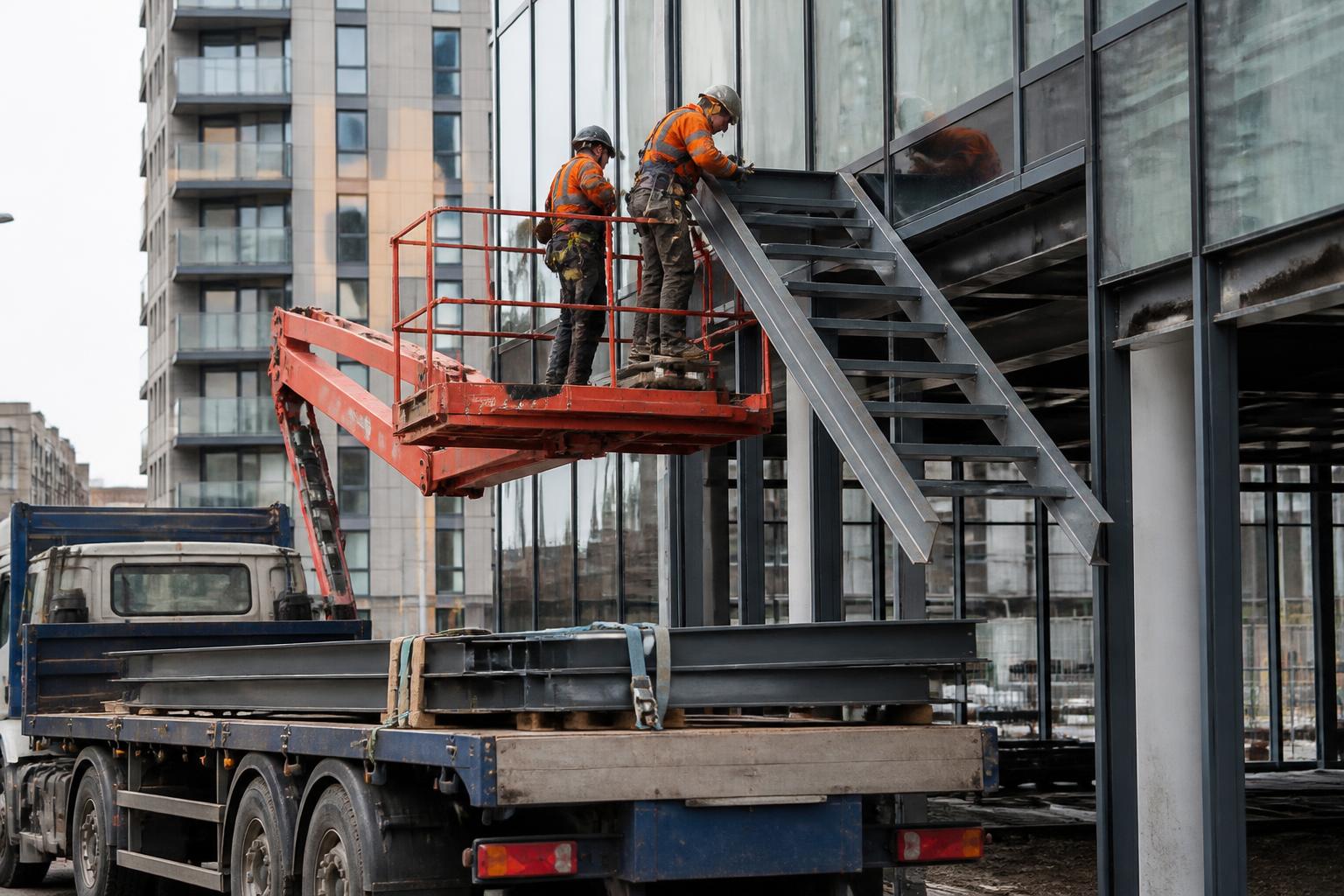
- Architectural and secondary steelwork: staircases, balconies, balustrades and canopies, where a failed fixing can injure members of the public
- General fabrication shops: brackets, frames, guards and enclosures made to drawings for manufacturers and other trades
- Mobile and site welding contractors: welding teams working from vans on construction, farm and industrial sites, where hot work is the main concern
- Pipework and coded welders: process pipework, steam and compressed air systems in factories, where weld quality is tested and recorded
- Gate, railing and security fencing makers: fabricated and galvanised work installed for schools, councils and fencing contractors
- Repair and hardfacing welders: rebuilding buckets, booms and trailers for farms and plant hire firms, where the repaired item goes straight back into heavy use
- Stainless and aluminium fabricators: food processing equipment, catering units and vehicle bodywork made to hygiene or weight specifications
- Trailer and vehicle body builders: chassis and bodies that go on the road, which insurers look at carefully because of the products risk
How much does welding and fabrication insurance cost?
Insurers price a fabricator on what is made, where it is made and where it ends up, and each of the points below is weighed separately.
Shop and site split
Wages and turnover earned on site are rated differently from workshop work, because hot work and erection at height carry more risk.
What the work ends up in
Load-bearing structures, lifting equipment, trailers and anything for rail, aviation or offshore use attract closer scrutiny than gates and brackets.
Hot work controls
Permits, fire checks after work, fire blankets, extinguishers and training records all count, and some insurers set specific conditions.
Erection at height
Erecting steel with cranes and access platforms adds employers' liability and contract works risk compared with deliver-only contracts.
Workshop protection
Building construction, how gas cylinders are stored, housekeeping of swarf and offcuts, and alarms are assessed for the property section.
Claims and health controls
Past claims, and evidence of fume extraction, health checks and hearing protection, influence the employers' liability rating.
What welding and fabrication insurance does not cover
These are the usual reasons a fabricator's claim is cut back or declined.
- Fire from hot work where the policy's hot work conditions were not followed
- Re-making or repairing your own defective welds and fabrications, as opposed to the damage they go on to cause
- Design errors, unless professional indemnity covers the design you take on
- Products for aircraft or offshore installations, or exported to the USA and Canada, unless declared and agreed
- Lifting operations and erection work that were not declared to the insurer
- Damage to the item you are working on, which many liability policies limit or exclude
- Steel under erection, unless contract works cover is in place on your policy or the main contractor's
Workshop fabrication or site welding and erection?
Most fabricators do both, but the risks are different. This is how insurers see each side of the business.
| Feature | Workshop fabrication | Site welding and erection |
|---|---|---|
| Main fire risk | Your own building, stock and machinery | The customer's building and its contents |
| Main injury risk | Handling steel, machinery and fume in the shop | Falls, lifting and hot work at height |
| Key policy sections | Property, business interruption and products liability | Public liability, contract works and employers' liability |
| What insurers check | Extraction, housekeeping, cylinder storage and alarms | Hot work permits, fire checks and erection method statements |
| Common gap | Machinery and stock values left out of date | Site wages or lifting work left undeclared |
How to compare welding and fabrication insurance
A fabricator's proposal is clearer when the shop and the site are described separately. Gather these first.
Split your work
Workshop and site wages, deliver-only and fabricate and erect contracts, and any design you take on.
Describe your products
What you make, the sectors it goes into, and any structural, lifting or road-going work.
Set out hot work controls
Your permit system, fire checks, training and the equipment welders carry to site.
Value the workshop
Rebuild cost, machinery, steel stock, work in progress and gross profit.
List claims and contract limits
Recent claims with what changed, and the liability limits your main contractors ask for.
Quotes for steel and welding firms
Tell us what you fabricate and where you weld, and a broker who handles metalwork firms will compare cover for you.
Compare quotesWelding and fabrication insurance FAQs
How much does welding and fabrication insurance cost?
It depends on turnover and wage roll, how much is earned on site rather than in the shop, what your fabrications are used for, your hot work controls, workshop values and claims. A shop making gates and brackets is priced very differently from one fabricating and erecting structural frames.
Is hot work covered on our public liability policy?
Usually, provided it is declared and you follow the policy's hot work conditions. These commonly include a permit or written method, clearing combustibles, having extinguishers on hand and a fire check of the area once welding finishes. A fire caused where the conditions were ignored may not be covered.
Who pays if a weld fails years after the steel was installed?
The injury or damage caused by the failure falls under products liability, using the policy in force when that injury or damage happens. That is why keeping cover in place matters long after a contract ends. Replacing the faulty steelwork itself is usually excluded, so keep weld records and test results.
Are welders covered for fume related illness?
Yes. Employers' liability covers claims from staff whose health is harmed by their work, including illness linked to welding fume, noise and vibration. Insurers ask about extraction, respiratory protection and health checks, because these claims can surface long after the exposure.
Does fabrication insurance cover steel we are erecting on site?
Not under the liability sections alone. Steel being erected is part of the works, so it needs contract works cover until handover, either on your own policy or under the main contractor's policy if the contract says so.
Do we need professional indemnity if we work to the engineer's drawings?
Often not, if you fabricate strictly to someone else's design. Once you design connections, prepare calculations or take design and build contracts, a design error can cause losses that liability policies exclude, and professional indemnity fills that gap.
Are our mobile welding teams covered on customers' sites?
Yes, if the policy declares site work and its hot work conditions are met. Welding sets and tools in vans need their own cover with overnight security conditions, and the vans need commercial vehicle insurance. Tell the insurer if gas cylinders are carried.
Does fabrication insurance cover trailers and vehicle bodies we build?
It can, but insurers treat road-going products with care because a failure at speed can cause serious harm. Expect questions about design, testing, volumes and who signs off each unit. Some insurers decline this work, so a specialist broker helps.
How do I get a welding and fabrication insurance quote?
Press the quote button and your enquiry goes to a broker experienced with metalwork firms. Have your workshop and site wage split, a description of what you fabricate, your hot work procedure, machinery and stock values and recent claims ready.
Ready to compare welding and fabrication insurance?
Cover for the shop, the site and every fabrication you put your name to, arranged by brokers who know hot work.